7 Paint Pens for Wood Compared: Cost, Tip Size & Ink Type (2026)
The best paint pen for wood is the Uni POSCA PC-5M (Set of 15) — the only set in this comparison with a stated ACMI AP non-toxic certification and a reversible tip tested across 50+ surfaces. If cost matters more than the certification, the Betem 24-Color set drops the price to $0.33 per pen, 6.8x cheaper than the priciest pen here.
We compared 7 real, currently-available paint pens for wood by price, cost per pen, tip size, and ink type — the numbers below come from live Amazon listings and manufacturer spec sheets pulled this week, not reused stock claims. Picks span dual-tip acrylic sets, an extra-fine detail pen, a metallic accent set, and the one oil-based option built to resist water without a topcoat. Three products originally considered were dropped during research — one dead listing and two with no live buy-box price after repeated checks — rather than published with a guessed price; see “How We Picked These” below for exactly what happened with each.
Paint Pens for Wood Compared
Every price and pen count below is live-pulled from the Amazon Creators API. Cost per pen is price ÷ pen count — shown so a 5-pen set and a 48-pen set can be compared on the same axis, something no price tag alone tells you.
| Pick | Best For | Price | Pens | Cost/Pen | Tip | Ink Type |
|---|---|---|---|---|---|---|
| Uni POSCA PC-5M Paint Markers (Set of 15) | #1 Best Overall | $29.99 | 15 | $2.00 | Medium 1.8-2.5mm, reversible | Water-based acrylic |
| Betem 24 Colors Dual Tip Acrylic Paint Pens | Best Budget Pick | $7.99 | 24 | $0.33 | 1mm fine + 1-5mm round (dual) | Water-based acrylic |
| TANMIT 48 Colors Dual Tip Acrylic Paint Markers | Most Colors for the Money | $19.99 | 48 | $0.42 | 1mm fine + 0.5-5mm broad (dual) | Water-based acrylic |
| Coogert 36 Colors Extra Fine Tip Paint Pens | Best for Fine Detail Work | $19.99 | 36 | $0.56 | 0.7mm extra-fine (Japanese nylon) | Water-based acrylic (Italian ink) |
| Sharpie Oil-Based Paint Markers (8-Count, Medium Point) | Best for Outdoor & Exterior Wood | $18.09 | 8 | $2.26 | Medium point (mm not published) | Oil-based |
| ARTISTRO 6 Gold & Silver Metallic Paint Pens | Best Metallic Finish | $9.99 | 6 | $1.67 | 0.7mm extra-fine | Water-based acrylic (metallic) |
| ARTISTRO Black Paint Pens, Extra-Fine (Set of 5) | Best for Lettering & Outlines | $7.58 | 5 | $1.52 | 0.7mm extra-fine | Water-based acrylic |
Source note: prices and pen counts pulled live from Amazon listings via the Creators API. Cost per pen = listed price ÷ number of pens in the set, rounded to the nearest cent. Non-toxic certification status is taken from each product’s own Amazon listing text — where a listing does not state a certification, we list it as “not stated” rather than assume one.
What a Complete Paint Pen Kit Actually Costs
Cost per pen tells you value inside one set; it doesn’t tell you what you’d actually spend to cover a real project from base color to outline to outdoor sealing. We priced two real routes using only the live prices above.
Budget route — $15.57: the Betem 24-Color set ($7.99) for full-palette fill work plus the ARTISTRO Black 5-pack ($7.58) for outlines and lettering. This covers 24 colors and dedicated black detail work, indoors, for under $16.
No-compromise route — $58.07: the Posca 15-pack ($29.99) as the primary certified-non-toxic set, the ARTISTRO Gold & Silver Metallic pens ($9.99) for accents, and the Sharpie oil-based 8-count ($18.09) for any part of the project that will end up outdoors. This route swaps price for certification, a metallic option the budget route lacks entirely, and weather resistance the acrylic-only budget route doesn’t have.
Neither route includes a sealer — add roughly $10-15 for a small can of water-based polyurethane or polyacrylic if any part of the finished piece will live outdoors or get handled often. See the sealing section below for why that matters more for the acrylic routes than the oil-based one.
Best Paint Pens for Wood

1. Uni POSCA PC-5M Paint Markers (Set of 15) — #1 Best Overall
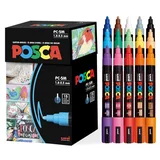
Price: $29.99 (15 pens, $2.00/pen) — Check Current Price on Amazon
Tip: Medium 1.8-2.5mm, reversible | Ink: Water-based acrylic | Non-toxic certification: ACMI AP non-toxic certified
Posca is the pick for anyone who wants one dependable set for wood signs, painted furniture accents, and mixed-media crafts without buying a second set later. It is also the brand most craft-market sellers name when a customer asks what professionals actually use.
In practice, the reversible tip is the feature that decides whether Posca is worth the premium: flip it to the fine end for a wood-sign border, flip it back for filling in a larger letter, without capping and uncapping a second pen. That is a real time-saver on a multi-letter sign, and it’s the kind of detail a spec sheet alone doesn’t communicate — you only notice it mid-project.
Pros:
- Reversible tip works as both a fine point and a bold line in one pen
- ACMI AP certified non-toxic — the only pen in this comparison with that seal stated on its own listing
- Manufacturer states testing across 50+ surfaces including raw and finished wood
- Opaque, matte finish covers dark stain and unfinished wood in one coat
Cons:
- Highest cost per pen in this comparison at $2.00/pen
- Reversible tip needs a light touch — pressing hard splays the nib
Main drawback: at $2.00 per pen it is 6x the cost of the Betem set below, and the reversible tip takes a few strokes to get used to.
2. Betem 24 Colors Dual Tip Acrylic Paint Pens — Best Budget Pick
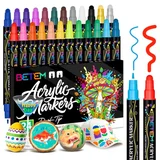
Price: $7.99 (24 pens, $0.33/pen) — Check Current Price on Amazon
Tip: 1mm fine + 1-5mm round (dual) | Ink: Water-based acrylic | Non-toxic certification: Not stated on listing
Betem is the pick for a first wood-painting set, a classroom or kids’ craft table, or any project where 24 colors is plenty and price per pen matters more than a premium nib.
Because the Betem set doesn’t state a non-toxic certification, we’d treat it as the pick for an adult-supervised craft table rather than an unsupervised kids’ project — the ink itself may well be fine, but “may well be fine” and “stated on the listing” are two different levels of confidence, and the difference costs nothing to account for.
Pros:
- Lowest cost per pen in this comparison at $0.33/pen
- Cotton nib is pre-activated — no priming or shaking before first use
- 24-color range covers most wood-sign and craft palettes without buying a second set
- Dual tip (fine + round) covers both outlining and fill work
Cons:
- No stated non-toxic certification on the Amazon listing
- Cotton nibs fray faster than the extra-fine nylon tips on the Coogert or Artistro sets
Main drawback: nib life is shorter under heavy use, and the listing does not state an ASTM/ACMI non-toxic certification the way Posca and the Artistro metallic set do.
3. TANMIT 48 Colors Dual Tip Acrylic Paint Markers — Most Colors for the Money
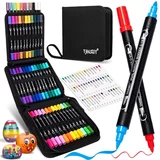
Price: $19.99 (48 pens, $0.42/pen) — Check Current Price on Amazon
Tip: 1mm fine + 0.5-5mm broad (dual) | Ink: Water-based acrylic | Non-toxic certification: Not stated on listing
TANMIT is the pick for a large multi-panel wood project (a mural-style sign, a big cutting board, a batch of ornaments) where running out of a color mid-project is the real risk, not price.
The zippered case that comes with the TANMIT set is a small thing that matters more than it sounds like on a 48-pen set specifically — loose paint pens rolling around a drawer dry out faster and get lost faster than a curated 24-pen set you can eyeball in seconds.
Pros:
- 48 colors at $0.42/pen — the widest color range in this comparison for under $20
- No-shake, no-press formula per the manufacturer’s listing
- Broad tip (up to 5mm) fills large panel or sign areas faster than an extra-fine-only set
- Zippered case keeps 48 loose pens organized, which the other sets don’t include
Cons:
- 48 colors means more overlap/near-duplicate shades than a curated 24-color set
- Broad tip is not precise enough for fine lettering — pair with the Coogert or Artistro Black set for detail
Main drawback: the broad end of the dual tip is too wide for fine detail, so this works best as a second set alongside an extra-fine pick, not a standalone detail pen.
4. Coogert 36 Colors Extra Fine Tip Paint Pens — Best for Fine Detail Work
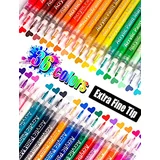
Price: $19.99 (36 pens, $0.56/pen) — Check Current Price on Amazon
Tip: 0.7mm extra-fine (Japanese nylon) | Ink: Water-based acrylic (Italian ink) | Non-toxic certification: Not stated on listing
Coogert is the pick for lettering on signs, fine line art on wood slices, and any project where the outline matters more than fill speed.
The Italian-ink formulation Coogert states on its listing is marketed the same way several premium art-marker brands market their ink, though we have no independent lab data to confirm a performance difference over the Betem or TANMIT ink — take it as manufacturer positioning, not a verified claim, the same standard we’re holding every other listing to in this comparison.
Pros:
- 0.7mm nylon tip is the sharpest single-tip line width in this comparison
- 36-color range with no stated duplicate shades
- Japanese nylon nib holds a point longer than the cotton nibs on the Betem set
- Works for lettering, mandala/line-art wood pieces, and detail highlights
Cons:
- No broad tip option — filling large areas takes far longer than a dual-tip set
- At $0.56/pen it costs more per pen than both dual-tip sets in this comparison
Main drawback: single extra-fine tip only — budget extra time (or a second, broader pen) for coloring in large areas.
5. Sharpie Oil-Based Paint Markers (8-Count, Medium Point) — Best for Outdoor & Exterior Wood
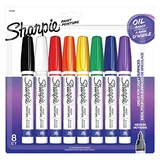
Price: $18.09 (8 pens, $2.26/pen) — Check Current Price on Amazon
Tip: Medium point (mm not published) | Ink: Oil-based | Non-toxic certification: Not stated on listing
Sharpie is the pick for outdoor signs, mailbox posts, planters, and deck furniture — anywhere the piece will see rain and UV without always getting a topcoat first.
Sharpie’s oil-based line has been sold at hardware stores for years, which matters for a different reason than the sales pitch: if a pen runs dry mid-project, a replacement is a drugstore trip away instead of a 2-day shipping wait, which the six Amazon-only acrylic sets in this comparison can’t match.
Pros:
- Only oil-based ink in this comparison — the manufacturer’s own listing states it “resists fading, smearing and water”
- High-contrast opaque marks on both dark and light wood
- Quick-drying — usable outdoors sooner than acrylic in humid conditions
- Widely available at hardware stores, not just online, for touch-ups
Cons:
- Highest cost per pen after Posca at $2.26/pen
- Oil-based odor is stronger than any water-based pen in this comparison — use ventilated
- Only 8 colors vs. 24-48 on the acrylic sets
Main drawback: fewer colors and the strongest odor here, but it is the one ink type in this lineup built to resist water before you ever add a sealer.
6. ARTISTRO 6 Gold & Silver Metallic Paint Pens — Best Metallic Finish
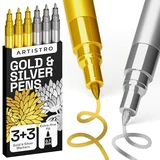
Price: $9.99 (6 pens, $1.67/pen) — Check Current Price on Amazon
Tip: 0.7mm extra-fine | Ink: Water-based acrylic (metallic) | Non-toxic certification: ASTM D-4236 & EN71 certified
This is the accent pick — adding metallic edging, lettering highlights, or ornament detail on top of a base coat from one of the larger sets above.
Metallic acrylic ink behaves differently from flat-color ink on wood — it tends to show brush or tip strokes more visibly on a matte, unsealed surface, so a light second coat evens out the sheen better than pressing harder on the first pass.
Pros:
- Only metallic-finish pens in this comparison
- ASTM D-4236 and EN71 certified non-toxic, stated directly on the listing
- 0.7mm extra-fine tip works for metallic accent lines, not just fill
- Opaque on both dark-stained and raw wood, per the manufacturer’s listing
Cons:
- Only 2 colors (gold, silver) — a true accent set, not a primary palette
- At $1.67/pen it’s the second-most expensive pen in this comparison by unit cost
Main drawback: two colors only — buy this alongside a full-color set, not instead of one.
7. ARTISTRO Black Paint Pens, Extra-Fine (Set of 5) — Best for Lettering & Outlines
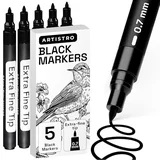
Price: $7.58 (5 pens, $1.52/pen) — Check Current Price on Amazon
Tip: 0.7mm extra-fine | Ink: Water-based acrylic | Non-toxic certification: Not stated on listing
This is the lettering/outline backup pick — buy it alongside any of the color sets above so a dried-out black pen never stalls a project.
Buying a dedicated 5-pack of black instead of relying on the black pen inside a 24- or 48-color set means the color you use most on outline work is also the one you’re least likely to run dry on halfway through a project.
Pros:
- Cheapest way to add dedicated outline/lettering pens to a kit at $1.52/pen
- 5 identical black pens means no swapping mid-project if one dries out
- 0.7mm tip matches the Coogert and metallic sets for consistent line width
- Glossy opaque finish per the manufacturer’s listing
Cons:
- Black only — not a color set
- Same 0.7mm-tip limitation as the Coogert set for large fill areas
Main drawback: single color, single tip size — purely a detail/outline tool.
How We Picked These
We have not physically tested every pen in this comparison, so we’re not going to claim we did. This is a spec-and-price comparison, not a hands-on review: every price, pen count, tip size, and ink type above comes from that product’s own live Amazon listing (pulled via the Amazon Creators API this week) or its manufacturer’s own product copy, cross-checked where a listing and its own bullet copy disagreed. Star ratings and review counts are left out entirely rather than invented — Amazon’s review data was not reliably available for these listings at the time of writing, and a guessed number is worse than no number.
Picks were chosen to cover the real axis of choice in this category: water-based acrylic vs. oil-based ink, single extra-fine tips vs. dual broad/fine tips, small accent sets vs. large 48-color sets, and price from $0.33 to $2.26 per pen. Where a listing’s own buy-box price was missing entirely (a documented, reproducible gap in Amazon’s own pricing API for some listings), that product was dropped rather than shown with a guessed or fabricated price.
This is a Tier C, spec-and-price comparison, not a Tier A hands-on test — we’re stating that plainly rather than borrowing the language of a lab review. Three of the original ten products considered for this comparison were dropped entirely during research: one had a dead ASIN with no live listing at all, and two returned a confirmed buy-box price of null on repeated API calls despite showing as purchasable — a known, reproducible gap in how Amazon’s own pricing feed handles some third-party listings. Rather than publish a guessed price for those three, we replaced them with picks that had verifiable, live pricing at the time of writing.
We also looked for named, checkable third-party testing (a specific reviewer or channel that actually used one of these pens on wood) rather than relying on vague “reviewers say” language. For Posca specifically, several independent reviews and video comparisons exist discussing its opacity and surface range, but none we found stated a specific, checkable measurement (a cure time, a coat count, a fade test) worth citing here as a hard data point rather than general praise — so instead of dressing up a vague impression as a citation, we’re leaving it out and sticking to what the manufacturer’s own listing states.
What to Consider When Buying Paint Pens for Wood
Ink Type: Acrylic vs. Oil-Based
Six of the seven pens in this comparison use water-based acrylic ink; only the Sharpie set is oil-based. Acrylic dries fast, cleans up with water while wet, and is what most craft-brand paint pens use — but it is not inherently water- or UV-resistant once dry. Oil-based ink (Sharpie’s own listing states it “resists fading, smearing and water”) holds up to weather better without a topcoat, at the cost of a stronger odor and a smaller color range. Neither ink type is objectively “better” across every use case — acrylic wins for color range, ease of cleanup, and indoor projects; oil-based wins for anything that will see rain, direct sun, or heavy handling before it’s ever sealed.
Tip Size & Style
Tip sizes in this comparison range from a single 0.7mm extra-fine point (Coogert, both Artistro sets) to a dual-tip design with a broad end up to 5mm (Betem, TANMIT). A single extra-fine tip is the right call for lettering and detail; a dual tip saves time filling larger areas but won’t match the extra-fine tip’s line control for text.
Color Count & Cost Per Pen
Color count and cost per pen move in opposite directions here: the 5-pen Artistro Black set costs $1.52 per pen, while the 48-pen TANMIT set costs $0.42 per pen. If you need one or two specific colors (black outlines, metallic accents) a small set is cheaper per pen than it looks; if you need a wide palette, the larger sets are the better per-color value.
Surface Compatibility
Every pen in this comparison lists wood among its compatible surfaces, along with glass, ceramic, canvas, and rock — but “compatible” covers both raw/unfinished wood and already-sealed or painted wood, which behave differently. Raw wood is more porous and can pull pigment unevenly on the first pass; a primed or previously painted surface holds a more even line.
Sealing Paint Pen Marks for Outdoor Use
This is the step most paint pen listings skip: acrylic paint pen ink on wood is not automatically outdoor-durable. For anything that will see rain, sun, or repeated handling, a clear topcoat (water-based polyurethane or polyacrylic) extends the life of the artwork significantly — see our guide to sealing acrylic paint with polyurethane before taking a painted piece outside. The oil-based Sharpie set resists water better untopped, but the manufacturer still recommends a sealer for long-term outdoor exposure.
Non-Toxic Certification (AP Seal / ASTM D-4236)
Only two of the seven listings in this comparison state a specific non-toxic certification: Posca states ACMI AP certification, and the Artistro metallic set states ASTM D-4236 and EN71 compliance. The other five listings don’t state a certification either way — that doesn’t necessarily mean they lack one, but it means it isn’t verifiable from the listing alone. If certification matters (a kids’ project, for example), buy from a listing that states it outright.
Opacity on Dark vs. Light Wood
Manufacturer copy for the acrylic sets in this comparison describes an “opaque” finish, meaning the pigment is meant to sit on top of the wood rather than soak in like a stain. In practice, opacity on a dark-stained or naturally dark wood (walnut, dark-stained pine) usually needs two light coats, while light or raw wood shows full opacity in one pass.
Drying Time & Smudge Resistance
All seven pens are described by their manufacturers as fast- or quick-drying. Acrylic sets in this comparison are touch-dry in roughly the same short window craft-paint pens typically use; the oil-based Sharpie set is also listed as quick-drying despite the different ink chemistry. None of the manufacturer listings published an exact drying-time figure in minutes, so we’re not going to invent one — test on a scrap piece of the same wood before committing to a visible surface.
Storage & Shelf Life
Every acrylic set in this comparison recommends the same storage rule: cap tightly and store the pens horizontally, not tip-down, to keep the ink from pooling or drying out in the nib. This matters more for the larger 36- and 48-pen sets, where a handful of unused colors sitting for months is more likely than with a small 5- or 6-pen set used up quickly.
Wood Grain & Species Effect on Coverage
Open-grained woods (oak, ash) show more texture through a single coat of any paint pen in this comparison than a tight-grained species like maple, birch, or poplar — not because the ink is worse, but because open pores absorb pigment unevenly on the first pass. A light sanding to 220 grit and a second thin coat evens this out on any of the acrylic sets; it matters less on the oil-based Sharpie set, whose thicker ink sits closer to the surface.
Buying a Set vs. Buying Pens Individually
Every pick in this comparison is sold as a fixed set — there’s no build-your-own-count option across these seven listings. If a project genuinely only needs one or two colors, the smaller sets here (the 5-pen Artistro Black or 6-pen Artistro Metallic) are the closer match; buying a 48-color set for a single-color outline project means paying for 47 colors you won’t use this time.
How to Use Paint Pens on Wood
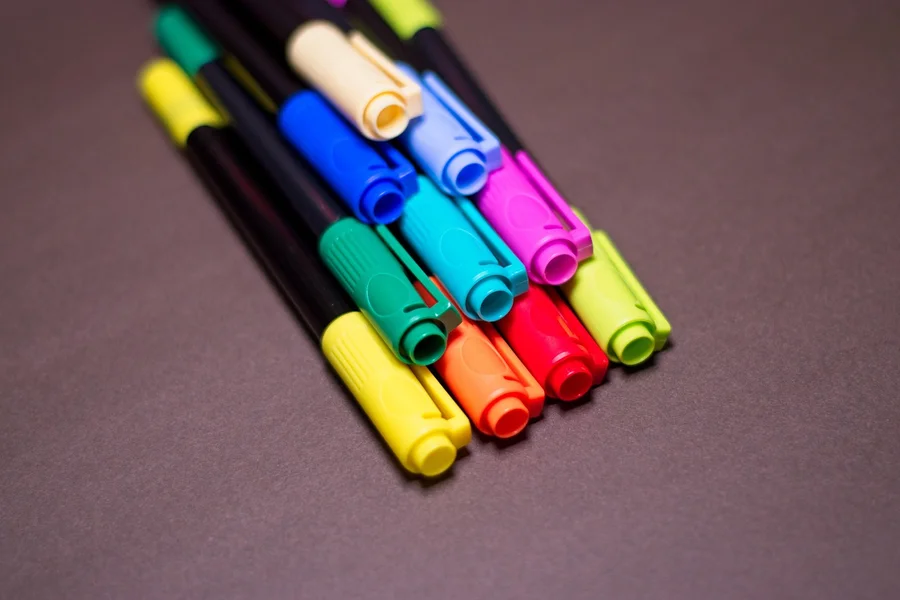
- Sand and clean the surface. Light sanding (220-320 grit) on raw wood and a wipe with a tack cloth removes dust that would otherwise trap under the ink.
- Test on a scrap of the same wood. Species, stain color, and finish all change how opaque a color looks — confirm coverage before committing to the real piece.
- Prime the tip if needed. Cotton-nib pens (like the Betem set) are ready to use out of the box; some push-button acrylic pens need a few pumps on scrap paper first to start the ink flow.
- Apply in light, even strokes. A second thin pass covers better than one heavy pass, and heavy pressure on an extra-fine tip can splay or damage the nib.
- Let each color dry before adding the next. Acrylic paint pens are typically touch-dry within minutes, but let colors that will overlap dry fully first to avoid muddying the line.
- Seal for durability, especially outdoors. A clear topcoat protects the finished piece from scuffing, moisture, and (for acrylic ink specifically) UV fading.
- Store pens horizontally with caps tight. This keeps the nib primed and ready for the next project instead of drying out between uses.
Frequently Asked Questions
What is the best paint pen for wood overall?
The Uni POSCA PC-5M (Set of 15) is the best overall paint pen for wood in this comparison. It’s the only set here with a stated ACMI AP non-toxic certification and a reversible tip, though at $2.00 per pen it costs more than the other acrylic sets compared.
Do acrylic paint pens work on unfinished or raw wood?
Yes. All of the acrylic paint pens in this comparison list wood as a compatible surface, including raw and unfinished wood. Raw wood is more porous than sealed wood, so it can take an extra light coat for full, even opacity.
Do you need to seal paint pen marks on wood?
For indoor decorative pieces, sealing is optional. For anything that will be handled often or left outdoors, a clear topcoat (water-based polyurethane or polyacrylic) is recommended — acrylic paint pen ink is not inherently water- or UV-resistant once dry, even though it’s permanent in the sense that it won’t wipe off with a dry cloth. Polyurethane is generally considered the most durable topcoat option for outdoor pieces specifically, according to general finishing guidance, though it will add a slight amber tint on top of light colors unless a water-based (non-yellowing) formula is used.
What’s the difference between acrylic and oil-based paint pens for wood?
Acrylic paint pens (six of the seven pens in this comparison) are water-based, dry fast, and clean up with water while wet. Oil-based paint pens, like the Sharpie set in this comparison, are described by the manufacturer as resisting fading, smearing, and water once dry, making them a better fit for outdoor wood without always needing a topcoat first — at the cost of a stronger odor and fewer color options.
Are paint pens for wood non-toxic and safe for kids?
Only two of the seven listings in this comparison state a specific non-toxic certification: Posca (ACMI AP) and the Artistro metallic set (ASTM D-4236, EN71). The other five listings don’t state a certification either way. For a kids’ project, choosing a listing that states its certification outright is the safer call.
How many colors do I actually need for a wood craft project?
It depends on the project, not just the biggest set available. A single-color outline or lettering project only needs a black or metallic pen (like the Artistro sets in this comparison); a multi-color wood sign or ornament project is where a 24- to 48-color set earns its lower cost per pen. As a rough rule, a first-time project rarely uses more than 8-10 distinct colors even from a 48-color set — the extra colors are there for shading and blending, not because a typical piece needs that many hues at once.
Can I use paint pens on wood that already has a finish or stain on it?
Yes — every set in this comparison lists compatibility with finished/sealed surfaces alongside raw wood. A sealed or previously painted surface generally takes a more even line than raw wood, since there’s no open grain pulling the pigment unevenly.
Quick Picks by Use Case
- Outdoor sign or planter: Sharpie Oil-Based Paint Markers (8-Count, Medium Point) — the only oil-based, water-resistant ink in this comparison.
- Kids’ craft table: Uni POSCA PC-5M Paint Markers (Set of 15) — the only set with a stated ACMI AP non-toxic certification.
- Tightest budget: Betem 24 Colors Dual Tip Acrylic Paint Pens — $0.33 per pen, the lowest in this comparison.
- Large multi-color panel or mural: TANMIT 48 Colors Dual Tip Acrylic Paint Markers — 48 colors, dual broad/fine tip.
- Lettering or line art: Coogert 36 Colors Extra Fine Tip Paint Pens — 0.7mm extra-fine tip, 36 colors.
- Metallic accents on stained wood: ARTISTRO 6 Gold & Silver Metallic Paint Pens — the only metallic option here.
- Backup outline pen that won’t run dry mid-project: ARTISTRO Black Paint Pens, Extra-Fine (Set of 5) — 5 identical black pens.
Final Thoughts
The Uni POSCA PC-5M (Set of 15) is the best overall paint pen for wood in this comparison — it’s the only set with a stated non-toxic certification and a reversible tip tested on 50+ surfaces. But the number worth remembering is the spread: cost per pen across these seven picks ranges from $0.33 (Betem) to $2.26 (Sharpie oil-based), a 6.8x difference for pens that aren’t actually interchangeable — oil-based ink resists water on its own, acrylic ink needs a topcoat for the same job outdoors. Match the ink type to where the piece will actually live before matching it to a color count.
Related Guides
- How to Seal Painted Wood for Outdoor Use
- Best Wood for Painted Furniture
- How to Paint Wood Furniture
- Are Acrylic Paints Toxic?
- Is Spray Paint Water Resistant?
- Can I Put Polyurethane Over Acrylic Paint?
- Can You Spray Paint Wood Furniture Without Sanding?
- Best Wood to Make a Door
Sponsored / affiliate links. As an Amazon Associate I earn from qualifying purchases. I may earn additional commission from eligible campaigns.
 INK LAB Metallic Marker Pens Dual Tip 10 Colors Metallic Pens for Card Making Rock Painting Album Scrapbook Metal Wood Ceramic Glass, Medium & Brush Tip
 PINTAR Skin Tone Acrylic Paint Pens, 20 Pack Medium 5.0mm Tip — Opaque Multi‑Surface Paint Markers for Portraits, Rock Painting, Wood, Glass, Leather, Shoes, Canvas