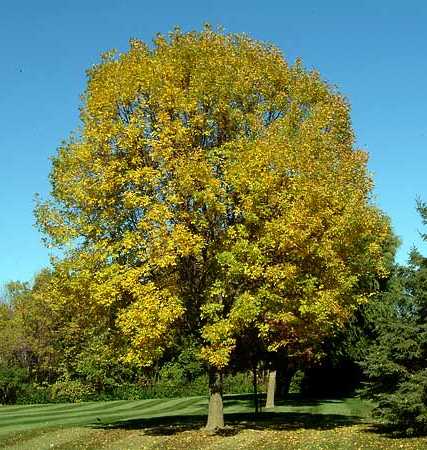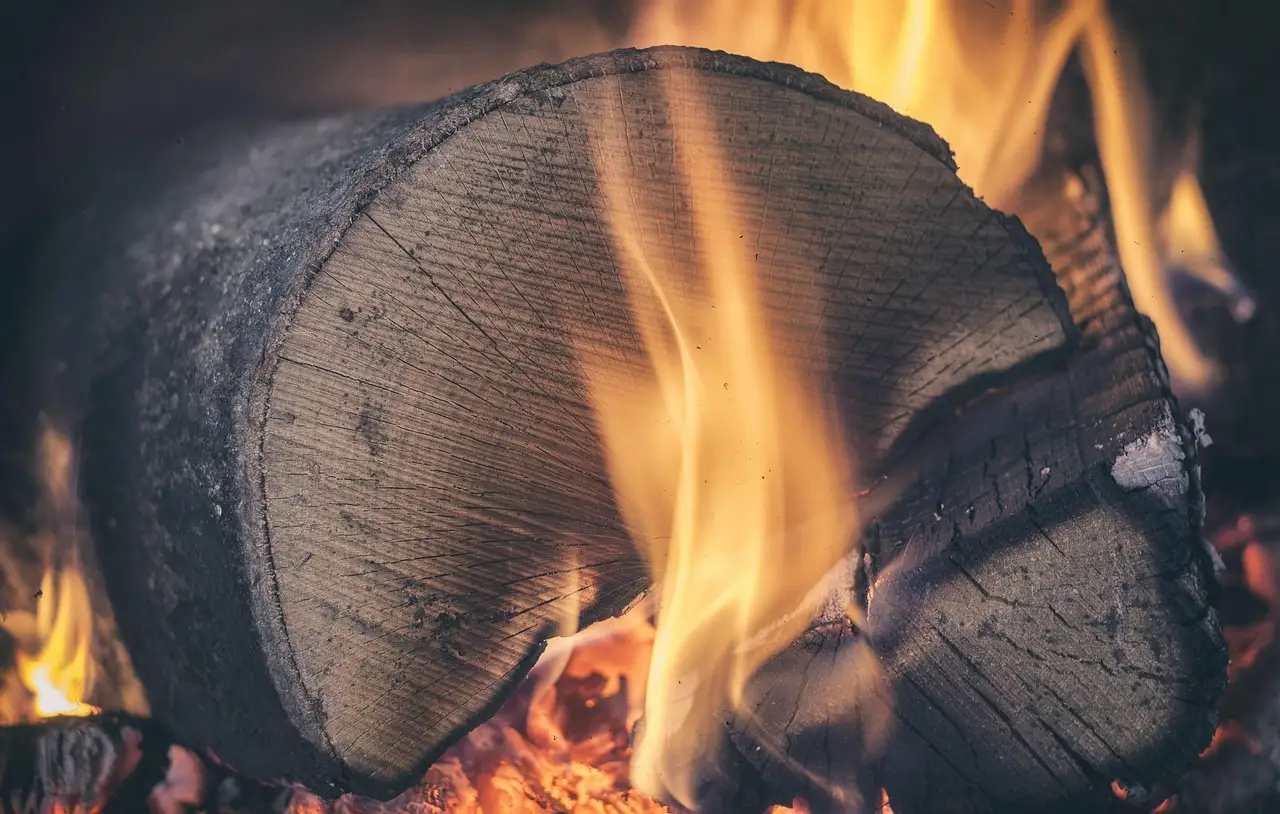
3 Best Uses for Ash Wood (2026): research shows
Ash is often a top choice for tool handles and is also commonly used for furniture and flooring, because it takes impact well but is only moderately stable in wider boards. Pick the wrong species and you get handles that split, furniture that moves, or floors that dent and show wear quickly. This guide ranks each use by fit, then points you to better species when ash is the wrong call.
This guide is part of our Ash lumber overview: workability, grain, and value series.
Quick comparison
| Product | Badge | Best for | Price | ||
|---|---|---|---|---|---|
 |
Walker Edison Mid-Century Modern Solid Wood Tapered-LegWalker Edison | Our pick | 59-inch mid-century solid wood dining table | $299.99
Price as of 12 Oct 2026
|
View |
 |
The Hardwood Edge Ash Hardwood Planks – 8-Pack Ash Wood forTHE HARDWOOD EDGE | Budget pick | 1/8-inch ash planks for crafts | $33.07
Price as of 12 Oct 2026
|
View |
 |
Sledge Hammer Handle Replacement for 2–4 lb Made ofCuitáxi | Also great | 2-inch sledge hammer handle replacement set | $19.95
Price as of 12 Oct 2026
|
View |
 |
Exotic Wood Zone Pack of 2, Wood Turning Bowl Blanks | WoodExotic Wood Zone | Upgrade pick | 6-inch kiln-dried white ash bowl blanks | $25.98
Price as of 12 Oct 2026
|
View |
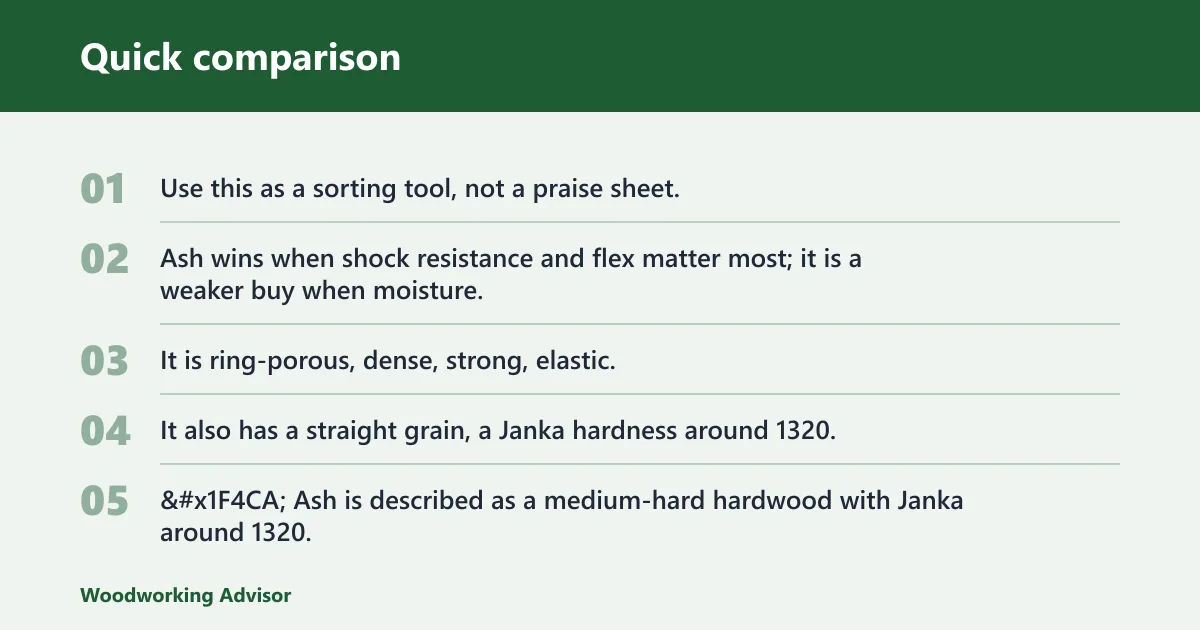
Use this as a sorting tool, not a praise sheet. Ash wins when shock resistance and flex matter most; it is a weaker buy when moisture, outdoor exposure, or scarce matching stock become the main problem.
Ash is a true hardwood. It is ring-porous, dense, strong, elastic, and well suited to parts that need controlled flex. It also has a straight grain, a Janka hardness around 1320, and a strong record for taking stain and finish well.
📊 Ash is described as a medium-hard hardwood with Janka around 1320. Source: Ash Wood Example: Proven Best Use Cases.
How we chose
The ranking below weighs seven things: shock resistance, appearance, steam-bending, wear, outdoor risk, finishing effort, and sourcing difficulty. That mix matters because ash can be an excellent fit in one project and a mediocre buy in another.
For tool handles, shock absorption matters most. For furniture, grain and finishing come first. For flooring, wear and stock consistency matter more than bending or impact springback.
Supply also matters. Emerald ash borer has killed tens of millions of ash trees in North America, and that has made availability and pricing less stable than many buyers expect.
Walker Edison solid wood dining table: best for furniture
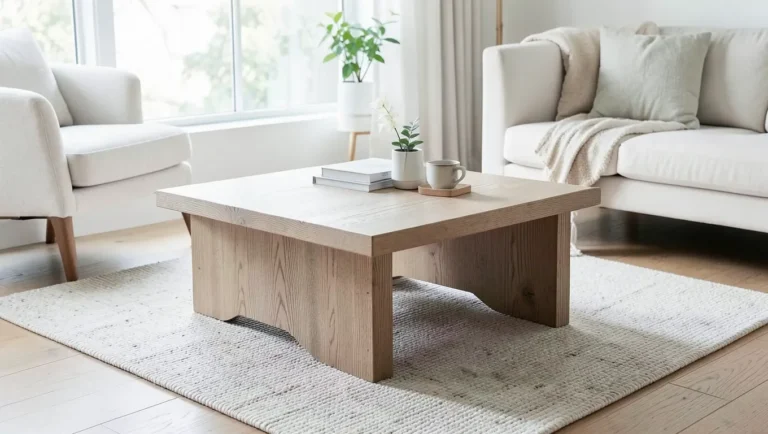
This fits a buyer who wants a compact ash dining table with clean lines and a straightforward furniture use. The English ash look works well when you want a pale, straight-grained top that takes finish neatly and fits a small dining area.
What stands out is the mix of solid-wood feel and a size that works for four to six people. Ash is a sensible furniture species because it machines cleanly, stains well, and can handle everyday use without the premium price of many more decorative hardwoods.
The drawback is the same one that limits many ash furniture projects: it is not a moisture-proof wood, and the open grain will not suit every buyer who wants a glass-smooth, closed-pore look. Keep it indoors and expect normal finish maintenance.
The Hardwood Edge ash hardwood planks: best for craft stock
This is for craft work, small jigs, models, inlays, and test pieces where you want the look of ash in a thin, easy-to-handle format. The 1/8-inch stock also makes sense when you want to see grain behavior before committing to a larger project.
What stands out is the kiln-dried, precision-sliced format and the bold straight grain. Ash’s even texture and good stain response make it useful for decorative panels, small parts, and laser or hand-cut projects where appearance matters more than heavy structural duty.
The drawback is thickness. Thin planks are not the right purchase for handles, flooring, or any part that needs real impact resistance. They are also less forgiving if you need a wide, flat panel with structural stiffness.
Cuitáxi sledge hammer handle replacement: best for tool handles
This is for impact-heavy hand tools, especially when a replacement handle needs to absorb repeated shock instead of sending it into your grip. Ash is the traditional pick for tool handles and baseball bats for exactly that reason.
What stands out is fit for abuse. Ash’s spring and shock resistance matter more here than a highly figured appearance, and its straight grain helps reduce split risk when the handle is selected and installed correctly.
The drawback is that handle stock lives or dies by grain quality and moisture control. A poorly oriented or overly dry replacement can fail early, so the material matters as much as the metal wedge and the fit at the eye.
Exotic Wood Zone white ash bowl blanks: best for turning and bent parts
This suits turning blanks, curved parts, and small components where white ash’s behavior matters more than its species name on the label. White ash is the North American benchmark, and it is widely used for furniture, flooring, tool handles, and millwork.
What stands out is the kiln-dried stock and the clear identification as Fraxinus americana. White ash bends well with steam, so it fits curved furniture parts better than many hard, brittle woods.
The drawback is that bowl blanks are not a shortcut to outdoor durability. Ash is not rot-resistant, so any turned part or curved component used outdoors still needs serious protection or a better species choice.
Is ash wood better for furniture, flooring, or tool handles?
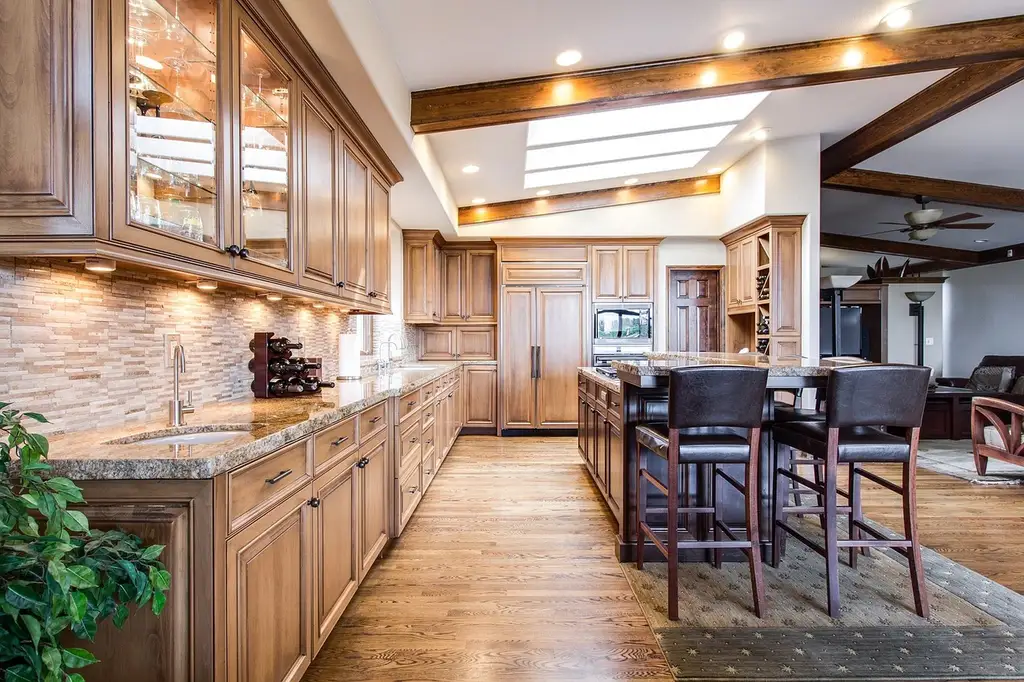
Tool handles are the best use, furniture is second, and flooring is third. Ash is a true hardwood with shock resistance, flex, and a straight grain, so it performs best where impact absorption matters most and where a pale, easy-to-finish hardwood makes sense.
For furniture, ash is a safe broad buy. For flooring, it works well in light, durable interiors, but it does not beat oak on overall flooring reputation, and it is not naturally rot-resistant for damp or exposed locations.
Why tool handles come first
Tool handles need shock resistance more than surface glamour. Ash has long been the traditional pick for axe handles, sledge handles, and baseball bats because it bends slightly under load instead of feeling dead and brittle. That springback is the main advantage.
Picture a 34-inch sledge handle with a loose grain line near the eye. If the wood is the wrong species or cut poorly, the first hard strike can open a split. Ash’s value is that it handles impact better than many harder but stiffer woods.
Why furniture is the safest broad buy
Ash is one of the easier hardwoods to live with in furniture. It planes, machines, stains, and finishes well, and the straight grain gives clean lines in tables, chairs, and casework. It is a strong choice when you want a pale, plain hardwood rather than a dramatic figure.
Say your project is a 60-inch dining table with long aprons and a light natural finish. Ash fits that job well. If you want a darker, more formal look with less visible grain movement, oak or maple may be the better buy.
Why flooring comes third
Ash flooring is useful when you want a light-toned, straight-grained floor with good hardness and good finishability. The Janka hardness is about 1320, which puts it in a respectable flooring range for many homes.
It still trails oak as the default flooring choice because oak is more familiar to buyers and often easier to source in matched runs. Ash also brings more sourcing uncertainty in North America because emerald ash borer has reduced supply and made pricing less predictable.
How does ash compare with oak for flooring?
Ash is a solid flooring choice, but oak remains the safer default for most buyers. Ash gives you a pale, straight-grained floor that finishes well and feels lively under clear coats, while oak usually offers steadier availability and a longer track record in flooring supply chains.
Choose ash if you want a lighter look and can source consistent boards. Choose oak if you want easier replacement matching, broader grade availability, and less concern about supply swings tied to emerald ash borer.
Janka hardness and dent resistance
Ash’s Janka hardness is about 1320, which supports everyday interior flooring use. That number helps, but it does not tell the whole story. Floor performance also depends on board thickness, finish, room traffic, and whether the boards stay dry.
When oak is the better buy
Oak is the better buy when you want a floor that is easier to source in quantity and easier to match later. If the room sees heavy wear, muddy shoes, or long-term repairs, the practical advantage often goes to oak rather than ash.
Is ash strong enough for tool handles and baseball bats?
Yes. Ash is strong enough for tool handles and baseball bats, and those are classic uses for a reason. Its value is not raw hardness alone; it is the mix of density, flex, and shock resistance that keeps impact from feeling harsh or brittle.
That said, the grain must be straight and the stock must be sound. A handle blank with runout, knots, or poor drying can fail far sooner than a clean, properly oriented piece.
Where ash beats harder but stiffer woods
Some hardwoods are harder than ash but worse at absorbing impact. That matters for striking tools. A handle that is too rigid can pass shock into your hand and crack at the eye or at a knot line.
For bat stock, the same logic applies. A species that looks tougher on paper can still perform worse if it feels dead and breaks with less warning under repeated shock.
When hickory is the better answer
Hickory is often the better buy when maximum shock resistance is the goal and the extra weight is acceptable. If you need a handle for heavy striking and want the most traditional alternative to ash, hickory deserves a look.
Does ash work well for steam-bent furniture?
Yes. Ash works well for steam-bent furniture because it bends readily and holds a curve better than many equally common hardwoods. That is why it shows up in bentwood chairs, curved rails, and some boat-frame work.
For curved components, straight grain helps, and ash has that going for it. European ash is also used for furniture, flooring, and bentwood components, and it often carries slightly more olive or golden tones than white ash.
Where steam bending makes ash shine
Ash is a practical choice when you need gentle curves in chair parts, stretchers, or rails. It bends well under steam and can take on elegant forms without demanding exotic stock or overly expensive species.
Suppose you need a curved crest rail for a chair back. Ash gives you a better path than many dense decorative hardwoods, because the material is more willing to move before it fails.
When another species makes more sense
If the part is heavily carved, highly figured, or exposed to weather, ash may not be the best buy. Bent parts that live outdoors need rot resistance first, and ash does not have that strength.
Is ash a good choice for outdoor projects?
Ash is a poor choice for exposed outdoor work unless you can protect it well. It is not rot-resistant, so rain, wet soil contact, and trapped moisture can shorten its life quickly. Sealer helps, but it does not turn ash into a weatherproof wood.
For covered outdoor pieces, ash can work if you finish all faces and keep up maintenance. For open decks, garden furniture, or anything that sits in standing moisture, pick a more durable species instead.
Outdoor failure modes to watch
The common problems are rot, finish breakdown, and joint swelling. Ash can look fine at first and still fail early if water gets into end grain, screw holes, or hidden joints. That is why outdoor joinery needs more than a topcoat.
A common first-timer mistake is using ash for a porch bench, then only finishing the top surfaces. After one wet season, the underside and end grain absorb moisture first, and movement starts at the joints.
Better species for exposed weather
For exposed outdoor use, look at naturally durable species rather than ash. If you need a pale hardwood look, you may still need to accept more maintenance or switch to a different finish schedule entirely.
What types of ash wood are commonly sold?
White ash, European ash, black ash, and olive ash are the names buyers see most often. They are not interchangeable. White ash and European ash are the most common woodworking choices; black ash is a different case; olive ash is a figure, not a species.
White ash is the North American benchmark and is commonly sold for furniture, flooring, tool handles, and architectural millwork. European ash is similar, often a little more olive or golden, and is used for furniture, flooring, and bentwood components.
Black ash is the odd one out
Black ash is valued for basket weaving because its growth rings separate when pounded. That trait makes it interesting for basket stock, but it makes black ash a poor stand-in for standard furniture or flooring lumber.
Olive ash is a figure, not a species
Olive ash is not a separate species. It refers to dark brown to black streaking in the wood, usually used for decorative veneers and turning blanks. Because it is visually unusual, it can command a significant premium.
Why is ash wood hard to find at lumber yards?
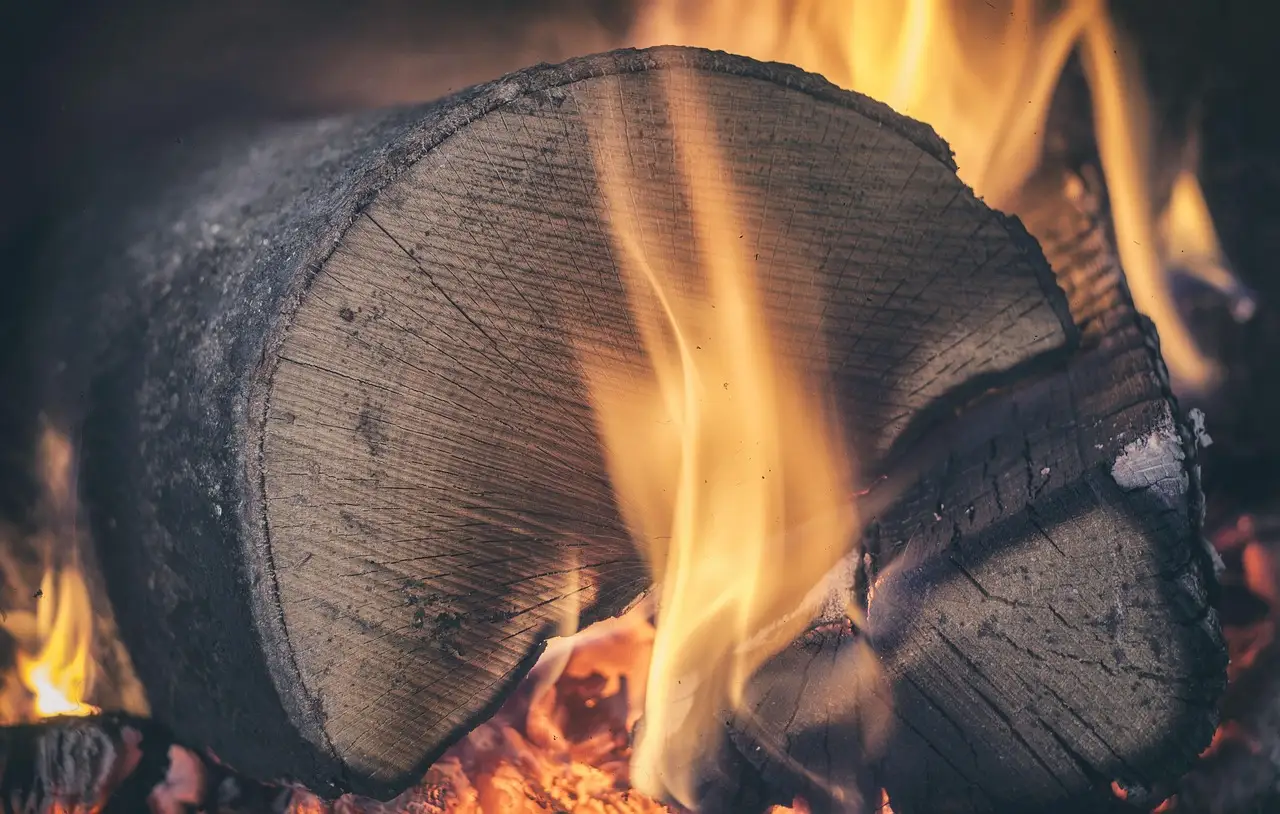
Ash is harder to find because supply has been disrupted by emerald ash borer, which has killed tens of millions of ash trees in North America. That damage does not just reduce volume; it also makes grading, matching, and consistent replenishment harder for yards.
The practical result is volatility. One yard may have decent white ash today and little next month. If you need a furniture set or flooring run with matched color, buy all stock at once and sort boards before milling.
How to source ash by project type
- For tool handles, look for straight grain first and appearance second.
- For furniture, buy extra boards so you can match color and grain.
- For flooring, confirm that the lot is consistent in shade and width.
- For bent parts, ask for stock with minimal runout and no hidden stress.
Does ash wood take stain and finish well?
Yes. Ash stains well and takes finish well, which is one reason it works well for furniture and visible millwork. Its straight grain gives a clear read under transparent finishes, and its pale color accepts many stain tones.
The open grain can also be a drawback. If you want a very smooth, uniform surface, the pores may telegraph unless you fill or choose a finish schedule that hides texture. That is not a flaw so much as a design choice.
Paint-grade versus clear-finished furniture
Ash can work in either direction. Clear finish lets the grain show. Paint-grade work hides the grain more completely, but it also throws away one of ash’s strongest visual qualities, which is its clean, even line.
Why open grain can help or hurt
Open grain helps if you want texture and stain contrast. It hurts if you want a polished, closed-pore look. That is why ash is a better match for honest, linear furniture than for ultra-smooth formal surfaces.
Which one should you buy
Buy ash for tool handles if impact matters most. Buy ash for furniture if you want clean grain, easy finishing, and a pale hardwood look. Buy ash for flooring if you want a light interior floor and can source consistent stock. Skip ash for exposed outdoor work unless you can protect it well.
For a budget-minded furniture build, standard white ash is usually the practical target. For curved parts, European ash is a strong option. For decorative turning stock, olive ash can be worth the premium. For basket work, black ash is the right species, not a substitute.
If you are choosing between ash and oak for flooring, oak is the safer default. If you are choosing between ash and hickory for a handle, hickory may win on pure shock duty. If you are choosing ash for outdoor use, the answer is usually “only with strong protection.”
Sponsored / affiliate links. As an Amazon Associate I earn from qualifying purchases. I may earn additional commission from eligible campaigns.
 The Hardwood Edge Mahogany Hardwood Planks - 2-Pack Mahogany Wood for Unfinished Wood Crafts - 1/8’’ (3mm) 100% Pure Hardwood - Laser Engraving Blanks - Exotic Mahogany Planks for Crafts and Gifts
 The Hardwood Edge Mahogany Hardwood Planks - 4-Pack Mahogany Wood for Unfinished Wood Crafts - 1/8’’ (3mm) 100% Pure Hardwood - Laser Engraving Blanks - Exotic Mahogany Planks for Crafts and Gifts