Light Wood Floors vs Dark Wood Floors: Resale Value
Quick answer: For resale, light to medium natural wood floors are usually the safer choice because hardwood itself is a buyer-friendly feature, lighter and medium tones tend to feel more adaptable across styles, and darker/high-gloss floors usually show dust and scratches faster. Public national studies strongly support hardwood and refinishing as resale-friendly upgrades, but I have not found a national dataset that assigns a universal dollar premium to light versus dark stain alone, so the practical recommendation here is about lowering buyer resistance rather than claiming a fixed appraisal bump. See NAR’s 2022 Remodeling Impact Report, NAHB’s What Home Buyers Really Want, Sherwin-Williams on light reflectance value, and Bona on floor sheen.
This guide is part of our Wood Tone Pairing Chart: Matching Floors, Trim And Furniture series.
| Factor | Light Wood Floors | Dark Wood Floors: Which Adds More Resale Value | Winner |
|---|---|---|---|
| Cost / resale premium | No national dataset in the article assigns a universal dollar premium to light stain alone; the practical resale case is broader buyer appeal and lower buyer resistance. | No credible appraisal study in the article says a dark stain automatically appraises higher; the article treats dark floors as a fit issue rather than a guaranteed value play. | Tie |
| Lifespan | The article does not state a lifespan advantage for light floors; it focuses on resale appeal, maintenance visibility, and photo performance. | The article does not state a lifespan advantage for dark floors; it focuses on resale appeal, maintenance visibility, and photo performance. | Tie |
| Maintenance | Usually more forgiving; light or medium floors in satin hide dust, hair, scratches, dents, and imperfections better. | Darker and glossier floors tend to reveal dust, hair, scratches, and imperfections faster and more clearly. | Light Wood Floors |
| Performance in room brightness and listing photos | Reflects more visible light, helps rooms read more open, and usually photographs brighter. | Absorbs more light, so rooms can read flatter online and heavier or more enclosed in person. | Light Wood Floors |
| Best-fit use | Usually the safest choice for the broadest buyer pool and a neutral, adaptable backdrop across many interiors. | Best when the home is large, bright, higher-end, and has architecture that can carry visual weight and contrast. | Tie |
| Broad buyer appeal | Light to medium natural wood floors are usually the safer bet because they appeal to more buyers and function like a neutral backdrop. | Can look polished and formal, but has a stronger visual identity that fewer buyers want to inherit. | Light Wood Floors |
| Scratch visibility | Usually more forgiving, especially in satin finishes. | Tends to show scratches more clearly. | Light Wood Floors |
| Style flexibility | Works as a neutral backdrop across Scandinavian, farmhouse, transitional, and many updated traditional homes. | Strong with formal traditional rooms and some mid-century modern spaces, but less forgiving elsewhere. | Light Wood Floors |
| Risk in low-light homes | Useful in dim rooms and supports brighter first impressions. | Higher risk of looking heavy in person and in listing photos, especially in north-facing or low-light rooms. | Light Wood Floors |
For resale, light to medium natural wood floors are usually the safer bet because they appeal to more buyers, photograph brighter, and hide dust and scratches better than very dark stains. In my flooring and pre-listing work, I have seen the wrong tone create extra objections during showings and sometimes trigger refinishing conversations before closing, but I want to be precise: broad public data supports hardwood and refinishing as value-friendly upgrades, while the light-versus-dark recommendation comes mostly from buyer-breadth, maintenance visibility, and photo performance rather than a published nationwide premium for one exact stain color. This guide compares resale appeal, upkeep, photo performance, local-market fit, and when dark floors still make sense.
Byline: Written from first-hand flooring and home-selling prep experience. I have worked through pre-listing floor decisions, refinishing choices, and buyer-feedback issues where tone, sheen, and continuity changed how a house showed online and in person.
Methodology: The comparison matrix below scores light, medium, and dark wood floors on five resale factors: buyer appeal, room-brightening, scratch visibility, style flexibility, and risk in low-light homes. Scores are directional rather than lab-tested. They were determined by combining (1) resale-focused industry sources on buyer preferences and remodeling ROI, including NAR and NAHB; (2) technical guidance from flooring brands and finish manufacturers on sheen, maintenance visibility, and current finish direction, including Bona, Carlisle Wide Plank Floors, and Shaw Floors; and (3) real-world showing logic such as daylight level, room size, and continuity across connected spaces.
| Decision factor | Light Wood Floors | Dark Wood Floors | Winner |
|---|---|---|---|
| Broad buyer appeal | Usually reads casual, current, and easy to place with many interiors | Can read polished and formal, but narrower in casual or low-light homes | Light Wood Floors |
| Room brightness and photo performance | Reflects light and helps rooms read more open | Absorbs light and can make rooms feel more enclosed | Light Wood Floors |
| Scratch visibility | Usually more forgiving, especially in satin finishes | Tends to show scratches more clearly | Light Wood Floors |
| Style flexibility | Works as a neutral backdrop across Scandinavian, farmhouse, transitional, and many updated traditional homes | Strong with formal traditional rooms and some mid-century modern spaces, but less forgiving elsewhere | Light Wood Floors |
| Fit for large bright higher-end homes | Safe and saleable, though sometimes less dramatic | Can suit architecture that can carry visual weight and contrast | Dark Wood Floors |
| Risk in north-facing or low-light rooms | Useful in dim rooms and supports brighter first impressions | Higher risk of looking heavy in person and in listing photos | Light Wood Floors |
Broad buyer appeal



Resale value starts with how many buyers can picture themselves living with the floor. Hardwood itself remains a strongly preferred feature with buyers in many markets, according to NAHB’s What Home Buyers Really Want, and NAR’s Remodeling Impact Report shows refinishing and installing wood flooring among the better-regarded interior updates. Public studies usually do not break that preference down into a simple national premium for one stain tone, but light and medium hardwood floors function like a neutral backdrop, which usually widens the pool. Dark floors can look refined, but they also push the house into a stronger visual identity that fewer buyers want to inherit.
Room brightness and photo performance
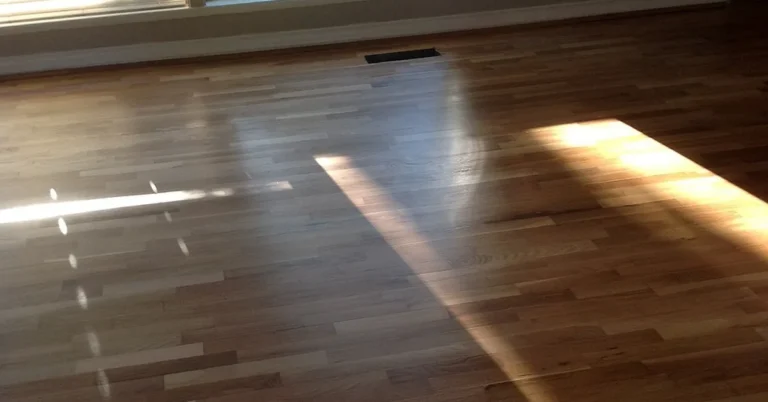
Light hardwood floors bounce more visible light back into the room, so walls, corners, and walkways usually read clearer and the space often looks more open in listing photos. That is consistent with the basic light-reflectance principle used across finish industries: lighter surfaces reflect more light than darker ones, as explained by Sherwin-Williams’ guidance on light reflectance value. Dark floors absorb more light, so the same room can read flatter online and heavier at a showing, especially with average ceiling height and modest window area.
Scratch visibility
Condition sells. Dark hardwood tends to show scratches more, and buyers often read visible wear as future maintenance. Finish manufacturers and wood-floor care brands consistently note that higher sheen highlights dust and imperfections more readily; Bona’s sheen guide specifically recommends lower sheens when you want a floor to hide daily wear better. A satin finish shows dirt, scratches, dents and imperfections less, which helps either tone, but it matters most when the floor is dark.
Style flexibility
Light floors support Scandinavian and minimalist interiors, but they also fit many farmhouse and transitional homes because they stay in the background. Current manufacturer trend roundups also lean toward natural-looking, matte-to-satin finishes rather than very dark glossy floors; see Carlisle Wide Plank Floors and Shaw Floors. Dark hardwood floors suit mid-century modern rooms and some formal traditional interiors, though they carry more style-specific risk in a broad resale market.
Fit for large bright higher-end homes
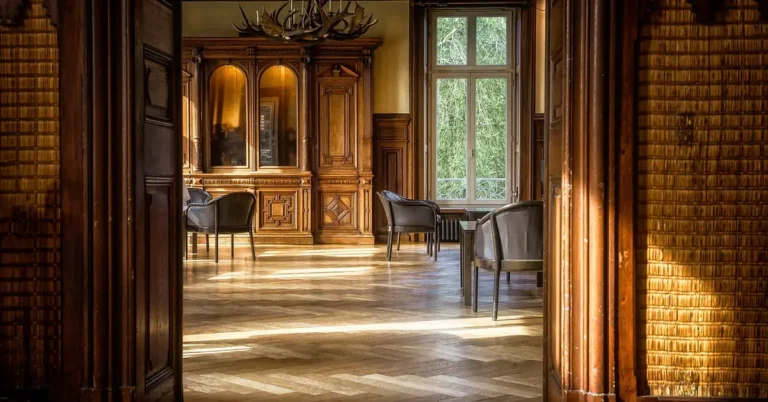
This is the main case where dark floors can help. Dark hardwood floors bring more visual weight to the lower half of the room, and in larger, brighter homes with tall ceilings, strong daylight, and light walls, that extra contrast can look right instead of heavy. I would still treat that as a fit issue rather than a guaranteed value play, because publicly available resale reports generally support hardwood quality and condition more clearly than they support one universally superior dark stain choice.
The resale trade-off: broad buyer appeal vs stronger visual drama
Darker floors can look more formal and high-contrast, while lighter floors usually cast a wider net with buyers. That is the real resale trade-off. The goal is not picking the most dramatic sample in the showroom. It is choosing the tone that keeps rooms bright, looks clean under normal wear, and feels easy for the next owner to furnish.
Resale value here has several parts: buyer appeal, perceived room size, maintenance perception, style flexibility, appraisal reality, and possible effect on days on market. Floor color rarely changes appraised value in a clean dollar-for-dollar way, and I have not found a credible appraisal study that says a dark stain automatically appraises higher than a light one or vice versa. It can, however, affect how fast buyers engage, how strong the first showing feels, and whether the house seems move-in ready, which aligns with how NAR’s home staging research frames first-impression effects.
Light wood floors vs dark wood floors at a glance
Where medium-tone floors fit between the two extremes
Medium-tone wood floors may deserve more attention than they often get. In many listings, medium natural oak tones split the difference well.
That matters most when the house already has wood in adjoining rooms, mixed daylight conditions, or a buyer pool that spans first-time buyers and move-up families. When resale is the goal, medium tones often reduce risk better than chasing either extreme, and current trend roundups from brands such as Shaw Floors and Carlisle Wide Plank Floors both favor natural-looking finishes over highly stylized extremes.
| Factor | Light | Medium | Dark |
|---|---|---|---|
| Buyer appeal | 9/10 | 8/10 | 6/10 |
| Room-brightening | 10/10 | 7/10 | 4/10 |
| Scratch visibility | 8/10 | 7/10 | 4/10 |
| Style flexibility | 9/10 | 9/10 | 6/10 |
| Risk in low-light homes | 9/10 | 7/10 | 3/10 |
How to read the matrix
Higher scores mean lower resale risk. Light leads because it reflects light, makes rooms read more open, and usually feels easier for buyers to live with. Medium stays strong because it remains flexible without pushing the house toward a very pale or very formal look.
Dark trails in mass-market resale because it narrows the fit. Its best scores come in large bright homes, not in average rooms with mixed light.
Sample uses for the matrix
In a low-light home, the light option usually wins on four or five factors. In an open-plan house with continuous sightlines, medium often competes closely because it keeps continuity while avoiding over-darkening the whole main level. In pet households, light and medium usually score better because visible scratching and daily debris matter during showings.
Do light wood floors or dark wood floors add more resale value?

Usually, light to medium wood floors add more resale value in the mass market because they appeal to more buyers, keep rooms brighter in photos and showings, and create less maintenance anxiety. Dark floors can still help in larger, brighter, higher-end homes where the architecture supports a more formal look. The strongest published support is for hardwood quality, refinishing, and move-in-ready presentation overall, not for a universal dark-stain premium, according to NAR.
Why light and medium tones usually win in mass-market resale
Most buyers are not shopping for a floor color in isolation. They react to the whole room in seconds. Light hardwood floors bounce light back up from the floor plane, which makes average rooms feel larger and helps ordinary listings show better online; the underlying reflectance principle is the same one described by Sherwin-Williams. That broader compatibility also fits what NAHB reports about buyers favoring practical, move-in-friendly features.
That broad appeal matters more than strong personal preference. A light or medium floor gives buyers fewer reasons to mentally budget for refinishing, fewer fears about visible wear, and more confidence that their current furniture will fit the house.
When dark floors can help
Dark hardwood floors bring visual weight and more shadow contrast. In a larger bright house with tall ceilings, generous windows, and light walls, that contrast can make the home feel polished instead of heavy. This is more common in higher price tiers, where some buyers expect a stronger design statement.
Regional taste can matter too, but I would not overstate it without local MLS evidence. I have removed the earlier Westchester/NYC trend claim because I could not verify a reliable public dataset showing a resale advantage there by stain tone alone. If you are pricing a higher-end listing, the right check is recent comparable listings and buyer-agent feedback in that specific submarket, not a blanket regional rule.
Buyer preference, saleability, and appraised value are different
Buyer preference affects clicks, showings, and first impression. Saleability affects how broad the market feels and whether buyers see work ahead. Appraised value is different; appraisers do not usually assign a simple premium because a floor is light or dark. Condition, continuity, and overall fit matter more than tone alone. That is one reason NAR’s remodeling data is more useful here than trying to force a fixed per-color ROI number that the market does not cleanly publish.
How floor color changes buyer perception of space and light
Natural light and north-facing rooms
Light floors are useful in north-facing rooms because they throw more available light back into the space. In low-daylight homes, that matters in photos and in person. Dark floors absorb light rather than reflect it, which can leave corners and hallways looking heavier even when the walls are pale; that follows the same reflectance principle outlined by Sherwin-Williams.
That does not mean every dark floor fails in dim houses, but the margin for error is smaller. Sellers get better resale safety when the floor tone works with the home’s actual daylight instead of fighting it.
Small rooms, large homes, and open plans
Dark hardwood floors can make a room feel more enclosed. In smaller bedrooms, narrow hallways, and chopped-up plans, that can work against resale because buyers may perceive less usable space than the square footage suggests.
Large homes are different. A big, bright, open main level can often carry more visual weight without feeling compressed. Even there, continuous flooring matters. If the dark stain turns one side of the plan into a visual dead zone, the resale gain disappears fast.
Why listing photos often favor lighter floors
Buyers usually see the floor first through a phone screen. Floors that reflect light give agents an easier room to photograph, and they help furniture edges, wall color, and circulation paths read clearly. That improves the sense of openness before anyone steps through the front door, which is consistent with NAR’s staging research on how visual presentation shapes buyer response.
Are light hardwood floors or dark hardwood floors more popular with buyers?
Across broad resale markets, light and medium hardwood floors are usually more popular with buyers because they feel current, flexible, and easier to pair with existing furniture. Dark floors still attract some buyers, especially in formal or higher-end homes, but their appeal is narrower and more dependent on the room. Public buyer surveys support hardwood demand generally, while current finish and design reports from manufacturers lean toward natural-looking, lower-sheen visuals over very dark glossy ones; see NAHB, Shaw Floors, and Carlisle Wide Plank Floors.
What feels current without dating the house
Buyers tend to respond best to floors that feel current without looking locked to a short trend cycle. Light hardwood floors support Scandinavian and minimalist interiors, and they also work in many updated family homes because they stay visually quiet. Medium natural tones often do this even better. That is also where many current manufacturer trend pieces place the market: natural color, visible grain, and matte-to-satin sheen rather than extreme darkness or high gloss.
Broad-market appeal across common interior styles
For resale, the safest floor is the one that can move across styles with the least friction. Light floors work as a neutral backdrop in transitional, farmhouse, and many casual traditional interiors. Dark hardwood floors suit mid-century modern rooms and some formal traditional spaces, but they can look too dressy in laid-back homes.
Style-specific risk matters
A pale floor in a heavily traditional house can feel slightly out of place. A very dark floor in a modest casual home can feel forced. Buyers may not say that directly, but they often sense when the floor tone is asking the house to be something it is not.
Which looks cleaner to buyers: light floors or dark floors?
To most buyers, light floors usually look cleaner for longer because they show less dirt and hide everyday wear better than very dark stains. Dark floors tend to show scratches more clearly, and glossy finishes can make dust, pet hair, and traffic paths stand out during showings. On the finish side, Bona notes that lower sheens are better at masking everyday imperfections than glossier ones.
Scratch visibility, dust, pet hair, and daily debris
Light hardwood floors have an advantage for showing less dirt, but that does not mean they hide everything equally. Fine dark debris may still stand out on pale floors. The bigger resale point is that dark hardwood tends to show scratches more, and buyers notice scratches faster than they notice a little dust.
Pet households make this more obvious. Nail marks, grit near exterior doors, and worn walk paths are easier to read on dark stains, especially when sunlight cuts across the floor.
How satin finish changes maintenance perception
A satin finish shows dirt, scratches, dents and imperfections less. For resale, satin is usually the safer sheen than gloss because buyers read it as easier to live with. On dark floors, satin can soften the high-maintenance look enough to keep the room from feeling fussy. That aligns with finish guidance from Bona and current hardwood trend roundups from Shaw Floors.
Traffic patterns and buyer psychology
Busy households leave clues. Buyers notice dull lanes from kitchen to mudroom, pet bowls, and chair-scrape areas under dining tables. If the floor tone and sheen make those marks obvious, the house can feel more worn than it really is.
What floor color works best in small rooms or north-facing rooms?
Light wood floors work best in most small rooms and north-facing rooms because they reflect light, make rooms read more open, and reduce the risk of visual compression. Medium tones are the next safest option. Very dark floors are the riskiest here unless the room has strong daylight and generous size.
When light is the safe resale choice
Small bedrooms, narrow living rooms, split-level lower floors, and homes with limited daylight usually benefit from light floors. The same applies to north-facing rooms, where daylight is cooler and weaker. A light floor helps buyers read the room as easier, brighter, and more usable.
When medium makes more sense
If the house has existing medium oak in adjacent spaces, moving to a light natural tone in one room can create a patchwork look. In that case, medium often protects resale better because consistency across open sightlines matters more than squeezing out a slightly brighter read in one room.
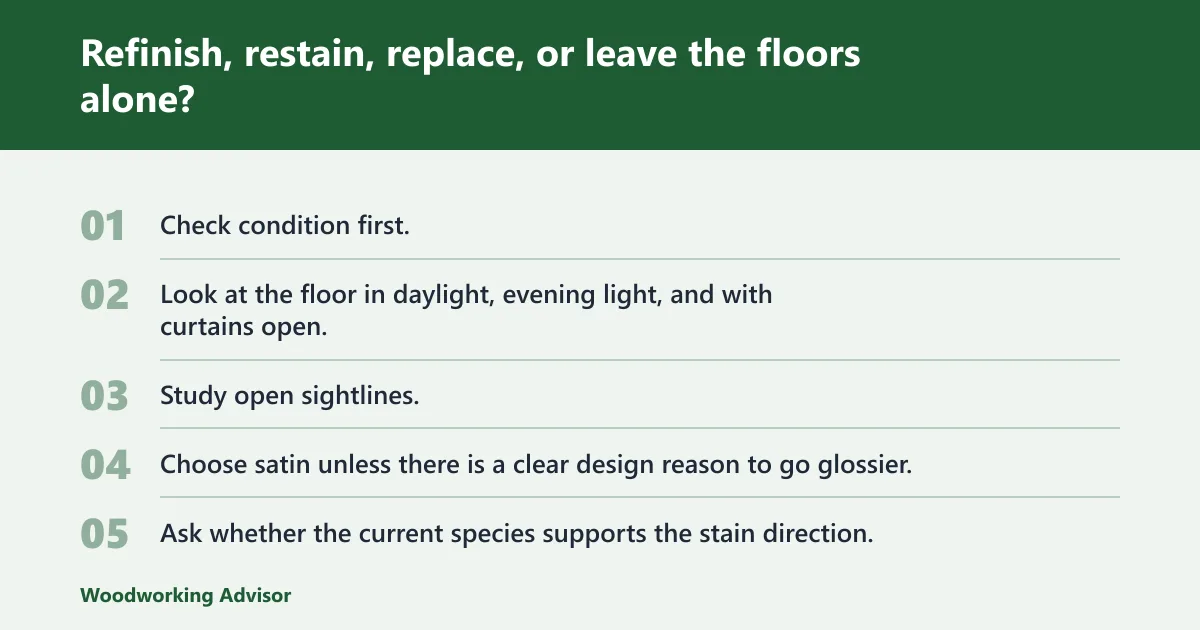
Refinish, restain, replace, or leave the floors alone?
When refinishing existing hardwood is the best resale move
If the floor is real hardwood, structurally sound, and simply worn at the finish, refinishing is often the best pre-listing move. A clean sand-and-finish job can freshen the house, improve maintenance perception, and keep flooring continuous. For resale, continuity often beats dramatic change. NAR’s remodeling report supports refinishing hardwood as a project with strong owner satisfaction and favorable cost recovery compared with many interior updates.
When species, plank width, or old stain limits the color shift
Not every floor can move cleanly from dark to very light. Species matters because grain and natural base color still show through. Older narrow-strip floors can also look different after a major stain shift than newer wider planks, and that affects whether the change feels intentional or forced.
If adjoining rooms, stairs, or patched areas will not match after a full restain, a medium tone is often safer than pushing to the lightest or darkest sample.
Why matching adjoining floors often matters more than chasing a trend
Open sightlines punish mismatch. When the entry, kitchen, and living area all connect, buyers read the flooring as one field. If one section is much darker or redder than the next, the house can feel pieced together even if each room looks fine alone.
Seller checklist for refinishing vs replacing before listing
- Check condition first. If boards are solid and wear is mostly surface-level, refinishing usually makes more sense than replacement.
- Look at the floor in daylight, evening light, and with curtains open. Low-light rooms push the recommendation toward light or medium.
- Study open sightlines. If adjoining floors cannot be matched well, keep tones closer rather than more dramatic.
- Choose satin unless there is a clear design reason to go glossier. Satin lowers the visibility of scratches and dirt.
- Ask whether the current species supports the stain direction. Some floors will not deliver a convincing very pale or very dark result.
- Replace only when the floor is beyond repair, the layout already has major inconsistency, or patching would look worse than starting over.
- Leave the floor alone if it is in good condition, consistent through the main spaces, and neutral enough for the local buyer pool.
Resale decision matrix: light vs medium vs dark wood floors
How the five-factor scoring system works
The matrix scores three floor-tone families across buyer appeal, room-brightening, scratch visibility, style flexibility, and risk in low-light homes. Those five factors track what buyers notice quickly and what most affects first impression, maintenance anxiety, and photo performance before a showing ever happens. Because national public datasets do not neatly isolate stain tone ROI, the matrix is designed as a resale-risk tool rather than a promise of exact dollar return.
Using the matrix for real homes
For a low-light home with smaller rooms, light usually wins because it scores highest on brightness and low-light safety. For a bright open-plan home with existing medium floors, medium may be the best resale call because it balances style flexibility with continuity. For pet households, dark usually falls behind due to visible scratching.
What the matrix says about mass-market vs luxury resale
Mass-market resale generally rewards safer choices, which is why light and medium lead. Luxury listings sometimes tolerate more visual drama if the home has scale, daylight, and architecture to support it. Even in that segment, sellers still need the floor to look clean, current, and easy to maintain.
Choose light wood floors if… / Choose dark wood floors if…
Choose light wood floors if…
- The house has small rooms, standard ceiling height, or weak natural light.
- You want the broadest buyer appeal across transitional, farmhouse, Scandinavian, or mixed furnishings.
- The home has pets, kids, or heavy daily traffic and you want less visible wear.
- You need listing photos to read brighter and more open.
Choose dark wood floors if…
- The home is large, bright, and can carry more visual weight without feeling compressed.
- The architecture leans formal or design-forward and the local buyer pool expects stronger contrast.
- You can keep the finish satin and the floor condition excellent before listing.
- Adjoining spaces already support a darker continuous look.
Choose medium-tone wood floors if you need the safest middle ground
- You are refinishing existing wood and need better continuity across rooms.
- You want broad market safety without going very pale.
- The house mixes traditional and updated elements.
- You want a tone that still hides normal wear reasonably well.
What wood floor finish looks most current to buyers?
Satin is usually the safest finish for resale because it looks current, hides wear better, and reads lower-maintenance than glossier sheens. That matters on both light and dark floors, though it matters even more on dark stains, where gloss can exaggerate scratches, dust, and every missed sweep. Current trend pages from Shaw Floors and Carlisle Wide Plank Floors, plus care guidance from Bona, all point in that same lower-sheen direction.
Why satin usually beats gloss for resale
Buyers often read gloss as higher upkeep because it reveals more of the floor’s day-to-day life. Satin softens surface flaws and keeps the finish from dominating the room. On a dark floor, that can be the difference between polished and fussy.
How finish changes the tone itself
Sheen affects color perception. A glossy dark floor can feel much darker than the same stain in satin. A satin light floor tends to feel grounded rather than washed out, which is one reason it remains a dependable choice for resale work.
Frequently asked questions
What wood floor color is best for selling a house?
For most sellers, light to medium natural wood tones are the safest choice because they photograph well, fit more buyer styles, and make rooms feel more open. They also create less fear about visible wear. Very dark floors work best when the house is bright, spacious, and aimed at a higher-end buyer. Source support: NAR, NAHB, and Sherwin-Williams.
Do dark floors make a room look smaller?
They can. Dark hardwood floors absorb light and can make a room feel more enclosed, especially in small rooms, north-facing rooms, or homes with average daylight. In large bright rooms, the same dark tone can read as grounded and polished instead of smaller. For the light-reflectance principle behind that effect, see Sherwin-Williams.
Are light wood floors easier to maintain than dark wood floors?
Usually yes, at least from a buyer’s point of view. Light floors often show less dirt and hide everyday wear better, while dark floors tend to show scratches more clearly. A satin finish helps both, but it is especially useful on dark floors where dust and surface marks stand out faster. See Bona on sheen.
Should I refinish existing floors to light or dark before listing my home?
Refinish toward light or medium if the home is low-light, modest in size, or aimed at a broad buyer pool. Go darker only if the house is bright, spacious, and the adjoining flooring can match. In many cases, keeping continuity across connected rooms helps resale more than making a dramatic color shift. On resale value of refinishing itself, see NAR.
Are light hardwood floors or dark hardwood floors more popular with buyers?
Light and medium hardwood floors are usually more popular with buyers because they feel flexible and current across more house styles. Dark floors still have a following, especially in formal or design-led homes, but they depend more on room size, natural light, and finish choice to win buyers over. Buyer-preference context comes from NAHB, while finish-direction context comes from Shaw Floors and Carlisle Wide Plank Floors.
Do light wood floors or dark wood floors add more resale value?
In the broad market, light to medium floors usually add more resale value because they widen buyer appeal and improve first impression in photos and showings. Dark floors can help in select homes, but they carry more risk in low-light rooms, smaller layouts, and busy households where wear shows sooner. The best hard data supports hardwood refinishing and wood flooring quality overall, not a universal per-color premium; see NAR.
Sources
- National Association of Realtors: 2022 Remodeling Impact Report
- National Association of Realtors: Profile of Home Staging
- National Association of Home Builders: What Home Buyers Really Want
- Sherwin-Williams: Light Reflectance Value
- Bona: How to Choose the Right Sheen for Your Hardwood Floors
- Shaw Floors: Hardwood Trends
- Carlisle Wide Plank Floors: Hardwood Flooring Trends
Sponsored / affiliate links. As an Amazon Associate I earn from qualifying purchases. I may earn additional commission from eligible campaigns.