Best Wood Tone for a Small Dark Room with Little Natural Light
Choose a light-to-medium wood tone with a warm undertone and moderate grain contrast. Skip very dark stains because they take in more light and can make a small, dim room feel tighter. Done poorly, the room can feel lower, narrower, and more boxed in than it already is. This guide explains how reflectance, undertone, finish sheen, and board color affect brightness in small rooms with little natural light.
Light, medium, or dark: the fast answer
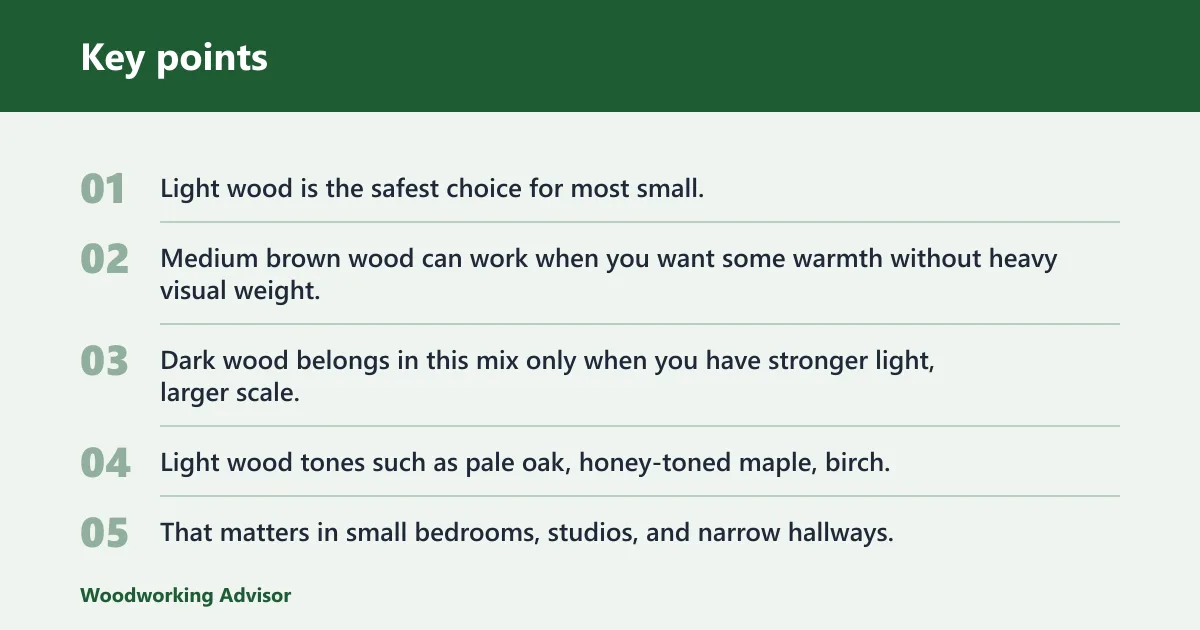



Light wood is the safest choice for most small, dark rooms because it reflects more light and makes the space read larger and more open. Medium brown wood can work when you want some warmth without heavy visual weight. Dark wood belongs in this mix only when you have stronger light, larger scale, or a plan to offset the light loss with wall color and sheen.
How tone changes perceived room size
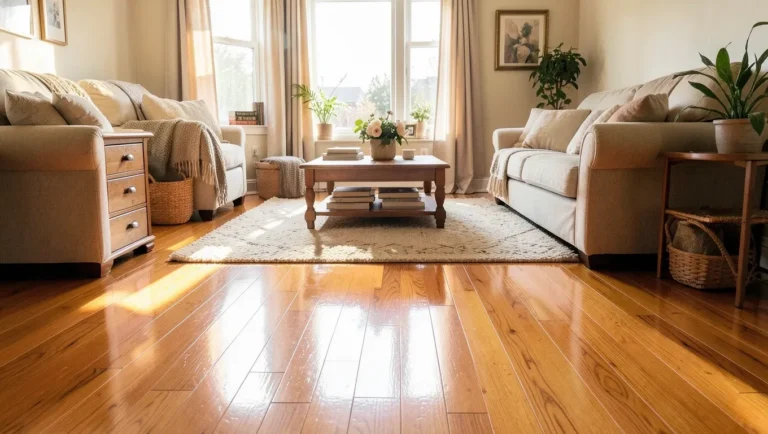
Light wood tones such as pale oak, honey-toned maple, birch, and blonde maple support a brighter feel because they return more light to the eye. That matters in small bedrooms, studios, and narrow hallways, where the floor covers a large share of the view. The lighter the floor, the less visual pressure it creates.
Dark wood does the opposite. It brings luxury and intimacy, but it also takes in light, so a compact room can feel smaller and more enclosed. That effect is not automatically bad. It becomes a problem when the room already lacks daylight and the floor is one of the largest dark surfaces in sight.
Why finish sheen matters too
Tone and sheen are separate decisions. A light floor with a flat finish can still read soft and muted, while a darker floor with a more reflective finish can bounce back more light than a matte one. In low-light rooms, sheen can change how enclosed or open the floor feels, even when the stain color stays the same.
That is why a dark floor is not always off-limits. If you want a deeper tone, a glossier or more reflective finish gives you some visual relief. It will not turn a dark floor into a light one, but it can keep the room from feeling as closed in.
What wood tone works best in a small dark room?
Light wood usually wins in a small dark room because it reflects available light and makes the room appear larger and more open. If you want warmth as well as brightness, choose a light-to-medium tone with honey or golden undertones instead of a cool gray cast. Medium brown is the backup choice when you need a little more depth.
Why light wood usually wins
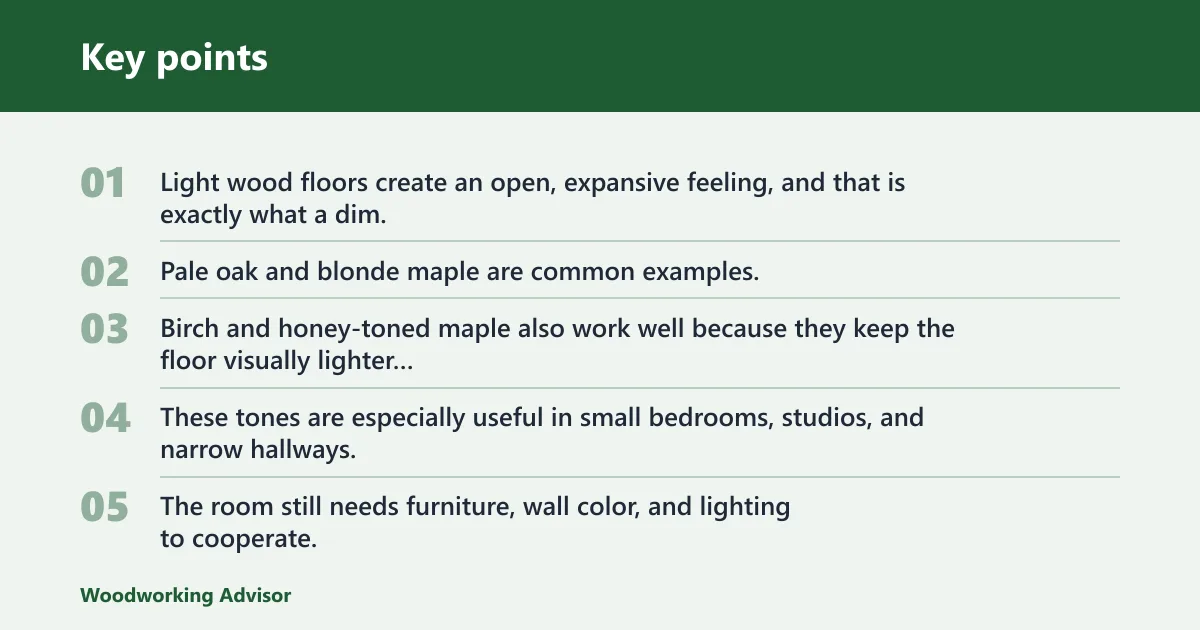
Light wood floors create an open, expansive feeling, and that is exactly what a dim, compact room needs most. Pale oak and blonde maple are common examples. Birch and honey-toned maple also work well because they keep the floor visually lighter without looking stark.
These tones are especially useful in small bedrooms, studios, and narrow hallways. The room still needs furniture, wall color, and lighting to cooperate, but the floor should not be the element that drags the visual level down.
When medium brown is the safer compromise
Medium brown wood is the practical middle ground when you want warmth without making the room feel cramped. Classic oak and other medium-tone woods often fit this brief because they feel grounded but not heavy. Medium tone wood floors are suggested with minimal gray tones for balance in low-light rooms.
Use medium brown when the room already has some light walls, a fair amount of artificial lighting, or furniture that needs a little visual anchoring. It is also a good choice if pure light floors would feel too airy for the room’s style.
When dark wood can still work
Dark wood can work in a small room if you want a more intimate feel and the rest of the room is doing a lot of brightness work. Dark wood floors provide a sense of luxury and intimacy. Dark wood can make a room with limited natural light feel smaller and more enclosed, so the setting has to support it.
That means stronger lighting, lighter walls, and a more reflective finish. It also means thinking about the room’s use. A den or media room can accept more visual depth than a narrow no-window hall.
How natural light changes the choice
Natural light level should be the main filter. Large windows, small windows, north-facing exposure, and no-window spaces do not behave the same way. North-facing rooms or spaces with limited sunlight benefit most from light hardwood flooring. The same is true for any room where daylight is weak and inconsistent.
North-facing rooms and low sun
North-facing rooms are a special case because the light tends to be cooler and less direct. That can make cool-toned flooring read flat or muddy, especially if the room already has shadowy corners. In those spaces, a light wood with warm undertones is usually the best route.
A common first-timer mistake is choosing a gray-leaning floor because it seems “clean” in the store. In a north-facing room, that same floor can read dull once it is paired with dim, cool ambient light and white trim.
Rooms with one small window
A room with one small window usually needs a floor that helps, not one that competes. Light wood is still the first choice, but medium brown can work if the window gets decent afternoon light or if the room has pale walls and mirrors. Warm undertones help keep the room from feeling thin or washed out.
Suppose a bedroom around 10 by 12 feet has one narrow window and a dresser blocking part of the light path. A pale oak floor can make the room feel less boxed in, while a dark walnut floor would make the shadows more obvious unless the rest of the room is very bright.
No-window rooms and basement spaces
No-window rooms and basement dens need the most caution because they rely entirely on artificial light. Light wood is usually the best starting point. If you prefer more visual depth, medium brown can work, but dark wood should be paired with brighter walls, stronger lighting, and a more reflective finish.
In these spaces, the floor should support the room’s artificial lighting plan rather than absorb it. Using multiple light sources can help create the illusion of brighter light in a dark room.
Do warm or cool undertones work better in a dark room?
Warm undertones usually work better in a dark room because they prevent the space from feeling cold or stark. Honey, golden, and red hints add a cozy read that helps low-light rooms feel more settled. Cool undertones can still work, but they need stronger lighting and careful pairing with the room’s fixed finishes.
Warm undertones for a cozier look
Warm woods have honey, golden, or red hints that make rooms feel cozy. That effect matters more when sunlight is limited, because the room can otherwise read gray or flat. A warm undertone softens that problem and makes light wood feel less sterile.
If the room has cool white trim or chrome hardware, a warm floor can balance it. If the room already has warm cabinets or wood furniture, the same undertone family helps the pieces sit together without visual friction.
Cool undertones in dim light
Cool woods show gray, ashy, or white undertones and create a modern, crisp look. In a bright room, that can be a clean effect. In a dim room, cool tones can read colder and sometimes muddy, especially if the lighting is weak or the room is already shadowy.
That does not mean cool floors never work. It means you need a reason for them, such as a very modern palette, strong artificial light, or fixed elements that are already cool-toned and need the floor to match.
Matching undertones to trim and furniture
This is where many decisions go wrong. If the room has warm oak trim, a floor with a strong gray cast can make the space look mismatched. If the cabinets are cool white and the furniture is metal-heavy, a honey floor may still work, but the rest of the room needs enough balance to keep it from feeling overly yellow.
The three basic wood tone factors are warmth, undertone, and grain. In a dark room, that means you should judge the floor against the trim, cabinets, and furniture already in place, not against a sample by itself.
Wood tone decision matrix

Use this table as a quick filter. It keeps the decision tied to room condition, not just personal preference. The “avoid this if” note is the part that saves the most mistakes.
| Room condition | Recommended wood tone | Reason |
|---|---|---|
| North-facing bedroom with one small window | Light wood with warm undertone, such as pale oak or blonde maple | Reflects limited daylight and keeps the room from reading cold; avoid this if the walls are already dark and the bedding is deep-toned. |
| Small office used during daytime and evening | Light-to-medium wood with minimal gray tones | Feels open for daytime work but still has enough depth for a focused look; avoid this if the desk, shelving, and trim are all dark. |
| Basement den with artificial lighting only | Medium brown with warm undertones | Gives warmth without swallowing light; avoid this if the room has only one weak overhead fixture and no wall lighting. |
| No-window hallway | Light wood, preferably pale oak or birch | Helps the corridor feel wider and less tunnel-like; avoid this if the hallway walls are also dark or heavily textured. |
| Small bedroom with light walls and a few large windows | Medium-tone wood, such as classic oak | Balances brightness with warmth so the room does not feel bare; avoid this if the windows face north and receive little sun. |
| Studio apartment with mixed daylight and lamps | Light wood with moderate grain contrast | Supports an open look while still giving the floor some visual character; avoid this if the furniture is already very pale and the room needs more grounding. |
| Bedroom with warm trim, wood furniture, and low sun | Warm medium wood | Echoes the existing finish family and keeps the room cohesive; avoid this if the trim and furniture already create too much visual heaviness. |
| Modern living room with gray walls and weak daylight | Light wood with warm undertone | Offsets the cool wall color and keeps the room from feeling flat; avoid this if the floor sample leans strongly gray or ashy. |
| Large room with strong daylight but dark furnishings | Medium brown or even dark wood | The larger scale can carry more depth, and the light helps prevent enclosure; avoid this if the room is smaller than it seems once the furniture is in place. |
How to keep a dark room from feeling closed
If you choose a darker floor, you need supporting elements that keep the room visually open. Light walls, reflective surfaces, and a more reflective finish all help, but none of them fixes a floor that is too dark for the room. The goal is to reduce the enclosed feeling, not erase it.
Use light walls for contrast
Light walls help preserve brightness when the floor is dark. The contrast keeps the room from turning into one large low-value block. This is one of the simplest ways to soften a dark floor in a dim room, especially when the room cannot get more natural light.
That said, pale walls alone will not make a very dark floor disappear. They just keep the room from feeling as if every surface is pulling light away at once.
Add mirrors and reflective surfaces
Mirrors and other reflective surfaces amplify the light that is already there. They work best with lighter wood tones, but they can also help a darker floor feel less enclosed by pushing more brightness back into the room. Use them where they can catch daylight or lamp light, not in a random spot.
A mirror across from a window or near a lamp can do more than one placed in a shadowed corner. The placement matters because the room needs a source to reflect.
Choose a more reflective finish
If you want a dark floor, finish sheen is your best support tool. A glossier or more reflective finish helps the floor bounce light instead of taking it in. That is useful in low-light rooms where the tone itself is fixed by the stain or species choice.
Use this carefully. Too much shine can feel busy under harsh light, especially if the room already has glossy furniture or strong glare from fixtures. A moderate reflective finish is often easier to live with than a very high gloss surface.
Frequently asked questions
What wood tone looks best in a small dark room with little natural light?
Light wood with a warm undertone is usually the best choice because it reflects more light and helps the room read larger and more open. Pale oak, birch, blonde maple, and honey-toned maple are strong options. If you need more depth, move to a light-to-medium tone rather than a dark one.
Should I choose light, medium, or dark wood in a room with no windows?
Light wood is the safest choice for a no-window room because it helps preserve every bit of artificial light. Medium wood can work if you want more warmth and have several light sources. Dark wood usually needs light walls, reflective finishes, and strong lighting to avoid a closed-in look.
Do warm wood tones work better than cool tones in a dark room?
Usually yes. Warm undertones with honey, golden, or red hints help a dark room feel cozier and less stark. Cool gray, ashy, or white undertones can read colder when sunlight is limited, especially in north-facing rooms or spaces with weak artificial light.
Will dark wood floors make a small room look smaller?
They often will, because dark wood takes in more light and can make a compact room feel more enclosed. That does not mean dark floors are impossible in small rooms, but they need better lighting, lighter walls, and sometimes a more reflective finish to keep the space from feeling tight.
What wood tone works best for north-facing rooms?
Light hardwood flooring is usually the best match for north-facing rooms because they get cooler, less direct light. Warm light tones are safer than cool ones, which can look flat or muddy in dim conditions. Medium tone wood can work if the room has enough lamps and pale walls.
How do I keep a dark room from feeling cold if I choose a light wood tone?
Choose a light floor with warm undertones, such as honey or golden notes, rather than a cool gray cast. Then pair it with warm textiles, warmer white walls, and layered lighting. That combination keeps the room bright without making it feel stark or sterile.
What finish helps wood floors reflect more light in a dark room?
A more reflective finish helps, especially if you are using a darker tone. Gloss or a higher-sheen finish bounces more light than a matte one, so the floor feels less heavy. It works best when the rest of the room also supports brightness with light walls and good lighting.
Sponsored / affiliate links. As an Amazon Associate I earn from qualifying purchases. I may earn additional commission from eligible campaigns.