Can Paint Be Frozen? Best Local Cold Weather Storage Tips
You might be wondering, Can Paint Be Frozen? Best Local Cold Weather Storage Tips are simple to figure out. Sometimes, winter weather can catch us off guard, and we worry about our leftover paint.
It’s a common question for many DIYers. Does a frozen paint can ruin everything? Don’t stress!
This guide will walk you through exactly what happens and how to keep your paint safe when it’s cold outside. We’ll break it down step-by-step so you can easily protect your supplies.
Understanding Paint Freezing And What Happens
This section will explain the science behind why paint freezing is a concern. We’ll look at the different types of paint and how they react to cold temperatures. You’ll learn why this is important for keeping your projects looking great.
This information will help you make smart choices about storing your paint this winter.
What Is In Paint
Paint is a mix of several things. It has pigment for color, a binder to hold it together, a solvent (like water or chemicals) to make it flow, and additives for special effects. The solvent is the part most affected by freezing temperatures.
The binder is like the glue in paint. It sticks the pigment to the surface you’re painting. Different paints use different binders.
Water-based paints use latex or acrylics. Oil-based paints use oils or alkyds.
How Solvents React To Cold
Water-based paints use water as their main solvent. When water freezes, it expands. This expansion can push the other ingredients in the paint apart.
This might not sound like much, but it can change the paint’s texture and how well it works.
Oil-based paints use mineral spirits or other chemicals as solvents. These don’t freeze as easily as water. However, extreme cold can still affect their consistency and performance.
It’s less about freezing solid and more about becoming very thick or gloppy.
The Impact Of Freezing On Paint Quality
When water-based paint freezes and thaws, the binder and pigment can separate. This can make the paint lumpy or grainy. It might not mix back together smoothly.
This separation can lead to an uneven finish when you try to paint with it. You might see streaks or a dull appearance.
Oil-based paints might become too thick to apply easily if they get very cold. They might also lose some of their gloss or color intensity. The additives in the paint can also be affected, making it harder to get the smooth, even coat you want.
Signs That Paint Has Been Frozen
After a paint can has been frozen, you might see ice crystals inside. The paint might look separated, with a layer of liquid on top. It might have a lumpy or curdled appearance.
Sometimes, the color might look different or dull.
When you try to stir it, it might feel gritty or uneven. If you try to brush it on, it might be hard to spread. You could notice streaks or blotches on the wall.
The paint might also not adhere well to the surface after being frozen.
Can Paint Be Frozen Safely Different Paint Types
This section will explore how different kinds of paint handle freezing. We will look at both water-based and oil-based paints. Knowing this will help you understand if your paint is salvageable after a cold snap.
This knowledge is key to protecting your painting supplies.
Water-Based Paints Latex And Acrylic
Water-based paints are the most vulnerable to freezing. They contain a lot of water, which expands when it freezes. This expansion can break down the emulsion that holds the paint together.
The binder, pigment, and other ingredients can permanently separate.
Once a water-based paint has frozen solid, it’s often ruined. You might be able to stir it, but the texture will likely be off. It may become lumpy, watery, or grainy.
Applying it might result in a streaky finish that doesn’t look good.
Oil-Based Paints Alkyd And Enamels
Oil-based paints are more resistant to freezing. Their solvents are less likely to freeze solid at typical winter temperatures. However, they can become very thick when exposed to extreme cold.
This makes them difficult to stir and apply smoothly.
Even if an oil-based paint doesn’t freeze, prolonged exposure to cold can affect its properties. The flow might be reduced, and it might not level out as well. This can lead to brush marks or a less uniform appearance.
Specialty Paints And Varnishes
Some specialty paints, like spray paints or certain metallic finishes, might have different sensitivities. Their formulations can include propellants or other chemicals that are affected by extreme temperatures. Always check the product label for storage instructions.
Varnishes and sealers, especially water-based ones, can also be damaged by freezing. The protective film they form might be compromised, reducing their effectiveness. This means your surfaces won’t be as protected from wear and tear.
Factors Affecting Freezing Damage
The severity of the cold is a major factor. A quick dip in temperature might not cause much harm. But prolonged exposure to below-freezing conditions can be very damaging.
The duration of the cold matters as much as the temperature itself.
How full the can is also plays a role. An almost empty can has more air space, which can offer some protection. A full can has less air and might freeze more quickly.
The type of container also matters. Metal cans might conduct cold differently than plastic ones.
Best Local Cold Weather Storage Tips For Paint
Now that we know what can happen to paint in the cold, let’s talk about protecting it. This section provides practical advice for storing your paint safely during winter. We’ll cover indoor and outdoor storage solutions.
Following these tips will help you keep your paint usable for future projects.
Indoor Storage Solutions
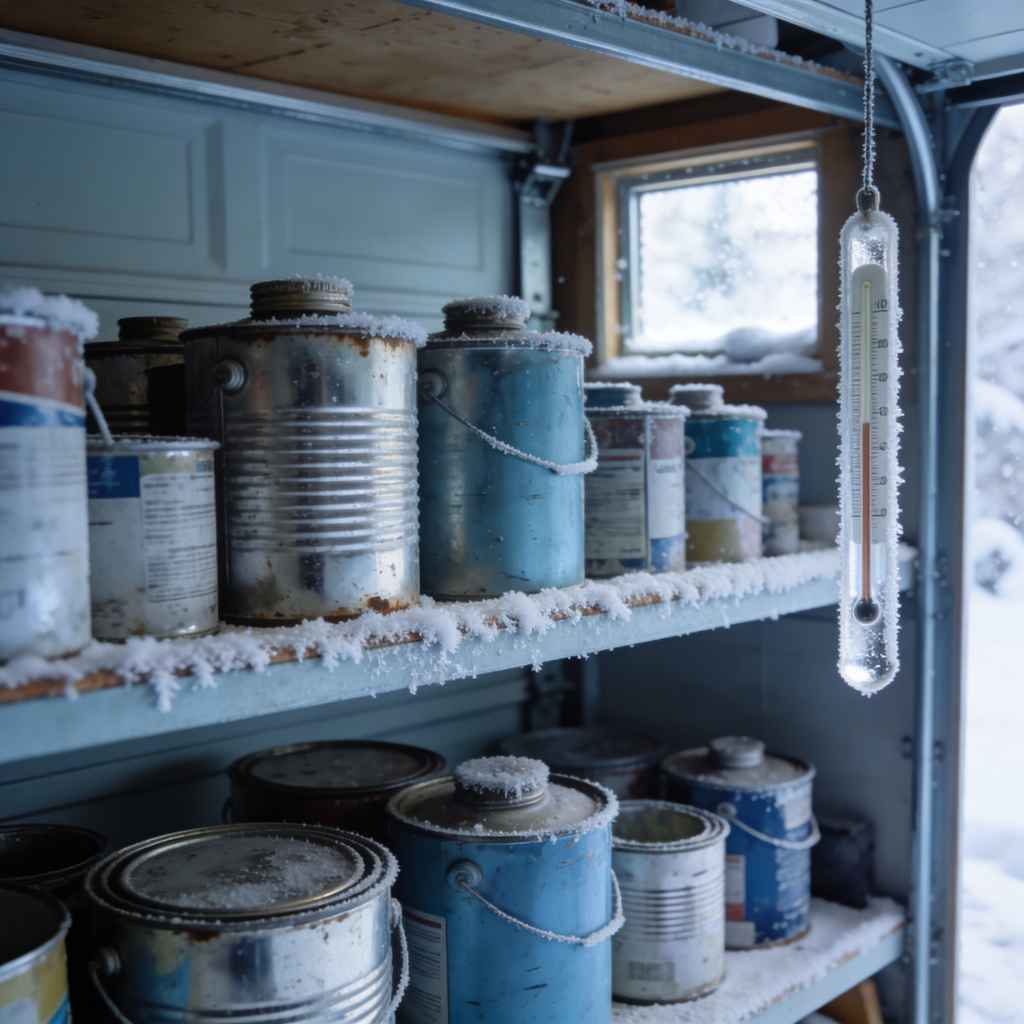
The best place to store paint is indoors, in a climate-controlled environment. This means a heated room inside your house or garage. Avoid storing paint in unheated sheds, garages, or basements where temperatures can drop below freezing.
Ideal temperature ranges for paint storage are typically between 50°F and 80°F (10°C and 27°C). This keeps the paint stable and prevents it from freezing or becoming too hot. Make sure the area is also well-ventilated to avoid fumes.
Garage And Basement Storage Considerations
If you must store paint in a garage or basement, assess the temperature carefully. Many garages and basements are not insulated well. They can experience drastic temperature swings, including freezing temperatures.
Use a thermometer to monitor the temperature in your storage area. If it regularly drops below freezing, this is not a safe place for your paint. Consider bringing the paint inside your home instead.
Utilizing Storage Containers For Protection
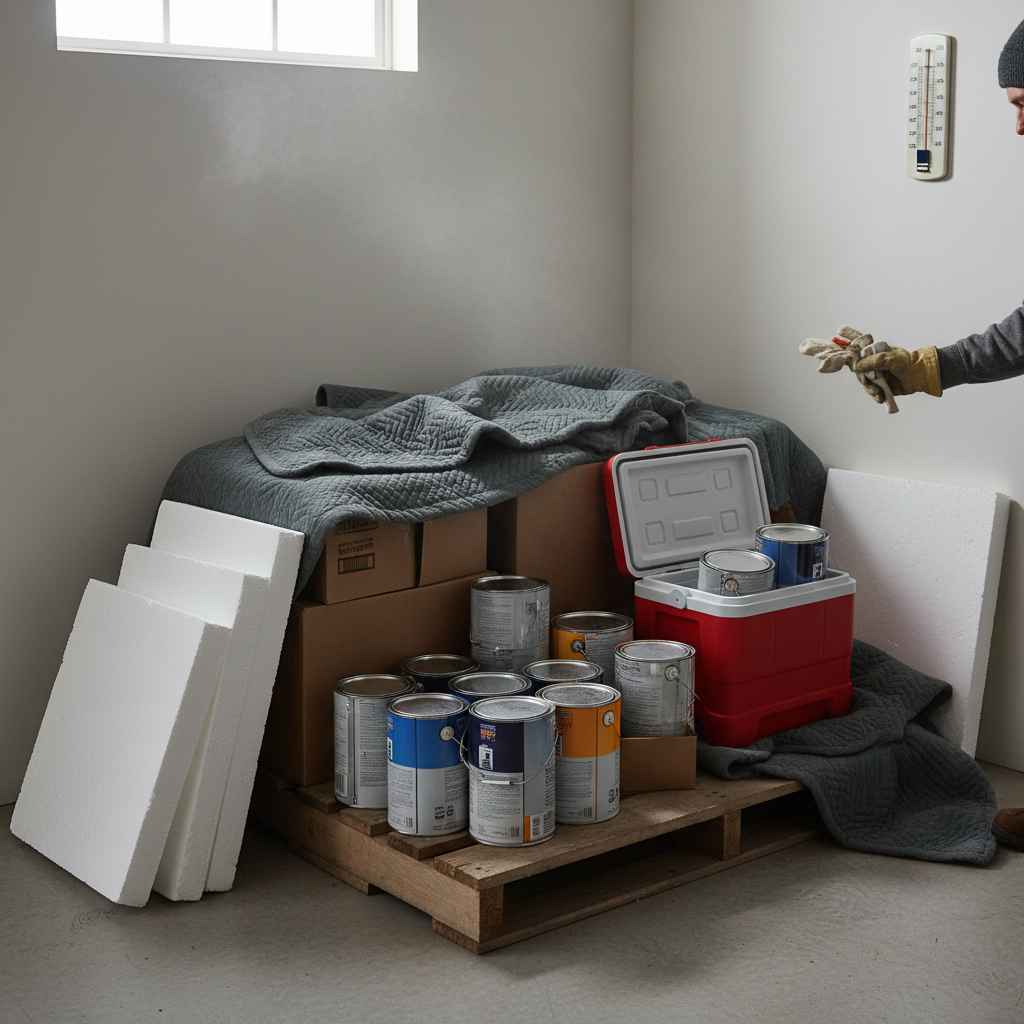
To add an extra layer of protection, you can use insulated containers. Foam coolers or storage bins can help buffer the paint from extreme cold. Place the paint cans inside these containers before storing them in a slightly warmer area.
Seal the containers tightly to trap any warmth. This can be particularly helpful if you have a slightly warmer spot in an unheated space. It provides a barrier against the harshest cold.
This is a good DIY solution for protection.
Tips For Transporting Paint In Cold Weather
When you buy paint or bring it home in cold weather, transport it quickly. Keep the paint in a heated part of your car. Don’t leave it in the trunk for an extended period.
Trunk temperatures can drop significantly, even in a short time.
Cover the paint cans with blankets or towels during transport. This adds insulation. Try to get the paint from the store to your heated storage location as fast as possible.
This minimizes its exposure to cold air.
How To Tell If Frozen Paint Is Still Usable
After a cold spell, check your paint. For water-based paints, if you see ice crystals or the paint looks separated and chunky, it’s likely ruined. If it mixes smoothly and has a normal texture, it might be okay.
But results can be unpredictable.
For oil-based paints, if they have just become very thick, they can often be salvaged. Stir them thoroughly until they reach a usable consistency. If there are signs of separation or unusual texture, use caution.
Always test a small amount first.
Reviving Paint That Has Been Slightly Chilled
Sometimes paint gets cold but doesn’t fully freeze. In this section, we’ll discuss how to bring slightly chilled paint back to its best. We will cover gentle warming methods.
Following these steps can help you save paint that might have been on the edge of freezing.
Gentle Warming Methods
If paint has been chilled but not frozen, you can try to warm it up slowly. Do not use direct heat like a heater or microwave, as this can damage the paint. Instead, place the can in a room that is warmer than freezing.
An ideal method is to place the paint can in a bucket of lukewarm water. Make sure the lid is sealed tightly so no water gets inside the can. Let it sit until the paint reaches room temperature.
Stir gently as it warms.
Checking Consistency And Usability
Once the paint has warmed, open the can and stir it well. Look for any signs of separation, lumps, or a grainy texture. If the paint mixes smoothly and looks normal, it’s likely usable.
Try painting a small, inconspicuous area with it. See how it applies. Does it spread evenly?
Does it have a good finish? Does the color look right? If everything seems normal, the paint should be fine for your project.
When To Discard Paint
If the paint still looks lumpy, curdled, or separated after warming, it’s best to discard it. You can also tell if it’s ruined if it has a strange smell or has separated into layers that won’t mix. Trying to use damaged paint will lead to poor results.
Dispose of old or damaged paint responsibly. Check with your local waste management for proper disposal methods. Many areas have hazardous waste collection sites for paint.
Testing A Small Area
Before painting a whole wall or project, always test the paint on a scrap piece of material or a hidden spot. This allows you to see how it applies and dries. You can catch any issues before committing to the entire project.
Observe the coverage, the smoothness of the finish, and the color. If it performs well, you can proceed with confidence. If you notice any problems, it’s a clear sign that the paint is not suitable for use.

Frequently Asked Questions
Question: Can I freeze and thaw paint multiple times?
Answer: It is not recommended to freeze and thaw water-based paint multiple times. Each freeze-thaw cycle can further damage the paint’s structure, leading to more separation and a poorer finish. Oil-based paints may tolerate it better but still can be affected over time.
Question: Will leaving paint in a cold car ruin it?
Answer: Yes, leaving paint in a cold car for an extended period, especially overnight or during very cold weather, can cause it to freeze or become significantly damaged. It’s best to transport paint quickly and store it in a temperature-controlled environment.
Question: How do I store leftover paint in winter?
Answer: Store leftover paint indoors in a heated room, like a closet or a heated part of your home. Avoid unheated garages, sheds, or basements where temperatures can drop below freezing.
Question: What is the best temperature to store paint?
Answer: The ideal temperature range for storing paint is typically between 50°F and 80°F (10°C and 27°C). This temperature range helps maintain the paint’s stability and prevents damage.
Question: Can I use paint that has been frozen?
Answer: For water-based paints, if it has frozen solid, it is usually ruined and will likely have a lumpy or separated texture that won’t apply well. Oil-based paints are more resilient but may become very thick; if they mix smoothly, they might be usable with caution.
Summary
Keeping your paint safe from cold is easy. Store it indoors in a warm place. Always check paint if it has been exposed to freezing temperatures.
If it looks off, it’s best to get new paint. Protect your supplies and enjoy your projects year-round.