Can You Eat Cherries From A Cherry Blossom Tree? Answered
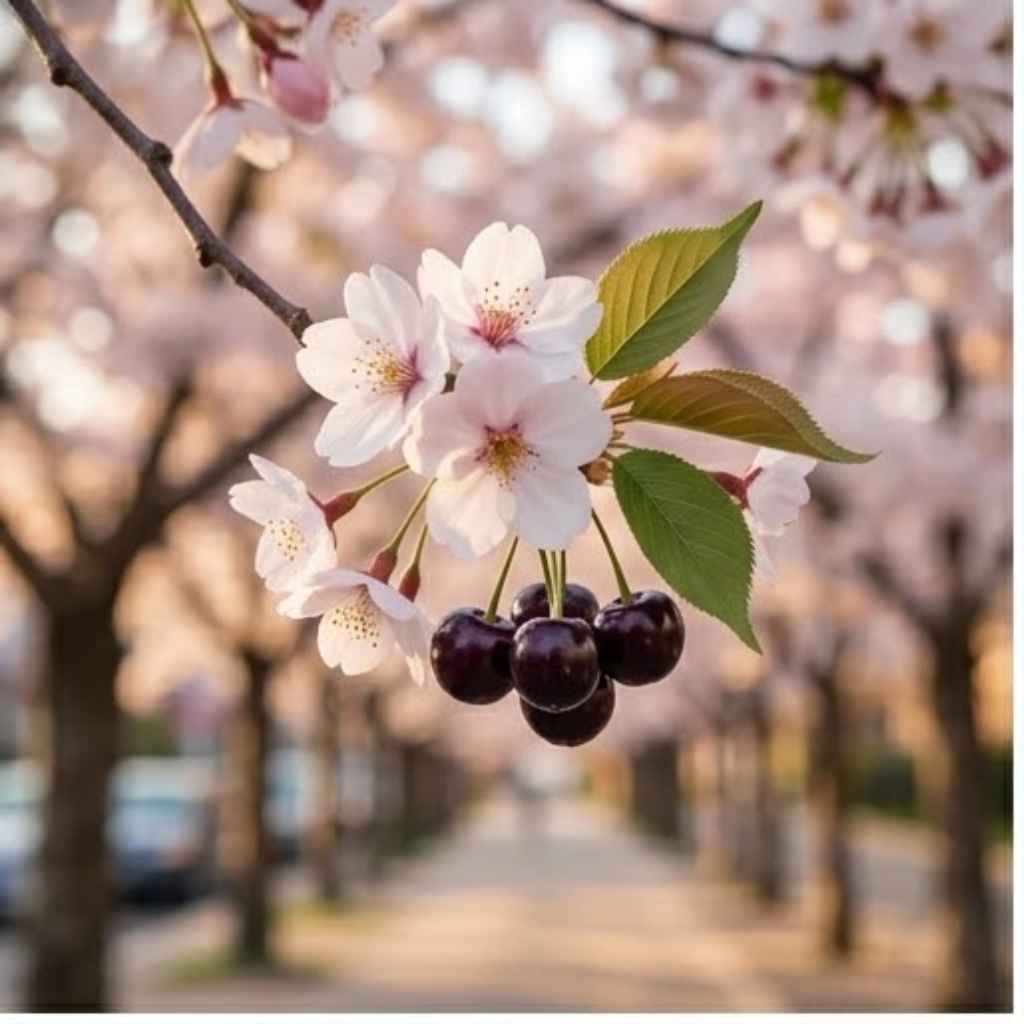
You cannot eat the cherries from ornamental cherry blossom trees. These trees are grown for their flowers, not for fruit. The cherries they produce are often small, bitter, and not meant for consumption. For edible cherries, you need specific fruit-bearing cherry tree varieties.
Understanding Cherry Blossom Trees
Cherry blossom trees are special. They are known as ornamental cherry trees. Their main purpose is beauty.
They create a breathtaking display in the spring. Think of parks and gardens bursting with color. These trees are bred for their flowers.
They produce many petals. These petals are often showy and fragrant.
There are many types of ornamental cherry trees. Some popular ones include Yoshino cherries and Kwanzan cherries. These trees focus on flower power.
They are not engineered to produce good fruit. This is a key difference.
Why Ornamental Cherries Don’t Produce Edible Fruit
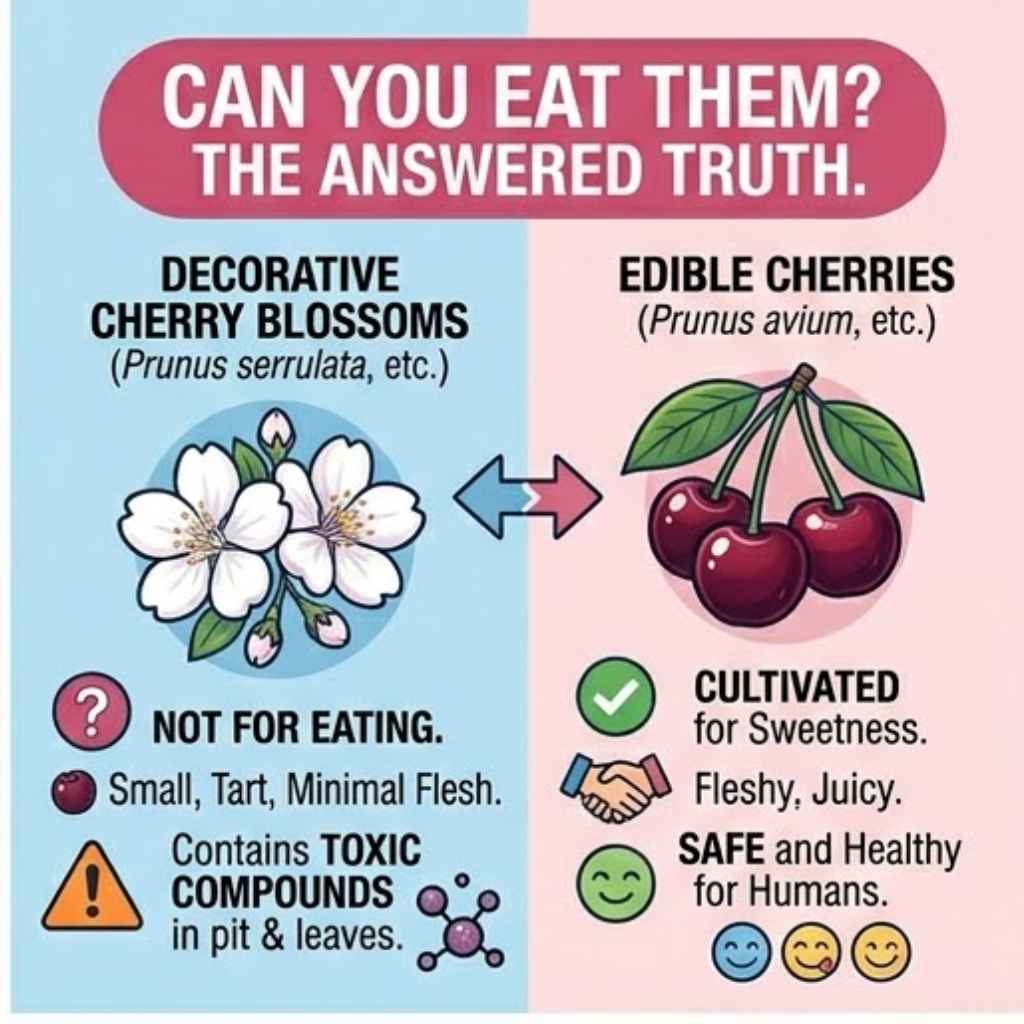
Ornamental cherry trees are bred for looks. Scientists and gardeners worked for years. They focused on making the flowers bigger.
They wanted more petals. They aimed for brighter colors. The goal was not fruit production.
This selective breeding changed the tree.
The cherries that might grow on these trees are usually very small. They can be quite bitter. They might also have very little flesh.
Eating them would not be a pleasant experience. In many cases, the fruit is just not palatable. It’s not like the sweet cherries you buy at the store.
These trees are more about visual appeal. They are a sign of spring’s arrival. They bring joy with their fleeting bloom.
The fruit is a side effect. It’s not the main event.
My Own Cherry Blossom Fruit Scare
I remember one spring. I was visiting a friend’s house. They had a beautiful cherry blossom tree in their yard.
It was covered in pink flowers. After the petals fell, tiny red dots appeared. They looked like miniature cherries.
I thought, “Wow, free cherries!”
My friend saw me looking. They laughed. “Oh, those,” they said.
“Don’t eat those. They’re sour.” I was a bit disappointed. I had pictured myself picking fresh cherries.
It was a good lesson. Looks can be deceiving. Not all cherries are meant to be eaten.
This experience taught me a lot. It made me realize the difference. Ornamental trees are for beauty.
Fruit trees are for food. It’s important to know what kind of tree you have. This prevents any mistaken snacking.
Ornamental vs. Fruit Cherry Trees
Ornamental Cherry Trees:
- Grown for flowers.
- Flowers are often showy and abundant.
- Fruit (if any) is small, bitter, and inedible.
- Examples: Yoshino, Kwanzan, Weeping Cherry.
Fruit Cherry Trees:
- Grown for edible cherries.
- Flowers are usually simpler, often white or pale pink.
- Fruit is large, sweet, and delicious.
- Examples: Bing, Rainier, Montmorency.
Identifying Your Cherry Tree
It can be tricky to tell the difference. Especially when the tree is young. Or when it’s not in bloom.
But there are clues. Look at the flowers first. Ornamental trees often have double flowers.
These have many layers of petals. Fruit trees usually have simpler flowers.
Then, look at the fruit. If small, hard cherries form, it’s likely ornamental. If plump, juicy cherries appear, it’s probably a fruit tree.
The size and taste are the biggest giveaways. If you’re still unsure, ask a local nursery. They can help identify your tree.
Quick Tree Identification Tips
Look for:
- Flower Type: Double petals usually mean ornamental. Single petals are common for fruit trees.
- Branch Growth: Ornamental trees can have more weeping or spreading habits. Fruit trees often grow more upright.
- Bark Texture: Sometimes bark patterns can differ slightly.
- Fruit Size & Shape: Small and hard vs. plump and juicy is a big clue.
What About Cherry Blossom Petals?
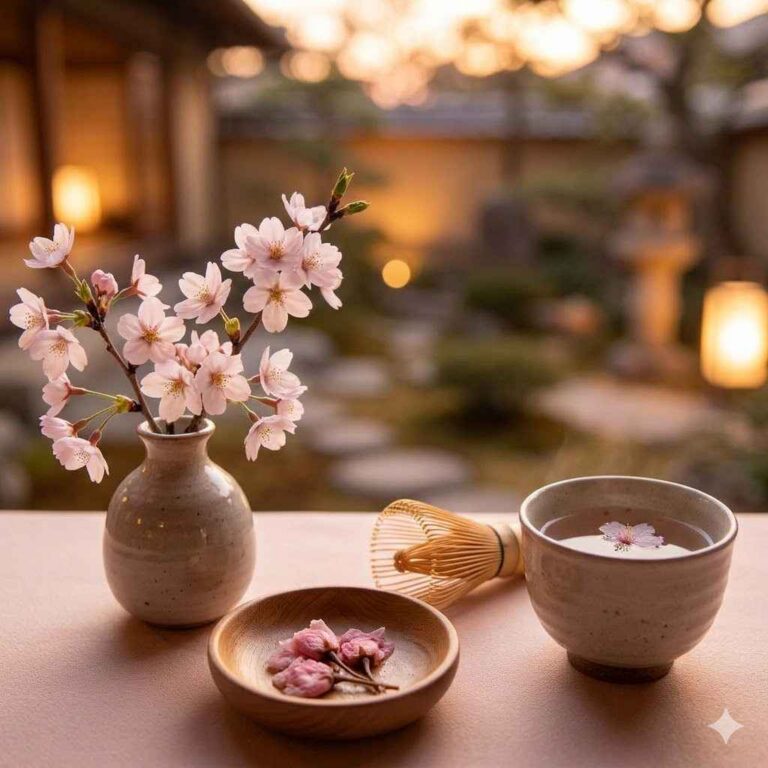
Some people wonder about eating the petals. Cherry blossom petals are sometimes used in Japanese cuisine. They are often pickled.
This process preserves them. It also changes their flavor. Pickled cherry blossoms are salty and slightly floral.
They are used sparingly as a garnish or flavor accent.
You wouldn’t eat them fresh off the tree. Raw petals might not taste good. They could also cause stomach upset for some people.
It’s best to stick to culinary uses. And only use petals specifically prepared for eating. Never try petals from a tree in a public park.
The Science Behind Fruit Development
Fruit develops from a flower. After pollination, the flower’s ovary grows. It swells and matures.
This forms the fruit. In cherry trees, this process results in a drupe. A drupe is a fleshy fruit.
It has a hard stone inside. This stone holds the seed.
For edible cherries, the ovary needs to be specific. It needs to develop into a large, sweet fruit. This is controlled by genetics.
Ornamental cherries have genes for beautiful flowers. They don’t have the genes for large, sweet fruit. Their genetic makeup prioritizes bloom over berry.
Contrast: Normal vs. Concerning Fruit Growth
Normal for Ornamental Cherry Trees:
- Tiny, hard, red or black “cherries” that are sour or bitter.
- Fruit may fall off quickly without ripening.
- Fruit production is sparse and inconsistent.
Concerning for Fruit Cherry Trees:
- Fruit is small, shriveled, or doesn’t develop properly.
- Fruit is consistently sour or lacks sweetness.
- Signs of disease or pests on the developing fruit.
Real-World Scenarios
Imagine you’re walking in a park. You see cherry trees in full bloom. It’s a magical sight.
As the flowers fade, you notice small fruits. Your first thought might be to try them. But remember, most park trees are ornamental.
They are there for public enjoyment of their beauty.
Or perhaps you inherited a house. There’s a cherry tree in the backyard. You don’t know its history.
Does it produce fruit? It’s best to observe it for a season. See what kind of flowers it has.
Look closely at any fruit that develops. If it looks like a decorative cherry, it probably is.
Homeowners often plant ornamental cherries. They want to add beauty to their landscape. They might not even think about fruit.
Fruit cherry trees are planted with a purpose: harvest. The intention behind planting guides the tree’s traits.
What This Means for You
If you have a cherry blossom tree, enjoy its flowers. Admire its spring beauty. If it produces small, hard fruit, leave them be.
They are not for eating. They might be food for birds. But they won’t be a treat for you.
If you want to grow cherries for eating, you need a fruit-bearing variety. Look for specific types like Bing, Rainier, or Montmorency. These are known for good fruit.
Planting the right tree ensures you get the delicious cherries you expect.
Don’t be disappointed if your ornamental tree doesn’t offer fruit. Its gift is its stunning floral display. That’s a valuable gift in itself.
Cherish the beauty it brings each year.
Quick Tips for Cherry Tree Owners
If you have a tree:
- Observe its flowers and fruit.
- If you want edible fruit, verify your tree’s variety.
- If it’s ornamental, focus on its blooms.
- If you’re unsure, ask an expert.
If you are considering planting:
- Decide if you want flowers or fruit.
- Choose a variety suited to your climate.
- Research the mature size of the tree.
- Buy from a reputable nursery.
Frequently Asked Questions
Are all cherries from cherry trees edible?
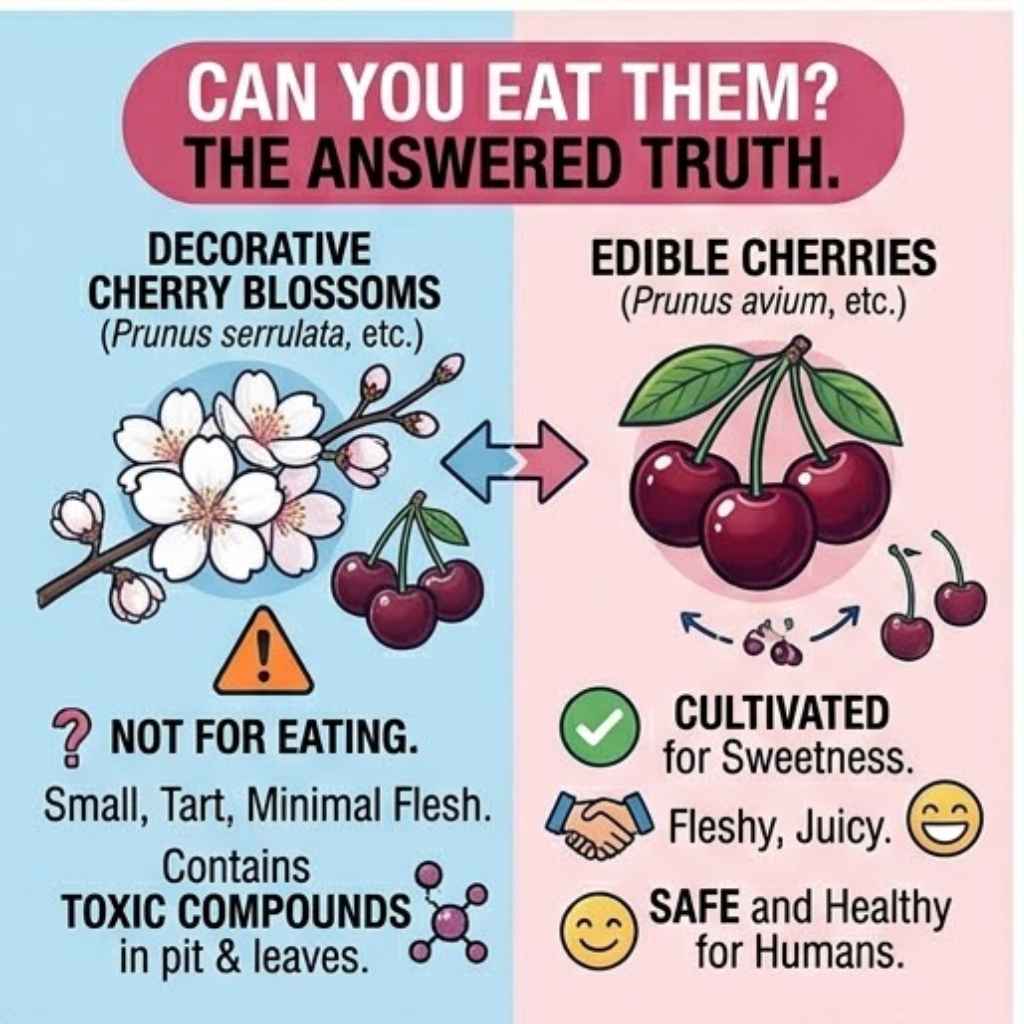
No. Cherries from ornamental cherry blossom trees are generally not edible. They are often bitter and small.
Only specific fruit-bearing cherry tree varieties produce edible cherries.
How can I tell if my cherry tree is ornamental or a fruit tree?
Ornamental trees often have double flowers with many petals. Fruit trees usually have simpler, single flowers. The fruit itself is a big clue: small and hard for ornamental, plump and juicy for fruit trees.
Can birds eat cherries from ornamental trees?
Birds can often eat the small, bitter cherries from ornamental trees. For them, it’s a food source. But these cherries are not suitable for human consumption.
Are cherry blossom petals safe to eat?
Cherry blossom petals are sometimes used in Japanese cuisine, but usually after being pickled. Eating raw petals is not recommended. Always use petals prepared for consumption and from a reliable source.
What should I do if my ornamental cherry tree produces fruit?
Enjoy the flowers! If fruit forms, appreciate it as part of the tree’s cycle. It’s not for eating.
The fruit might feed local wildlife. You don’t need to do anything special unless it causes a mess.
Where can I buy fruit-bearing cherry trees?
You can buy fruit-bearing cherry trees from local garden centers, nurseries, and online horticultural suppliers. Ensure you buy from a reputable source to get the correct variety.
Final Thoughts on Cherry Blossom Fruit
Cherry blossom trees are a gift of spring. Their beauty is unmatched. While the idea of fresh cherries is tempting, remember their purpose.
Ornamental trees are for our eyes. Fruit trees are for our taste buds. Enjoy the visual feast each year.