Can You Glue Baseboards Instead of Nailing? What Works
Yes, you can glue baseboards to a wall instead of nailing them, but in practice the glue usually needs a little help. Construction adhesive bonds well to drywall and paint-grade trim, yet it does not grab instantly, and it cannot pull a bowed board tight against a wavy wall. This guide covers what two major adhesive makers say about open time, cure time and coverage, how much adhesive a real room takes, and where glue-only installs go wrong.
Short Answer: Glue Works, but Plan for Cure Time
BEST TRIM ADHESIVE PICK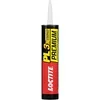 |
Loctite PL Premium Polyurethane Construction Adhesive (10 fl oz cartridge)
|
Both products discussed below are rated by their makers for wood and drywall, so bond strength is rarely the problem. The tricky part is holding the baseboard in position while the adhesive cures, then dealing with the gap along the top edge and the wall surface behind it. The sections below walk through those steps in order, starting with the numbers most guides skip.
What the Adhesive Data Sheets Say
Most baseboard articles say “use construction adhesive” and stop there. The manufacturers publish numbers that are far more useful. The table below comes from the Loctite PL Premium technical data sheet (Henkel, revised 12/12/2019) and the Liquid Nails Projects LN-704 data sheet (PPG, 8/2022). Products get reformulated, so always check the label on the tube you actually buy.
| Spec (from manufacturer data sheet) | Loctite PL Premium | Liquid Nails LN-704 |
|---|---|---|
| Chemistry | One-part polyurethane, moisture curing | Latex (water clean-up when wet) |
| Open time | 15 to 20 minutes | 30 minutes |
| Reposition window | 30 to 45 minutes | Not listed on the sheet |
| Cure time | 24 to 48 hours at 78 F and 50% humidity | 24 hours minimum at room temperature |
| Application temperature | Above 41 F, below 95 F for best results | 40 F to 100 F |
| Coverage, 10 oz tube, 1/4 inch bead | About 30.6 ft | About 30 ft |
| Gap bridging | Not listed as a rating | Up to 3/8 inch |
| Clean-up of wet adhesive | Mineral spirits | Water |
| Indoor and outdoor | Both | Interior only |
Two details matter for trim work. First, the open time is short. Loctite says to press surfaces together within 15 to 20 minutes, so glue one or two boards at a time rather than a whole wall. Second, both sheets call for a full day of cure. Loctite says to use mechanical support for 24 hours, which is the manufacturer telling you a glued board should not be left to hold itself right away.
There is also a common mix-up worth correcting. Many people assume construction adhesive behaves like caulk and simply stays where you press it. It does not. It behaves more like a slow-setting paste, and until it cures, the board can creep, sag at the top, or pop away from a bowed stud line. That is why “glue only” installs so often show a gap by the next morning.
How Much Adhesive a Room Actually Takes
A 10 oz tube covers about 30 feet with a continuous 1/4 inch bead, according to both sheets. A 12 by 14 foot room has 52 feet of wall. Subtract a 3 foot door opening and you have about 49 feet of baseboard. That is 49 divided by 30.6, or about 1.6 tubes for one unbroken bead. Because most installers run a wavier zigzag or a double bead on taller boards, buy two or three tubes so you do not run short mid-wall.
Picking Between the Two Adhesives
For a dry, heated interior room, either product fits the job. LN-704 cleans up with water while wet, lists a 30 minute open time, and is low-odor, which makes it forgiving for a first project. It is rated for interior use only. Loctite PL Premium gives a firmer, rubbery cured bond and works both indoors and outdoors, but you need mineral spirits for wet clean-up. Loctite also lists rigid vinyl and PVC trim among the materials it bonds, which matters if your baseboard is not wood.
How to Glue Baseboards Step by Step
- Dry-fit every board. Cut the joints first; if you need help with inside and outside corners, see our guide to cutting angles with a miter saw. The Loctite sheet also says to pre-fit all materials and protect finished surfaces.
- Clean the wall and the back of the trim. Dust and grease weaken the bond. Loctite says surfaces must be clean and free of frost, standing water, grease and dust.
- Check the temperature. Both sheets give a lower limit of about 40 to 41 F, so do not glue in a cold, unheated room.
- Cut the nozzle at a 45 degree angle to about a 1/4 inch opening, then apply a wavy bead along the back of the board, staying away from the very top and bottom edges so squeeze-out does not show.
- Press the board against the wall and hold it. Tape, braces, or a few finish nails keep it flush while the bead cures.
- Leave it alone for the cure window before caulking or painting, and wipe fresh squeeze-out right away.
Gaps, Caulk and Finishing
Glue does not close a gap by itself. A baseboard that sits away from a wavy wall will stay away from it; the adhesive just fills the space behind it. LN-704 lists gap bridging up to 3/8 inch, which helps behind the board but does not fix a visible gap at the top edge. Fill that with paintable caulk after the adhesive has cured. Caulk is a finish, not a fastener, so never rely on it to hold trim.
If you do use finish nails to hold the board, you will have holes to fill. Our guide to filling nail holes in trim covers that step, and how to use wood filler helps with larger gaps in the joints.
Removal Damage and Wall Movement
Glue makes trim harder to take off. In general trade experience, a strong bond can tear the paper face of drywall when you pry the baseboard away, which means patching and repainting behind it. If you might replace the trim in a few years, use less adhesive or nails. Seasonal humidity also moves wood and walls slightly, so a rigid bond with no nails can show a hairline crack at the caulk line over time. Neither point comes from the data sheets, so treat them as general guidance rather than measured results.
If you are stripping old trim before installing new, see how to remove paint from baseboards first, since adhesive will not hold well on flaking paint.
When Nailing Is the Better Choice
- Wavy or out-of-plumb walls, where a nail pulls the board in as you drive it.
- Rooms you expect to redecorate soon, where easy removal matters.
- Cold, damp or dusty spaces where the adhesive cannot cure properly.
- Long runs where you cannot brace the board for a full day.
For the nails themselves, see our comparison of DA and FN finish nails. Many installers combine both: a few nails to hold the board, plus a bead of adhesive for extra hold. Doorway trim is a special case, and our guide to finishing a doorway without a door covers casing for open openings.
Safety and Ventilation
Both data sheets carry safety statements worth following. The LN-704 sheet says to provide fresh air ventilation during and after application and drying, and warns that the product is harmful if inhaled. The Loctite sheet says to wear gloves, and that cured adhesive on bare skin will not wash off right away and may darken the skin for about three days. Loctite also uses mineral spirits for clean-up, so keep the room ventilated and read the label and safety data sheet. Open a window, run a fan, and avoid using either product in a closed room without airflow.
Frequently Asked Questions
Can you use Liquid Nails instead of nails for baseboards?
Yes, in most interior cases, but treat it as a bond that needs support while it cures. Liquid Nails LN-704 lists a 30 minute open time and a 24 hour minimum cure, so hold the trim with tape, braces or a few finish nails for at least a day.
Will glued baseboards damage the wall when removed?
Often, yes. A strong bond can peel the paper face off drywall when you pull the trim, and you may need to patch and repaint. If you expect to remove the baseboard someday, use fewer glue beads or choose nails.
How long should baseboard adhesive cure before I caulk and paint?
Follow the label. Loctite PL Premium lists 24 to 48 hours to cure at 78 F and 50 percent humidity, with mechanical support for 24 hours. Liquid Nails LN-704 lists a 24 hour minimum cure. Cold or dry rooms take longer.
Can I glue baseboards to a wall with no nails at all?
You can, and the data sheets say the adhesives bond to drywall and wood. The catch is that nothing holds the board flat against a wavy wall while the bead cures, so most installers add a few nails or brace the whole run.
Is construction adhesive safe to use indoors?
It can be, with ventilation and gloves. The Liquid Nails LN-704 data sheet says to provide fresh air ventilation during and after application and drying, and the Loctite PL Premium sheet says to wear gloves. Read the label and safety data sheet for whichever product you buy.
Bottom Line
You can glue baseboards instead of nailing them, and the manufacturers say the adhesives bond wood to drywall. But the data sheets also show short open times and a 24 hour cure, so plan to brace the boards, fill gaps with caulk, and accept that removal can damage the wall. A few finish nails plus a bead of adhesive is the safest way to get a tight, lasting install.
Sponsored / affiliate links. As an Amazon Associate I earn from qualifying purchases. I may earn additional commission from eligible campaigns.