Is DeWalt Better Than Milwaukee? (20V vs 18V + Warranty)
DeWalt’s 20V MAX and Milwaukee’s 18V M18 tools deliver nearly identical real-world power — the different voltage numbers reflect different rating methods, not different output. Picking wrong still matters: it locks you into one battery ecosystem, and Milwaukee backs most M18 cordless tools with a 5-year warranty versus DeWalt’s 3-year coverage plus a 90-day money-back guarantee. This guide covers the real voltage difference, exact warranty terms, pricing, and which brand fits DIY use versus daily job-site work.
History And Background
Both brands built their reputations over roughly a century of tool manufacturing, and that history still shapes how each company designs products today.
Founding Of DeWalt
In 1923, Raymond E. DeWalt invented the radial arm saw, and the DeWalt Products Company was founded in 1947 as a subsidiary of American Machine & Foundry. DeWalt entered the cordless power tool market in 1992, which is when the brand became a household name for portable drills and saws.
Founding Of Milwaukee
Milwaukee Electric Tool Corporation was founded in 1924 by A.F. Siebert in Milwaukee, Wisconsin, originally building heavy-duty tools for electricians and plumbers. That trade-focused origin is still visible in Milwaukee’s current lineup, which skews toward tools built for daily professional use rather than occasional DIY projects.
Before getting into the technical differences below, here’s a solid starting point if you’re building your first cordless kit rather than choosing between two you already own:
|
Best DIY Starter Kit Pick |
|
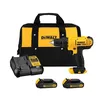 |
DEWALT 20V MAX Cordless Drill Driver Kit (DCD771C2) – $119.00 A compact 2-speed drill/driver with two batteries and a charger — a practical, low-cost way into the 20V MAX ecosystem this guide compares against Milwaukee’s M18 platform.
|
As an Amazon Associate we earn from qualifying purchases.
Product Range And Innovation
Both brands cover the same core categories — drills, impact drivers, saws, and grinders — but they push different technology forward.
DeWalt Tools And Innovations
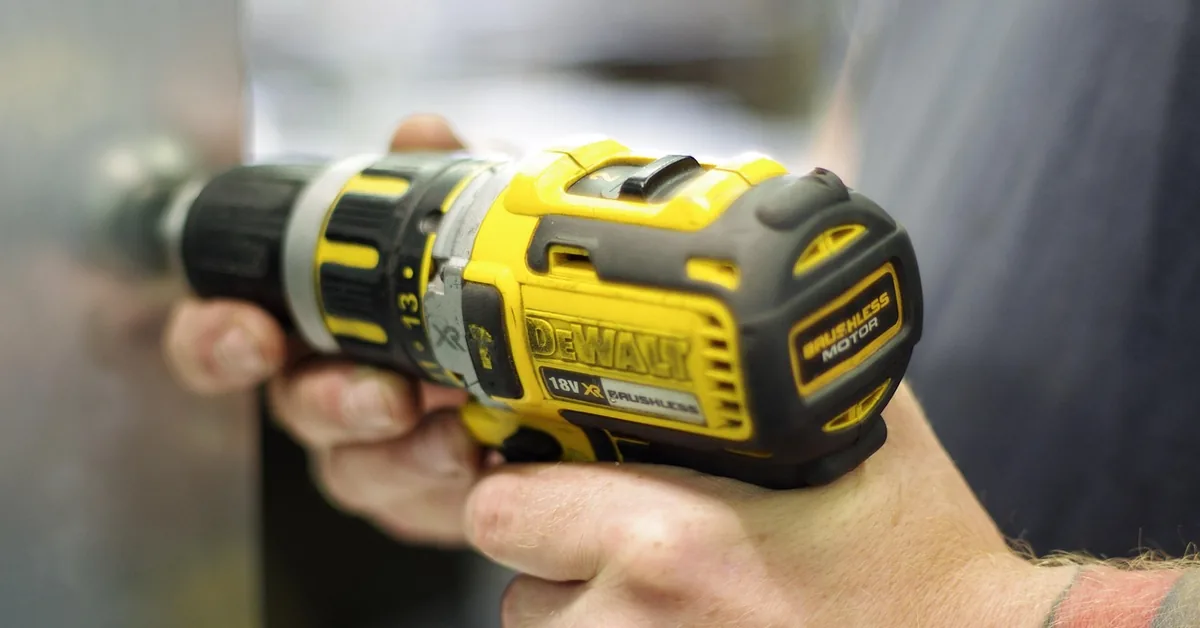
DeWalt’s FlexVolt system lets a single battery power both 20V and 60V tools, automatically switching voltage when it’s inserted into a compatible tool. The TSTAK modular storage system and the Perform & Protect line (vibration reduction, dust extraction) round out DeWalt’s job-site ecosystem.
Milwaukee Tools And Innovations
Milwaukee’s M18 FUEL line pairs brushless motors with REDLITHIUM batteries for longer runtime under load. ONE-KEY lets users track and customize tools from a smartphone app, and the Milwaukee TICK tracker helps locate misplaced tools and equipment on a job site.
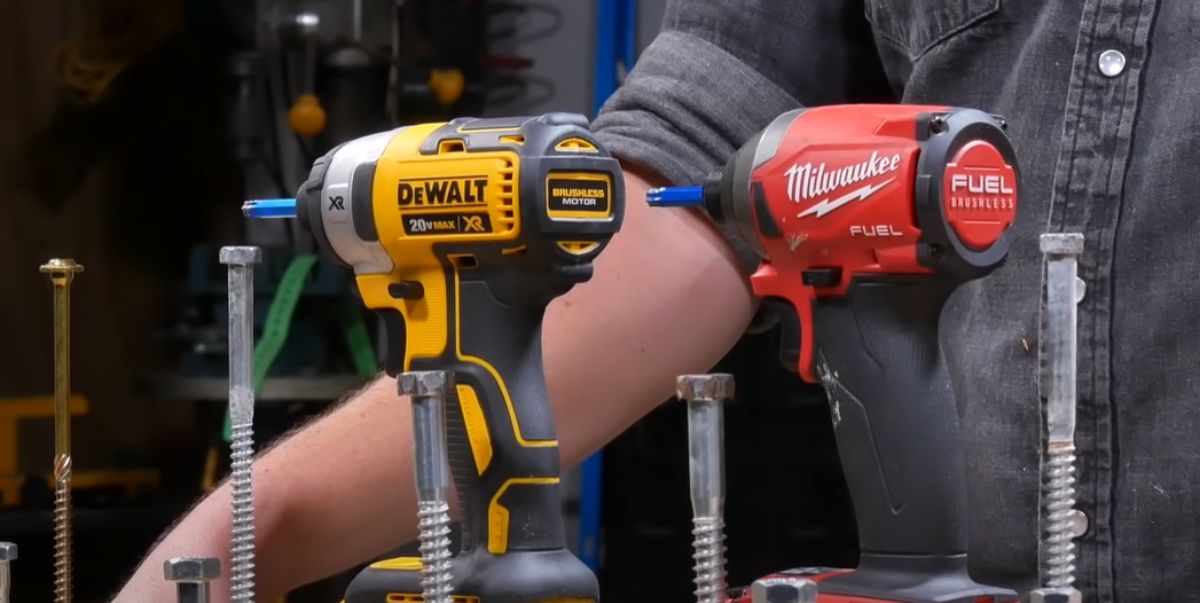
Which Brand Should You Buy: DIY Vs Professional?
DeWalt’s lower entry price on starter kits makes it the more common pick for serious DIYers and homeowners building a first cordless tool set. Milwaukee’s pricing sits higher on average, but its lineup is built around trade categories — plumbing, electrical, HVAC — that most DIYers never touch, which is why professionals gravitate toward it.
If you already own one brand and just need basic maintenance, both platforms are simple: see how to change the chuck on a DeWalt drill or change a bit on the Milwaukee M18 for the exact steps.
Is DeWalt’s 20V Actually More Powerful Than Milwaukee’s 18V?
DeWalt’s “20V MAX” and Milwaukee’s “18V” M18 naming describe the same lithium-ion cell chemistry rated by two different methods — DeWalt quotes maximum voltage measured right after a full charge, while Milwaukee quotes nominal voltage measured during normal operation. Once you measure actual sustained output, both platforms land in the same practical range. The voltage number on the box doesn’t tell you which drill hits harder; the motor, gearing, and battery amp-hour rating do that instead.
📊 DeWalt’s 20V MAX batteries measure roughly 20 volts only briefly at peak charge; both brands’ packs run at a similar nominal voltage during actual use. — Source: DeWalt and Milwaukee battery specification sheets, 2026
Because the cell chemistry is similar, some accessories and bits cross over even though the batteries themselves don’t — DeWalt and Milwaukee use incompatible battery mounts, so packs can’t be swapped between brands. You can use DeWalt bits in a Milwaukee drill as long as the shank size matches, but the two battery platforms stay completely separate.
Performance And Durability
DeWalt Performance
DeWalt’s FlexVolt 60V tools are built for heavier-duty tasks — framing, masonry drilling, larger miter saws — where the extra voltage headroom matters. On standard 20V MAX tools, expect performance comparable to any other mid-tier brushless cordless platform.
Milwaukee Performance
Milwaukee’s M18 FUEL line and its higher-voltage MX FUEL system (72V, aimed at replacing gas-powered equipment) push further into professional-grade output. Battery charge time is comparable across both brands’ standard packs — the real differentiator is runtime under sustained heavy load, where Milwaukee’s REDLITHIUM cells tend to hold voltage slightly longer.
Warranty Comparison: DeWalt Vs Milwaukee
Warranty length is one of the few places DeWalt and Milwaukee genuinely differ, and it’s rarely put side by side.
| Coverage | DeWalt | Milwaukee |
|---|---|---|
| Standard cordless power tools | 3-year limited warranty | 5-year limited warranty |
| Extra protection | 1-year free service contract + 90-day money-back guarantee | Some specialty tools (FUEL high-torque impact wrenches, job site radios) drop to 1–2 years |
| Hand tools | Limited lifetime warranty | Limited lifetime warranty |
According to DeWalt’s official warranty page, cordless power tools carry a 3-year limited warranty plus a 1-year free service contract and a 90-day money-back guarantee. Milwaukee’s warranty page states that most M18 tools carry a 5-year limited warranty, though a handful of specialty tools carry shorter terms.
Price And Value For Money
DeWalt Pricing And Value
DeWalt tools are designed for professionals and serious DIY enthusiasts who need reliable performance in demanding applications. Entry-level kits are priced to compete directly with Milwaukee’s cheapest offerings, while DeWalt’s FlexVolt and top-tier brushless tools carry a real premium.
Milwaukee Pricing And Value
Milwaukee tools generally sit a notch above equivalent DeWalt tools on price, but the brand backs that premium with the longer warranty covered above and a lineup built specifically for daily professional abuse. Milwaukee’s REDLINK Intelligence system also protects tools and batteries from overload, which reduces long-term repair costs on a jobsite.
| Brand | Average Price Range | Value Proposition |
|---|---|---|
| DeWalt | Slightly lower on entry kits | Durable, long-lasting tools with a broad DIY-friendly lineup |
| Milwaukee | Slightly higher | Longer warranty and a trade-focused lineup built for daily job-site use |
In short: DeWalt tends to win on upfront price and DIY-friendliness, while Milwaukee’s higher price buys a longer warranty and tools built around professional trade work. Both are safe investments — the right choice depends on how hard and how often you’ll use them.
User Feedback And Reviews
DeWalt User Feedback
Owners consistently point to DeWalt’s ergonomics and the sheer size of its tool lineup as reasons they stay in the ecosystem — once you own a few 20V MAX batteries, adding another tool is inexpensive.
Milwaukee User Feedback
Milwaukee owners cite ruggedness and torque under load most often, along with responsive customer service when a tool needs warranty repair.
“In our shop, both DeWalt 20V MAX and Milwaukee M18 tools have held up through years of regular use. The real difference we notice day to day isn’t power — it’s accessory selection and battery interchangeability across our own tool lineup, since neither brand’s batteries fit the other’s tools.”
Frequently Asked Questions On Is DeWalt Better Than Milwaukee
Which Is Better, DeWalt Or Milwaukee?
Neither brand is better overall. DeWalt tends to cost less upfront and suits DIY and general use, while Milwaukee costs more but backs its tools with a longer 5-year warranty and a lineup built for daily trade work.
Which Brand Makes The Best Power Tools?
The best power tool brand depends on your needs. DeWalt, Milwaukee, Makita, Bosch, and Hilti are all reliable options — compare warranty length, price, and your existing battery platform before deciding.
Is DeWalt High End?
Yes. DeWalt is considered a high-end brand in the power tool industry, known for durability and reliability, and is a common choice for both professionals and serious DIY enthusiasts.
Are DeWalt And Milwaukee Made By The Same Company?
No. DeWalt is owned by Stanley Black & Decker, while Milwaukee Tool is owned by Techtronic Industries (TTI). They are separate brands under different parent companies.
Is Milwaukee 18V The Same As DeWalt 20V?
Practically, yes. Milwaukee’s 18V and DeWalt’s 20V MAX use similar lithium-ion cells rated by different methods — nominal voltage versus peak voltage at full charge. Real-world output between comparable tools is very close.
Which Brand Has A Better Warranty, DeWalt Or Milwaukee?
Milwaukee generally offers the better warranty on cordless power tools — a 5-year limited warranty compared to DeWalt’s 3-year limited warranty, 1-year free service contract, and 90-day money-back guarantee.
Conclusion
DeWalt and Milwaukee both build reliable, durable power tools, and the “better” brand depends on your budget, warranty priorities, and whether you’re buying for occasional DIY projects or daily professional use. DeWalt generally costs less upfront and suits DIYers building a first tool set; Milwaukee costs more but backs that price with a longer warranty and tools built for trade work. Either platform is a safe long-term investment once you settle on one battery ecosystem.
Sponsored / affiliate links. As an Amazon Associate I earn from qualifying purchases. I may earn additional commission from eligible campaigns.