Engineered Hardwood vs. Laminate: Which Is Easier to Maintain?
Laminate is often easier to maintain if the main risks are scratches, spills, and muddy traffic, since daily cleanup is usually straightforward and the surface tends to handle grit well. Engineered hardwood is easier if you want a wood-safe routine and the option to sand and refinish later. Pick the wrong floor, and you may face swollen planks, permanent wear marks, or a replacement sooner than expected. This guide compares cleaning, spill response, repairs, refinishing, and long-term upkeep so you can pick the lower-maintenance floor for your home.
| Factor | Engineered Hardwood | Laminate | Winner |
|---|---|---|---|
| Daily cleaning | Sweep, vacuum on hard-floor mode, then use a damp wood-safe cleaner. | Dry or lightly damp microfiber mop; avoid soaking the floor. | Laminate |
| Spill response | Wipe quickly; standing water can damage the wood layers and finish. | Wipe quickly; seams can swell if moisture sits too long. | Laminate |
| Scratch repair | Scratches can show sooner, but some products can be refinished a few times. | More scratch resistant, but cannot be refinished. | Laminate |
| Moisture failure mode | Water damage to veneer, core, or finish. | Seam swelling and core damage from excess moisture. | Laminate |
| Annual upkeep cost | Usually higher due to wood-safe cleaner, felt pads, and replacement risk if damaged. | Usually lower unless moisture damage forces panel replacement. | Laminate |
The maintenance trade-off
The maintenance question is not only about appearance. It comes down to daily cleaning, spill cleanup, deep cleaning, scratch behavior, and what happens when a floor gets damaged.
Engineered hardwood gives you a wood-appropriate cleaning routine and, on some products, a chance to refinish later. Laminate usually asks less of you day to day, and it resists scratches and routine grit better.
What the floor is made of changes the upkeep
Engineered hardwood has a real wood veneer on top of multiple layers, often plywood or HDF. That construction helps it stay more stable than solid hardwood in homes with seasonal humidity swings, but it is still a wood floor and still needs careful moisture control.
Laminate typically uses a high-density fiberboard core, an image layer, and a wear surface above it. That top layer is tough for daily wear, but the seams and core are where water becomes a problem.
Why finish type matters on engineered hardwood
Not all engineered hardwood behaves the same during cleaning. A factory finish, a softer matte finish, or a thinner veneer can change how careful you need to be with cleaners, pads, and abrasion.
That is also why some engineered hardwood can be refinished a few times and some cannot. Veneer thickness determines whether sanding is realistic later.
Which floor is easier to clean day to day?
Laminate is usually easier for daily upkeep because dry or lightly damp microfiber mopping is the standard routine, and the surface generally handles routine grit better than many wood floors. Engineered hardwood is still manageable, but it needs a wood-safe cleaner and more careful damp mopping.
For both floors, a soft-bristle broom or vacuum with a hard-floor setting is the safest starting point. The difference is that laminate lets you stay drier, while engineered hardwood asks for wood-appropriate products and a more controlled wipe-down.
What to do on engineered hardwood
Use regular sweeping, vacuuming, and a damp wood-safe cleaner. The cloth or mop head should be damp, not wet, and the cleaner should be meant for finished wood floors rather than a harsh all-purpose solution.
What to do on laminate
Use a dry or lightly damp microfiber mop. That microfiber head matters because it picks up dust and grit without flooding seams or leaving excess moisture behind.
What to avoid on both floors
Do not soak either floor. Avoid abrasive scrub pads, ammonia-heavy cleaners, and steam mops, because heat and moisture can damage both the wear surface and the joints.
- Sweep or vacuum loose grit first.
- Use the correct mop: damp wood-safe cleaner for engineered hardwood, dry or lightly damp microfiber for laminate.
- Dry any visible moisture at once.
- Keep felt pads under chair legs and furniture feet.
How do spills and steam affect each floor?
Spills favor laminate only if you clean them quickly. Standing water is a problem for both floors, but laminate is especially vulnerable at seams, where swelling can start after moisture sits too long. Engineered hardwood can also be damaged by water, especially if the finish is breached or the core gets wet.
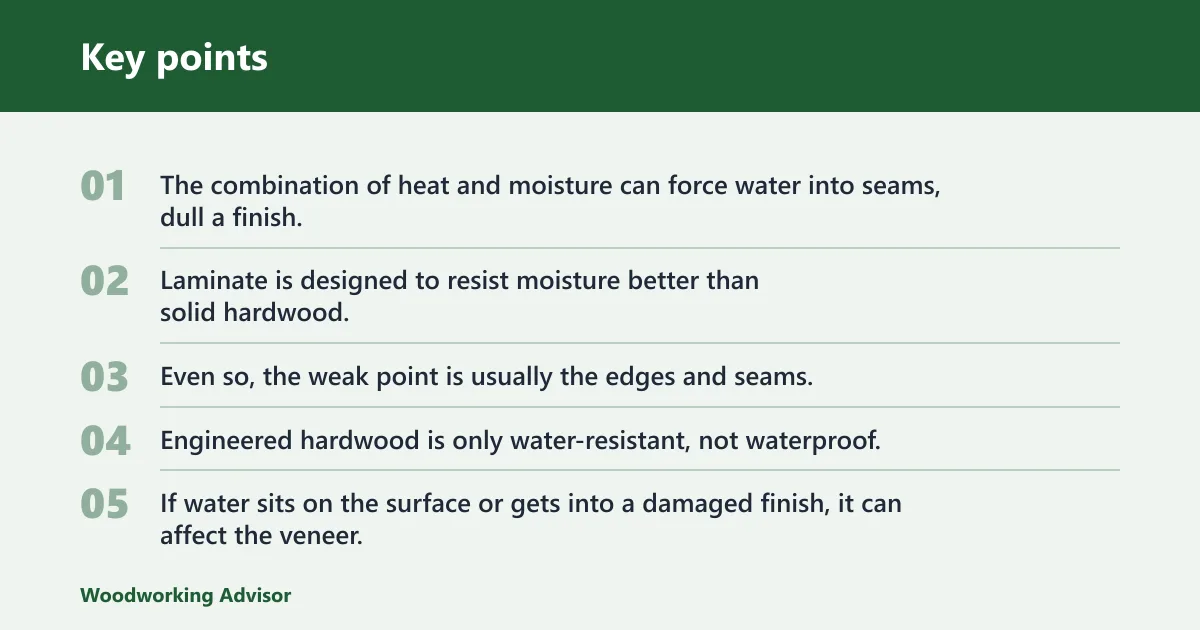
Steam mops are a poor choice for both. The combination of heat and moisture can force water into seams, dull a finish, or cause edge damage that does not reverse on its own.
Moisture risk on laminate
Laminate is designed to resist moisture better than solid hardwood, and some product lines are marketed as waterproof. Even so, the weak point is usually the edges and seams, where swelling can happen if a spill is ignored.
Moisture risk on engineered hardwood
Engineered hardwood is only water-resistant, not waterproof. If water sits on the surface or gets into a damaged finish, it can affect the veneer, core, or finish layer.
Say your dining area spills a full glass of water onto a laminate floor. If you wipe it quickly, the floor is likely fine; if it sits near a seam for an hour, the edge can start to swell. The same spill on engineered hardwood needs a quick wipe too, but the goal is to protect the wood layers and finish from repeated wetting.
Which floor works better for pets and kids?
Laminate usually works better in homes with pets and kids because it is highly scratch resistant and easier to keep looking unchanged after muddy paws, toy traffic, and frequent cleanup. Engineered hardwood can still work well, but it will show wear sooner if the household has a lot of grit, dragging, or dropped objects.
The deciding factor is often not just scratches. It is how often you deal with water bowls, spills, tracked-in dirt, and chair movement in the same rooms.
Scratch resistance and tracked-in grit
Bruce says laminate is highly scratch resistant, while Bruce says engineered hardwood is more prone to scratches. That difference matters in hallways, play areas, and around feeding stations where grit acts like sandpaper.
Mess cleanup around doors and feeding areas
Entryways, mudrooms, and pet feeding zones create repeated exposure to water and dirt. Laminate is more forgiving if you keep up with wipe-downs, while engineered hardwood needs more vigilance to avoid finish dulling and water marks.
A common first-timer mistake is choosing a beautiful engineered floor for a kitchen and then treating it like tile. A few small spills are manageable, but repeated wet cleanup near the sink can shorten the floor’s clean-looking life if moisture is not removed fast.
Maintenance cost over time
Laminate usually costs less to maintain because the routine is simpler and the cleaner needs are basic. Engineered hardwood can cost more over time because you may buy wood-safe cleaner, extra pads, and more furniture protection, and because damage can require repair or replacement sooner.
The same source gives laminate pricing around $1 to $3 per square foot, while Bruce gives engineered hardwood pricing starting around $3 per square foot. Upfront price is only part of the bill, though. Maintenance cost includes cleaners, microfiber pads, entry mats, felt protectors, and the chance of replacing boards after water or wear damage.
What adds to the upkeep bill
- Microfiber mop pads and replacement heads.
- Wood-safe cleaner for engineered hardwood.
- Entry mats that trap grit before it reaches the floor.
- Felt pads under chairs, stools, and table legs.
- Replacement boards if moisture or wear damages a section.
Which floor can cost more after damage?
Laminate usually has the lower replacement barrier because damaged panels are swapped rather than refinished. Engineered hardwood may be repaired more flexibly if the veneer is thick enough, but that same floor can be more expensive to save if water reaches the core or finish damage spreads.
Choose Engineered Hardwood if… / Choose Laminate if…
Choose Engineered Hardwood if you want real wood underfoot, prefer a wood-safe cleaner routine, live with seasonal humidity swings, or want the option to refinish later if the veneer is thick enough. It also makes sense in rooms where scratches are manageable and the appeal of repairability matters more than maximum surface toughness.
Choose Laminate if your biggest concerns are scratches, muddy traffic, kids, pets, or simple day-to-day maintenance. It is the better fit when you want a dry or lightly damp microfiber routine, lower upkeep, and a floor that is less likely to look worn after routine use.
Picture a front entry that gets wet boots, a dog, and a stroller wheel every afternoon. Laminate is usually the easier maintenance choice there because the main job is wiping up grit and moisture quickly. In a quieter bedroom, engineered hardwood can be the better fit because cleaning is still simple, and the lower traffic reduces scratch pressure.

Frequently asked questions
Is engineered hardwood easier to maintain than laminate?
Usually no, not if your main concern is keeping the floor looking unchanged. Laminate is generally easier for scratch resistance and spill handling. Engineered hardwood can feel simpler in a different way because it accepts wood-safe cleaners and may be refinished later if the veneer is thick enough.
Which floor is better for pets and kids, engineered hardwood or laminate?
Laminate is often a better choice for pets and kids because it tends to resist scratches and handle everyday messes more easily. Engineered hardwood can still work, especially in calmer rooms, but it is more likely to show dents, finish wear, or water marks in busy areas.
Can you use a steam mop on engineered hardwood or laminate?
No. Steam mops are often a poor choice for either floor type because heat and moisture can damage seams, dull finishes, and force water into vulnerable edges. A dry or lightly damp microfiber mop is safer, and engineered hardwood should be cleaned with a wood-safe product.
What cleaner should you use on engineered hardwood floors?
Use a wood-safe cleaner made for finished hardwood, applied with a damp mop rather than a wet one. Avoid harsh scrubbing, soaking the surface, or using cleaners that leave residue. The goal is to clean the finish without forcing moisture into the wood layers.
Does laminate need less maintenance than engineered hardwood?
Yes, in most households it does. Laminate usually needs only dry or lightly damp microfiber cleaning, and it is more scratch resistant. Engineered hardwood needs more caution because it uses a real wood veneer, is not waterproof, and may react more strongly to moisture and the wrong cleaner.
Can engineered hardwood be refinished if it gets worn?
Sometimes. Some engineered hardwood can be refinished a few times, but only if the veneer is thick enough to allow sanding. Thin veneers, water damage, or core damage can limit that option, and laminate cannot be refinished at all.
Sponsored / affiliate links. As an Amazon Associate I earn from qualifying purchases. I may earn additional commission from eligible campaigns.