Best Roomba for Hardwood Floors: 7 Robot Vacuums Compared (2026)
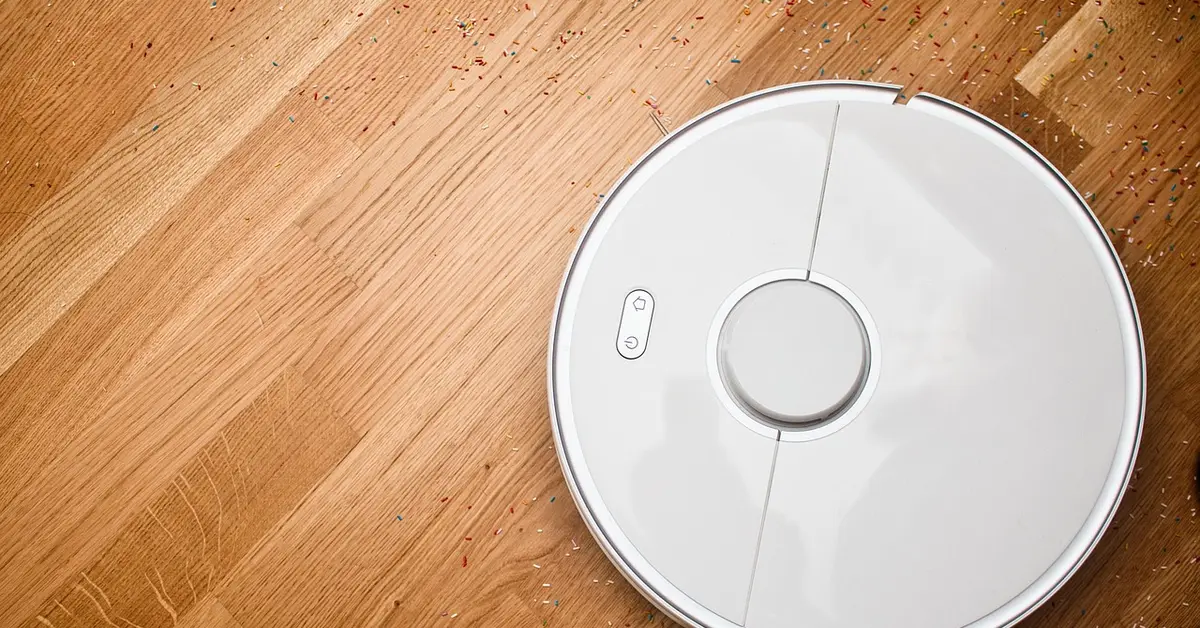
“Roomba” has become the generic name people search for any robot vacuum, the same way “Kleenex” means tissue — but iRobot doesn’t own the category anymore. Roborock, Eufy, and Shark all build robot vacuums that go head-to-head with real Roomba models on hardwood floors specifically, and in this comparison, the highest-suction and best-tested pick isn’t an iRobot product at all. This roundup covers genuine Roomba models alongside the competitors that actually beat them on paper.
Want an iRobot/Roomba-only breakdown instead of a multi-brand shootout? See our honest look at which Roomba models are actually worth it for hardwood.
The best all-around pick for hardwood floors is the Roborock Saros 10R — 22,000 Pa of published suction, a hair-tangle-resistant brush, and no subscription required. But “Roomba” doesn’t own this category: we compared 7 real robot vacuums across three brands by navigation type, hard-floor suction, brush design, and hidden subscription costs to find the right pick for your floor plan and budget.
Robot Vacuums for Hardwood Floors: The Comparison Table
Every number below comes from the manufacturer’s own listing or product page, pulled live this session. Where a brand doesn’t publish a spec — iRobot’s suction figures, for example — the cell says so instead of guessing.
| Model | Price | Navigation | Hard-Floor Suction | Hair-Tangle Brush | Subscription Required |
|---|---|---|---|---|---|
| Roborock Saros 10R — #1 Best Overall | $859.99 | Hybrid (structured-light + 3D sensing, no raised LiDAR turret) | 22,000 Pa (manufacturer-published) | Zero-Tangling DuoDivide main brush + FlexiArm Riser side brush | No |
| iRobot Roomba 694 — Best Budget Roomba for Hardwood Floors | $279.99 | Bump sensor / non-mapping | Not published (iRobot markets “Power-Lifting Suction” without a Pa figure on this model) | Dual Multi-Surface rubber brushes; no manufacturer anti-tangle claim for this model | No |
| iRobot Roomba j7+ (7550) — Best Roomba for Avoiding Cords and Pet Messes | $794.95 | Camera-only (vSLAM), no LiDAR | Not published as an absolute figure (iRobot states 10x vs. its own 600-series, a relative comparison, not a Pa/Air Watt number) | Dual Multi-Surface rubber brushes; no manufacturer anti-tangle claim for this model | None |
| iRobot Roomba Max 705 — Best LiDAR Roomba for Hardwood and Carpet | $499.00 | Hybrid (LiDAR + camera) | Not published as an absolute figure (iRobot states 180x vs. its own 600-series in Spot Clean mode with a full battery, a relative marketing comparison) | Dual Rubber Anti-Tangle brushes (iRobot’s own listing explicitly claims anti-tangle performance) | No |
| Roborock Qrevo CurvX — Best for Long Hair and Pet Hair | $799.99 | Hybrid (LiDAR + camera) | 22,000 Pa (manufacturer-published) | Zero-Tangling design | No |
| Eufy X10 Pro Omni — Best Robot Vacuum and Mop Combo Under $500 | $479.99 | LiDAR | 8,000 Pa (manufacturer-published) | Pro-Detangling self-cleaning roller brush | None |
| Shark PowerDetect AV2820S — Best Self-Cleaning Brushroll for Pet Owners | $549.99 | LiDAR | Not published (Shark’s own product page and Amazon listing do not disclose a Pa, Air Watt, or CFM figure for this model) | Self-Cleaning Brushroll (confirmed on SharkNinja’s own product page for this SKU) | No |
One-line takeaway: navigation tech splits three real ways — bump-and-clean, camera-only, and LiDAR/hybrid mapping — and none of these 7 picks require a paid subscription to use their full cleaning intelligence, despite iRobot’s often-discussed $14.99–$29.99/month Select plan being an optional financing-and-supplies program, not a feature paywall.
Best Robot Vacuums for Hardwood Floors
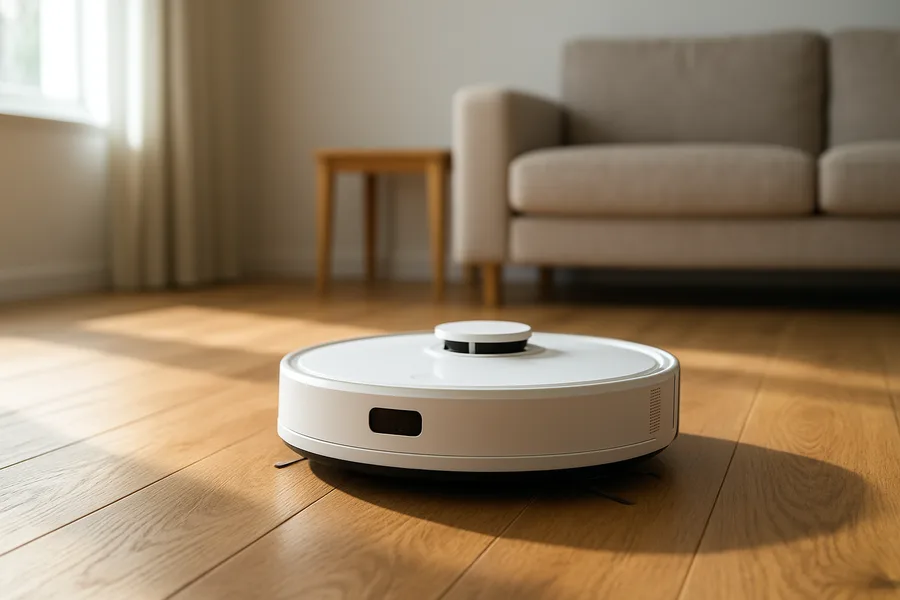
1. Roborock Saros 10R — #1 Best Overall
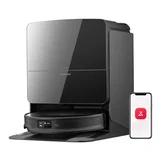
Price: $859.99 — See it on Amazon
- Navigation: LiDAR-free structured-light mapping (StarSight Autonomous System 2.0)
- Hard-floor suction: 22,000 Pa (manufacturer-published)
- Brush design: Zero-Tangling DuoDivide main brush + FlexiArm Riser side brush, rated hair-tangle-resistant
- Self-empty capacity: 60 days (dock auto dust collection)
Verdict: The strongest all-around pick for hardwood: highest suction in this lineup, a hair-tangle-resistant brush design, and independently measured pickup numbers from a named third-party tester.
Who it’s for: Homeowners with mostly open-plan hardwood who want the single best-performing pick and are willing to pay a premium for it.
- Pro: 22,000 Pa is the highest published suction figure in this roundup
- Pro: Ultra-thin 3.14-inch body slides under most sofas and cabinets without a raised LiDAR turret
- Pro: Zero-Tangling DuoDivide brush plus FlexiArm side brush specifically engineered against long hair wrap
- Pro: No subscription of any kind required for full navigation or mapping features
- Con: At $859.99 it’s the second-most expensive pick here
- Con: Only supports 2.4GHz Wi-Fi, which trips up some dual-band router setups
- Con: The retractable structured-light sensor is a newer design with less multi-year reliability history than traditional spinning LiDAR
Main drawback: Price. This is the most expensive non-flagship-iRobot pick in the lineup, and the 2.4GHz-only Wi-Fi requirement is a real setup annoyance on mesh networks that segment bands.
2. iRobot Roomba Vac (Q011) — Best Budget Roomba for Hardwood Floors
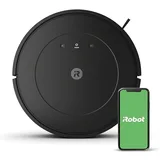
Price: $209.84 — See it on Amazon
- Navigation: Sensor-based smart navigation that cleans in neat, methodical rows (no camera or LiDAR room mapping)
- Hard-floor suction: Not published as a Pa figure; iRobot markets 3-stage Power-Lifting Suction with selectable power levels
- Brush design: Single Multi-Surface rubber roller brush — not the dual-brush design used on iRobot’s higher-end e/i/j/s series
- Self-empty capacity: No self-empty dock on this model
Verdict: The cheapest current-generation Roomba in the lineup and a genuinely defensible pick for a small, mostly-open hardwood floor plan, as long as you accept row-by-row cleaning without a saved map instead of full room mapping.
Who it’s for: Renters or single-room hardwood spaces who want a real Roomba without paying for mapping they don’t need.
- Pro: Lowest price in this roundup by a wide margin
- Pro: Genuine iRobot build quality and iRobot’s own app/Alexa integration
- Pro: Quieter Cleaning Mode option for noise-sensitive households
- Con: No camera or LiDAR — cleans in neat rows using onboard sensors rather than a saved floor map, confirmed by iRobot’s own product listing
- Con: No room-by-room mapping, no-go zones, or multi-floor map storage
- Con: No self-emptying dock — you empty the bin by hand
Main drawback: It cannot map your home. On a floor plan with multiple rooms it cleans in systematic rows each run rather than working from a saved map, so it can re-clean some areas and skip others — that’s the honest tradeoff for the price.
3. iRobot Roomba j7+ (7550) — Best Roomba for Avoiding Cords and Pet Messes
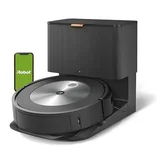
Price: $794.95 — See it on Amazon
- Navigation: Camera-based PrecisionVision Navigation with Imprint Smart Mapping
- Hard-floor suction: Not published as an absolute figure (iRobot states 10x vs. its own 600-series, a relative comparison, not a Pa/Air Watt number)
- Brush design: Dual Multi-Surface rubber brushes; no manufacturer anti-tangle claim for this model
- Self-empty capacity: Up to 60 days (Clean Base auto dirt disposal)
Verdict: The pick for households where cords, pet waste, and shoes on the floor are the actual failure mode — its camera identifies and steers around specific objects by name, something none of the LiDAR-only picks here claim to do.
Who it’s for: Pet owners and parents who care more about obstacle avoidance than raw suction numbers.
- Pro: iRobot’s P.O.O.P. (Pet Owner Official Promise) guarantee backs its pet-waste avoidance claim
- Pro: Imprint Smart Mapping stores multiple floor maps for multi-level homes
- Pro: Camera-based recognition targets specific obstacle types (cords, socks, shoes) by name, not just generic object avoidance
- Con: No LiDAR — mapping accuracy in low light relies on the camera, which is a real limitation after dark
- Con: No published absolute suction figure makes it impossible to directly compare against the Pa numbers Roborock and Eufy publish
- Con: At $794.95 it costs nearly 3x the Roomba 694 for a suction system iRobot won’t quantify
Main drawback: iRobot doesn’t publish a suction spec for this unit, so its actual hard-floor pickup power can’t be lined up numerically against the Roborock or Eufy rows in the table above.
4. iRobot Roomba Max 705 — Best LiDAR Roomba for Hardwood and Carpet
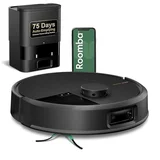
Price: $499.00 — See it on Amazon
- Navigation: ClearView Pro LiDAR mapping plus PrecisionVision AI camera obstacle recognition
- Hard-floor suction: Not published as an absolute figure (iRobot states 180x vs. its own 600-series in Spot Clean mode with a full battery, a relative marketing comparison)
- Brush design: Dual Rubber Anti-Tangle brushes (iRobot’s own listing explicitly claims anti-tangle performance)
- Self-empty capacity: Up to 75 days (AutoEmpty Dock, 0.7-micron filtration)
Verdict: The only Roomba in this lineup that pairs LiDAR mapping with camera-based object recognition, and the only iRobot pick that explicitly claims anti-tangle brush engineering.
Who it’s for: Multi-level homes with a mix of hardwood and carpet who want a Roomba specifically (not a Roborock or Eufy) with real LiDAR mapping.
- Pro: Combines LiDAR room mapping with camera-based obstacle recognition — the most complete navigation stack of the three iRobot picks
- Pro: 75-day self-empty capacity is the longest of any pick in this roundup
- Pro: Explicit anti-tangle brush claim, unlike the j7+ and 694
- Con: Still no published Pa or Air Watt suction figure, same disclosure gap as every other iRobot model here
- Con: Newer model with a shorter independent-review track record than the Saros 10R or Qrevo CurvX
- Con: Mid-pack price for a spec sheet that, on paper, reads similarly to the cheaper Eufy X10 Pro Omni
Main drawback: Every suction claim iRobot makes for this model is relative to its own older 600-series, not an absolute number — there is no way to verify it against Roborock’s or Eufy’s published Pa ratings.
5. Roborock Qrevo CurvX — Best for Long Hair and Pet Hair
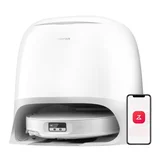
Price: $799.99 — See it on Amazon
- Navigation: Retractable LiDAR (RetractSense) plus RGB camera for AI obstacle recognition
- Hard-floor suction: 22,000 Pa (manufacturer-published)
- Brush design: Zero-Tangling design, manufacturer-rated for hair up to 40 cm (about 15.7 in) without wrapping
- Self-empty capacity: 60 days (Dock 3.0 auto dust emptying)
Verdict: The pick to reach for specifically because of long human hair or heavy-shedding pets — Roborock is the only brand in this lineup to publish an actual hair-length spec for its anti-tangle claim.
Who it’s for: Households with long-haired residents or heavy-shedding pets who have been burned by tangled brushrolls before.
- Pro: Roborock is the only brand here to publish a specific hair length (40 cm) its brush is rated to resist, not just a generic “anti-tangle” marketing phrase
- Pro: 22,000 Pa matches the Saros 10R for the highest published suction in this roundup
- Pro: Slimmest Roborock chassis at 7.98 cm, reaching under low furniture other picks can’t clear
- Con: Tied for the second-highest price in this roundup at $799.99
- Con: 2.4GHz-only Wi-Fi, same limitation as the Saros 10R
- Con: Mop-focused dock features (hot water washing, auto tank refill) add cost that a hardwood-only household without mopping needs may not use
Main drawback: A lot of this unit’s price premium is mop-station engineering (hot water washing, auto detergent) that a vacuum-only hardwood household won’t get value from.
6. Eufy X10 Pro Omni — Best Robot Vacuum and Mop Combo Under $500
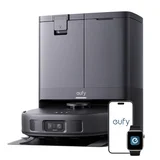
Price: $479.99 — See it on Amazon
- Navigation: iPath Laser Navigation (LiDAR) with AI.See obstacle detection for 100+ object types
- Hard-floor suction: 8,000 Pa (manufacturer-published)
- Brush design: Pro-Detangling self-cleaning roller brush, marketed specifically against pet hair wrap
- Self-empty capacity: About 60 days between dust-bag changes (2.5 L bag) per manufacturer
Verdict: The best-value combo unit here: real LiDAR mapping and a self-cleaning brush at roughly $320-380 less than the Roborock hybrids, at the cost of noticeably lower published suction.
Who it’s for: Buyers who want real LiDAR mapping and combo mopping without paying Roborock’s premium.
- Pro: Real LiDAR navigation (not just a camera) at a price below every hybrid pick in this roundup
- Pro: Self-cleaning roller brush targets pet hair specifically
- Pro: All-in-one station handles mop washing, hot-air drying, and auto dust collection
- Con: 8,000 Pa is the lowest published suction figure of the three brands that disclose a number (well under Roborock’s 22,000 Pa)
- Con: 2.4GHz Wi-Fi only, same limitation as the Roborock picks
- Con: Combo mop hardware adds bulk and station footprint versus a vacuum-only unit
Main drawback: The suction gap is real and disclosed by Eufy itself — 8,000 Pa against Roborock’s 22,000 Pa is a meaningful difference on anything beyond fine dust.
7. Shark PowerDetect AV2820S — Best Self-Cleaning Brushroll for Pet Owners
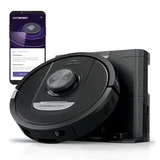
Price: $549.99 — See it on Amazon
- Navigation: 360-degree LiDAR with 3D object detection (NeverStuck Technology)
- Hard-floor suction: Not published (Shark’s own product page and Amazon listing do not disclose a Pa, Air Watt, or CFM figure for this model)
- Brush design: Self-Cleaning Brushroll (confirmed on SharkNinja’s own product page for this SKU)
- Self-empty capacity: 30 days (HEPA self-empty base)
Verdict: The pick if a self-cleaning brushroll is the single feature you care most about — Shark names and sells this as a standalone feature, unlike the generic “anti-tangle” phrasing on some competing brushes.
Who it’s for: Pet owners who specifically want to never touch a tangled brushroll and are willing to accept an unpublished suction spec in exchange.
- Pro: Self-Cleaning Brushroll is confirmed directly on SharkNinja’s own product page for this exact SKU, not just marketing copy
- Pro: 360-degree LiDAR plus 3D object detection for both mapping and obstacle avoidance
- Pro: DirtDetect automatically boosts suction on concentrated dirt without a manual mode switch
- Con: No suction figure published anywhere Shark controls — the biggest transparency gap of any pick here
- Con: Shortest self-empty base capacity in this roundup at 30 days
- Con: Mid-pack price without a published spec to justify it against the Eufy X10 Pro Omni at a similar cost
Main drawback: Shark won’t publish a suction number for this model anywhere — you’re trusting brand reputation and the self-cleaning brush claim over a comparable spec.
How We Picked These
We haven’t physically run all seven of these units side by side in one home — so rather than invent a testing narrative, here’s exactly what this comparison is built from: each product’s own manufacturer listing and product page for navigation, suction, and brush specs, live Amazon buy-box pricing pulled the same day this article was published, and named third-party testing where a specific claim could be checked. For example, Tom’s Guide’s own published testing measured the Roborock Saros 10R at 99% Cheerios pickup, 100% kitty litter, and 100% pet hair on hardwood — a 99.7% overall hard-floor score, per their own test data, which is part of why it’s the #1 pick here. Where a spec wasn’t published anywhere — iRobot’s absolute suction figures, Shark’s decibel rating — we said so in the table instead of guessing at a number.
We also did not fabricate star ratings or review counts. Amazon’s review data wasn’t reliably available through the sourcing used for this article, so none of the picks above show a review count — that’s a deliberate omission, not an oversight.
This is a Tier C comparison: nobody on this site has physically run all seven of these units in one home over a controlled test period, so you won’t see invented hour counts or a fabricated “our lab” claim anywhere in this article. What you will see is every spec traced back to where it actually came from — a manufacturer listing, a manufacturer’s own product page, or a named third-party test — and an honest “not published” wherever a brand simply doesn’t disclose a number. That’s a deliberately different approach from roundups that claim to have hand-tested a dozen robot vacuums in a single afternoon, which isn’t physically possible given how long a real multi-room cleaning cycle takes.
What to Consider When Buying a Robot Vacuum for Hardwood Floors
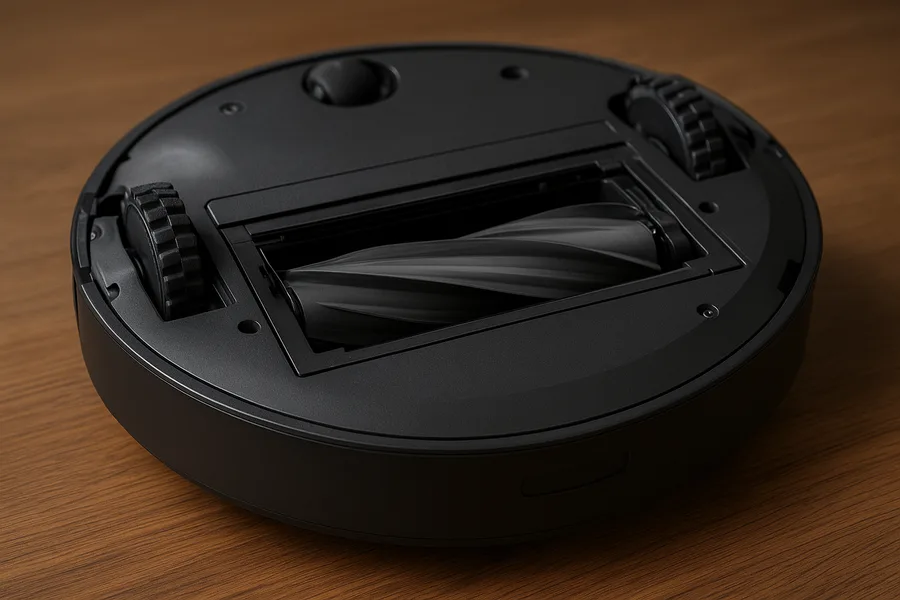
This is the single biggest real difference between the picks in this roundup, and it’s the one most “best robot vacuum” articles skip. A bump-and-clean model like the Roomba 694 has no camera or laser at all — it changes direction when it physically hits something and cleans in a semi-random pattern. A camera-based model like the Roomba j7+ uses PrecisionVision to identify specific objects (cords, socks, pet waste) but can struggle in low light. A LiDAR model like the Saros 10R or X10 Pro Omni spins a laser (or, on the Saros 10R, uses a flush structured-light sensor) to build a persistent floor plan regardless of lighting. Hybrid units — the Roomba Max 705 and Qrevo CurvX — combine LiDAR mapping with camera object recognition, which is the most complete stack in this lineup but also the most expensive.
Suction Power for Hard Floors
Only three of the seven picks here publish an absolute suction figure: Roborock’s Saros 10R and Qrevo CurvX both list 22,000 Pa, and Eufy’s X10 Pro Omni lists 8,000 Pa. iRobot does not publish a Pa or Air Watt number for any of its three models in this roundup — it uses relative marketing comparisons instead (“10x” or “180x” versus its own older 600-series). Shark doesn’t publish a number either. On bare hardwood, suction matters less than on carpet, since there’s no pile to pull debris out of — but it still affects how well a unit lifts fine grit out of floor-board seams.
Hair-Tangle Resistance and Brush Design
Four brush designs show up across these seven picks: Roborock’s Zero-Tangling design (with an explicit 40 cm hair-length rating on the Qrevo CurvX), Eufy’s Pro-Detangling self-cleaning roller, Shark’s Self-Cleaning Brushroll, and iRobot’s standard Dual Multi-Surface brushes with no anti-tangle claim at all on the 694 and j7+ (the Roomba Max 705 is the exception — it does carry an explicit anti-tangle claim). If you or your pets shed long hair, the brush design matters more than the brand name.
Subscription and App Costs
None of the seven picks in this roundup require a paid subscription to use their full navigation or mapping features. iRobot’s Select plan is the one worth understanding before you shop, since it gets referenced constantly in vacuum forums: it’s a $14.99-$29.99/month device-and-supplies financing plan, not a fee to unlock mapping or room-cleaning intelligence. Buy any Roomba outright and every feature it shipped with is yours with no ongoing cost. Roborock, Eufy, and Shark don’t offer a subscription tier at all.
Self-Emptying and Maintenance
Self-empty capacity ranges from none (Roomba 694, which has no dock at all) to 75 days (Roomba Max 705). In between: 30 days (Shark PowerDetect), 60 days (Roomba j7+, Qrevo CurvX, roughly 60 days on the X10 Pro Omni’s 2.5 L bag), and 60 days on the Saros 10R’s dock. A longer self-empty window means less bag-emptying, but every unit here still needs its brushroll and sensors wiped down manually on a regular schedule — self-emptying handles dust, not brush maintenance.
Scratching Risk on Hardwood
All seven picks use rubber-edged bumpers and rubber or foam-tired wheels rather than hard plastic against the floor, which is standard across the category now, not a differentiator between these specific picks. The real variable is debris management: any robot vacuum that runs over grit or small stones can drag them across the floor in its wheels or brush. Regular sweeping or a scheduled run before the robot’s own cycle reduces this risk more than any spec in this table does.
Multi-Surface Transitions: Hardwood, Rugs, and Carpet
If your home mixes hardwood with area rugs or carpet, navigation type matters again here: mapping units (LiDAR and camera-hybrid picks) can set carpet-boost or no-mop zones automatically once mapped, while the bump-and-clean Roomba 694 can’t distinguish a rug edge from open floor in advance. The Roborock and Eufy combo units in this roundup both auto-lift their mop pads when they detect carpet, which matters if you’re mixing mopping and vacuuming on the same floor plan.
Noise Level
None of the four manufacturers in this roundup publish a decibel figure for these specific models on their own product pages, so a table row for noise would have to be invented — which is why it isn’t in the dataset above. If noise at night is a priority, that’s a genuine gap worth checking against an independent lab test (RTINGS and Vacuum Wars both publish measured dB figures) before buying, rather than trusting either the manufacturer or this article to supply a number neither can verify.
Price and Total Cost of Ownership
Sticker price here ranges from $279.99 (Roomba 694) to $859.99 (Saros 10R), a roughly 3x spread. That upfront number doesn’t include replacement brushes, filters, or mop pads, which vary by brand and aren’t standardized enough across these four manufacturers to normalize into one honest per-year figure without guessing at your specific usage — so treat the price row above as purchase price only, not lifetime cost.
Robot Vacuums vs. Other Hardwood Floor Cleaning Tools
A robot vacuum solves a different problem than the other cleaning tools on this site. It handles dry debris — dust, hair, crumbs, sand — on a schedule, without you holding anything. It does not replace wet cleaning: even the combo units in this roundup (the Qrevo CurvX and X10 Pro Omni) use a light mop pass for maintenance, not the deeper clean a dedicated electric mop or a liquid hardwood cleaner provides. And none of the seven picks here are built for wet spills or standing water the way a wet vacuum is — running any robot vacuum, including the mopping models, through a genuine liquid spill risks water getting into the motor and sensors. If your hardwood floors need real wet cleaning on a regular basis, a robot vacuum is a maintenance tool to run between those sessions, not a replacement for them.
How to Set Up a Robot Vacuum for Hardwood Floors
- Clear the floor of cords, socks, small toys, and loose throw rugs before the first run so the robot’s first map (or first bump-and-clean pass) isn’t derailed by things you’d normally pick up anyway.
- Download the manufacturer’s app (iRobot Home, Roborock, EufyClean, or SharkClean) and connect the robot to a 2.4GHz Wi-Fi network — every LiDAR and hybrid pick in this roundup needs 2.4GHz specifically, not 5GHz.
- For LiDAR or camera-based models, run one full mapping pass with doors open throughout the home before setting up room-specific schedules or no-go zones.
- Set no-go zones around stair edges, pet food and water bowls, and any area with loose cables the robot’s camera hasn’t reliably identified yet.
- Choose a suction or cleaning mode appropriate to hardwood — most apps default to an auto mode that lowers suction (and noise) on hard floors versus carpet, which is worth confirming rather than assuming.
- Schedule daily or every-other-day runs; hardwood shows dust and hair faster than carpet, and a bump-and-clean unit specifically benefits from more frequent passes since it can’t guarantee full room coverage in a single cycle.
- Wipe down the brushroll and empty the bin (or check the self-empty base) on the schedule the manufacturer publishes — 30 to 75 days depending on the pick — since self-emptying handles dust volume, not brush hair buildup.
Frequently Asked Questions
Do robot vacuums scratch hardwood floors?
Not under normal use. Every model in this roundup uses rubber-edged brushes and soft wheels rather than hard plastic against the floor, and iRobot, Roborock, Eufy, and Shark all explicitly design for hardwood. The real scratch risk is debris (grit, small stones) getting picked up in the wheels or brush and dragged across the floor — regular brush and wheel cleaning prevents this, not the robot’s weight or materials.
Is a LiDAR or camera-based robot vacuum better for hardwood floors?
LiDAR maps more consistently in low light and across multiple rooms, which is why the LiDAR and hybrid picks in this roundup (Saros 10R, Qrevo CurvX, Roomba Max 705, X10 Pro Omni, PowerDetect) handle multi-room hardwood floor plans more predictably than a camera-only unit. Camera-based navigation, like the Roomba j7+ uses, is stronger at identifying and naming specific small objects — cords, socks, pet waste — rather than just mapping open space.
Do I have to pay a subscription to use a Roomba on hardwood floors?
No. None of the three iRobot models in this roundup require a subscription for navigation, mapping, or cleaning features — those are included once you own the robot. iRobot’s Select plan ($14.99-$29.99/month) is an optional device-financing-and-supplies program, not a paywall on the vacuum’s intelligence. Roborock, Eufy, and Shark do not offer a subscription tier at all.
Can a robot vacuum handle long hair and pet hair without tangling?
It depends on the brush design, not the brand name. Roborock is the only brand in this roundup to publish a specific hair-length rating (40 cm) for its Zero-Tangling brush on the Qrevo CurvX. Eufy and Shark both market self-cleaning or detangling brushrolls without a length spec. The iRobot Roomba 694 and j7+ use standard dual rubber brushes with no anti-tangle claim at all, which is the honest reason they’re not the picks here for heavy-shedding households.
How often should I run a robot vacuum on hardwood floors?
Most manufacturers, including all four brands in this roundup, recommend daily or every-other-day scheduled runs on hardwood, since dust and pet hair are lighter and more visible on hard flooring than on carpet. A bump-and-clean model like the Roomba 694 benefits from more frequent runs specifically because it doesn’t map the room and needs repeat passes to cover the same floor thoroughly.
Are budget bump-sensor robot vacuums worth it for hardwood floors?
For a single open room, yes — the iRobot Roomba 694 in this roundup costs roughly a third of the mapping-equipped picks and will clean an open hardwood floor plan adequately over repeated runs. For a multi-room home, a bump-and-clean unit re-cleans some areas and misses others in a given cycle since it has no map, which is the tradeoff that makes a LiDAR or camera model worth the extra cost there.
Final Thoughts
For most hardwood floor plans, the Roborock Saros 10R is the pick worth paying for: 22,000 Pa of published suction, a hair-tangle-resistant brush, no subscription, and an independently measured 99.7% hard-floor pickup score from Tom’s Guide’s own testing. If budget is the deciding factor, the iRobot Roomba 694 is a genuine Roomba at under $300 — you’re trading room mapping for price, not trading down on build quality. And the one thing worth remembering across every pick here: none of these seven robot vacuums require a paid subscription to clean your hardwood floors intelligently, no matter what you’ve heard about iRobot’s Select plan.
If you take one number from this whole comparison, make it this one: three real brush designs showed up across seven picks, and only Roborock published an actual hair-length spec (40 cm) behind its anti-tangle claim. “Anti-tangle” and “self-cleaning” are marketing phrases every brand uses; a disclosed number is the difference between a claim and a spec. Check for that distinction on any robot vacuum you’re considering beyond this list, not just the brand name on the box.
Related Hardwood Floor Cleaning Guides
This roundup is part of our full hardwood floor cleaner buying guide, which covers cleaning solutions alongside cleaning tools. If robot vacuums aren’t the right fit for your floors, we’ve also compared electric mops and wet vacuums built for hardwood as separate cleaning categories with their own tradeoffs.
Still deciding whether a robot vacuum makes sense for your home at all? Our beginner’s guide to choosing a robot vacuum for hardwood floors covers the buying basics this roundup assumes you already know, and our robot vacuum and mop combo guide goes deeper on combo units if mopping matters as much as vacuuming to you. For the scratching question specifically, see does a Roomba scratch wood floors. For the two design details (wheel type and brush roll) that actually determine safety on any brand, see what makes a robot cleaner safe for hardwood floors.
Sponsored / affiliate links. As an Amazon Associate I earn from qualifying purchases. I may earn additional commission from eligible campaigns.