Will Hot Glue Stick in Cold Weather?
Hot glue can stick in cold weather, but below about 50°F (10°C) the bond is generally less dependable, and outdoor use on structural loads is usually not recommended. Ignore that, and joints can peel, pop loose, or fail after the first temperature swing. This guide explains when hot glue is acceptable for quick indoor fixes, damp spaces, and temporary outdoor tacks, and when you need a different adhesive.
EVA glue behavior and limits on cold surfaces
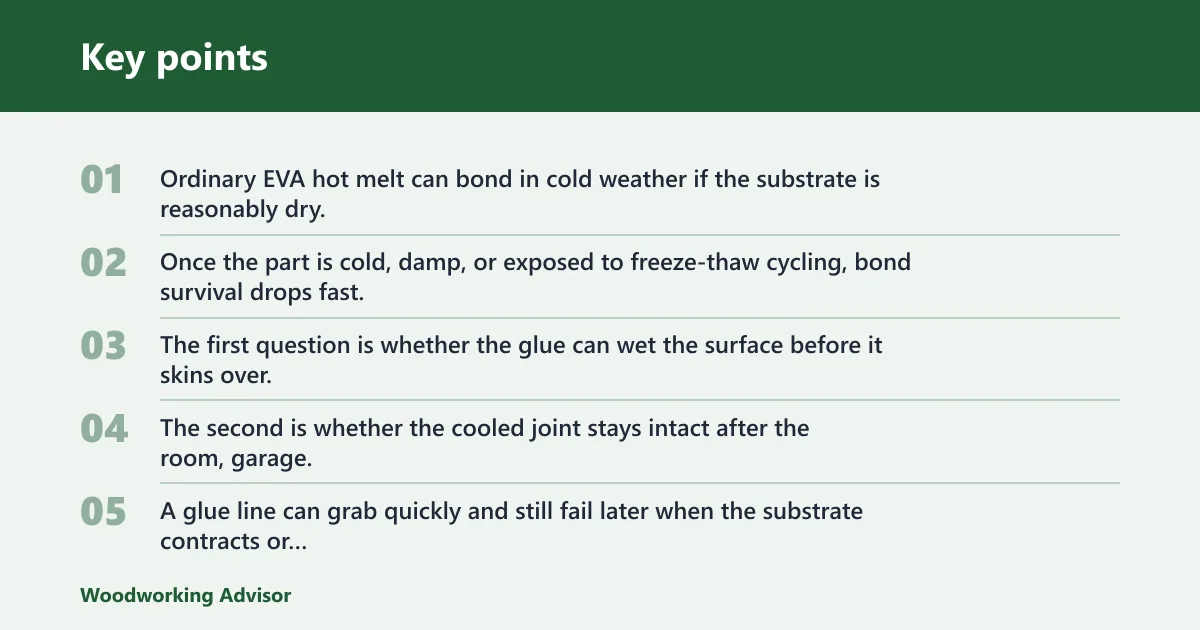


Yes, but only within limits. Ordinary EVA hot melt can bond in cold weather if the substrate is reasonably dry, the joint is lightly loaded, and it is being used for temporary tack or indoor repair. Once the part is cold, damp, or exposed to freeze-thaw cycling, bond survival drops fast.
Bond formation versus bond survival
The first question is whether the glue can wet the surface before it skins over. The second is whether the cooled joint stays intact after the room, garage, or outdoor air drops below freezing. Those are different problems. A glue line can grab quickly and still fail later when the substrate contracts or moisture gets in.
For winter use, a hot glue joint has to survive three stresses: rapid cooling, moisture, and movement. A bonded cardboard box in a cold basement is a different case from a PVC bracket outdoors in January. The first may be fine as a tack. The second is a bad bet.
How cold changes hot glue bonds
Standard EVA hot melt glue sticks are the common consumer type. One competitor says EVA-based hot glues soften at 80–100°C, which explains why they are easy to reheat and also why they can lose grip under heat and moisture. In cold conditions, the issue is not melting point alone. It is whether the glue line becomes brittle, shrinks, or pulls away from the surface.
Cold surfaces pull heat out of the adhesive too fast. That shortens open time and can leave a thin, under-wetted bond. If the surface is frosted or just colder than the room air, you can get a weak skin on top while the center is still trying to set.
Brittleness, shrinkage, and shock
Hot melt adhesives are solvent-free and solid at room temperature, but many common EVA sticks get more failure-prone in cold, damp, and UV exposure than specialty formulations. The winter risk is impact and peel, not just static load. A light tug, a vibration, or a twist can split a brittle glue line that looked fine ten minutes earlier.
Freeze-thaw cycling is especially hard on weaker bonds. Water can condense on the surface, freeze, then expand as conditions change. That movement stresses the adhesive edge and gives failure a path to start.
How hot glue types matter
Not all hot glue behaves the same way in winter. Ordinary EVA sticks are the baseline. Polyamide hot melt sticks are a higher-temperature formulation, and one competitor says they were tested for stability down to -20°C. A competitor also describes some high-temperature polyamide sticks as weather resistant.
That does not make them universal outdoor glue. It does mean they are the better hot-melt choice when you need a tougher bond than basic craft glue can give, especially where cold resistance matters more than easy removal.
Does a low-temp glue gun help in winter?
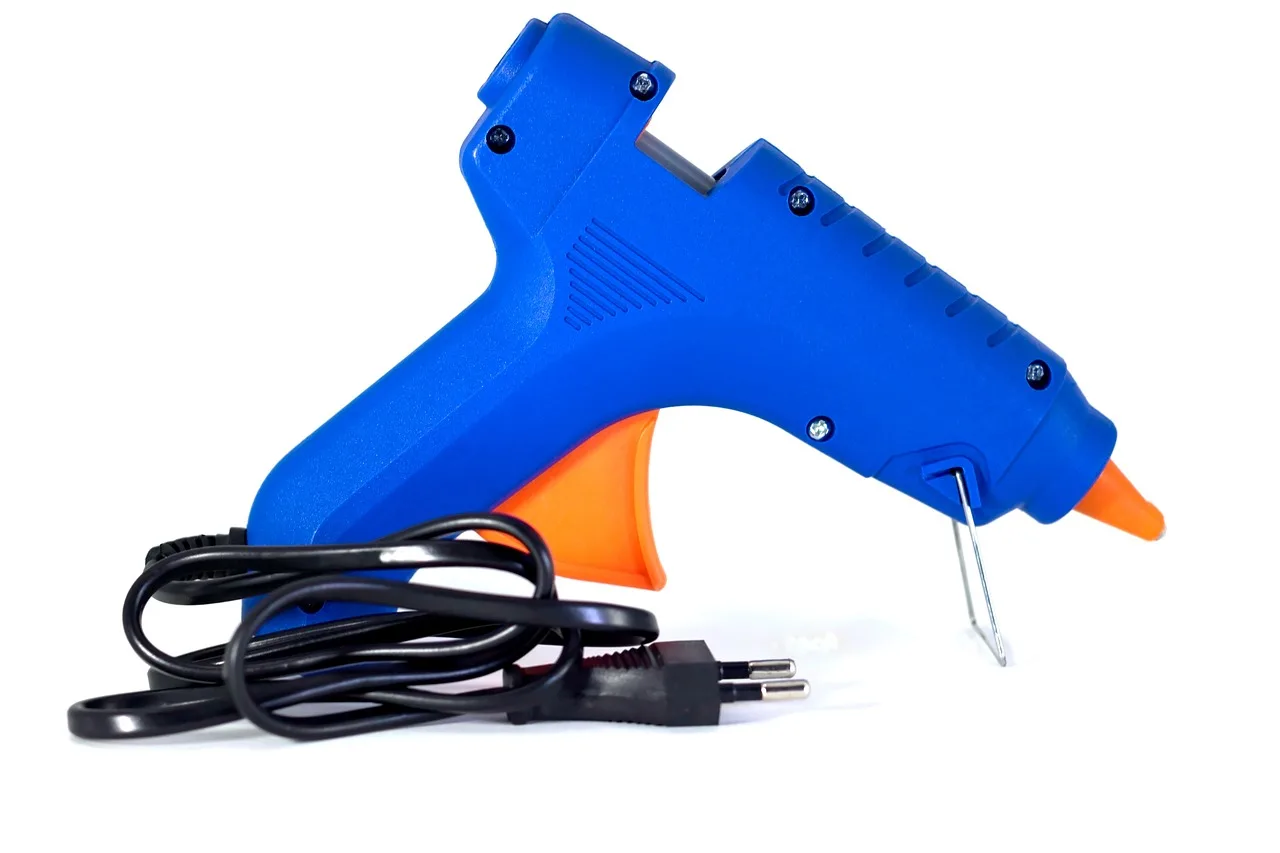
A low-temperature glue gun helps with delicate materials, not with bad substrate conditions. On dual-temperature models, low is often about 250°F and high is about 380°F. Lower heat can reduce scorching on foam, thin plastics, and fabric, but it also gives you less thermal reserve when the surface is cold.
Low-temperature glue guns
Use low-temp settings when the material can warp, wrinkle, or melt under a hotter nozzle. That includes some craft foam, thin trim, and light paper goods. In winter, though, low-temp output may chill too quickly on cold wood or metal, leaving you with poor wet-out and a shorter working window.
High-temperature glue guns
High-temp output is usually the better choice for general-purpose repairs and tougher bonding. It gives the adhesive more heat to wet the surface before the line skins over. That matters on larger parts, rough wood, and substrates that steal heat fast. It still does not turn craft hot glue into an outdoor structural adhesive.
Picture a 1-inch wood trim piece that needs temporary positioning while another fastener goes in. A high-temp gun can give you enough grab to hold the trim in place. Now picture the same trim outdoors on a painted metal gate in freezing rain. More heat at the gun will not solve the moisture or movement problem.
Matching gun heat to substrate
The gun setting should match both the material and the job. Use low-temp for fragile substrates and light interior tack. Use high-temp when you need better wet-out on wood or cardboard. For winter work, the deciding factor is still surface condition. Cold, wet, or dusty parts remain poor candidates.
What surfaces hold best in the cold?
Dry wood and porous materials usually give hot glue its best winter chance. Painted wood and cardboard can also hold for light-duty work if the surface is clean and not chilled through. Metal, PVC, and slick plastics are harder, because the glue has less texture to grab and the surface often cools the adhesive too quickly.
Wood, painted wood, and cardboard
These surfaces are the most forgiving because the adhesive can key into pores or fibers. Even then, cold reduces performance if the board is coming straight from an unheated garage. A pre-warmed panel bonds better than an icy one. That is especially true if humidity is high and condensation may form.
Metal, plastic, and PVC
Hot glue can stick to some plastics and metals, but winter makes the margin smaller. Smooth metal sheds heat fast. PVC and painted surfaces can carry release agents, dust, or surface oils. On these substrates, hot glue is best treated as a temporary tack unless conditions are controlled and the load stays light.
Frozen, damp, or dusty surfaces
Frozen wood, damp masonry, dusty plastic, and wet painted metal are all poor choices. Moisture matters as much as temperature. A damp garage wall or bathroom trim can fail because the glue line bonds to surface moisture instead of the substrate. That failure may not show up until the first cold snap or humidity swing.
Suppose a 6-inch PVC spacer is held to a basement wall with hot glue at 45°F. If the wall is dry and the spacer only needs to stay put for layout, the bond may be acceptable as a tack. If the wall is cold and damp, the same joint should be avoided.
Cold weather adhesive decision table
This table separates temporary tack from a bond that has to survive winter use. Read across each row from substrate to risk. If the surface is cold and wet, the answer usually shifts toward avoid, even when the glue itself is rated for colder conditions.
| Substrate | Ambient temperature | Surface temperature | Moisture level | Recommended glue type | Expected risk | Hot glue acceptable? |
|---|---|---|---|---|---|---|
| Dry cardboard | 50°F to 65°F | Near room temperature | Low | Standard EVA hot melt | Low for light-duty tack; peel risk if stressed | Yes, temporary tack |
| Wood trim | Below 50°F | Cool, not frosted | Low | High-temperature EVA or polyamide hot melt | Moderate; rapid skinning and shorter open time | Yes, if load is light |
| Painted wood | Below 50°F | Cold to the touch | Low to medium | Polyamide hot melt | Moderate; bond may release with peel or vibration | Temporary tack only |
| Metal | 40°F or lower | Very cold | Low | Polyamide hot melt or epoxy | High; heat loss and poor wet-out | Usually avoid |
| PVC | Below 50°F | Cold | Low | Specialty hot melt only, if light-duty | High; slick surface and shrink stress | Temporary tack only |
| Frozen wood | At or below freezing | Frozen | Medium to high | Epoxy or construction adhesive after warming | Very high; condensation and brittle bond line | Avoid |
| Damp basement wall | 40°F to 55°F | Cool | High | Moisture-tolerant construction adhesive | Very high; bond failure from moisture film | Avoid |
Temporary tack versus avoid
Temporary tack means the joint only needs to hold position while another fastener, screw, clamp, or mechanical support takes over. Avoid means the adhesive would be carrying the actual load. Hot glue is acceptable far more often in the first case than the second.
How to improve hot glue results in winter
You can improve winter performance, but only within the limits of the adhesive. The main goals are to warm the surface, keep moisture out of the bond line, and avoid disturbing the joint while it cools. Those steps reduce rapid skinning and the micro-fractures that start on cold surfaces.
Pre-warm the surface
One competitor recommends pre-warming surfaces before applying hot glue in winter. That advice makes sense because it slows heat loss from the glue line. A warmer substrate gives the adhesive more time to wet the surface instead of freezing into a thin shell. Do not overheat paint, plastic, or finished wood.
Control condensation and moisture
Wipe condensation off the part before you bond it. If you move a piece from an outdoor shed into a warm room, moisture can form on the surface even if it looks dry. The same risk shows up in bathrooms, garages, and basements. Drying the surface matters as much as the glue choice.
Apply fast, then hold steady
Hot glue starts setting almost immediately, so slow placement hurts winter performance. Lay the bead, place the part, and hold it still until the line firms up. Do not twist the joint to check strength too soon. That movement can break a bond that was only half set.
A common first-timer mistake is using a cold painted shelf edge at 38°F, then pressing the part, letting go early, and assuming the glue failed for no reason. In that case the problem is often surface chill plus early movement, not the adhesive alone.
What glue works better for cold temperatures?
For cold-weather work, the safer choice depends on load, substrate, and moisture. Epoxy is better when you need strong structural bonding on metal, hard plastic, or load-bearing joints. Construction adhesive is better for larger contact areas and many building materials. Specialty hot melt is best when you still want quick set and light-duty tack.
When to choose epoxy
Choose epoxy when the joint must survive temperature swings, vibration, or heavier load. It is a better fit than craft hot glue for metal parts, repaired brackets, and many outdoor fixes. It also handles many applications where freeze-thaw cycling would be too hard on ordinary EVA hot melt.
When to choose construction adhesive
Choose construction adhesive for large wood, masonry, or panel bonds where moisture resistance matters. It is often the safer pick for basement or exterior work where a hot glue line would be too small and too brittle. Check the manufacturer rating before applying it in cold conditions.
When to choose specialty hot melt
Choose specialty hot melt when you need speed and temporary hold, but ordinary craft glue is not enough. Polyamide sticks are the standout here. They are a better cold-weather option than basic EVA, and one competitor reports stability down to -20°C. Still, they are best viewed as a higher-end hot melt, not a cure-all.
Freeze-resistant glue traps are a useful example of niche cold-weather adhesive design. Catchmaster freeze-resistant glue traps are described as effective down to 0°F. That tells you specialty products can be built for subfreezing use, but it does not mean ordinary craft sticks should be trusted for outdoor structure.
Frequently asked questions
Will hot glue stick in cold weather?
Yes, hot glue can stick in cold weather if the surface is dry and the joint is light-duty. Performance drops below about 50°F (10°C), especially on cold metal, frozen wood, or damp surfaces. Use it mainly as a temporary tack or for indoor craft work, not as an outdoor structural bond.
What temperature can hot glue withstand?
That depends on the glue type. Standard EVA hot melt is more sensitive to heat, and one competitor says it softens at 80–100°C. Specialty polyamide sticks are built for tougher conditions, with one competitor reporting stability down to -20°C. Always check the manufacturer’s rating for the exact stick and job.
Does hot glue get brittle in freezing temperatures?
It can. Cold does not always make the glue snap instantly, but it can make the bond more brittle and more likely to fail under peel, shock, or vibration. The risk rises on smooth, cold, or wet substrates and during freeze-thaw cycling, which stresses the glue line at the edges.
Can you use a hot glue gun outdoors in winter?
You can use one outdoors for temporary tacks, light craft work, or short-term positioning if the surface is dry and not frozen. It is not a good choice for load-bearing joints, wet materials, or repeated temperature swings. For those jobs, epoxy, construction adhesive, or a specialty hot melt is safer.
Is hot glue weather resistant?
Ordinary EVA hot glue is only partly weather tolerant. Moisture, UV exposure, and repeated cold cycles can weaken it. Some high-temperature polyamide sticks are described as weather resistant, but that is a specialty category. Treat standard craft hot glue as a limited indoor adhesive unless the product data says otherwise.
How do you keep hot glue from failing in the cold?
Warm the substrate, dry off condensation, and use the right glue stick for the job. A dual-temperature gun helps you match heat to the material, but it will not fix a wet or frozen surface. Keep the joint still until set, and avoid using hot glue where structural strength is required.
Does a low-temperature glue gun help in winter?
Only in a limited way. A low-temperature gun, often around 250°F on dual-temperature models, helps protect fragile materials from heat damage. It does not improve cold-weather bond survival on its own. For winter work, a higher-temperature setting is often better for wet-out, but substrate temperature and moisture still decide the outcome.
Sponsored / affiliate links. As an Amazon Associate I earn from qualifying purchases. I may earn additional commission from eligible campaigns.