Super Glue in Cold Weather
Use super glue in cold weather mainly for small, tight-fitting repairs when the parts are above about 50°F; if the parts are colder, warm the joint and adhesive first, and if the bond is structural or gap-filled, choose epoxy or polyurethane instead. Ignoring temperature can leave the glue brittle, slow to set, or failed before the repair is back in service. This guide gives a temperature rule, prep steps for cold surfaces, and the adhesive choices that work for big gaps or load-bearing repairs.
How cold affects application and cure
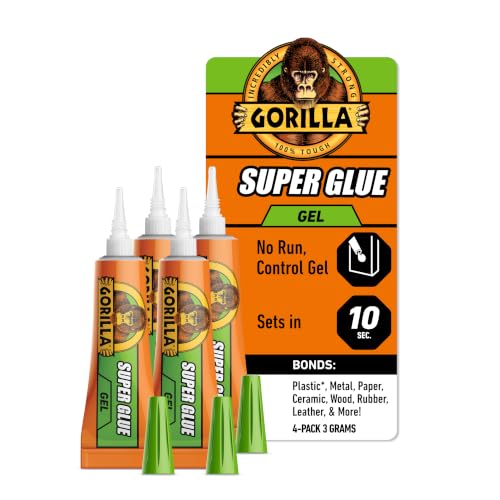
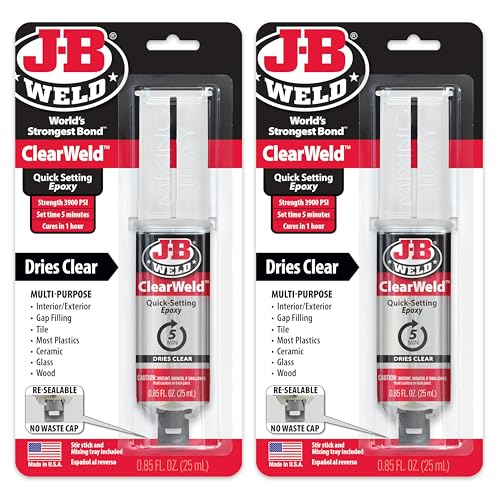
Yes, but only when the joint is dry, the parts are warm enough for application, and the repair is small and well fitted. Cyanoacrylate super glue is temperature-sensitive, so cold air slows the reaction and cold surfaces can reduce bond quality even when the cured adhesive may later tolerate much lower temperatures.
What cold changes in the bond line
Cold temperatures can make super glue more viscous, which makes it harder to spread in a thin, even film. They also slow polymerization, so the glue may take longer to set and may reach handling strength more slowly than it would at room temperature.
That matters more than the service temperature after cure. A bond can sometimes survive colder use conditions than the adhesive can tolerate during application, so the real decision is whether the parts are warm and dry enough at the moment you apply it.
When a quick repair is still worth trying
For a non-structural fix on close-fitting parts, super glue can still be worth using if you can warm the joint and keep moisture off the bond line. For a load-bearing repair, a gap-filling bond, or anything outdoors in freezing conditions, switch adhesives instead of hoping the cold cooperates.
Cold-weather super glue decision table
Use this table as a quick rule. It separates ambient temperature from surface condition, because dry warmth and damp cold are not the same problem.
| Ambient temperature | Surface condition | Expected set behavior | Recommended action |
|---|---|---|---|
| 30°F | Dry wood | Set will be slow; adhesive may feel thicker and the bond line can cure unevenly | Warm the wood and nearby air first. If you cannot get the joint warm and dry, use a different adhesive. |
| 40°F | Damp metal | Bond quality is unreliable; moisture and cold both work against a clean cure | Do not glue yet. Dry the metal fully, remove condensation, and preheat the joint before deciding whether to bond. |
| 50°F | Indoor garage, dry parts | Typical application zone for many formulas; set should be more predictable if the fit is tight | Use super glue if the repair is small and dry. Check the label on your exact product variant. |
| Below freezing | Outdoor repair with frost risk | Very high failure risk during application; frost, condensation, and cold surfaces can block a dependable bond | Move the work indoors or choose a different adhesive. Do not rely on super glue for a critical outdoor repair in freezing conditions. |
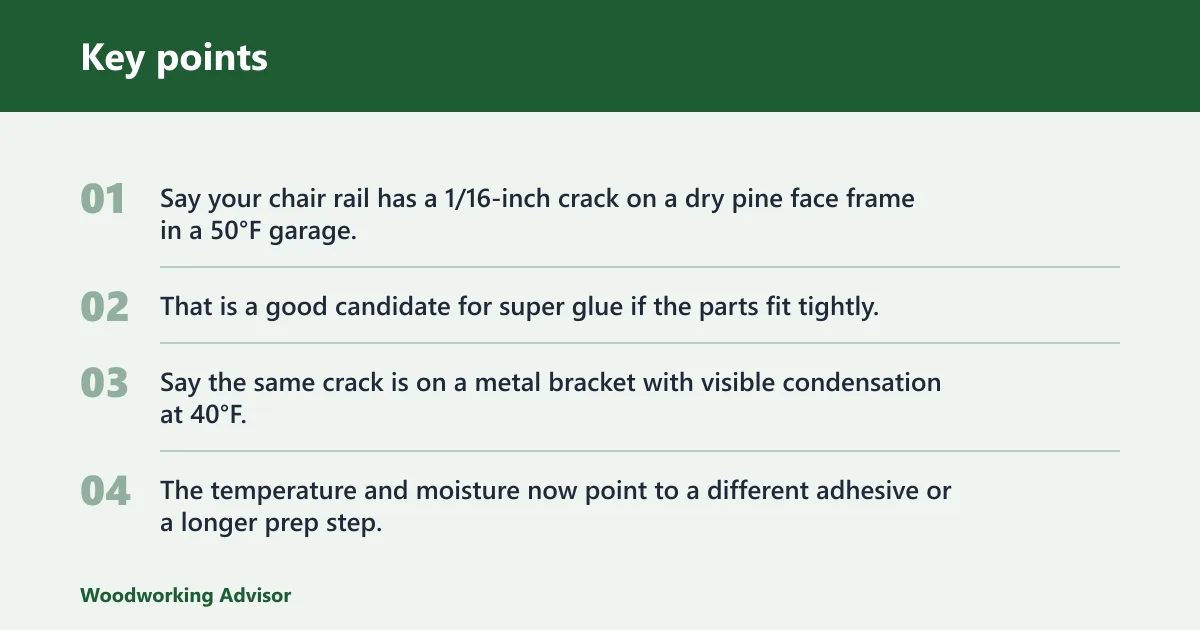
Say your chair rail has a 1/16-inch crack on a dry pine face frame in a 50°F garage. That is a good candidate for super glue if the parts fit tightly. Say the same crack is on a metal bracket with visible condensation at 40°F. The temperature and moisture now point to a different adhesive or a longer prep step.
How cold changes super glue cure
Cold slows the chemical reaction that turns cyanoacrylate from liquid to solid. That can stretch handling time, delay full cure, and leave the bond line weaker than expected if the parts are moved before the adhesive finishes polymerizing.
Why handling time can stretch in the cold
At lower temperatures, super glue may stay workable longer before it grabs. That does not mean the bond is better. It usually means the reaction is moving more slowly, so the joint needs more time undisturbed and may still end up brittle if the surfaces are too cold.
Moisture behaves the same way in a different direction. Trace moisture on a surface can help cyanoacrylate start curing, but condensation, frost, or damp contamination can weaken the bond line and leave a chalky bloom or a weak edge near the joint.
Why brittle bond lines and weak adhesion happen
Cold can create a false sense of success. The glue may appear to hold at first, then fail when the part flexes, because the adhesive cured poorly or the bond line contains moisture, frost, or excess thickness from the colder, more viscous adhesive.
A common first-timer mistake is gluing a cold metal latch straight from an unheated truck bed. The surface looks dry, but the part sweats as it warms indoors. That condensation on the bond line can be enough to ruin the repair even if the ambient air later reaches room temperature.
What should you warm first?
Warm the joint and the mating surfaces first, not the glue alone. Super glue spreads better when the workpiece is dry and close to room temperature, and storing the tube at room temperature helps it stay less viscous and easier to dispense in winter.
Preheat the joint, not the glue alone
Use a heat gun, hairdryer, or warm water to raise the temperature of the parts before bonding. Aim for warm-dry surfaces, not hot ones. If the part is too hot to touch comfortably, let it cool back down before applying the adhesive.
- Dry the parts completely.
- Warm the joint area evenly.
- Check for fogging, frost, or fresh condensation.
- Apply a small amount of glue to a tight-fitting joint.
- Hold the parts still until the bond has set enough for gentle handling.
Room temperature storage matters too. A tube kept warm before use is easier to dispense and easier to spread in a thin bead. That is especially useful when you are working in an unheated garage and do not want thick adhesive to fight the fit.
Safe warm-dry targets for the workpiece
The goal is simple: the surfaces should be dry enough that you do not see moisture and warm enough that they do not chill the adhesive on contact. If you are using a heat gun, hairdryer, or warm water, keep the part warm-dry rather than overheated, and let any rinse water evaporate fully before gluing.
Which super glue specs matter?
Application temperature matters more than cured operating range for the repair itself. A bond can survive far colder service temperatures once it is fully cured, but that does not help if the adhesive never cures well because the parts were too cold or damp at application.
Cyanoacrylate application temperature versus operating range
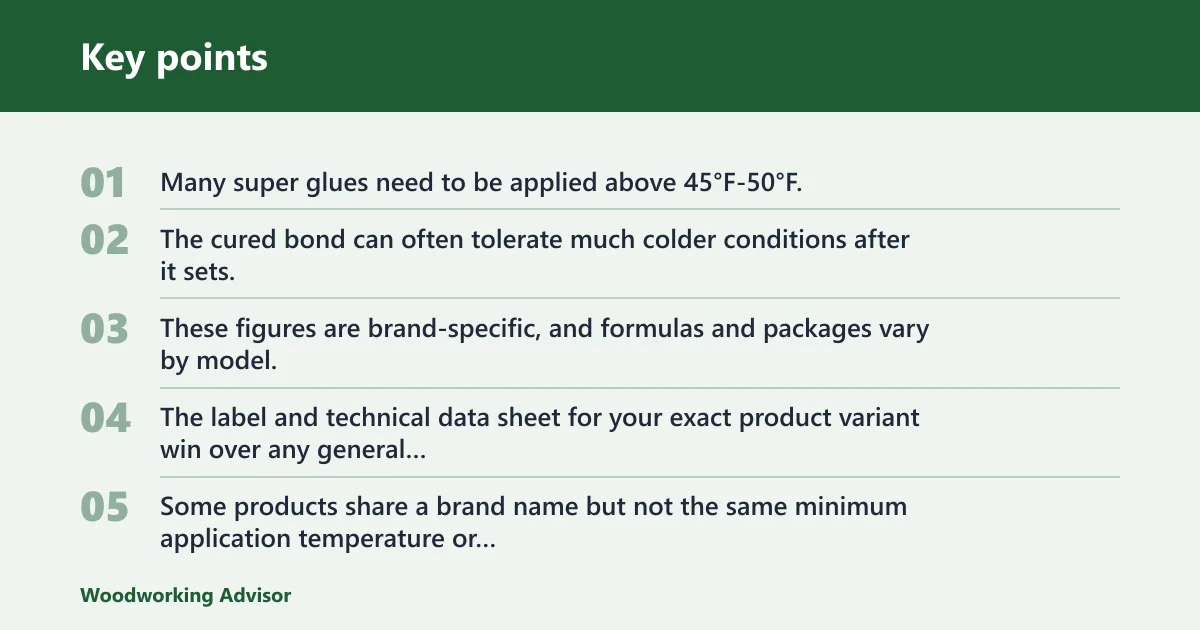
Many super glues need to be applied above 45°F-50°F. The cured bond can often tolerate much colder conditions after it sets, but those are different numbers for different stages of the job. Do not treat them as interchangeable.
| Brand | Minimum application temperature | Operating temperature range |
|---|---|---|
| Gorilla Super Glue | Room temperature | -65°F to 220°F |
| Original Super Glue | 50°F | -65°F to 180°F |
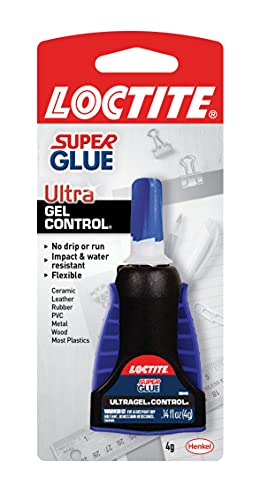
| Loctite Super Glue | Above 50° | -65°F to 180°F |
| Krazy Glue | 50°F | -65°F to 212°F |
These figures are brand-specific, and formulas and packages vary by model. The label and technical data sheet for your exact product variant win over any general temperature rule.
Why the label or technical data sheet wins
Some products share a brand name but not the same minimum application temperature or cured range. If the package says room temperature, above 50°F, or a different limit, follow that listing instead of a generic rule.
For cold-weather work, that distinction matters. Gorilla Super Glue lists room temperature as the minimum application temperature, while Original Super Glue and Krazy Glue list 50°F, and Loctite Super Glue lists above 50°. The cured operating ranges are broader, but that does not change the need for a warm, dry joint at application.
When should you choose another adhesive?
Choose another adhesive when the joint is damp, frosty, condensation-prone, gap-filled, or load-bearing. In those cases, cold weather does more than slow the cure. It raises the chance of weak adhesion, brittle failure, or a repair that looks set but fails in use.
Damp, frosty, or condensation-prone surfaces
If you can see moisture, frost, or a surface that sweats as it warms, super glue is a poor bet. Trace moisture can help the cure start, but actual wetness or condensation on the bond line is a different problem and can prevent a clean bond.
Load-bearing repairs
For parts that carry weight, vibration, or repeated stress, cold-weather failure risk is higher. A structural repair deserves an adhesive that tolerates the joint design you have, not one that depends on perfect fit and warm, dry surfaces.
That is why epoxy or polyurethane is often the better choice for big gaps or repairs that must stay reliable after freeze-thaw changes. Super glue is best reserved for small, tight-fitting fixes where you can control the surface temperature and dryness.
Outdoor fixes below freezing
Below-freezing outdoor repairs are the least forgiving. If you cannot warm the parts indoors first, or if the repair will immediately face snow, frost, or repeated thermal cycling, choose a different adhesive or postpone the job until the workpiece is warm and dry.
Cold-weather fail-safe checklist
Use this checklist before opening the tube. It keeps the decision simple and helps prevent the most common winter failures.
- Check the bond line for condensation.
- Confirm there is no frost on either surface.
- Make sure the parts are fully dry before gluing.
- Warm the joint with a heat gun, hairdryer, or warm water, then let it dry again.
- Store the tube at room temperature before use.
- Use super glue only for small, tight-fitting repairs that match the label guidance.
- Switch to a different adhesive for structural, gap-filled, or below-freezing outdoor repairs.
Follow the manufacturer’s label and technical data sheet for your exact product variant. If the listed minimum application temperature is higher than the conditions you have, the right answer is usually to warm the parts or choose another adhesive.
Frequently asked questions
Does super glue work in cold weather?
It can work, but only with dry parts and a warm enough application temperature. Cold slows the reaction, makes the adhesive thicker, and can reduce bond quality. For small, tight-fitting repairs above about 50°F, it is often usable. For damp or freezing conditions, another adhesive is usually a better choice.
Will super glue set in cold weather?
Yes, but it may set more slowly and less predictably. Low temperatures slow polymerization, so the joint can need more time undisturbed. If the parts are too cold or wet, the glue may not cure well enough for a dependable bond. Warming the joint first gives the best chance of success.
Does super glue dry in cold weather?
It dries more slowly in cold weather, and the bond line can end up weaker if the surfaces are cold or damp. The adhesive may stay workable longer, but that is not an advantage if the joint is moved too soon. Dry, warm surfaces are the safer setup for a good cure.
Does super glue hold up in cold weather?
Once fully cured, some super glues can withstand much colder service temperatures than they can during application. The problem is the bonding step, not the finished bond alone. If the repair was made on warm, dry parts and matches the label guidance, it has a better chance of holding up.
How long does super glue take to dry in cold weather?
There is no single universal time, because formula, fit, and temperature all matter. Cold temperatures usually extend set time, sometimes enough to make handling unsafe before full cure. If the joint is below the product’s application range, wait and warm the parts rather than relying on a guess.
What temperature can super glue withstand?
That depends on the formula and the brand. The sourced ranges here include Original Super Glue at -65° to 180° F, Gorilla Super Glue at -65° to 220° F, and Krazy Glue at -65°F to 212°F. Those are cured operating ranges, not permission to apply the glue at those temperatures.
Sponsored / affiliate links. As an Amazon Associate I earn from qualifying purchases. I may earn additional commission from eligible campaigns.