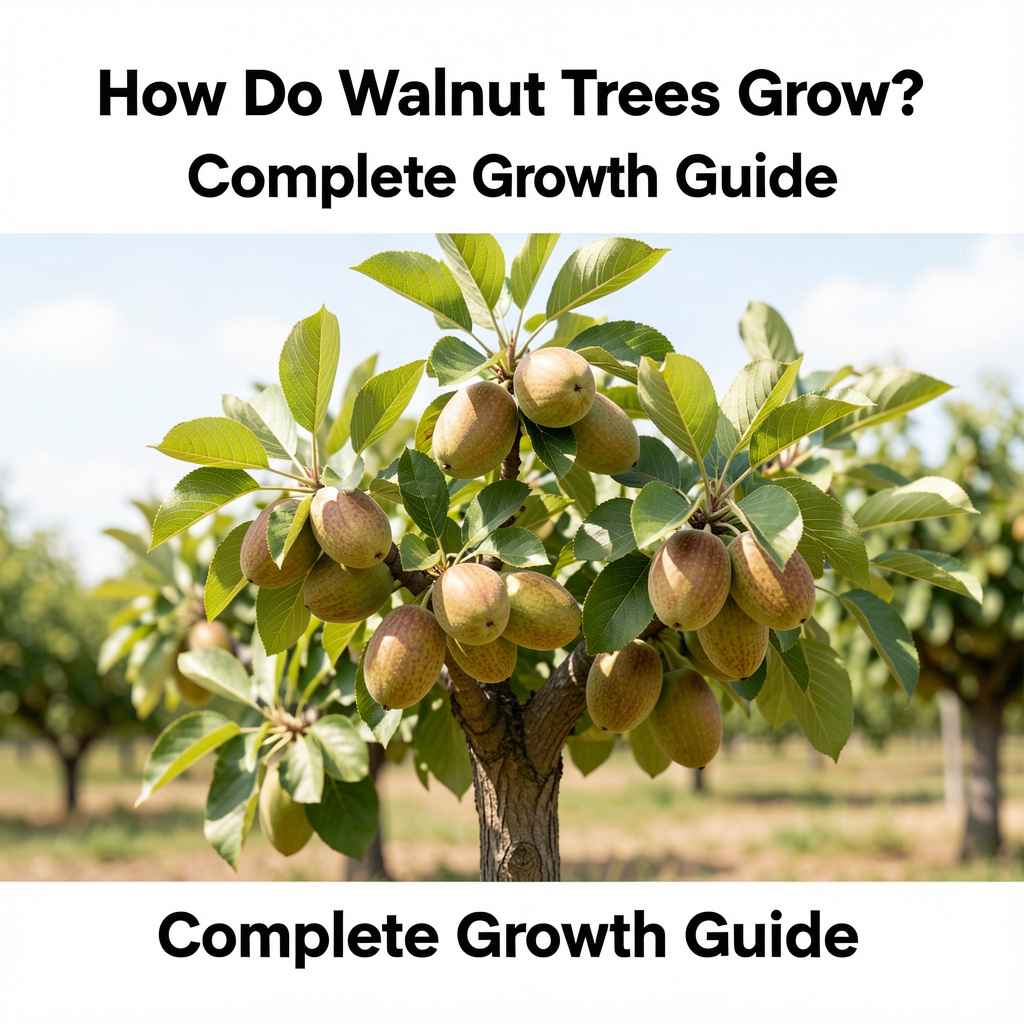
How Do Walnut Trees Grow? Complete Growth Guide
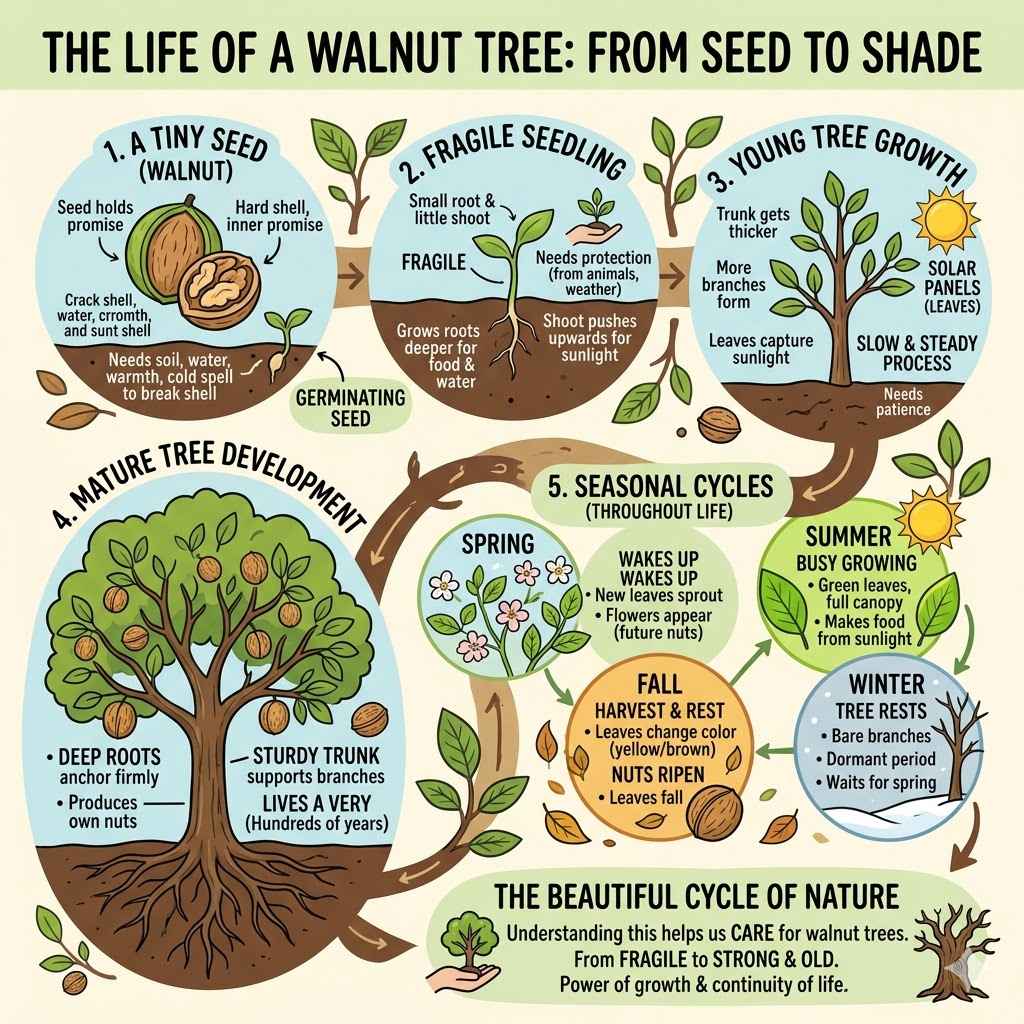
The Life of a Walnut Tree: From Seed to Shade
Walnut trees start small. They begin as a seed, often called a nut. This nut holds the promise of a future tree.
It needs the right conditions to even start growing. This means finding a good spot in the ground. It needs water and warmth.
Sometimes, the nut needs a cold spell too. This helps break its hard shell.
Once the seed sprouts, it’s a tiny seedling. It has a small root and a little shoot. This little plant is fragile.
It needs protection from animals and harsh weather. The seedling works hard to grow its roots deeper. This helps it find more water and food.
It also pushes its shoot upwards towards the sun. Sunlight is vital for the plant to make its own food.
As the seedling grows, it becomes a young tree. Its trunk gets thicker. More branches form.
Leaves appear. These leaves are like tiny solar panels. They capture sunlight.
The tree uses this energy to grow taller and wider. This stage can take many years. It’s a slow and steady process.
Patience is key with trees.
The tree continues to grow. It develops a strong root system. This anchors it firmly in the ground.
The trunk becomes sturdy. It can support more branches. The tree starts to look like a real tree.
It might start producing its own nuts. This is when it becomes a mature tree. Mature trees can live for a very long time.
Some can live for hundreds of years!
During its life, a walnut tree goes through seasons. In spring, it wakes up. New leaves sprout.
Flowers might appear. These flowers will become nuts. In summer, it’s busy growing.
Its leaves are green and full. It makes food from sunlight. In fall, the leaves change color.
They might turn yellow or brown. The nuts ripen. Then, the leaves fall off.
In winter, the tree rests. It waits for spring to come again.
Understanding this life cycle helps us care for walnut trees. It tells us what they need at each stage. From the fragile seedling to the strong, old tree, each part of its life is important.
It’s a beautiful cycle of nature. It shows us how life continues. It also shows us the power of growth.
What Walnut Trees Need to Thrive
Walnut trees are not picky about everything. But they do have some basic needs. Meeting these needs helps them grow strong.
It also helps them produce good nuts. Let’s look at what makes a walnut tree happy.
Sunlight
Walnut trees love sun. They need plenty of it. Full sun is best.
This means at least six hours of direct sunlight each day. Sunlight helps them make food. It fuels their growth.
Without enough sun, they grow slowly. They might not produce many nuts. So, pick a sunny spot for your tree.
Soil
Soil is like food for trees. Walnut trees like rich soil. It should be well-draining.
This means water can flow through it. It shouldn’t stay waterlogged. Waterlogged soil can hurt the roots.
It can cause rot. The soil should also have good nutrients. Compost or aged manure can help improve the soil.
This gives the tree the food it needs.
Some people test their soil. This tells them what is missing. They can then add what the soil needs.
This helps the tree grow better. Walnut trees prefer soil with a slightly acidic to neutral pH. Around 6.0 to 7.0 is ideal.
This helps them absorb nutrients. Many garden centers offer simple soil test kits.
Water
Water is essential for all living things. Walnut trees need water. Young trees need it more often.
Their roots are still small. They can dry out easily. Water them deeply.
Let the soil dry out a bit between waterings. This encourages roots to grow deeper. Mature trees are more drought-tolerant.
But they still need water during very dry spells.
Overwatering is a common mistake. It can be worse than underwatering. It can lead to root rot.
Roots need air too. If soil is constantly wet, roots can’t breathe. They start to die.
This weakens the whole tree. Always check the soil before watering. Stick your finger in a few inches deep.
If it feels dry, it’s time to water. If it feels moist, wait a bit longer.
Space
Walnut trees get big. They need a lot of space. Think about the mature size of the tree.
The roots spread out wide. The branches reach up and out. You need to plant them away from buildings.
Keep them clear of power lines. Also, keep them away from other trees. They need room to grow without crowding.
Different types of walnut trees grow to different sizes. Some are more compact. Others are very large.
Research the specific type you are planting. This helps you choose the right location. Giving them enough space from the start prevents future problems.
It also lets them grow to their full, natural shape.
Climate
Walnut trees are native to North America and Asia. They grow best in temperate climates. This means areas with warm summers and cold winters.
The cold winter helps them rest. It’s important for their fruiting cycle. Most common walnuts need a certain number of “chill hours.” These are hours spent below a certain temperature.
This is usually below 45°F (7°C).
Extremely hot or dry climates can be challenging. Very cold climates can also be an issue. Some varieties are more tolerant of heat or cold.
Choosing a variety suited to your local climate is crucial. Check with your local agricultural extension office. They can advise on the best varieties for your area.
They know the local conditions well.
The Growth Process Explained
Let’s dive a bit deeper into how a walnut tree actually grows. It’s a fascinating process. It involves roots, shoots, and many tiny cells working together.
Germination: The Spark of Life
It all starts with the nut. Inside is a seed. For germination to happen, the seed needs specific conditions.
It needs moisture. It needs the right temperature. Many walnut seeds also need a period of cold.
This is called stratification. It mimics winter. This process breaks the seed’s dormancy.
It signals that it’s safe to grow.
Once these conditions are met, the seed coat cracks. A root emerges first. This is the radicle.
It grows downwards. It anchors the seedling. It starts to absorb water and nutrients from the soil.
Soon after, a shoot emerges. This is the plumule. It grows upwards, towards the light.
This first shoot carries the first leaves, called cotyledons. These often contain stored food for the seedling.
Seed Germination Checklist
Moisture: Soil should be consistently damp, but not soggy.
Temperature: Varies by species, but often requires cool periods.
Stratification: Many walnuts need a cold, moist period (like in a refrigerator) before planting.
Depth: Plant nuts about 1-2 inches deep in the soil.
Seedling Stage: The Vulnerable Beginning
The seedling is very delicate. It relies on its stored food for a while. As it grows, it develops true leaves.
These leaves are different from the cotyledons. They are the tree’s food factories. The seedling stage is critical.
Young trees are easily damaged. They can be eaten by animals. They can be affected by frost.
They can succumb to diseases.
This is when many potential trees are lost. Providing protection is important. This might mean a small cage around the seedling.
It might mean keeping it in a protected nursery bed for a year or two. The goal is to help it establish a strong root system. This makes it more resilient.
Seedling Care Tips
Protection: Shield from pests and harsh weather.
Watering: Keep soil moist but not waterlogged.
Sunlight: Provide adequate light once true leaves appear.
Weeding: Keep the area around the seedling clear of competing weeds.
Sapling to Young Tree: Gaining Strength
Once the seedling is a few years old, it becomes a sapling. Its trunk is still thin. But its roots are spreading.
It’s gaining strength. This is when it’s often transplanted to its permanent location. It needs good soil and plenty of sun.
The tree focuses on growing taller. It also starts to branch out.
The trunk gets thicker year by year. This is due to secondary growth. New layers of wood and bark form.
This is how trees get wider. The branches extend outwards. They develop buds.
These buds will become leaves or flowers in the spring. This is a period of rapid growth. The tree is establishing its structure.
This phase can last for several years. It’s important to prune young trees. Pruning helps shape the tree.
It removes weak or crossing branches. This leads to a stronger, more productive tree later on. Proper pruning at this stage is vital for long-term health.
Young Tree Development
Trunk Thickening: New wood layers add girth each year.
Branching: More limbs develop, creating the tree’s canopy shape.
Root Expansion: Roots grow wider and deeper for stability and water access.
Pruning Focus: Shaping for structure and removing defects.
Maturity: The Fruiting Years
A walnut tree reaches maturity when it starts to produce nuts. This can take anywhere from 5 to 20 years. It depends on the species and growing conditions.
Once mature, the tree focuses on reproduction. It produces flowers. These flowers are pollinated.
Then, the nuts begin to form.
The tree’s energy is now divided. It still grows, but more slowly. A lot of energy goes into producing nuts.
This requires good soil, water, and sunlight. Healthy trees will produce nuts year after year. Some trees have good nut years followed by lighter years.
This is called alternate bearing. It’s a natural cycle for many fruit and nut trees.
Mature trees are impressive. They can be very large. Their canopies provide wide shade.
They become important parts of the landscape. They support wildlife. They contribute to the ecosystem.
They stand as a testament to time and growth.
Real-World Context: Where and Why Walnut Trees Grow
Walnut trees don’t just grow anywhere. They have specific environmental needs. Understanding these helps us appreciate why they are found in certain places.
It also explains why they might struggle in others.
Native Habitats
Many walnut species are native to North America. The Black Walnut is common in the eastern United States. It prefers moist, fertile bottomlands.
It likes deep, well-drained soils. The California Walnut is native to the western U.S. It grows in valleys and on lower mountain slopes.
It is adapted to drier conditions than the Black Walnut.
Other species come from Europe and Asia. For example, the English Walnut (or Persian Walnut) is thought to originate from the region of Persia (modern-day Iran). It thrives in climates with mild winters and warm summers.
Its natural range gives clues about its preferred growing conditions.
Soil Preferences and Why They Matter
As mentioned, walnut trees like good soil. Why is this so important? Their root systems are extensive.
They need space to grow without being blocked by hardpan or rocks. Good soil also holds moisture and nutrients. This feeds the tree.
Deep roots allow the tree to withstand drought better. They also anchor the tree firmly, preventing it from falling in strong winds.
If soil is poor or compacted, trees struggle. They grow slowly. They are more prone to disease.
Their nut production will be low. This is why soil preparation is often a key step before planting a walnut tree. Improving soil health benefits the tree for its entire life.
Soil Quality Factors
Drainage: Prevents root rot.
Nutrients: Supports healthy growth and nut production.
Depth: Allows for extensive root system development.
pH Level: Affects nutrient availability for the tree.
Climate and Adaptations
Walnut trees are hardy. But they have limits. They need winter dormancy.
This is crucial for their health and fruit production. Areas with very mild winters may not provide enough chill hours. This can prevent flowering and fruiting.
Conversely, areas with extremely harsh, late frosts can damage new growth in spring.
Some varieties have been bred for specific climates. For instance, certain Black Walnut strains are more cold-hardy. English Walnut varieties are often chosen for their ability to handle specific temperature ranges.
Choosing the right variety for your climate is a major factor in success. It ensures the tree has the best chance to thrive.
Human Interaction and Cultivation
Humans have been growing walnut trees for centuries. We plant them for their nuts. We plant them for their valuable wood.
We also plant them for shade and beauty. This cultivation has led to different types of walnuts. Some are grown for maximum nut yield.
Others are grown for specific wood qualities.
Farmers and gardeners have learned a lot. They know how to prune them. They know how to manage pests and diseases.
They understand how to improve soil. This knowledge is passed down. It allows us to grow these magnificent trees successfully.
It also helps us choose the best trees for our needs.
What This Means for You: Observing Your Walnut Tree
So, how do you know if your walnut tree is happy? You can observe its growth. You can look for signs of health or stress.
This helps you understand its needs better. It’s like checking in on a friend.
When Growth is Normal
Normal growth means the tree is reaching its potential. You’ll see steady increases in height and trunk diameter. The leaves will be a healthy green color.
They’ll be full in the summer. The tree will produce nuts each year, or on its alternate bearing cycle. You won’t see a lot of dead branches or unusual spots on the leaves.
Young trees will grow faster. They add inches to their height each year. Mature trees might grow slower.
Their growth is more about thickening their trunk and branches. They focus on nut production. A healthy tree has a strong presence.
It looks robust and full of life. The bark will look healthy, without deep cracks or signs of decay.
Signs of a Healthy Walnut Tree
Vigorous New Growth: Spring brings lots of new leaves and shoots.
Full, Green Canopy: Leaves are abundant and vibrant during the growing season.
Consistent Nut Production: Regular harvests of good quality nuts.
Strong Trunk and Branches: No signs of decay or weakness.
Smooth Bark: Healthy bark texture for its age.
When to Be Concerned
There are signs that a walnut tree might be struggling. These are things to watch out for. Yellowing leaves can mean many things.
It could be a nutrient deficiency. It could be lack of water. Or it could be too much water.
Drooping leaves can also indicate stress. This might be from heat, drought, or disease.
Dead branches are another warning sign. They might be brown and brittle. You might see signs of insects boring into the wood.
Unusual spots or lesions on the leaves or bark can point to disease. If the tree’s growth seems stunted, it might not be getting enough sun or nutrients. Or the soil might be poor.
One significant concern for walnut trees is a disease called Walnut Blight. This can cause dark spots on leaves and nuts. It can reduce nut yield.
Another issue is the presence of walnut toxicity. Black Walnuts, in particular, release a substance called juglone. This can be harmful to many other plants.
It can stunt their growth or even kill them. So, surrounding plants need to be chosen carefully.
Warning Signs in Walnut Trees
Premature Leaf Drop: Leaves falling off before autumn.
Wilting or Drooping: Leaves appear limp and lifeless.
Discolored Leaves: Yellowing, browning, or spotting on foliage.
Dieback: Branches or twigs turning brown and dying.
Unusual Bark Changes: Cankers, holes, or oozing sap.
Simple Checks You Can Do
You don’t need to be an expert to check on your tree. Start with a visual inspection. Walk around the tree.
Look at the leaves. Look at the trunk. Look at the branches.
Are there any obvious problems?
Check the soil around the base. Is it too wet? Is it too dry?
Dig down a few inches with your finger. This gives you a good idea. If you see any holes in the bark, they might be from insects.
You can gently scrape away a bit of bark near a suspicious spot. Look for white grubs or sawdust-like material. This can indicate boring insects.
If you are truly worried, don’t hesitate to get help. Your local county extension office is a great resource. They have horticulturalists who can identify problems.
They can offer advice. Sometimes, a picture is enough for them to help. Other times, they might suggest a site visit.
Quick Tips for Supporting Your Walnut Tree
While walnut trees are hardy, a little help goes a long way. These are simple things you can do to support their growth and health.
- Mulch is Your Friend: Apply a layer of organic mulch around the base of the tree. Keep it a few inches away from the trunk. Mulch helps retain soil moisture. It also suppresses weeds. It keeps the soil temperature more stable.
- Weed Control: Weeds compete for water and nutrients. Keep the area around your young tree free of weeds. This gives the tree a better chance.
- Avoid Compaction: Don’t drive vehicles or park heavy machinery around the base of your walnut tree. Compacted soil restricts root growth and water infiltration.
- Observe and Learn: Pay attention to your tree. Notice how it changes through the seasons. This helps you understand its normal behavior. It also makes you quicker to spot any problems.
- Consider Companion Planting Carefully: If you have a Black Walnut, be mindful of its juglone toxin. Avoid planting sensitive species nearby. Research plants that tolerate juglone.
Growth Support Strategies
Mulching: Conserves moisture, suppresses weeds, regulates soil temp.
Weeding: Reduces competition for resources.
Soil Health: Adding compost can improve soil structure and nutrients over time.
Watering Wisely: Deep watering less often is better than shallow watering frequently.
Pest Monitoring: Early detection of insects or diseases is key.

Frequently Asked Questions About Walnut Tree Growth
How long does it take for a walnut tree to produce nuts?
It can take anywhere from 5 to 20 years for a walnut tree to start producing nuts. This depends a lot on the specific type of walnut tree and the growing conditions. Young trees need time to establish a strong root system and grow large enough to support fruit production.
Patience is definitely a virtue with nut trees!
Can I plant a walnut tree in a small backyard?
Most walnut trees grow very large. They need a lot of space for their roots and canopy. A small backyard might not be suitable for most varieties.
However, some dwarf or semi-dwarf varieties are becoming available. It is always best to check the mature size of the specific tree you are considering. Ensure there is enough room for its full growth.
Why are my walnut tree’s leaves turning yellow?
Yellowing leaves on a walnut tree can be caused by several things. It might be due to a lack of essential nutrients in the soil, like nitrogen or iron. It could also be a watering issue.
The tree might be getting too much or too little water. Sometimes, certain diseases or pests can also cause leaves to turn yellow. It’s important to check the soil and look for other signs of distress.
What is juglone and why is it a problem for other plants?
Juglone is a chemical compound naturally produced by walnut trees, especially Black Walnuts. It is found in the roots, bark, and nuts. Juglone is toxic to many other plants.
It can inhibit their growth or even kill them. This is why you should be careful when planting other species near a Black Walnut tree. Some plants are resistant to juglone, while others are very sensitive.
How deep should I plant a walnut seed (nut)?
When planting a walnut seed, aim to plant it about 1 to 2 inches deep in the soil. The exact depth can vary slightly depending on the size of the nut. You want to ensure it’s deep enough to be stable but not so deep that the seedling has trouble reaching the surface.
Make sure the soil is moist after planting.
Do walnut trees need a pollinator?
Yes, most walnut trees are monoecious, meaning they have both male and female flowers on the same tree. However, they are typically wind-pollinated and often self-incompatible. This means the pollen from the male flowers on one tree may not effectively pollinate the female flowers on the same tree.
Planting two or more walnut trees of compatible varieties nearby is often recommended to ensure good pollination and nut set.
Conclusion
Watching a walnut tree grow is a long-term reward. From a tiny seed to a grand, majestic presence, each stage is important. Understanding their needs for sun, soil, and water helps us support them.
Observing their growth tells us if they are happy. These trees are more than just producers of nuts; they are living monuments. They connect us to the earth and to the cycles of nature.