How Long Does Shellac Take to Dry? Dry-to-Touch vs. Fully Cured
Shellac feels dry to the touch remarkably fast – usually 15 to 30 minutes for a thin coat in a well-ventilated shop – and most finishers can safely recoat within about an hour under good conditions. That speed is a big part of why shellac has stayed a favorite sealer and finish for two centuries. But “dry” and “fully hardened” are two different milestones, and mixing them up is how a shellac finish ends up scuffed, cloudy, or dented weeks after it looked done. One quick note before the numbers: this article is about finishing wood with shellac, not the alcohol-cured gel nail product that borrowed the name – every time and figure below is specific to a wood finish drying on a real project.
Dry to the Touch vs. Fully Cured: The Difference That Actually Matters
“Dry” on a shellac can label almost always means dry to the touch – the point where the surface no longer feels tacky and won’t pick up a fingerprint or dust. On a thin, well-ventilated coat, that happens in 15 to 30 minutes. Recoating is usually safe about an hour after that, sooner in a warm dry shop and later in a cold or humid one. Fully hardened is a different, much later milestone: the point where the film has stopped losing solvent and reached its final density. For a thin coat that’s typically several days to about a week; manufacturers’ general guidance for calling a shellac finish completely cured – solid enough for food contact on a cutting board or bowl, for example – runs closer to 30 days. Treat a same-day dry shellac finish like it’s still fully hardened, and you’re the one who ends up with the dent, the cloudy rub-out, or the tacky spot under a rug that sat down too soon.
FAST-DRYING PRE-MIXED PICK
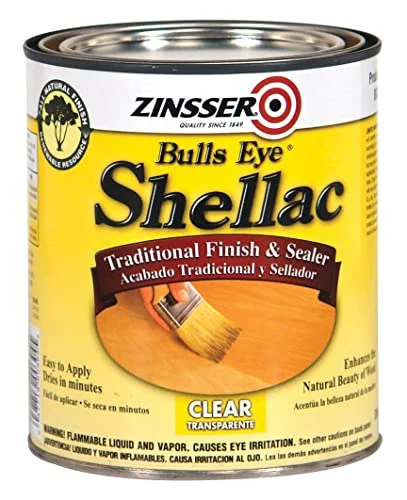 |
Zinsser Bulls Eye Clear Shellac, 1 Qt – $29.98 A pre-mixed clear shellac that follows the exact dry-to-touch and recoat timing covered in this guide – no need to mix flakes yourself.
|
How Shellac Actually Dries (It’s Evaporation, Not a Chemical Cure)
Oil-based polyurethane and epoxy harden through a genuine chemical reaction – oxidation or cross-linking – that keeps progressing for weeks after the surface feels dry. Shellac doesn’t work that way. It’s resin from the lac bug dissolved in denatured alcohol, and it dries almost entirely by the alcohol physically evaporating out of the film. Once the alcohol flashes off, what’s left behind is the resin itself, back in solid form. That’s the reason shellac is unusual among wood finishes: there’s no polymerizing reaction to wait out, but a freshly dry film still needs time for every last trace of alcohol to work its way out and for the resin to settle into its final, hardest state. A thicker coat holds solvent deeper in the film, so it takes noticeably longer to reach that same fully-hardened point than a thin one does.
Real Numbers: Dry, Recoat, and Full-Hardness Times
- Dry to the touch: 15 to 30 minutes for a thin coat with decent airflow
- Safe to recoat: about 1 hour in a warm, dry shop; up to 2 to 4 hours in a cold or humid one
- Hard enough for light handling: same day to the next morning
- Hard enough to rub out with pumice or rottenstone, or for daily-use surfaces like tabletops: several days to about a week for thin brushed coats
- Considered fully hardened (food-contact surfaces, cutting boards, bowls): roughly 30 days
Those ranges assume a typical wiped-on or brushed application in a normal indoor shop. Push toward the fast end with warmth, airflow, and thin coats; expect the slow end – or longer – in a cold garage, a humid basement, or with a heavier-bodied coat.
What Changes These Numbers: Cut, Wax Content, and Coat Thickness
Shellac is sold and mixed by “cut” – the ratio of dry shellac flakes to alcohol, written as a pound cut (a 1-lb cut is roughly one pound of flakes per gallon of alcohol; 2-lb and 3-lb cuts are progressively thicker). A thinner cut carries less resin per coat, so each pass dries and hardens faster, though you’ll need more coats to build the same film thickness. Wax content matters too: shellac flakes naturally contain a small amount of wax unless it’s been removed, and dewaxed shellac (sold as SealCoat and similar products) tends to dry a touch faster and harder without it. Dewaxed shellac is also the one to reach for as a barrier or sealer coat under most other finishes, since the natural wax in regular shellac can interfere with a topcoat’s adhesion. Coat thickness is the biggest lever of all – several thin coats dry and harden far more evenly and quickly than one thick, heavy pour, which can skin over on the surface while staying soft and gummy underneath for a long time.
Temperature and Humidity’s Real Effect on Dry Time
Alcohol evaporates faster in warm, dry, moving air, so a shop sitting around 70 to 80 degrees Fahrenheit with a fan running and modest humidity will land you at the fast end of every range above. Cold weather or high humidity work against you the same way they slow any solvent-based finish – a humid summer garage or an unheated shop in winter can double or triple the recoat wait and push full hardness out closer to two weeks instead of one. If a coat still feels the least bit tacky at the time you expected it to be dry, the environment is almost always the reason, not a bad batch of shellac.
When You Actually Need Full Cure, Not Just Dry-to-Touch
Most of the time, dry-to-touch and a same-day recoat are all you need to keep building a shellac finish. Full hardness only becomes non-negotiable in a few specific situations: before rubbing the finish out with pumice or rottenstone, before putting a piece into daily heavy use (a dining tabletop, a desk), and before anything that will touch food. As covered in our guide to using rottenstone to polish a wood finish, rubbing out a shellac film before it’s fully hardened – not just dry to the touch – is one of the most common ways to ruin an otherwise good rub-out: the abrasive drags through a still-soft film and leaves smears or a cloudy haze instead of skimming across a hard, polishable surface. If you’re not sure whether a piece is ready for that stage, give it the fingernail test on an inconspicuous edge – if it leaves a mark or feels even slightly soft, wait longer before you reach for the pumice.
Common Mistakes That Leave Shellac Tacky, Cloudy, or Soft
- Sanding before the coat is hard enough. A still-soft film gums up sandpaper almost immediately and leaves swirl marks instead of a clean scuff.
- Working in cold or humid conditions without adjusting your expectations. Moisture trapped in the film during drying causes “blushing,” a cloudy white haze in the finish – most common in humid weather or when spraying.
- Piling on one heavy coat to save time. It skins over on top while staying soft and gummy underneath for far longer than a few thin coats would take.
- Using the wrong shellac for the job. Waxed shellac is a fine topcoat on its own but a poor barrier coat under certain other finishes – reach for dewaxed shellac when you’re sealing knots or sap under a different topcoat.
- Rubbing out or using the piece hard before full hardness. Dry-to-touch is not the same milestone – see the section above.
Frequently Asked Questions
How long does shellac take to dry before I can touch it?
A thin coat of shellac is usually dry to the touch in 15 to 30 minutes with decent airflow. That’s the point where it no longer feels tacky or picks up fingerprints, and it’s typically safe to recoat within about an hour after that in a warm, dry shop.
How long until shellac is fully cured and hardened?
Full hardness takes much longer than dry-to-touch – typically several days to about a week for a thin coat before it’s ready for tasks like rubbing out with pumice or rottenstone, and manufacturers’ general guidance for a fully hardened, food-safe finish runs closer to 30 days.
Does humidity really affect shellac drying time?
Yes. Shellac dries by the alcohol solvent evaporating out of the film, and high humidity slows that evaporation significantly – a humid shop can double or triple both the recoat wait and the time needed to reach full hardness compared to a warm, dry one.
Can I use shellac under polyurethane, and does that change the dry time?
Yes, dewaxed shellac is a common barrier coat under polyurethane and other topcoats, since regular waxed shellac can interfere with the topcoat’s adhesion. The shellac layer itself still only needs to be dry to the touch and past its short recoat window before you topcoat over it – it doesn’t need to reach full hardness first.
The short version: shellac’s speed is real, but it only tells half the story. Trust the 15-to-30-minute dry-to-touch window for handling and recoating, and give it the extra days it actually needs before you rub it out, load it with daily use, or put food on it.
Sponsored / affiliate links. As an Amazon Associate I earn from qualifying purchases. I may earn additional commission from eligible campaigns.