How Much Is a Cord of Wood? 2026 Price Guide by Region
A full cord of wood costs $150 to $450 on average in the U.S. as of 2026, with hardwood species like oak and hickory running higher than softwoods like pine, and prices climbing in the Northeast and dropping in the rural South and Midwest. Delivery and stacking, if you pay for them, typically add $20 to $60 on top of that.
That’s a wide range because firewood pricing isn’t standardized the way lumber at a home center is — it depends on what’s growing near you, how far a supplier has to haul it, and whether the wood has actually been split and seasoned or just cut and stacked green. Below is a region-by-region breakdown, the real factors that move the number up or down, and a cost-per-BTU comparison most firewood guides skip entirely — it’s the number that actually tells you whether you’re getting a good deal.
What Is a Cord of Wood, Exactly?
Best Way to Verify Seasoned Wood
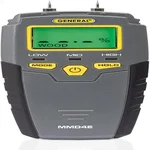 |
General Tools MMD4E Moisture Meter – $37.70 The only real way to confirm a supplier’s “seasoned” firewood is actually dry enough to burn clean.
|
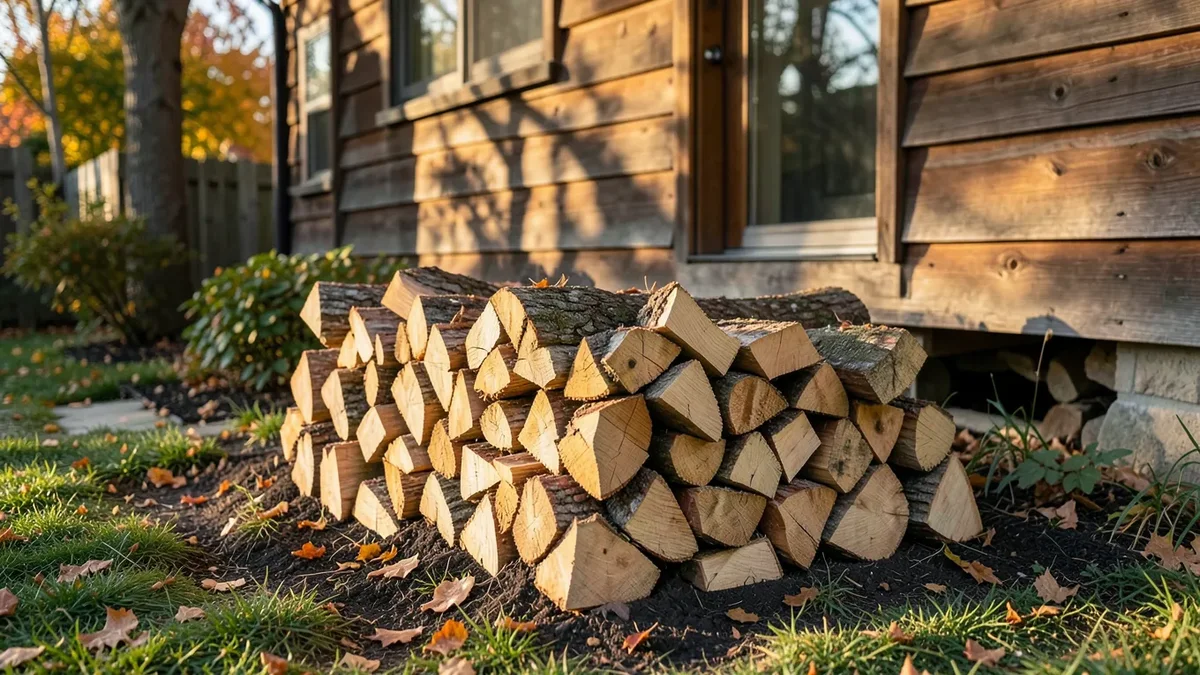
A cord is a legally defined volume of stacked firewood: 4 feet high by 4 feet wide by 8 feet long, or 128 cubic feet total. That number assumes the wood is racked neatly in one direction with the pieces touching — not tossed in a loose pile. A “loose thrown” cord (wood dumped rather than stacked) actually takes up closer to 180 cubic feet of truck bed space to contain the same 128 cubic feet of solid wood, because of the air gaps between randomly angled pieces.
You’ll sometimes see the term spelled “quard” or “quord” in search — there’s no such official unit. It’s almost always someone typing “cord” phonetically, or asking about a quarter cord (a real, informal quantity equal to roughly 32 cubic feet, or about a quarter of a full cord).
National Average Price and Regional Differences
Firewood is a local, low-margin product — most sellers are small operators, tree services, or farmers selling by the truckload, not national brands with fixed pricing. That means location shifts the price of a cord more than almost any other factor:
- Rural South and lower Midwest: roughly $120–$220 per cord. Softer, faster-growing species (pine, sweetgum, hackberry) are common and cheap, and mild winters mean less competition for supply.
- Upper Midwest and Mountain West: roughly $150–$275 per cord. Oak, hickory, and ash are more common, and longer heating seasons push demand up in fall and winter.
- Pacific Northwest and West Coast: roughly $180–$320 per cord, driven up by fir and madrone being harder to source in bulk near cities, plus higher delivery/labor costs.
- Northeast and New England: roughly $250–$450 per cord. This region burns the most hardwood per household of anywhere in the country, seasoned/kiln-dried wood commands a real premium, and long, cold winters keep demand — and price — high through the season.
Prices in every region climb 15–30% from October through December as people scramble to stock up before the cold sets in, then drop again in spring when suppliers are trying to move last season’s stock. Buying in late spring or summer, when a supplier has wood sitting seasoned in the yard with nowhere to go, is consistently the cheapest time to buy — not the dead of winter when you actually need it. Not sure how much to order? Our guide on how many ricks of wood you need for winter turns your heating style into cords and ricks.
What Actually Drives the Price
Species. Dense hardwoods (oak, hickory, ash, sugar maple) cost more per cord than softwoods (pine, fir, spruce) because they take longer to grow, are heavier to haul, and burn longer with more heat — you’re paying for more usable energy per load, not just more wood.
Seasoning. “Seasoned” firewood has been split and air-dried for 6–12 months until moisture content drops below about 20%. It costs 20–40% more than green (freshly cut) wood of the same species, because the seller has tied up money and yard space for months before selling it. Green wood is cheaper up front but burns poorly, smokes heavily, and won’t be usable for months after you buy it — so “cheaper” green wood is often the worse deal if you need heat this season.
Delivery and stacking. Most sellers charge $20–$50 extra to deliver within a reasonable radius (further trips cost more), and another $20–$40 if you want it stacked instead of dumped in your driveway. Picking up yourself in a trailer or truck bed is the single biggest way to cut the price, if you have the vehicle for it.
Quantity. Buying 3+ cords at once from the same supplier typically knocks 10–15% off the per-cord price compared to buying a single cord — sellers would rather make one delivery trip than three.
Cost Per Million BTU: The Comparison Most Guides Skip
Price per cord alone is misleading, because a cord of pine and a cord of hickory don’t contain the same amount of usable heat. A cord is a fixed volume — 128 cubic feet — but density and heat content vary enormously by species. Dividing price by the actual heat output (measured in million BTU per cord) is the only fair way to compare a “cheap” softwood cord against a “pricier” hardwood one.
| Species | Approx. Heat Value (million BTU/cord) | Typical Price/Cord | Approx. Cost per Million BTU |
|---|---|---|---|
| Shagbark hickory | ~27–28 | $280 | ~$10.00 |
| White oak | ~24–25 | $260 | ~$10.60 |
| White ash | ~23–24 | $240 | ~$10.20 |
| Sugar maple | ~21–22 | $230 | ~$10.70 |
| Douglas fir | ~20–21 | $190 | ~$9.30 |
| Ponderosa/loblolly pine | ~15–17 | $150 | ~$9.70 |
The prices above are illustrative national averages, not quotes for your area — but the pattern holds almost everywhere: the cost-per-BTU gap between “cheap” pine and “expensive” hickory is much smaller than the sticker price per cord suggests, because you burn through pine roughly 40–50% faster to get the same heat. If a softwood cord is priced at less than about 75–80% of what a hardwood cord costs in your area, it’s usually still the better value; above that, the hardwood is often actually cheaper per unit of heat.
Full Cord vs. Face Cord vs. Rick vs. Quarter Cord
This is where most firewood disputes start, because only “cord” has a strict legal definition — the rest are regional slang that suppliers define inconsistently.
| Term | Typical Volume | Notes |
|---|---|---|
| Full cord | 128 cubic feet (4′ × 4′ × 8′) | The only legally standardized unit in most states. |
| Face cord / rick | ~1/3 of a full cord (≈42–45 cu ft) | 4′ × 8′, but only as deep as one piece of wood (usually 12–18″). Depth varies by seller — always ask. |
| Quarter cord (“quard”) | ~32 cubic feet | Roughly a quarter of a full cord; informal, not standardized. |
| Truckload | Varies widely, often 1/2–3/4 cord | Meaningless as a unit — always ask for the cubic footage or cord fraction, not just “a truckload.” |
A face cord priced at a third of a full cord’s price is a fair deal; one priced at half the full-cord rate is not, since you’re getting roughly a third of the wood. Always ask a seller to define their face cord’s depth in inches before agreeing on a price — “a face cord” with 24-inch-deep splits is nearly twice the wood of one with 12-inch splits, at the same name.
How to Avoid Getting Shorted
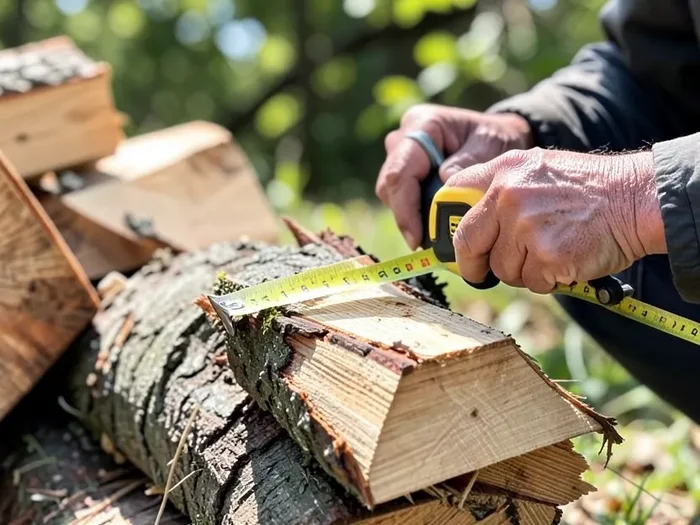
Measure it yourself. Before you pay for a delivered stack, measure height × width × depth in feet and multiply. A stack that’s 4′ high, 8′ long, and 3.5′ deep (not the full 4′) is only 112 cubic feet — 87% of a full cord — even if the seller calls it “a cord.”
Check the moisture content, not just the label. “Seasoned” is a claim, not a guarantee — some sellers use the word loosely. Properly dried firewood should read below 20% moisture on a cheap pin-style moisture meter; anything above that will hiss, smoke, and burn cool and dirty no matter what the seller called it. This is the single easiest way to confirm you actually got what you paid for.
Get it in writing. A text or receipt stating the volume (in cubic feet or cord fraction), species, and seasoning status protects you if what shows up doesn’t match what was promised — small-claims disputes over shorted firewood deliveries are common enough that most state consumer-protection offices have a page on it.
Legal Rules Around Buying and Transporting Firewood
The cord (128 cubic feet) is a legally defined unit of measure under weights-and-measures law in every U.S. state — a seller advertising “a cord” who knowingly delivers less can be reported to the state’s weights and measures division, the same agency that enforces accurate gas pumps and scales. Face cords, ricks, and quarter cords have no such legal backing, which is exactly why disputes cluster around those terms.
Separately, most states and the USDA restrict moving untreated firewood more than 50 miles, and many state parks ban bringing in outside firewood entirely — this is to slow the spread of pests like the emerald ash borer and spotted lanternfly, which travel in firewood bark. If you’re buying for a camping trip rather than home heating, buy it at or near your destination rather than hauling your own from home.
Frequently Asked Questions
How much wood is in a full cord?
A full cord is 128 cubic feet of stacked wood — a stack 4 feet high, 4 feet wide, and 8 feet long, with the pieces racked tightly in one direction rather than piled loosely.
How much is a quarter cord of wood?
A quarter cord (sometimes searched as a “quard”) is roughly 32 cubic feet, about a quarter of a full cord, and typically costs $75 to $150 depending on species and region.
How much is a rick of wood?
A rick, also called a face cord, is about a third of a full cord — roughly 42 to 45 cubic feet — though the exact depth varies by seller, so always confirm the piece length before buying.
What is a good price for a half cord of wood?
A fair price for a half cord is roughly half the going full-cord rate in your area — typically $75 to $225 depending on species, season, and whether it is delivered.
The Bottom Line
A cord of wood runs $150 to $450 depending mostly on where you live and what species you are buying, but the sticker price only tells half the story. Measure what is delivered, ask what “seasoned” actually means to that seller, and compare cost per BTU rather than cost per cord when deciding between a cheap softwood and a pricier hardwood. That is what actually determines whether you got a good deal.
Sponsored / affiliate links. As an Amazon Associate I earn from qualifying purchases. I may earn additional commission from eligible campaigns.