How to Apply Paste Wax to Furniture
Apply paste wax to cured shellac, lacquer, varnish, oil, or painted furniture in a thin coat, then buff it off. Skip it on unfinished wood, raw wax-only finishes, or floors where slip risk matters. Used badly, wax can leave haze, drag dust into the surface, and make later refinishing harder. This guide explains when winter waxing helps, when it backfires, and how to apply it cleanly.
Paste wax basics
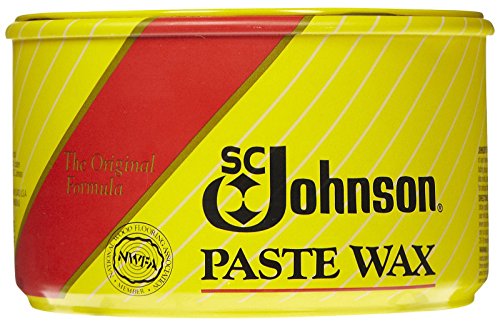


Paste wax works best as a thin protective or polishing layer, not as a primary finish. It comes in furniture and floor formulations, and it can be clear or tinted. Most paste waxes are meant to dry, haze, then buff to a sheen.
Winter is the time many owners notice duller furniture. Dry indoor heat can make a finished surface look flat, but that does not mean every piece should be waxed. Use wax only when the existing finish can benefit from a light polish and you are not creating a cleaning, slip, or refinishing problem.
Furniture wax and floor wax are generally not interchangeable, and formulations vary by product. Floors finished with polyurethane generally are not recommended for paste wax because the surface can become dangerously slippery. On furniture, a thin coat is the rule. A light coat is all you need on waxed surfaces.
What you’ll need
- Paste wax for furniture, or a wax that matches the existing finish
- Cotton cloth, cheesecloth, or a terry cloth towel for application and buffing
- 0000 steel wool, if you choose that method for a compatible finish
- Clean dry cloths for dust removal
- Mineral spirits for removing old wax before refinishing
- A cleaner appropriate for the surface, if the piece needs cleaning before waxing
- A buffing tool or electric buffer for large flat surfaces
- Wood filler for dents and cracks only after old wax has been removed and refinishing is planned
Wax finish decision table
Use this table before you reach for the tin. It gives you the finish, the prep step, the best applicator, and the most likely failure if you choose poorly.
| Finish | Wax? | Prep step | Best applicator | Failure to expect |
|---|---|---|---|---|
| Polyurethane | Usually no | Dust and clean only if you are not refinishing | Cotton cloth | Slippery feel, weak grip, haze on high-contact areas |
| Lacquer | Often yes | Dust off fully; clean only if the surface is dirty | Cotton cloth or cheesecloth | Streaks or dull patches if wax is applied too heavily |
| Shellac | Sometimes | Check for soft spots; clean gently with mineral spirits | Cotton cloth | Softening if the finish is exposed to alcohol or heat |
| Oiled wood | Use caution | Confirm the oil finish is fully cured and dry | Soft cloth only | Uneven absorption, greasy feel, fast dust pickup |
Can you wax polyurethane?
Usually not on floors, and only with caution on furniture. Polyurethane is a common hard finish and generally does not need extra wax protection. On a flat tabletop or cabinet door, wax can reduce grip, leave a slippery feel, or build up where hands touch the surface most.
If you want a short-term polish on polyurethane furniture, keep the coat very light and test an inconspicuous spot first. If a dining table feels dull in January but still cleans normally, a thin wax coat may add a mild sheen. If the surface is a floor or a high-step area, skip wax.
Stop waxing and clean the surface with a dry cloth first, then inspect for residue. If the piece still feels slick after normal cleaning, the wax is the problem, not the polyurethane.
How to apply paste wax
Begin with a clean, dry surface. Wipe away dust, then spread a very thin coat, let it haze, and buff it off. Use cloth application as the default. Reserve 0000 steel wool for finishes that can tolerate gentle abrasion and only when you want a more even spread on a sound surface.
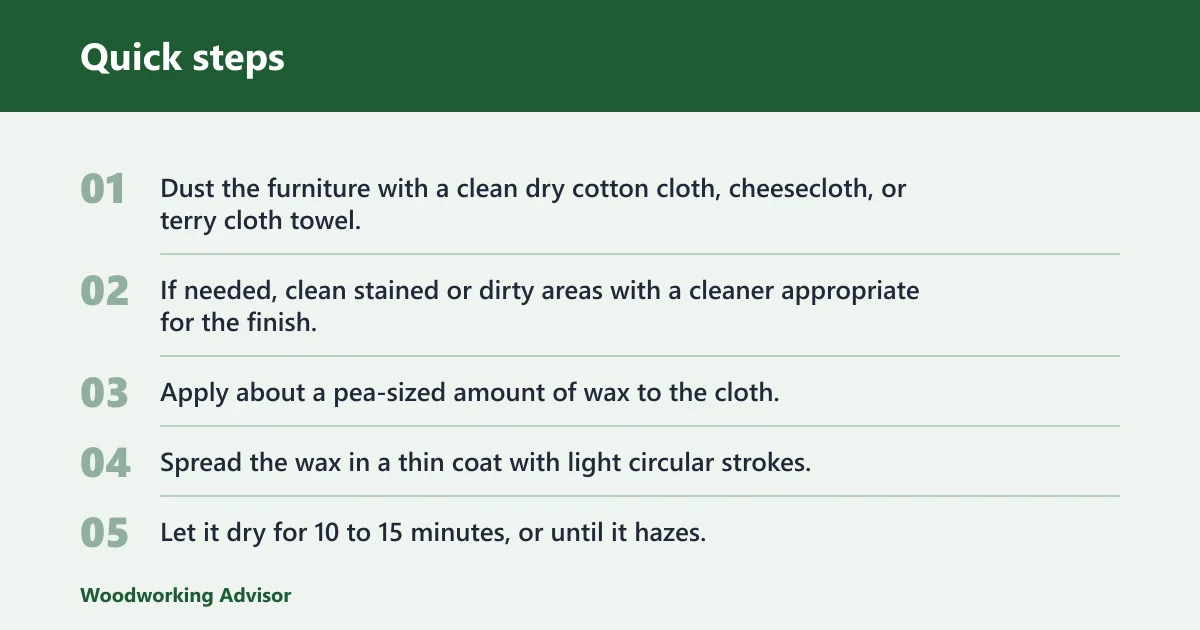
- Dust the furniture with a clean dry cotton cloth, cheesecloth, or terry cloth towel.
- If needed, clean stained or dirty areas with a cleaner appropriate for the finish, then dry the surface fully.
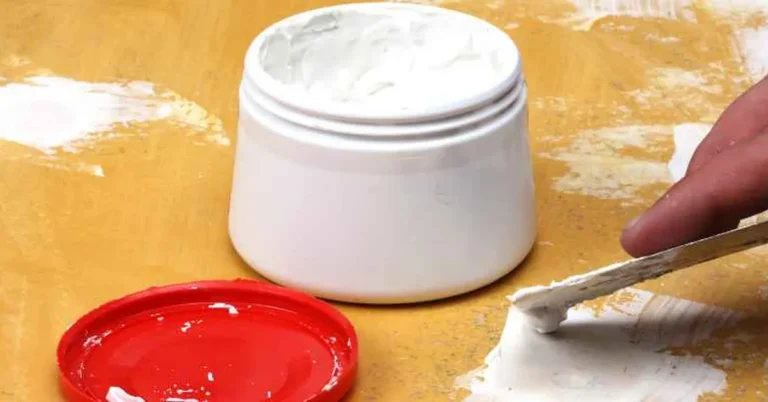
- Apply about a pea-sized amount of wax to the cloth.
- Spread the wax in a thin coat with light circular strokes.
- Let it dry for 10 to 15 minutes, or until it hazes, following the product label if the timing differs.
- Buff with a clean soft cloth until the surface feels smooth and looks even.
- Add a second light coat only if needed, then wait four to eight hours, or the time stated on the product label, before rechecking sheen.
For large tabletops or sideboards, a buffing tool or electric buffer can speed the final polish after the wax cures. Keep the tool moving. Do not press hard, or you can leave hot spots and uneven gloss.
On a table about 6 feet long, applying thick wax can leave drag marks, soft ridges, and a greasy feel that attracts dust.
When should you remove old wax?
Remove old wax when you plan to repaint, recoat, or repair the piece. Wax can interfere with adhesion, and Entri Ways states you cannot paint over wax. If the next step is primer, paint, glue, or a new topcoat, old wax has to come off first.
How do you know if furniture already has wax on it? Look for a soft, smeary feel, uneven shine, or a cloth that picks up cloudy residue after rubbing. Mineral spirits will also reveal wax on some finishes: a dampened cloth may turn cloudy or gummy when old wax is present.
Use mineral spirits to remove old wax before refinishing. After the wax is gone and the wood is clean, wood filler goes in next if the piece needs dents or cracks filled before primer or paint. Do not apply filler over wax.
Check a small hidden area with mineral spirits, then let it dry. If the surface still feels waxy or smears under light pressure, repeat the cleaning before sanding or filling.
When not to wax
Skip wax when the piece is antique and you want to preserve the current finish with minimal intervention, when the finish is painted and you may repaint later, or when the piece gets hard daily use and slip or buildup would be a problem. Wax is a finish aid, not a fix for wear, open grain, or missing coating.
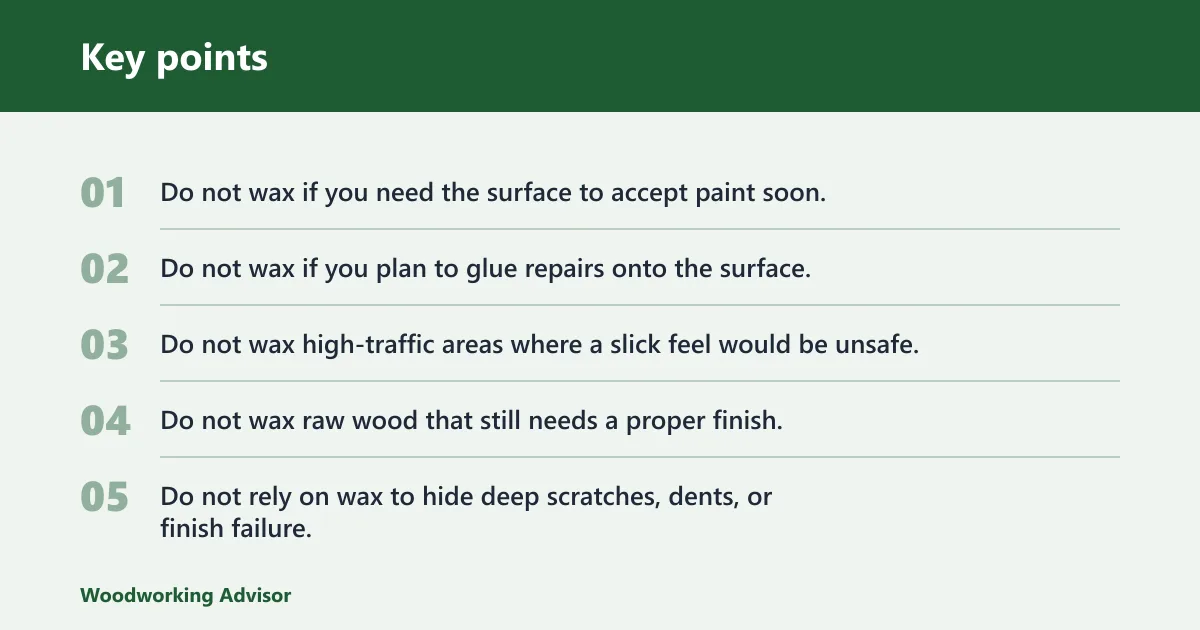
- Do not wax if you need the surface to accept paint soon.
- Do not wax if you plan to glue repairs onto the surface.
- Do not wax high-traffic areas where a slick feel would be unsafe.
- Do not wax raw wood that still needs a proper finish.
- Do not rely on wax to hide deep scratches, dents, or finish failure.
Say your hall table is lacquered and the finish looks dull every February. A single thin wax coat can help with sheen. Say the same piece is a painted entry bench with kids climbing on it daily. Wax is the wrong choice because the surface needs better wear control and future paint work.
Common mistakes
Too much wax is the most common error. It leaves buildup at edges, collects dust, and can haze over with age. Keep coats thin and stop when the surface looks even. If shine is still low, add another light coat later instead of loading on more product now.
Wrong cleaner or applicator causes the next set of problems. Use a cleaner appropriate for the surface before waxing, then dry it fully. Use cotton cloth, cheesecloth, or a terry cloth towel for most jobs. 0000 steel wool can work on suitable finishes, but cloth is the safer default for many readers.
Waxing before paint or topcoat work is another dead end. Once wax is on the surface, later coating work becomes harder. Remove the wax with mineral spirits first, then sand, fill, prime, or paint as needed.
Hunker advises applying new wax infrequently, about every six months. That cadence fits maintenance, not heavy buildup. If the surface still looks good after cleaning, wait. Rewaxing too soon usually adds residue instead of useful protection.
Frequently asked questions
Is paste wax good for furniture?
Yes, when you want a light polish or a thin protective layer on an existing finish. It is commonly used on shellac, lacquer, varnish, and some painted surfaces. It is not a substitute for a real finish, and it is a poor choice when you need later paint or topcoat adhesion.
Can you apply paste wax over polyurethane?
Yes, but only on furniture where a little extra sheen or feel is worth the tradeoff. Do not use it on polyurethane floors. On furniture, keep the layer very thin and expect less grip on hands-on surfaces, especially if the piece sees daily contact.
How often should you reapply paste wax to furniture?
For maintenance, about every six months is a common interval. If the surface still looks even and does not feel dry or dull after cleaning, wait longer. Reapply only after dusting and cleaning, because wax over dirt traps residue and creates dull spots.
How do you know if furniture already has wax on it?
Rub a clean cloth on a hidden area. If the cloth picks up cloudy residue or the finish feels smeary, wax is likely present. Mineral spirits can also help reveal old wax before refinishing, but use them only if you plan to remove the residue and start over.
What should you use to remove old paste wax from wood?
Use mineral spirits and clean cloths. Wipe until the cloth stops picking up residue, then let the surface dry completely. If you plan to refinish, remove the wax before sanding, then move to filler, primer, or paint as needed.
Can you wax bare wood furniture?
No, not as a stand-alone finish. Paste wax is mainly used to polish an existing finish rather than replace one. Bare wood needs a proper finish first, such as shellac, lacquer, varnish, or an oil system that has fully cured.
Sponsored / affiliate links. As an Amazon Associate I earn from qualifying purchases. I may earn additional commission from eligible campaigns.