Ideal Humidity for Wood Furniture
Keep indoor humidity for wood furniture around 35% to 45% RH, with 40% as a practical target; avoid drops below 30% or swings of more than about 10% in a day. Bad winter humidity control can split boards, loosen joints, make drawers stick, and raise mold risk. This guide shows how to spot low, high, and fast-changing humidity before you buy a humidifier.
Why humidity swings hurt wood more than steady readings
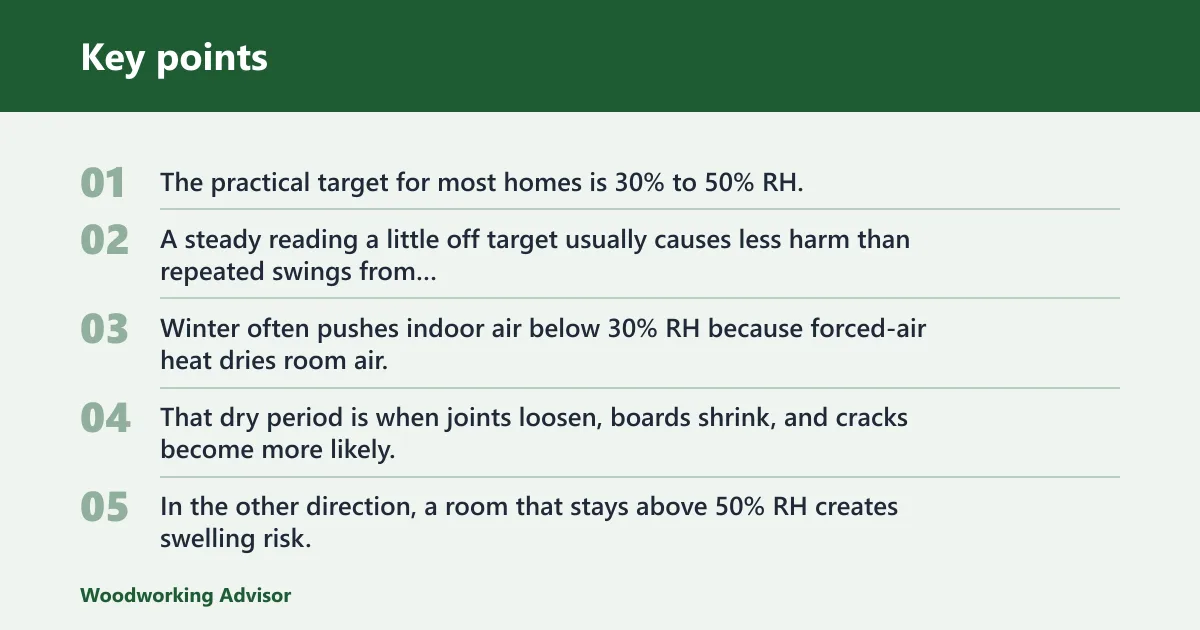


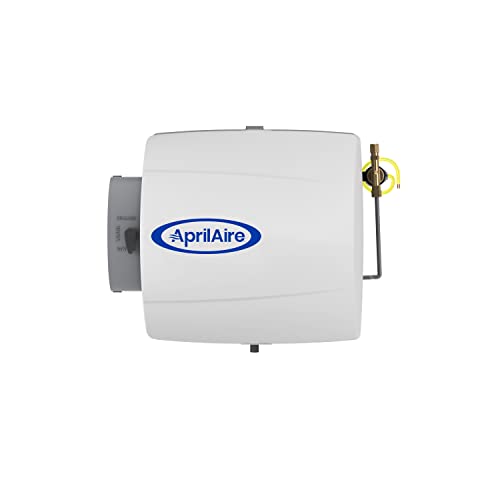
The practical target for most homes is 30% to 50% RH, with many solid-wood pieces doing best near 35% to 55% RH and around 45% RH as a useful aim. Stability matters most. A steady reading a little off target usually causes less harm than repeated swings from one side of the range to the other.
Winter often pushes indoor air below 30% RH because forced-air heat dries room air. That dry period is when joints loosen, boards shrink, and cracks become more likely. In the other direction, a room that stays above 50% RH creates swelling risk, and mold concern rises further above 60% RH.
Wood takes on and gives off moisture based on relative humidity and temperature until it reaches an equilibrium moisture content that matches the room. That is why the same table can behave differently in January than in July. The room, the season, and the heating system all matter.
Why stable humidity matters more than a perfect number
Repeated humidity cycling is often more damaging than a single reading that is a little high or low. Fast swings change wood moisture content before the piece can settle, so the movement keeps repeating across the grain. That is when stress builds in joints, veneers, and glued seams.
Say your dining room sits near 38% RH all winter, then jumps to 55% RH for a few days after a humidifier is turned up too far. That fast change can be harder on a tabletop than a steady 44% RH reading, even though both numbers are close to the practical target.
What humidity does to wood
Wood absorbs and releases moisture depending on relative humidity and temperature. As moisture content changes, the wood expands or contracts, mostly across the grain. That movement can show up as warped panels, loose joints, sticky drawers, and door binding.
Finishes and coatings slow the exchange of moisture, but they do not stop it. A coated surface may delay movement on the outside while the wood beneath still changes. Cloudy spots or white rings in the finish can mean moisture has penetrated the protective coating.
How movement shows up in furniture
Solid wood reacts most visibly because its grain structure moves with moisture change. Veneer can telegraph problems through the core, and engineered wood often resists movement better, though it can still swell, separate at edges, or fail at joints if the exposure is sustained.
Wood movement is normal. Trouble begins when the movement is large, rapid, or repeated. A drawer that starts rubbing only during a cold snap may be seasonal. A drawer that sticks after every humid spell, or a joint that opens and closes each month, points to a humidity problem that needs correction.
What happens when indoor air is too dry?
When indoor humidity drops below 30% RH, wood can lose moisture fast enough to shrink, split, and loosen joints. The first signs are often small cracks, open seams, squeaks, and drawers that no longer fit as cleanly. Dry winter air is the most common cause.
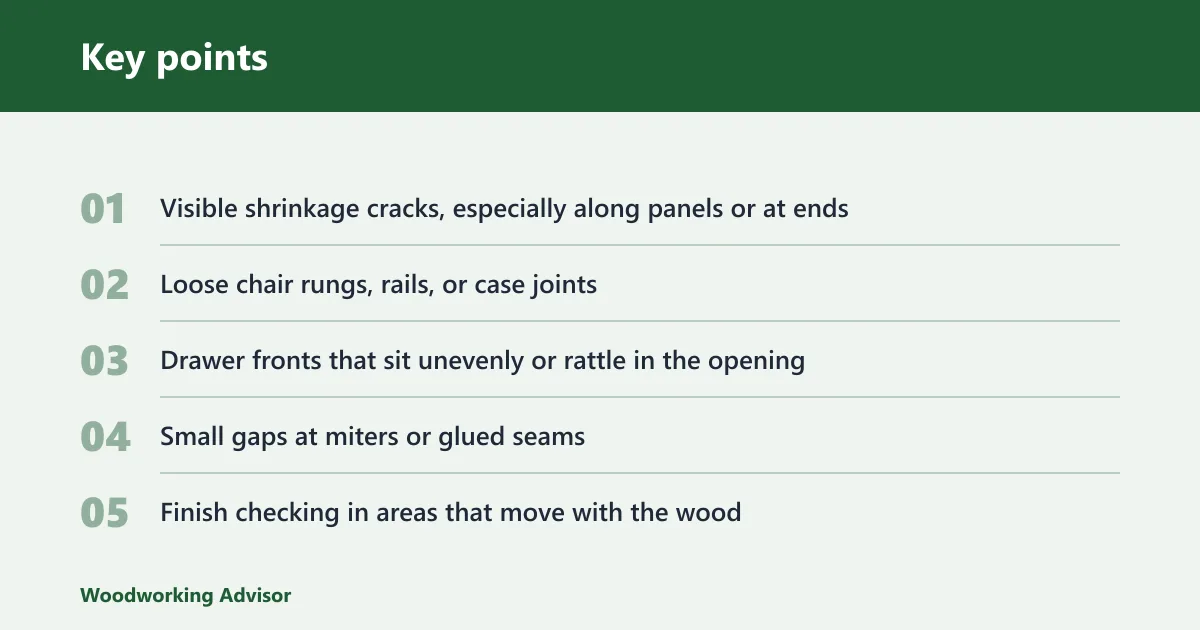
Low humidity usually affects exposed solid wood first, especially wide boards, tabletops, and chair parts with end grain near the ends. Veneer can lift at edges if the substrate and face layer shrink at different rates. Engineered wood tends to move less, but adhesives and edge banding can still fail in very dry rooms.
Signs of low-RH damage on furniture
- Visible shrinkage cracks, especially along panels or at ends
- Loose chair rungs, rails, or case joints
- Drawer fronts that sit unevenly or rattle in the opening
- Small gaps at miters or glued seams
- Finish checking in areas that move with the wood
How to reduce cracking risk in winter
Start by measuring the room before changing anything. If RH is below 30%, add humidity slowly. A portable humidifier can help a single room, while a whole-house unit makes more sense when several rooms stay dry for weeks at a time. Avoid raising humidity too fast; steady improvement is safer than a sudden overshoot.
Keep furniture away from supply vents, radiators, and fireplaces, since hot dry air speeds moisture loss. In forced-air homes, the air near registers can be much drier than the room average, so pieces placed close to vents often show problems first.
What happens when indoor air is too damp?
When indoor humidity rises above 50 percent, wood begins to expand. At that point, swelling, warped parts, sticky drawers, and door binding become more likely. If humidity stays above about 60% RH for more than a few days, mold risk can rise, especially on unfinished surfaces and in shaded corners.
High humidity matters most in basements, sunrooms, laundry-adjacent rooms, and any space where cold surfaces or poor airflow let moisture linger. Veneer lifting and swollen drawer sides are common warning signs. Structural trouble becomes more likely when the piece keeps swelling and drying in cycles.
Why drawers and doors start sticking
Drawers and doors usually bind because the wood has expanded across the grain. A small amount of swelling can be enough to close up the running clearance in a tight-fitting case piece. That is why a drawer may work in dry weather and stick as soon as the room turns damp.
Sticky movement is not always cosmetic. If the swelling comes with joint separation, soft spots, or a musty odor, treat it as more than a fit issue. Check for hidden moisture sources, condensation near windows, or leaks before assuming the furniture itself is the only problem.
Winter humidity decision table
This table helps you match the reading to the likely symptom, risk level, and response. Use a hygrometer first, then choose the fix. Separate solid wood, veneer, and engineered wood, because each one reacts differently to the same room air.
| Furniture type | RH range | Likely symptom | Risk level | Correct response |
|---|---|---|---|---|
| Solid wood | Below 30% | Shrinkage cracks, loose joints, gaps at seams | High | Add humidity with a humidifier and recheck after a few days |
| Solid wood | 30% to 50% | Usually stable, with normal seasonal movement | Low to moderate | Maintain stable conditions and avoid rapid swings |
| Solid wood | Above 50% | Swelling, sticky drawers, warped panels | High | Reduce humidity and check for condensation or leaks |
| Veneer | Below 30% | Edge lift, checking, loose glued seams | High | Raise RH gradually and inspect the bond line |
| Veneer | 30% to 50% | Generally stable with minor seasonal movement | Low | Keep RH steady and avoid direct heat vents |
| Veneer | Above 50% | Finish clouding, lifting edges, swelling at seams | Moderate to high | Use a dehumidifier if the reading stays high |
| Engineered wood | Below 30% | Minor edge gaps, fastener loosening, surface checking | Moderate | Add humidity if the low reading persists |
| Engineered wood | 30% to 50% | Usually the most stable range | Low | Monitor for room-to-room differences |
| Engineered wood | Above 50% | Edge swelling, softening at joints, finish problems | Moderate | Lower RH and inspect for moisture sources |
How do you measure humidity at home?
Use a hygrometer before you change a humidifier or dehumidifier setting. Place it in the same room as the furniture, away from windows, supply vents, radiators, and direct sun. The goal is to read the air the piece actually lives in, not the average condition somewhere else in the house.
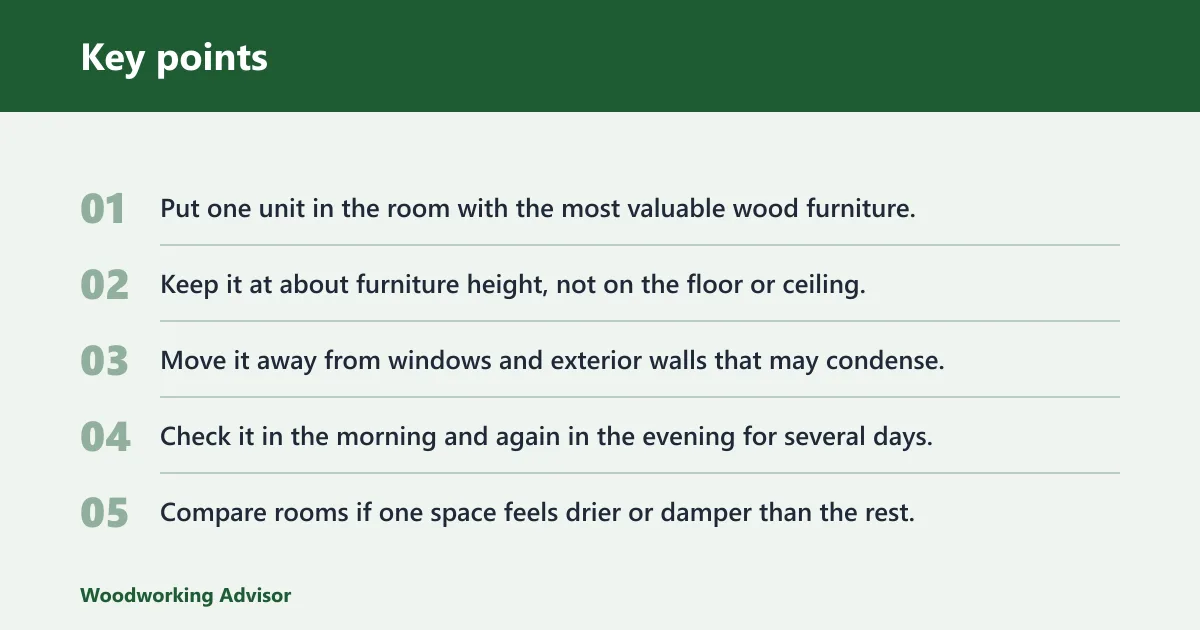
Rooms often differ more than homeowners expect. A dining room near a heat register can read much drier than a basement, while a sunroom can swing high during the day and drop at night. Separate readings matter because furniture damage follows the local room, not the thermostat setting.
Where to place a hygrometer
- Put one unit in the room with the most valuable wood furniture.
- Keep it at about furniture height, not on the floor or ceiling.
- Move it away from windows and exterior walls that may condense.
- Check it in the morning and again in the evening for several days.
- Compare rooms if one space feels drier or damper than the rest.
Which rooms need separate readings?
Start with the dining room, living room, basement, and sunroom if those spaces hold wood furniture. Homes with forced-air heat often need at least one reading near the main living area and another in the driest room. A basement reading can tell you when dehumidification is needed even if the upstairs air seems fine.
A common first-timer mistake is checking only the hall thermostat display and assuming it reflects every room. It does not. A reading near 40% RH in one space can hide a 28% RH problem in the room where the table and cabinet are stored.
How to control winter humidity
Use a humidifier when the indoor air is too dry and a dehumidifier when a room stays damp. The device should match the problem, because adding moisture to a room that already sits near 50% RH can push furniture into the swelling zone. Before any change, confirm the reading with a hygrometer.
Portable humidifiers work well for one room or for a few pieces that need protection in a dry heating season. Whole-house units are better when the entire home stays below 30% RH. On the damp side, a dehumidifier is the right tool for basements, sunrooms, and other rooms that stay above 50% RH.
How ventilation helps in problem rooms
Ventilation helps remove excess moisture in bathrooms, kitchens, and basements, but it should work with humidity control, not replace it. In winter, humidifier overshoot can be a problem too. If windows fog or condensation forms on cold surfaces, the room may already be too damp for nearby furniture.
Use extra caution in homes with forced-air heat. Dry heat can pull RH below 30% in a day, then a humidifier can push it too high overnight. That back-and-forth is exactly the kind of cycling that stresses wood.
Frequently asked questions
What is the ideal humidity for wood furniture?
For most wood furniture, 30% to 50% RH is the practical indoor range, with about 40% to 45% RH as a useful target. Solid wood often tolerates 35% to 55% RH well if the level stays steady. The best reading is the one that avoids rapid swings.
Does humidity ruin wood furniture?
Humidity can damage wood furniture when it stays too low, too high, or changes too fast. Dry air below 30% RH can crack wood and loosen joints. Damp air above 50% RH can swell parts, stick drawers, and raise mold risk, especially if the condition persists.
What humidity level is too dry for furniture?
Below 30% RH is too dry for most wood furniture. At that level, wood can lose moisture fast enough to shrink, split, and open joints. Winter heating often pushes rooms into that range, so a hygrometer is the best way to confirm the problem before you add humidity.
What humidity level causes wood furniture to swell?
Wood begins to expand when indoor humidity rises above 50 percent. If the air stays high for several days, swelling becomes more noticeable and drawers or doors may start sticking. Above 60% RH, the risk of mold and finish problems rises further.
How can I measure humidity in my home for furniture care?
Use a hygrometer in the same room as the furniture, and keep it away from vents, windows, and radiators. Check separate rooms if conditions differ. The reading should guide your next step, whether that means adding moisture, removing it, or leaving the room alone.
How do I stop wood furniture from cracking in winter?
Keep the room above 30% RH, but avoid sudden jumps. Use a humidifier if the air is dry, and place furniture away from heat vents. Stable humidity matters more than chasing one perfect number. Recheck the room after any adjustment so you do not overshoot into the damp zone.
Can high humidity make drawers and doors stick?
Yes. High humidity makes wood swell across the grain, which can close up clearances in drawers and doors. If the room stays above 50% RH, sticking becomes more likely. If the reading is above 60% RH, check for mold risk and hidden moisture sources too.
Sponsored / affiliate links. As an Amazon Associate I earn from qualifying purchases. I may earn additional commission from eligible campaigns.