How to Calculate Wood Price: 2026 Cost-Per-Board-Foot Chart
To calculate wood price, multiply length x width x thickness in inches, divide by 144 to get board feet, then multiply by the dealer’s price per board foot. Two details change the final number: hardwood is billed on its rough (nominal) thickness even when it is sold planed thinner, and the waste allowance you add depends on whether you buy rough or surfaced stock. This guide gives the formula, 2026 price ranges by species, a worked cut-list estimate, and a table that fixes the most common waste-factor mistake.
The Board-Foot Formula and What You Are Actually Billed For
Best Board-Foot Calculator Pick
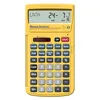 |
Calculated Industries 4019 Material Estimator – $23.31 Takes length, width and thickness in feet, inches and fractions and returns board feet and cost per unit, so you skip the length x width x thickness / 144 arithmetic below.
|
As an Amazon Associate we earn from qualifying purchases.
A board foot is a unit of volume, not length: 144 cubic inches, or a board 12 inches long, 12 inches wide and 1 inch thick (1/12 of a cubic foot). Hardwood dealers price by it, which is why a short, wide, thick board can cost more than a long, narrow, thin one. The formula is (length in inches x width in inches x thickness in inches) / 144 = board feet. Multiply by the price per board foot for the cost. If you work in feet, the shortcut is length (ft) x width (in) x thickness (in) / 12.
Worked example: a rough-sawn red oak board 96 in long, 8 in wide and 1 in thick is (96 x 8 x 1) / 144 = 5.33 board feet. At $4 per board foot that is about $21.33 before waste. For converting a bulk order between board feet and cubic feet, see how many cubic feet are in a board foot.
Quarter thickness: you pay for the rough size
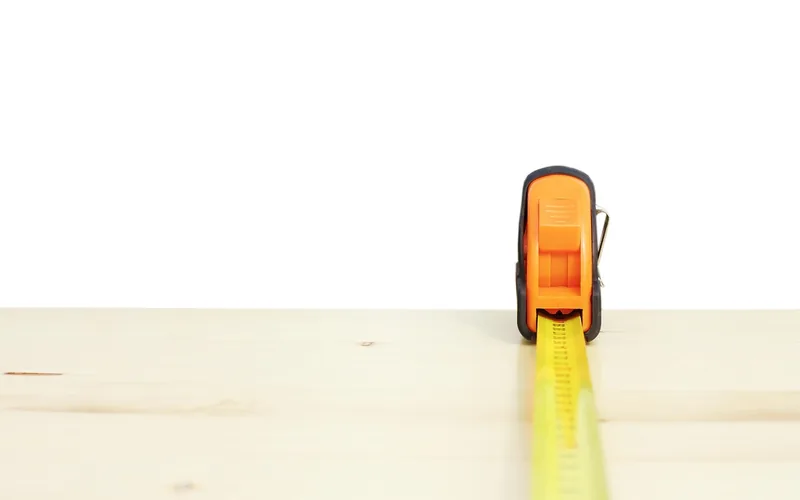
Hardwood thickness is called in quarters of an inch: 4/4 is one inch, 5/4 is 1.25 inches, and so on. Dealers invoice on that rough thickness even when they sell the board surfaced on two sides (S2S) and thinner. A 4/4 board typically finishes around 13/16 inch after surfacing, but it is still billed as a full 1-inch board (boardfootcalc.net thickness guide).
That matters for price comparisons. An S2S 4/4 board is 13/16 inch thick but billed at 1 inch, so you pay for about 23% more wood than you receive (1 / 0.8125 = 1.23). Two quotes can both say “$6 per board foot” and deliver different amounts of usable thickness.
| Thickness call | Rough thickness (billed) | Typical S2S thickness | Board feet in an 8 ft x 8 in board |
|---|---|---|---|
| 4/4 | 1.00 in | 13/16 in | 5.33 |
| 5/4 | 1.25 in | 1-1/16 in | 6.67 |
| 6/4 | 1.50 in | 1-5/16 in | 8.00 |
| 8/4 | 2.00 in | 1-3/4 in | 10.67 |
Surfaced thicknesses are approximate and vary a little by mill. The last column uses the billed (rough) thickness: (96 x 8 x thickness) / 144.
2026 Lumber Price Chart by Species (Per Board Foot)
Hardwood pricing varies by grade (FAS vs. Select), region and whether the board is rough-sawn or surfaced. These ranges are compiled from hardwood dealer price lists and 2026 pricing guides, and they move with supply, so treat them as a sanity check for a quote rather than a fixed price. The chart covers standard boards; live-edge and slab pricing follows a different model, covered in how to calculate wood slab price.
| Species | Rough-Sawn ($/bf) | Surfaced/S4S ($/bf) | Best For |
|---|---|---|---|
| Black Walnut | $6–$12 | $10–$18 | Fine furniture, accent pieces |
| White Oak | $5–$10 | $8–$15 | Outdoor-rated furniture, flooring |
| Red Oak | $2–$5 | $4–$7 | Cabinetry, general furniture |
| Hard Maple | $3–$6 | $5–$9 | Cutting boards, butcher blocks |
| American Cherry | $4–$8 | $6–$11 | Fine furniture, cabinetry |
| Poplar | $2–$4 | $3–$6 | Painted furniture, secondary wood |
| Hickory | $3–$6 | $5–$8 | Flooring, rustic furniture |
Ranges compiled from hardwood dealer price lists and 2026 industry pricing guides. Actual prices vary by region, grade and current supply.
Construction Lumber and Plywood: Nominal vs. Actual Board Feet
Framing lumber is sold by the piece, but the board-foot rate sits behind the sticker, and here the rule flips. Softwood dimensional lumber is priced on nominal size, so a 2×4 that measures 1.5 x 3.5 inches is still counted as 2 x 4 (Wikipedia, board foot). Take an 8-foot 2×4:
- Nominal: (2 x 4 x 96) / 144 = 5.33 board feet
- Actual: (1.5 x 3.5 x 96) / 144 = 3.5 board feet
- Price: our 2×4 cost guide lists an 8-foot stud at about $3.85 to $4.15 (October 5, 2026), which is roughly $0.72 to $0.78 per nominal board foot but $1.10 to $1.19 per board foot of wood you actually get.
So framing lumber looks cheap per board foot mostly because the nominal count is generous. Other typical ranges: pressure-treated lumber roughly $0.90 to $1.60 per nominal board foot (about $6 to $10 for a 2x4x8), Douglas fir roughly $0.70 to $1.20, and 3/4-inch CDX plywood roughly $30 to $80 per 4×8 sheet nationally, with most regions near $40 to $55. For a whole framing job, use a lumber calculator for framing.
Rough-Sawn vs. Surfaced (S4S): Why the Same Species Costs More
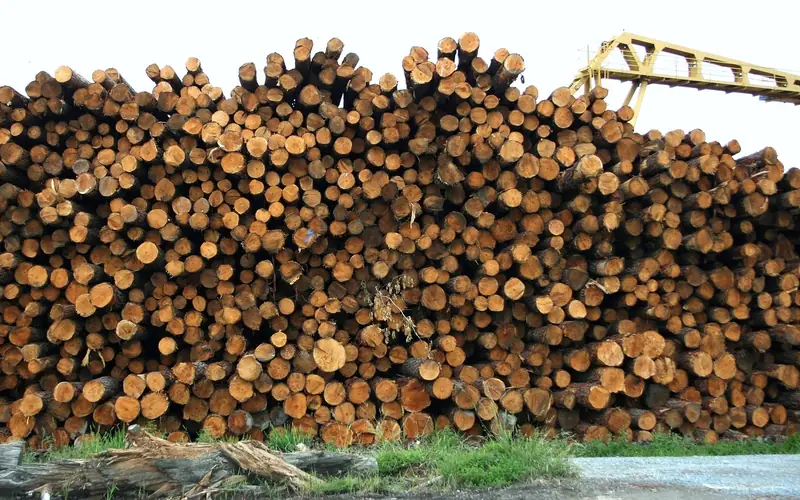
Rough-sawn lumber comes straight off the saw, unplaned and unsquared, and the chart above shows it running roughly 30 to 45% cheaper per board foot than the same species surfaced. Surfaced four sides (S4S) lumber is milled flat, square and to a consistent thickness, so it costs more even though there is less wood in it.
The gap is partly yield. Planing a 1-inch rough board to 3/4 inch removes 25% of its volume as shavings, and surfacing to 13/16 inch removes about 19%. Rough-sawn only saves money if you own a planer and have the shop time to mill it; otherwise the saving disappears when someone else surfaces it.
Waste Factor: Why Guides Say 10-15% and 15-25%
Published waste advice looks contradictory because the numbers answer different questions. The lower range (10 to 15%) fits surfaced, straight-grained stock with simple cuts. The higher range (15 to 25%) fits rough stock, defect-prone boards, or layouts with many short parts. At the far end, a contributor on the WoodWeb woodworking forum put total loss from green 1-inch rough stock to finished parts near 50%: 25% from milling to 3/4 inch, 5 to 15% more from straight-lining and end cuts, and the rest from defects. That is one professional’s rule of thumb, not a standard, but it shows how fast waste compounds on rough lumber (WoodWeb discussion). Our wood cost guide uses the wider 15 to 25% range because it assumes a mix of rough and surfaced buyers.
| Situation | Typical waste allowance |
|---|---|
| Surfaced stock, straight cuts, simple project | 10% |
| Surfaced stock, furniture with many joints | 15% |
| Rough stock you will mill yourself | 20-25% |
| Figured, knotty or defect-heavy boards | 25% or more |
Most people add the waste percentage to the cut-list total (x 1.15 for 15%). But waste is a share of the wood you buy, not of the wood you need. To end up with enough after losing a fraction w of the purchase, buy need / (1 – w). The WoodWeb poster’s “30% ordering factor” works out to a true waste rate of about 23% (30 / 130), which is the same effect in reverse.
| Waste share of purchase | Multiply cut list by | Naive “add the percent” |
|---|---|---|
| 10% | 1.11 | 1.10 |
| 15% | 1.18 | 1.15 |
| 20% | 1.25 | 1.20 |
| 25% | 1.33 | 1.25 |
| 30% | 1.43 | 1.30 |
At 10 to 15% the difference is small. At 25% it is the gap between 1.33 and 1.25, and on a 20-board-foot job that is 26.7 versus 25 board feet.
Worked Estimate: A Red Oak Bookcase Cut List
Say the cut list is two 36 in sides and three 30 in shelves, all 10 in wide and 4/4 thick (billed at 1 inch). Sides: (2 x 36 x 10 x 1) / 144 = 5.00 board feet. Shelves: (3 x 30 x 10 x 1) / 144 = 6.25 board feet. Total: 11.25 board feet. Using the red oak ranges from the chart above:
| Buying route | Waste share | Board feet to buy | Price range |
|---|---|---|---|
| Surfaced (S4S) red oak, $4-$7/bf | 15% | 11.25 / 0.85 = 13.2 | about $53 to $93 |
| Rough red oak, $2-$5/bf, you mill it | 25% | 11.25 / 0.75 = 15.0 | about $30 to $75, plus planer time |
The rough route can be cheaper, but the range overlaps, and it assumes you already own a jointer and planer. If you are comparing two suppliers, convert both quotes to the same state (rough or surfaced), the same thickness call and the same grade before deciding.
Smart-Buying Tips: Suppliers, Bulk Orders and Timing
- Big-box vs. local lumberyard: big-box stores are usually cheaper for construction-grade SPF, pressure-treated lumber and plywood. Local hardwood yards often do better on hardwood species and let you hand-pick boards for grain and defects.
- Ask for the quote in board feet: a per-piece or per-linear-foot price hides the thickness and width, so you cannot compare it to another supplier.
- Ask about quantity breaks: some yards discount larger orders or repeat customers, so it costs nothing to ask once you know your board-foot total.
- Timing: demand and prices for framing lumber tend to ease outside the spring building season, but prices move with supply, so compare current quotes rather than waiting.
This math applies to straight-grain lumber. Figured wood such as burl is priced on a different scale; see our burl wood value guide. For other project math, see the woodworking calculators guide.
Common Mistakes When Estimating Wood Cost
- Forgetting waste entirely, then running short mid-project and paying for a second trip.
- Adding the waste percent instead of dividing by (1 – waste), which under-buys by a few percent at high waste rates (see the table above).
- Computing board feet from finished thickness when the dealer bills on rough thickness: a 3/4 inch board is billed as 1 inch (4/4).
- Comparing a rough quote to a surfaced quote: $4 per board foot rough and $6 surfaced can be close to the same real cost once you pay to mill the rough stock.
- Confusing linear feet with board feet: a linear foot measures length only, so it works as a price unit only for lumber sold in one fixed size, such as a 2×4.
Frequently Asked Questions
How do you calculate the price per foot of lumber?
Multiply the board footage (length x width x thickness in inches, divided by 144) by the price per board foot. For lumber sold by linear foot, like a standard 2×4, multiply the total length by the price per linear foot instead.
How much lumber do I need for a project?
Total the board feet for every piece on your cut list, then divide by (1 minus your waste share). For 15% waste, multiply by about 1.18 rather than 1.15. For framing quantities like studs and plates, a board-feet-needed calculator walks through the same math per piece.
Do you pay for rough or finished thickness when buying hardwood?
Dealers bill hardwood on its rough (nominal) thickness. A 4/4 board is billed as 1 inch even if it is surfaced to about 13/16 inch, so compare quotes on the same thickness call.
What waste percentage should I add to a lumber order?
Roughly 10 to 15% for surfaced, straight-grained stock with simple cuts, and 15 to 25% for rough or defect-prone lumber or many short parts. Buy the cut-list total divided by (1 minus waste).
Is it cheaper to buy from a big-box store or a local lumberyard?
For construction-grade SPF, pressure-treated lumber and plywood, big-box stores are usually cheaper. For hardwood species, local lumberyards often beat big-box pricing and let you hand-select boards.
What is the difference between board feet and linear feet when pricing lumber?
Board feet measure volume (length x width x thickness), which is why hardwood of varying sizes is priced by board foot. Linear feet measure only length and work as a price unit only for lumber sold in one fixed width and thickness, like 2x4s.
Why does rough-sawn lumber cost less than surfaced lumber of the same species?
Surfacing removes part of the rough board (about 25% going from 1 inch to 3/4 inch) and costs milling labor, and mills price the surfaced board to cover both. Rough-sawn only saves money if you have a planer and the time to mill it yourself.
Conclusion
Wood price comes down to board feet x price per board foot, applied to the right thickness and the right state of lumber. Check any quote against the species chart, confirm whether you are comparing rough or surfaced pricing, and order your cut list divided by (1 minus waste). For species-by-species costs and where to buy, see our wood cost guide; for framing lumber, see the 2×4 price guide; and for project-specific quantities, see how many board feet you need.
Sponsored / affiliate links. As an Amazon Associate I earn from qualifying purchases. I may earn additional commission from eligible campaigns.