How to Care for Wood Countertops (Daily Cleaning to Deep Conditioning)
Wood countertops need two levels of care: a quick wipe-down with mild soap and water after every use, and a deeper oil or wax conditioning every few weeks to keep the wood sealed against water and stains. Skipping the conditioning step is the main reason wood countertops crack or gray over time.
If you’re also dealing with caring for wood spoons, see our related guide on caring for wood spoons.
Understanding Your Wood Countertops
Best Conditioner for Wood Countertops
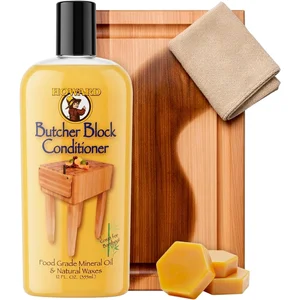 |
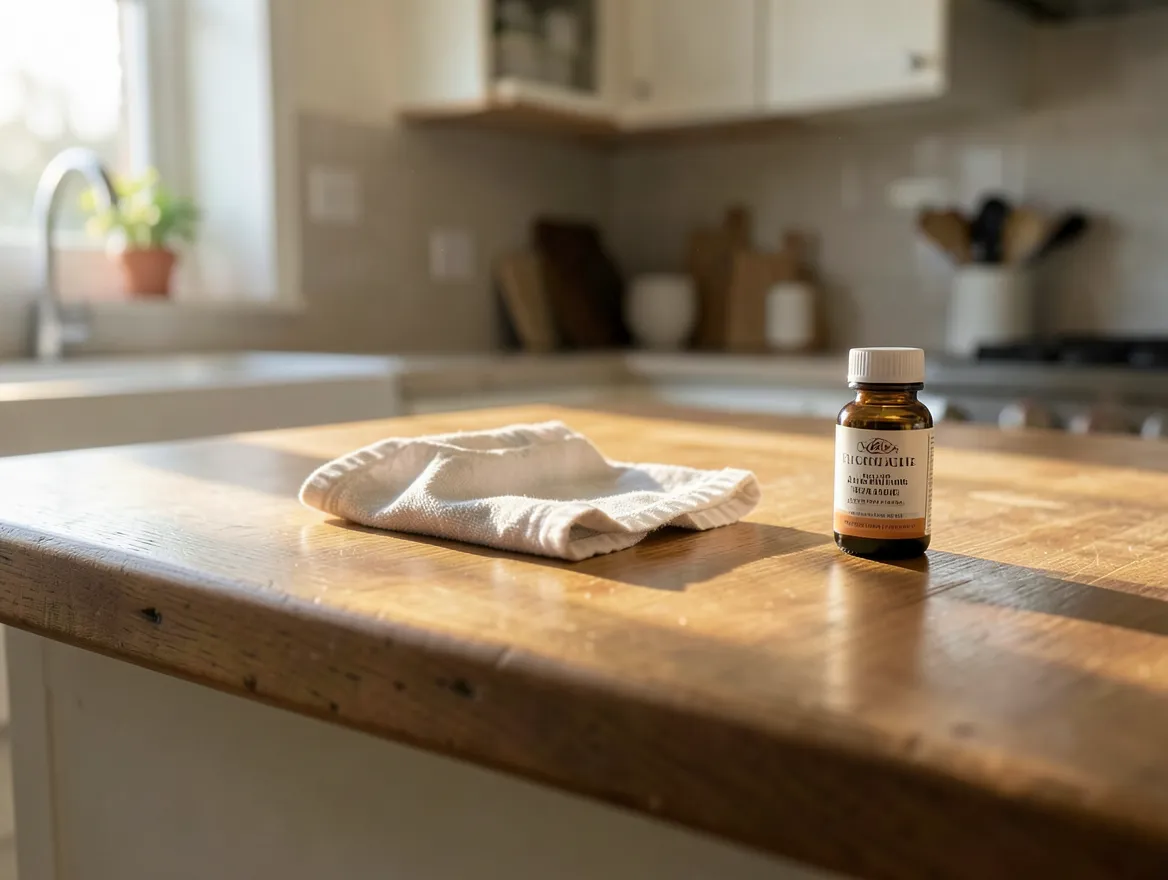
Howard Butcher Block Conditioner, 12 fl oz A food-grade oil-and-wax blend reseals the wood between deeper conditioning sessions.
|
Wood countertops are a natural product, so no two slabs look quite the same — but the wood species and the finish on top of it matter more for care than any of that natural variation. Oak, maple, walnut, and bamboo are the most common choices, and each brings a different grain pattern, hardness, and color that changes both how the counter looks and how it needs to be maintained.
The finish is the bigger factor day to day. A sealed finish — polyurethane or an epoxy resin coating the surface — creates a genuine barrier against water and staining, which is why sealed countertops tolerate a lot more everyday abuse. An unsealed finish (oiled or waxed) lets the wood’s actual surface stay in contact with air and, unfortunately, with spills too; it looks and feels more natural but needs a real maintenance routine to stay protected, since there’s no plastic-like barrier doing the work for you.
Hardness matters too — an oak or maple counter resists dents better than a softer wood like pine or cherry, so the same accidental knife drop that barely marks oak can leave a visible dent in a softer species. Combine that with your finish type and you’ve got a real read on what your particular counter can handle: a hard wood with a polyurethane finish is fairly forgiving of a quick spill; a softer wood with an oil finish needs spills wiped up close to immediately. The edge profile factors in too — a delicate ogee or bullnose edge chips more easily in a softer wood than the same profile cut into oak or maple, which is worth knowing before you pick a profile purely on looks; see our guide to wood countertop edge profiles for which ones hold up best and which need a built-up strip.
Your kitchen’s environment factors in as well. Cooking generates moisture and heat, and countertops regularly meet juice, wine, oil, and even coffee — all of which can leave a mark if left sitting. Swings in temperature and humidity cause wood to expand and contract slightly over time, which is normal, but it’s worth knowing about before you interpret a small seasonal gap or slight cupping as a sign something’s wrong.
The Mistake That Ruins Most Wood Countertops
The single most common way a wood countertop gets a permanent-looking dark spot is an oil spill left overnight — olive oil, cooking oil, even a greasy pan set down and forgotten. Unlike water, which mostly sits on the surface of a properly finished counter and wipes away, oil penetrates into the wood fiber itself, especially on an oiled or waxed finish that’s designed to absorb oil in the first place. By morning, what looked like a quick cleanup the night before has become a genuinely soaked-in dark patch.
The fix isn’t usually a full refinish. Blot (don’t wipe, which spreads it) as much excess oil as possible first, then cover the spot with a thick layer of cornstarch or baking soda and let it sit for several hours to overnight — both are mildly absorbent and will draw a surprising amount of oil back out of the wood fiber. For a spot that’s still visibly darker after that, working a small amount of fresh mineral oil into the surrounding area often blends the discoloration in rather than leaving a hard-edged mark, since matching moisture levels across the whole surface is usually more effective than trying to lighten one specific spot. The lesson generalizes past oil specifically: anything you wouldn’t want soaking into raw wood for eight hours needs cleaning up before you go to bed, not in the morning.
Wood Countertop Care Basics
Daily Wiping: Use a soft, damp cloth. Wipe down surfaces every day. This removes crumbs and light spills.
Always dry the surface afterward.
Avoid Soaking: Never let water sit on the wood. Wipe up spills immediately. This is crucial for preventing water damage and stains.
Gentle Cleaning: Use mild dish soap. Mix it with water. Avoid harsh chemicals or abrasive cleaners.
They can damage the finish.
Keeping Your Wood Countertops Clean
Daily cleaning is genuinely simple, but “gentle” is the operative word — harsh cleaners and abrasive scrubbers strip or dull a finish faster than daily use ever will. A soft cloth dampened (not soaked) with water handles routine dust and crumbs; follow it immediately with a dry cloth, since standing moisture left on the surface is what actually causes long-term damage, not the brief contact of a quick wipe-down.
For a sticky mess, a few drops of mild dish soap mixed into warm water and applied with a well-wrung, barely-damp cloth is enough — rinse the residue with a clean damp cloth afterward and dry thoroughly. If you want to disinfect occasionally, a diluted white vinegar solution used sparingly works, but test it on a hidden spot first, since vinegar’s mild acidity can interact differently depending on your specific finish, and always follow it with a clean rinse and full dry rather than letting the vinegar solution air-dry on its own.
Never cut directly on the wood itself — always use a cutting board — both to protect the finish from knife marks and to keep acidic juices from citrus or tomatoes from sitting in contact with exposed wood fiber longer than a quick countertop wipe would allow. How much margin for error you have here depends on your finish: a polyurethane-sealed counter tolerates an accidental splash far better than an oiled one, which absorbs liquid faster and needs a quicker response.
Cleaning Tips for Different Stains
- Grease: Blot up excess grease. Sprinkle cornstarch or baking soda on the spot. Let it sit for an hour. It will absorb the oil. Wipe it away with a soft cloth.
- Water Rings: For light rings, try rubbing the spot with a soft cloth. Sometimes, a little mineral oil can help blend it in.
- General Grime: Use a mild dish soap and water solution. Wipe and dry well.
Protecting Your Wood Countertops: Sealing and Oiling
Which protection routine you need comes down entirely to which finish you already have. A polyurethane or epoxy-sealed counter is doing most of the protective work through that plastic-like barrier, and it typically only needs touching up every few years — when the finish looks dull or you can feel a rough or worn patch under your palm, that’s the cue to reseal rather than any fixed calendar schedule. If the piece in question is a butcher-block-style counter, check how many coats of polyurethane a butcher block actually needs first — the count (and whether polyurethane belongs there at all) depends on whether that surface doubles as a cutting area. Resealing means a thorough clean, a full dry, and often a light scuff-sanding so the new coat has something to grip, followed by thin, even coats with full drying time between each and decent ventilation while it cures.
An oiled or waxed finish takes the opposite approach — no barrier layer, so the wood itself needs to stay saturated with oil to resist water and staining, and it needs reapplication every 1-3 months rather than every few years. For oiled finishes, food-grade mineral oil or a specialized wood conditioner (the same food-safe sealants covered in our guide to sealing wood for food contact) worked into the wood with a clean cloth, left to soak for 15-20 minutes, then buffed dry brings back both protection and sheen in one step. Wax offers a similar look with a bit more shine but less durability than oil — expect to reapply it somewhat more often, and expect it to be a better fit for a display piece than a heavily used prep surface.
The choice between the two finish types is really a lifestyle decision more than a wood-quality one: sealed finishes trade a bit of the wood’s natural tactile feel for low-maintenance, high stain resistance, while oiled or waxed finishes trade a recurring maintenance habit for a warmer, more natural look and feel. Neither is objectively better — a busy kitchen usually leans sealed, while someone who enjoys the ritual of periodic oiling (and doesn’t mind the extra vigilance around spills) often prefers the oiled route.
Oiling Your Countertop: A Quick Guide
- Clean the countertop thoroughly.
- Ensure it’s completely dry.
- Apply a food-grade mineral oil with a clean cloth.
- Let the oil soak in for 20 minutes.
- Wipe away any excess oil.
- Buff with a dry cloth for a soft sheen.
Dealing with Scratches and Dents
Scratches and small dents are a normal part of owning a wood countertop, and most of them are fixable without professional help. For light surface scratches, rubbing a bit of mineral oil into the mark with a soft cloth often blends it into the surrounding wood well enough that it’s no longer noticeable. Deeper scratches call for fine-grit sandpaper worked gently and strictly in the direction of the grain — sanding across the grain leaves visible cross-scratches that are more obvious than the original mark — followed by cleaning the area and reapplying whatever finish (oil, wax, or sealant) the rest of the counter has.
Wood color plays a real role in how much this matters: a dark stain like walnut hides minor scratches far better than a light wood like maple, where the same mark stands out sharply against the pale grain. Small dents respond well to steam on unfinished or oiled wood — a damp cloth over the dent, a warm iron gently pressed onto the cloth (never directly onto the wood), and the resulting steam swells the compressed wood fibers back toward their original shape. Test this cautiously on sealed wood, since heat and moisture can affect a polyurethane or epoxy coating differently than it affects bare or oiled wood fiber.
Deeper dents that steam won’t lift usually need a color-matched wood filler worked into the depression, left to fully cure, sanded smooth with the grain, and then refinished to blend with the surrounding area — getting that blend invisible takes some patience and is where a professional refinisher earns their fee if you’d rather not experiment on a visible section of counter. Whatever the damage, acting while it’s small beats waiting; a fresh scratch or dent is a five-minute fix, while the same damage left to collect grime and moisture for months becomes a bigger repair.
Fixing Minor Dents with Steam
What you need:
- A damp cloth
- A warm iron
- Patience!
Steps:
- Place the damp cloth over the dent.
- Gently press a warm iron onto the cloth.
- Lift the iron and cloth. Check the dent.
- Repeat if needed, but don’t over-soak or overheat.
Avoiding Water Damage and Stains
Water is the single biggest long-term threat to a wood countertop — left sitting, it can warp the wood, cause staining, and eventually invite mold growth in the worst cases. The fix is mostly about habits rather than products: wipe up spills (including drips from washing dishes or hands) right away, don’t let the faucet drip and pool at the sink edge over time, and periodically check a dishwasher’s seal and the plumbing under the sink for slow leaks that can do real damage long before they’re visible from above.
The sink area deserves extra attention specifically because it sees the most consistent water exposure in the kitchen. If you have an undermount sink, the seam where sink meets counter needs a solid, unbroken silicone caulk seal — check it periodically, and redo it as soon as it looks worn or cracked, since a failed seam seal lets water track directly into end-grain wood where it does the most damage. Use coasters for glasses (cork and felt-backed options are the safest choice for a finished countertop — see this coaster materials compared by cost and safety breakdown) and trivets for anything hot, since even a condensation-covered glass left too long can leave a visible ring.
Stains follow the same wipe-it-up-fast logic — coffee, wine, berry juice, and cooking oils are the most common culprits, and all of them are far easier to deal with in the first few minutes than after they’ve had hours to set. For a stain that’s already set, a paste of baking soda and water applied and left to sit for a while, then gently wiped away and the area rinsed and dried, handles a lot of everyday stains. An oiled or waxed finish is meaningfully more porous than a sealed one, absorbing liquids faster — which means the best defense on that finish type isn’t a better cleaning trick, it’s keeping the reapplication schedule current so the wood has less absorptive capacity to begin with.
Quick Check for Water Damage Signs
Look for:
- Darkening or discoloration of the wood.
- Warping or lifting edges.
- Soft or spongy spots.
- Mold or mildew growth.
If you see these, address them immediately!
Maintaining Different Wood Types
Maple is hard, dense, and genuinely durable against dents and scratches, with a fine, uniform grain that takes finishes evenly. Its light color is the tradeoff — stains show up much more visibly on maple than on a darker wood, so good sealing or a consistent oiling schedule matters more here than it does on something like walnut.
Oak is similarly hard and strong, with a prominent, open grain pattern that actually works in its favor by hiding minor scratches better than maple’s tight grain does. White oak in particular is more naturally resistant to moisture and rot than red oak, which is worth knowing if you’re choosing between the two for a wet kitchen environment.
Walnut is strong but noticeably softer than maple or oak, meaning it’s more prone to dents from a dropped pan or heavy impact — but its rich, dark color hides both dents and minor scratches better than any lighter wood on this list, and it looks especially good with a natural oil finish that plays up its varied grain. Bamboo, technically a grass rather than a hardwood, is very hard and naturally moisture- and pest-resistant, but because it’s constructed from glued strips rather than a solid piece, it can develop strip separation over time if the finish isn’t kept up — a maintenance risk unique to bamboo that solid hardwoods don’t share.
Cherry is a softer hardwood that darkens attractively with age and UV exposure, while teak stands out from every wood on this list for its naturally high oil content, which makes it genuinely more water-resistant without any finish at all — a real advantage in a kitchen where moisture exposure is a bigger concern than usual. Whatever species you have, the underlying care principles don’t change: gentle cleaning, fast spill response, and a maintenance schedule matched to your finish type. What changes by species is mainly how forgiving the wood is of a mistake, and how visible the resulting mark ends up being.
Wood Countertop Myth vs. Reality
| Myth | Reality |
|---|---|
| Wood countertops are impossible to keep clean. | With regular, gentle cleaning and proper sealing, they are easy to maintain. |
| One spill will ruin them forever. | Most spills can be wiped up immediately. Minor stains can often be treated. |
| They require constant, difficult upkeep. | Daily care is simple. Periodic sealing or oiling is straightforward. |
Matching Care to How You Actually Use Your Kitchen
How much maintenance a wood countertop realistically needs depends heavily on how the kitchen actually gets used, not just the wood and finish you chose on paper. A busy family kitchen with young kids sees sticky fingers, dropped food, and spilled drinks constantly, which usually argues for a durable sealed finish and a habit of wiping down counters multiple times a day rather than hoping an oiled finish keeps up with that pace. A household that cooks heavily and preps directly at the counter runs into oil, sauce, and wine spills often enough that a cutting board becomes non-negotiable regardless of how durable the wood itself is — the finish protects against spills, not against a knife blade.
A kitchen with fewer items left out and a simple end-of-day wipe-down routine tends to have the easiest time with wood counters generally, just because there’s less clutter creating opportunities for spills to go unnoticed. The pattern that causes the most damage across every kitchen type is the same one: installing wood counters, loving them for the first few months, and then gradually letting the care routine lapse — skipping oiling, ignoring small spills, assuming the wood will just handle it. Wood is a living material that needs consistent attention, and neglect is what turns a normal, maintainable countertop into one with permanent stains and a worn-out finish.
Kitchen layout matters more than people expect, too — a deep sink splashes more, a dishwasher opening directly onto the counter creates more moisture exposure, and a dripping faucet is a slow, constant source of water damage that’s easy to overlook until it’s already caused staining. An island without a sink nearby is naturally the easiest spot in any kitchen to keep wood counters looking new, simply because it sees the least water exposure by default.
Your Countertop’s Best Friends
Your Best Friend: A soft cloth, mild soap, and a dry towel.
Your Second Best Friend: Food-grade mineral oil or quality wood wax.
Your Third Best Friend: A cutting board!
Your Worst Enemy: Standing water, harsh chemicals, abrasive scrubbers.
When is it Normal, and When to Worry?
Knowing the difference between normal wear and an actual problem saves a lot of unnecessary worry — and occasionally saves a countertop, since real problems get worse the longer they’re ignored.
Normal:
- Slight changes in color over time, especially with natural oils.
- Very minor surface scratches that are hard to see.
- Slight dulling of the finish if it hasn’t been oiled recently.
- A faint watermark that disappears after drying.
- Small dents on harder woods with normal use.
When to worry:
- Deep gouges or cracks that go into the wood.
- Warping or cupping where the wood is visibly not flat.
- Dark, spreading stains that don’t come out with gentle cleaning.
- Soft, spongy spots that indicate rot or significant water saturation.
- Mold or mildew growth on the surface or edges.
- The finish is peeling or flaking off in large areas.
- Water pooling or not drying from the edges, especially around sinks.
Any of the “worry” signs above is worth acting on quickly — small problems caught early are simple fixes, while the same damage left for months often means a full professional refinish rather than a spot repair. A wood countertop genuinely is a lot like a piece of fine furniture: it will show its age, but with a real care routine it ages gracefully rather than deteriorating.
Quick Tips for Wood Countertop Longevity
These are the habits that make the real difference over years of use, not just the first few months.
- Wipe up spills the second they happen. This is the golden rule.
- Always use trivets and coasters. Protect the surface from heat and moisture.
- Use cutting boards for all chopping. Don’t cut directly on the wood.
- Clean with mild soap and water. Avoid harsh chemicals.
- Dry the counter thoroughly after cleaning. No standing water.
- Re-oil or re-wax as needed. Check the manufacturer’s recommendations. For oiled finishes, this might be every 1-3 months.
- Inspect around the sink and faucet regularly. Check for leaks or worn seals.
- Consider a splatter guard if your faucet sprays a lot.
- Don’t place hot pans directly on the counter. Use pot holders.
- Clean your trash can regularly. Leaky bags can cause moisture issues underneath.
None of these habits takes more than a minute or two, but together they’re the actual difference between a wood countertop that looks worn out after two years and one that still looks good after a decade.
Frequently Asked Questions About Wood Countertops
Can I put a hot pan on a wood countertop?
It’s best not to. While some finishes offer minor heat resistance, direct heat can damage the finish and the wood. Always use trivets or hot pads for hot pots and pans.
How often should I oil my wood countertops?
For oiled finishes, it depends on usage and humidity. Generally, every 1 to 3 months is recommended. If water no longer beads up on the surface, it’s time to re-oil.
Are wood countertops sanitary?
Wood has natural antibacterial properties. However, like any surface, it needs to be cleaned regularly. Promptly wiping up spills and cleaning with mild soap and water helps maintain hygiene.
Can I sand and refinish my wood countertops myself?
Yes, minor sanding and refinishing of small areas can be a DIY project. For a full refinish, it’s a more involved process. If you’re unsure, hiring a professional is a good idea. If you’re starting from scratch instead of refinishing, see our DIY wood countertop build guide for the full process.
What if I have a deep scratch? Can it be fixed?
Deep scratches can often be repaired. Depending on the depth and the finish, it might involve wood filler, sanding, and refinishing the affected area. For very deep damage, professional help might be needed.
Are wood countertops worth the maintenance?
For many people, the beauty, warmth, and natural feel of wood countertops make the maintenance worthwhile. With a consistent care routine, they can last for decades and add significant value and appeal to a home.
Conclusion
Caring for a wood countertop really comes down to knowing your specific wood and finish, then keeping a few simple habits consistent: wipe spills up fast, keep a cutting board between your knife and the wood, and stay on top of resealing or reoiling before the finish actually wears through rather than after. None of that is difficult on its own — it’s skipping it for months at a time that turns a normal, maintainable surface into one with a permanent stain or a peeling finish. Do the small things regularly and a wood countertop will genuinely outlast most other kitchen surfaces while looking better doing it.
Sponsored / affiliate links. As an Amazon Associate I earn from qualifying purchases. I may earn additional commission from eligible campaigns.