How to Connect Two Pieces of Plywood Permanently (Screws, Dowels & Biscuits)
To permanently connect two pieces of plywood, drive pocket-hole screws at an angle through one piece into the other, or glue a biscuit or dowel into matching slots or holes and clamp until the glue cures. Pocket screws are the fastest and easiest option for most DIY builds, while biscuits and dowels give a cleaner, joint-free surface on furniture and panel glue-ups. This guide covers the three methods that actually hold up on plywood, plus the one screw-placement mistake that weakens more plywood joints than any other.
If you’re building something that needs to open and close, like a cabinet lid or a fold-down workbench, you don’t want a permanent joint at all. See our guide on how to hinge two pieces of plywood for that. Everything below is for joints meant to stay fixed for good.
Pick Your Joint: Pocket Screws, Biscuits, or Dowels
All three methods create a strong, permanent bond in plywood, but they solve slightly different problems. Pocket screws win on speed and clamping pressure while the glue sets. Biscuits win on alignment for edge-to-edge panels where you don’t want any visible fasteners. Dowels win on simplicity if you don’t own a biscuit joiner or pocket-hole jig. Most builders reach for a pocket-hole jig first because it needs the least practice to get a tight, square joint on the first try.
Best Pocket-Hole Jig For Plywood Joints
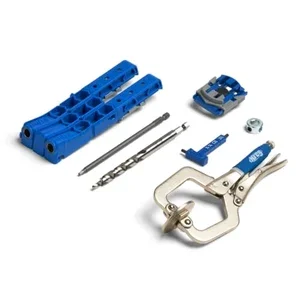 |
Kreg Pocket-Hole Jig 320 with Face Clamp – $49.00 The jig this guide’s pocket-screw method is built around, sized for plywood from 1/2 inch to 1 1/2 inches thick.
|
Pocket-Hole Screws: The Fastest Strong Joint for Plywood
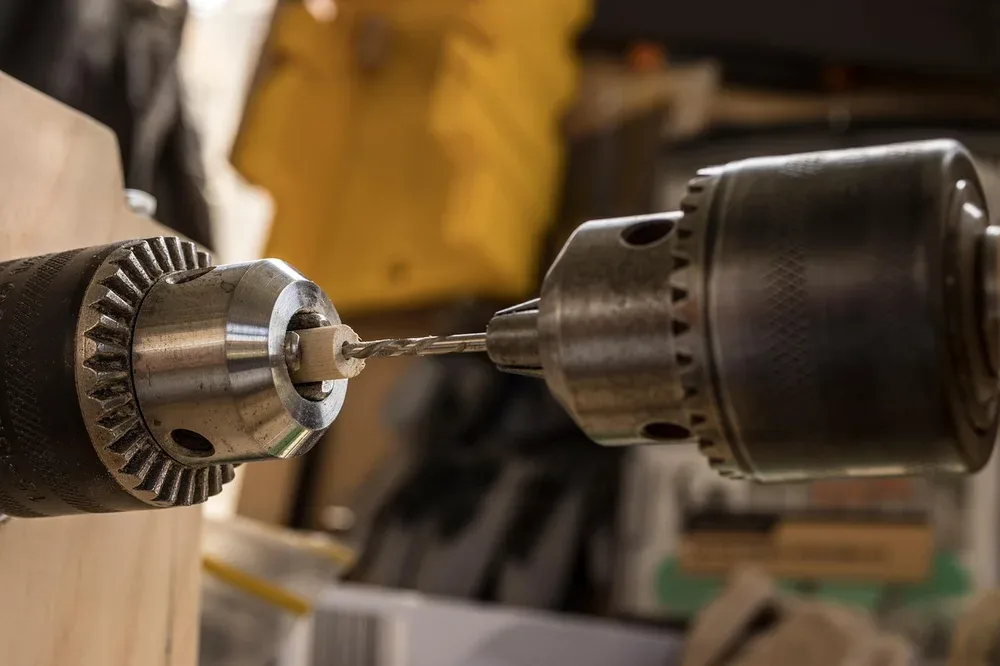
A pocket-hole jig clamps onto one piece of plywood and guides a stepped drill bit in at a low angle, so the pilot hole exits near the edge instead of straight down through the face. You then drive a self-tapping pocket screw through that angled hole into the second piece. The angle is what makes it strong: the screw threads pull the two faces together the same way a clamp would, so you get a snug, self-aligning joint without needing a second set of hands.
- Set the jig’s drill-guide depth to match your plywood’s actual thickness, not the nominal size on the label.
- Clamp the workpiece before drilling so the plywood doesn’t shift and blow out the hole.
- Use coarse-thread pocket screws for plywood and other sheet goods; fine-thread screws are meant for solid hardwood.
- Add wood glue to the joint face before driving the screw for a bond that outlasts the screw alone.
If you’re working with thinner sheet goods, like 1/2-inch plywood, the drill-guide setting and screw length both need to change from what you’d use on 3/4-inch stock. See using a Kreg jig on 1/2-inch plywood for the specific settings.
Biscuit Joints: Best for Edge-to-Edge Panel Glue-Ups
A biscuit joint uses a biscuit joiner to plunge-cut a football-shaped slot into the edge of each plywood piece, then a compressed wood biscuit is glued into both slots at once. The biscuit itself adds very little mechanical strength; its real job is alignment. Once glue hits the compressed wood, it swells slightly inside the slot and locks the two faces flush while the glue cures, which is exactly what you need when you’re gluing up several plywood panels into one wide surface, like a tabletop or a cabinet side, and can’t afford the pieces to slip out of line under clamp pressure.
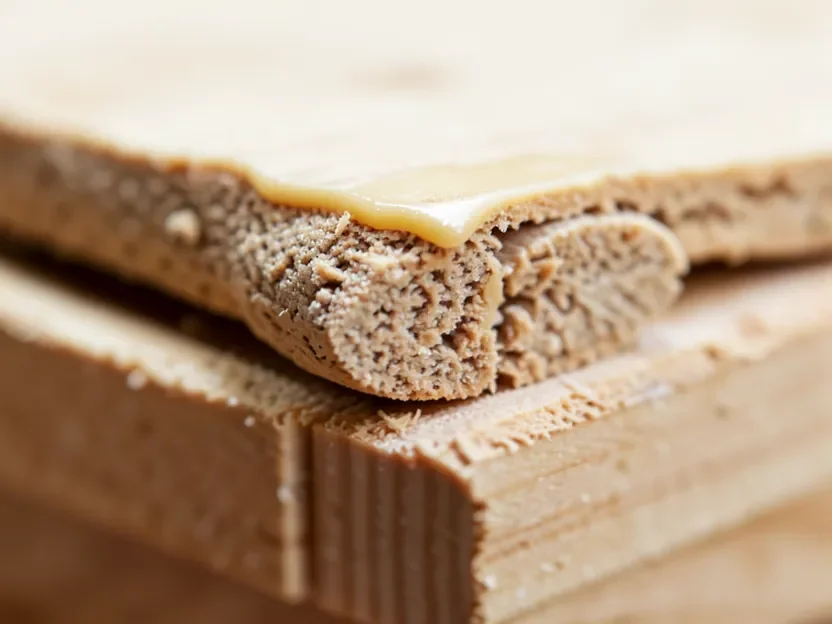
Because plywood edges show the layered veneer, a biscuit-and-glue joint also leaves a cleaner line than exposed screws when the edge will be visible or just sanded and finished. The tradeoff is the tool: a biscuit joiner is a dedicated purchase, so this method makes the most sense if you’re already gluing up panels regularly, not for a one-off shelf.
Dowel Joints: Simple Alignment and Strength
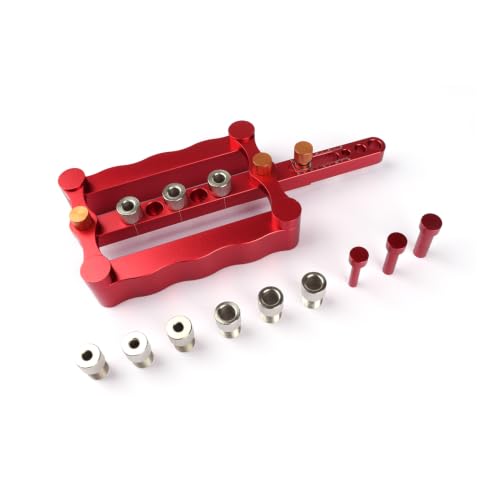
Dowels do the same alignment job as biscuits with cheaper, more common tools. A doweling jig drills matching holes into both pieces, spaced roughly every 4 to 6 inches along the joint, and glued wood dowels drop into the holes to register the pieces before you clamp. Tests by woodworking publications have found dowel joints hold up comparably to biscuit joints in 3/4-inch plywood butt joints, so the choice mostly comes down to what tool you already own. Dowels need more precise hole alignment than a biscuit slot forgives, since a dowel hole has almost no side-to-side play, while a biscuit slot is cut slightly oversized for the biscuit to allow a little adjustment before the glue grabs.
Why Screw Placement Matters More on Plywood
Plywood is built from thin veneer layers bonded face to face, and that structure changes where a screw actually holds. Drive a screw into the face of a plywood sheet and it passes through several full layers of wood fiber, giving it solid grip. Drive a screw into the edge of the same sheet and it’s biting mostly into the glue lines between layers rather than long wood fiber, so the same screw holds noticeably less in edge grain than it does in face grain. This is the practical reason pocket screws are so popular for plywood specifically: the angled pocket hole lets the screw drive into more solid material at a slant instead of straight into the thin edge, which partly makes up for plywood’s weaker edge-holding power. If you’re screwing straight into a plywood edge without a pocket hole, pre-drill and add glue, since a dry edge screw in plywood is one of the more common failure points in shop-built furniture.
Gluing and Clamping for a Seamless Joint
Whichever fastening method you choose, glue is doing real structural work, not just filling gaps. PVA wood glue is the standard choice for interior plywood joints: it dries clear, cleans up with water before it cures, and forms a bond that’s often stronger than the wood itself once fully cured. For outdoor or moisture-prone builds, a polyurethane glue that expands slightly as it cures fills small gaps better and resists water. Spread glue evenly on both mating surfaces, clamp firmly enough to see a thin, even bead squeeze out along the joint, and leave the clamps on for the glue manufacturer’s full cure time, not just until it feels dry to the touch. Wipe squeeze-out with a damp cloth while it’s still wet; once it skins over, it has to be scraped or sanded off and can take stain unevenly.
Finishing the Joint So It Disappears
Sand across the joint line with progressively finer grits, always finishing in the direction of the grain, to level any slight height difference between the two pieces before you seal or paint. On a pocket-screw joint, fill the visible screw pocket with a matching plywood plug or wood filler if the inside face will be seen. On a biscuit or dowel joint, a light pass of wood filler over any tiny gap at the seam, sanded flush once dry, is usually all that’s needed before finishing. Seal exposed edges and joints with the same finish you’re using on the rest of the piece so moisture can’t get into the joint from one side only, which is what causes a joint to swell and crack months later even though it looked solid on the day you built it.
Frequently Asked Questions
What is the strongest way to permanently join two pieces of plywood?
A glued pocket-hole screw joint is generally the strongest for corner and edge-to-face connections, since the glue provides the bonding strength and the screw provides clamping pressure while it cures. For edge-to-edge panel glue-ups, glue plus biscuits or dowels for alignment gives a comparably strong, fastener-free joint.
Are pocket screws strong enough for plywood?
Yes. Pocket screws are strong enough for shelving, cabinet carcasses, and most furniture-grade plywood joints, especially when combined with glue. The angled pilot hole drives the screw into more solid material than a straight edge screw would, which helps offset plywood’s weaker edge-holding power.
Can I use dowels or biscuits without glue?
No. Neither dowels nor biscuits are meant to be a mechanical fastener on their own; they’re alignment aids. The glue is what actually bonds the joint, so a dry-fit dowel or biscuit joint will come apart under normal use.
Why does a screw hold less in the edge of plywood than the face?
A face screw passes through multiple full veneer layers and grips solid wood fiber. An edge screw drives mostly into the thin glue lines between those layers, which have far less holding power than the fiber itself, so the same screw pulls out more easily from a plywood edge than from its face.
What tools do I need to connect plywood permanently?
At minimum, a drill, wood glue, and clamps. A pocket-hole jig adds fast, strong screwed joints; a biscuit joiner or doweling jig adds clean, fastener-free alignment for edge-to-edge panels. A tape measure, square, and sandpaper round out the basic kit for accurate, well-finished joints.
Sponsored / affiliate links. As an Amazon Associate I earn from qualifying purchases. I may earn additional commission from eligible campaigns.