Make Wood Paneling Look Good Without Painting (7 Fixes)
Wood paneling looks dated mainly because of flat, dim lighting and bare walls, not the wood itself. A room with original 1970s paneling still intact just needs warm light, contrast, and texture to read as intentional instead of outdated. This guide covers cleaning and conditioning the wood, the lighting and decor fixes that cut the “cave” effect, and what it actually costs to paint or cover the paneling instead, if you change your mind later.
Insert your Affiliate Disclosure reusable block here.
Quick Answer
Wood paneling looks good without painting when you clean and condition it, add warm 2700-3000K lighting, and break up the wall with mirrors, art, and furniture in contrasting light tones. Full repainting runs about $1,100 hired out or $150 DIY — decor-only fixes cost a fraction of that and take a weekend.
Deep-Clean and Condition the Wood First
Most paneling that “looks bad” is actually just dirty. Decades of dust, nicotine film, furniture polish buildup, and cooking residue dull the finish and darken the grain far more than the wood’s actual color does. Wipe panels down monthly with a soft microfiber cloth, and do a deeper clean twice a year with a wood-safe cleaner rather than an all-purpose spray — ammonia-based glass cleaners and harsh degreasers can strip or cloud the original factory finish.
After cleaning, a conditioning treatment brings back sheen that dry, decades-old paneling has lost, which by itself makes a wall look several shades richer without changing the color at all. Work with the grain, let it sit per the product’s label, then buff with a clean cloth.
As an Amazon Associate we earn from qualifying purchases.
Warm Up the Room With Lighting
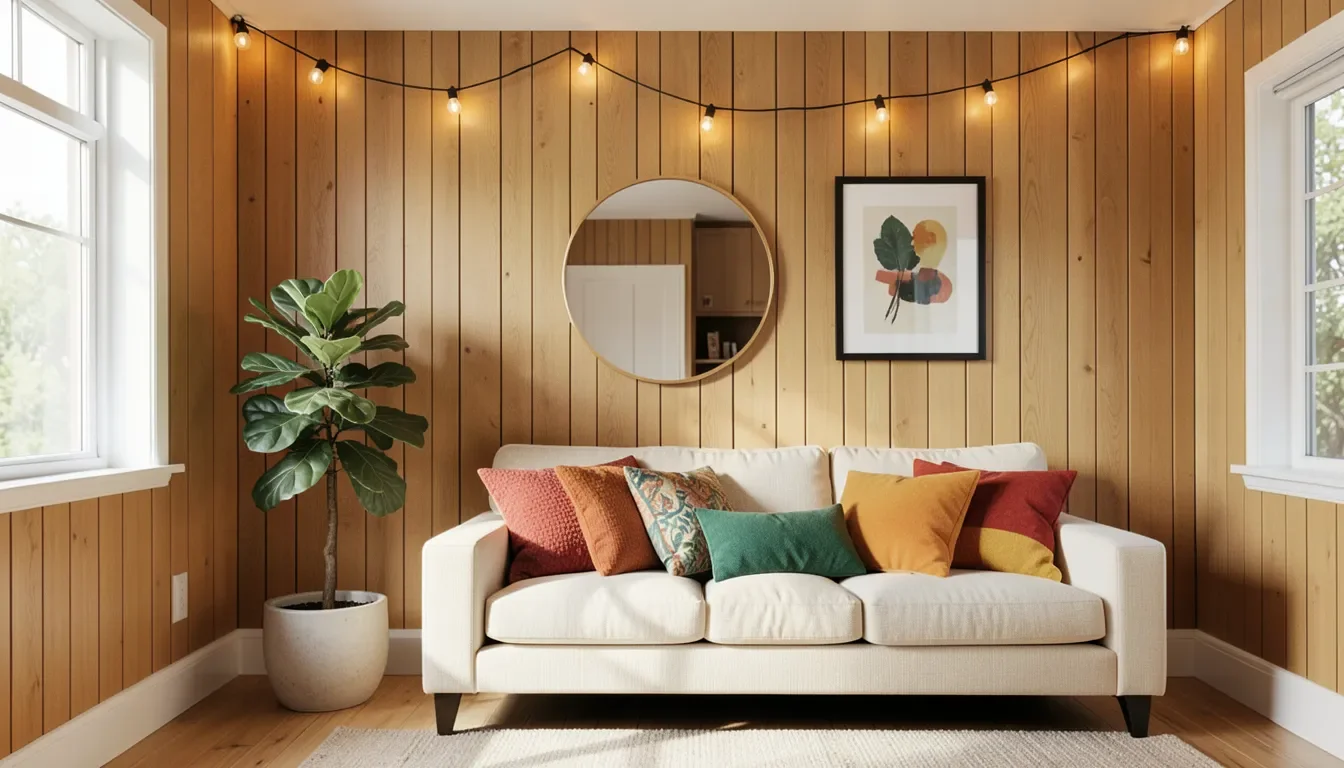
Dark wood paneling absorbs a lot more light than drywall does, which is the single biggest reason paneled rooms read as dim or “cave-like” under a single overhead fixture. Swap any cool white (4000K+) bulbs for warm 2700-3000K bulbs, and add at least one floor lamp or table lamp at eye level rather than relying on ceiling light alone — light bouncing off the wall at an angle shows off the wood grain instead of flattening it.
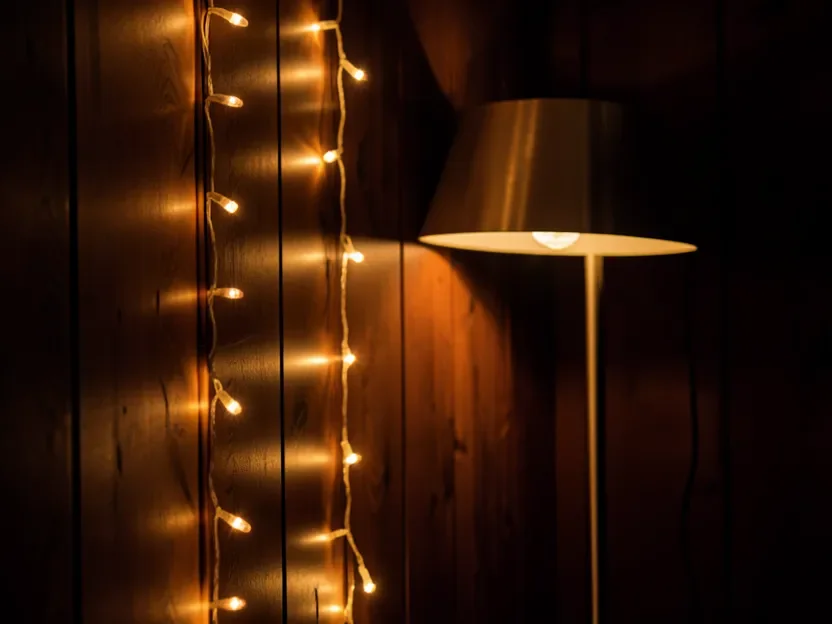
String lights along a shelf or window trim add a low, ambient layer without any wiring changes. If the room has a wood beam light fixture or similar, matching its finish tone to the paneling (rather than contrasting it) keeps the ceiling from competing with the wall.
Add Contrast With Mirrors, Art, and a Gallery Wall
A wall of uniform vertical grooves reads as busy until something breaks up the pattern. A large round or oval mirror does double duty: it interrupts the grooves and bounces window light deeper into the room. Hang it across from a window or lamp, not a blank interior wall, or the reflection has nothing useful to bounce.
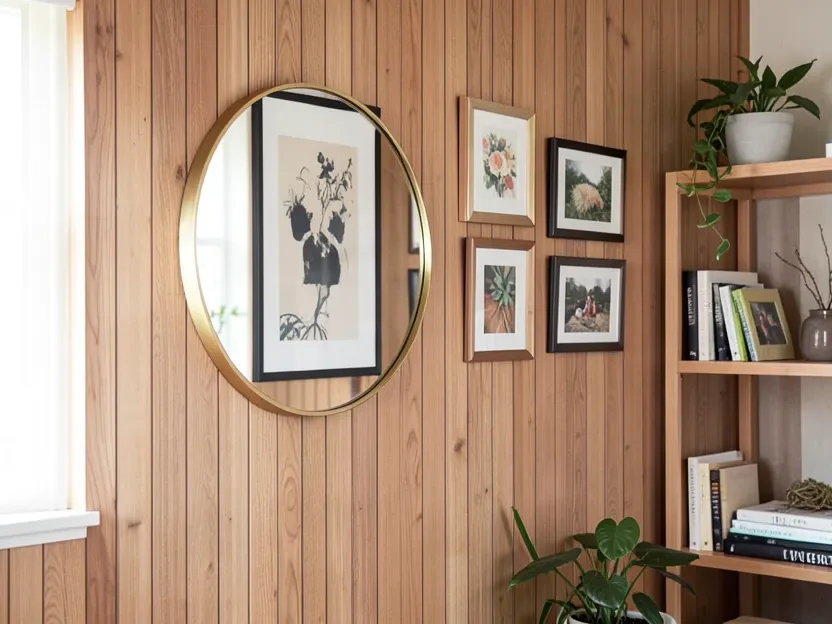
For art, go with black or white frames rather than matching wood tones, since a wood frame on a wood wall tends to visually disappear. A gallery wall of 4-6 mixed frame sizes covers more of the paneling’s surface area than a single large piece, which matters most on walls with heavy vertical grooves.
Bring in Furniture and Textiles That Soften the Walls
Furniture in the same wood tone as the paneling makes a room look monochrome and dated fast — the classic “everything is orange oak” 1970s look. Swap toward light, upholstered pieces: a cream or light gray sofa, a jute or wool area rug, and a few textured throw pillows in contrasting colors. The goal is tonal contrast, not matching the wood.
Long curtains hung close to the ceiling (rather than short ones at the window frame) also soften a paneled wall and make the room feel taller, which counteracts the visual weight that dark wood adds to a space.
Layer in Natural Elements
Live plants are the fastest low-cost fix for a paneled room — a fiddle-leaf fig or a trailing pothos on a shelf adds green against all that brown, and the organic shape contrasts the wall’s straight vertical lines. Paneled rooms are often on the dimmer side even after a lighting upgrade, so favor lower-light-tolerant plants like pothos, snake plant, or ZZ plant over sun-hungry varieties that will struggle and drop leaves. Woven baskets, a jute rug, and rattan or wicker accents add texture that reads as intentional layering rather than “we never got around to updating this room.”
Try Creative Techniques: Stencils, Geometric Overlays, and a Single Accent Wall
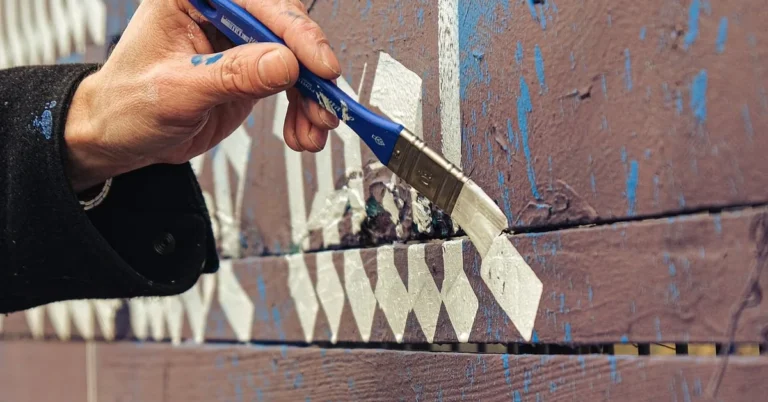
If flat decor changes aren’t enough, a few structural-but-reversible techniques go further without painting the wood: stencil a repeating pattern directly onto one section using a wood-safe stain or chalk-based stencil paint, or add thin wood or PVC overlay strips in a geometric pattern to break up the uniform grooves. Always test any stencil medium on a hidden panel (inside a closet or behind furniture) first — some stains soak into old paneling unevenly and can’t be fully removed if the color turns out wrong. Overlay strips attached with removable panel adhesive, rather than nails or screws, avoid punching holes in the original wood, so the change stays reversible if you move or change your mind later.
Treating just one wall as a deliberate feature, rather than trying to “fix” an entire paneled room at once, is usually the better first move — it limits both the cost and the risk of a technique you haven’t tried before, and a single well-styled accent wall does more visually than a mediocre update spread across four walls. Read more paneling-specific decor ideas by style and room type in our wood paneling living room ideas guide.
What It Actually Costs to Cover Wood Paneling Instead
If you eventually decide painting is worth it after all, it’s worth knowing the real price spread first. Based on typical U.S. contractor and materials pricing, a professional paint job on paneled walls runs around $1,100 for an average room, largely because stain-blocking primer and extra coats are needed to stop the old finish from bleeding through. Doing it yourself with primer, paint, and basic tools runs closer to $150. Wallpaper or a thicker wall liner installed over the grooves, a common non-paint cover option, typically runs around $560 installed, and less if you hang it yourself.
| Option | Typical Cost | Best For |
|---|---|---|
| Decor-only fixes (lighting, mirrors, textiles) | $50–$300 | Renters, or anyone not ready for a permanent change |
| DIY paint (primer + paint) | ~$150 | Homeowners comfortable priming and painting themselves |
| Wallpaper or wall liner installed | ~$560 | Covering grooves without removing the paneling |
| Professional paint job | ~$1,100 | A permanent, warrantied finish with no DIY risk |
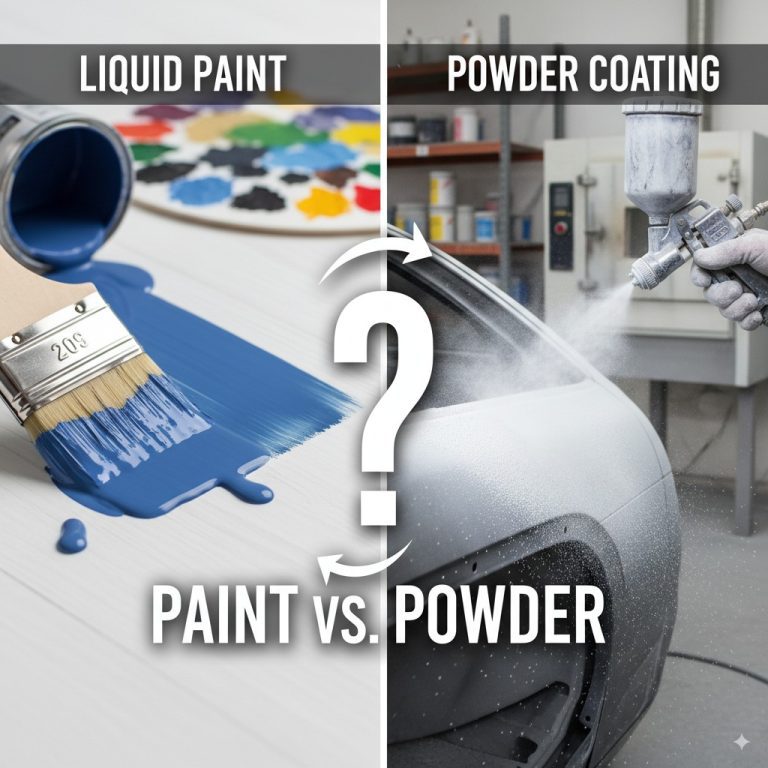
If you do decide to paint, see our guides on painting wood paneling without sanding and the full step-by-step painting guide, or browse more paint and finish guides for other rooms.
Frequently Asked Questions
How do you modernize wood paneling without painting?
Clean and condition the wood, switch to warm 2700-3000K lighting at multiple heights, and add contrast with mirrors, light-colored furniture, and textured decor. These changes cost far less than painting and can be undone if you move or change your mind, unlike a permanent coat of paint. See our guide on painting paneling if you decide a permanent change is worth it later.
How do you make wood paneling look better?
Start with a deep clean and a wood-safe conditioner, since built-up grime is usually what makes paneling look dull rather than the wood color itself. Then break up the wall visually with mirrors, art in non-wood frames, and furniture in a lighter, contrasting tone.
How do you modernize 70s wood paneling specifically?
1970s paneling is usually a darker, orange-toned finish, so the fastest fix is contrast: cool-toned or white furniture and rugs, black or white picture frames, and warm-white (not cool-white) lighting to avoid making the orange undertone look more yellow. A single accent wall of stencil work or a geometric overlay also modernizes the look without removing the paneling.
What is the best way to cover up wood paneling walls?
Wallpaper or a thicker wall liner hung directly over the grooves is the most common non-paint cover option, running about $560 installed. It hides the wood entirely without the stain-blocking primer work that painting paneling requires.
Is wood paneling coming back in style?
Yes, in a specific form: modern shiplap, board-and-batten, and vertical slat wood accent walls are a popular current design trend, but they use lighter finishes and cleaner lines than the dark, glossy paneling common in 1960s-1980s homes. Original paneling in good condition can often be styled to fit this look with lighting and decor changes rather than replaced.
What’s the cheapest way to update wood paneling without painting?
Cleaning and conditioning the existing wood plus a lighting change is the cheapest real fix, typically $50-$100 in cleaner, bulbs, and a lamp. Adding a mirror and a few plants brings the total closer to $150-$300 while still costing far less than any paint or wallpaper option.
Conclusion
Wood paneling doesn’t have to mean a permanent repaint or a full remodel. A deep clean and conditioning treatment, warmer lighting, and a few contrast pieces like mirrors, light furniture, and plants solve most of what makes a paneled room feel dated, usually for a few hundred dollars and a weekend. If you still want a permanent change later, painting or a wallpaper liner are both proven options — now you know roughly what each one actually costs before you commit.
Sponsored / affiliate links. As an Amazon Associate I earn from qualifying purchases. I may earn additional commission from eligible campaigns.