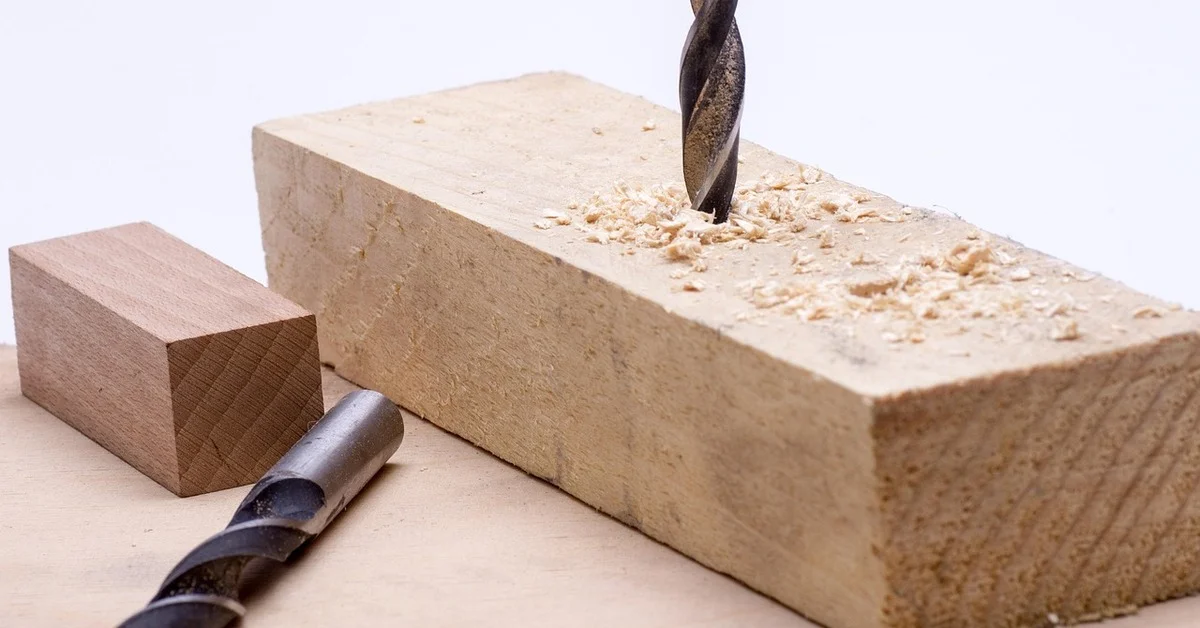
How to Widen a Hole in Wood Without Going Off-Center (5 Methods)
To widen a hole in wood, match the method to how much bigger it needs to be: file or sand for under 1/16 inch, a step bit in thin stock, a bit run through a clamped guide block for up to about 1/2 inch, or plug the old hole and re-drill when the new hole must sit dead center. The catch is that a bit dropped into an old hole drifts toward the thick side of the wood. This guide covers each fix, how to pick one, and the bit sizes to aim for.
Why a Bigger Bit Alone Drifts Off-Center
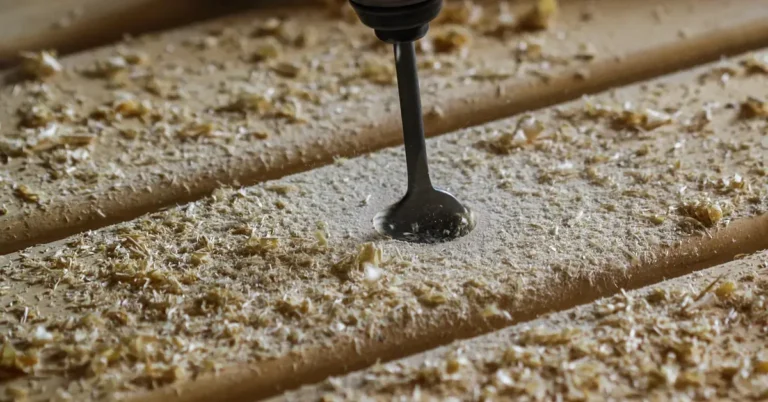
The usual advice is to put the next size up into the old hole and drill through. It works badly. The old hole is empty space, so the tip of the bit has nothing to bite into at the center, and the cutting lips catch on whichever side has more wood. The bit slides that way, and you end up with an oval or a hole that has moved sideways by a few hundredths of an inch. That is enough to make a dowel loose or a hinge sit crooked.
Every reliable method below fixes that one problem: it gives the cutter something to center on. A step bit does it with the smaller step riding in the old hole. A guide block does it with a fresh hole in scrap. A plug does it by filling the old hole so the tip has wood to grab.
 | Best Step Bit Pick NEIKO 10173A Step Drill Bit Set (5 Piece, 1/8 to 1-3/8 Inch) Five titanium-coated step bits that together cover 50 hole sizes, so you can grow an existing hole one small step at a time while the smaller step keeps the tip centered.
|
As an Amazon Associate we earn from qualifying purchases.
Which Method Fits? Pick by How Much Bigger You Need the Hole
This table is a rule of thumb from common shop practice, not lab data. Thin stock means roughly 3/4 inch or less, such as plywood and shelving boards.
| Increase needed | Best method | Stays centered because | Watch out for |
|---|---|---|---|
| Under 1/16 inch | Round file or rasp, then sandpaper on a dowel | You control every stroke | Slow beyond about 1/8 inch |
| 1/16 to 1/4 inch, thin stock | Step drill bit | The smaller step rides in the old hole | Burning in thick hardwood |
| 1/16 to about 1/2 inch, any thickness | Guide block plus brad-point or Forstner bit | The bit rim rides in a pre-drilled scrap hole | The guide must be clamped and lined up |
| Any size, must be exactly concentric | Plug the hole, cure, re-drill | The tip centers in solid wood | Needs overnight glue cure |
| 1 inch or larger | Hole saw with the old hole plugged | The pilot bit has wood to grip | Pilot bit is only about 1/4 inch |
Method 1: Widen a Hole with a Step Drill Bit
A step bit is a cone with stepped diameters. You drive it into the old hole until the step that matches your target size has cut through. Because the lower steps sit in the existing hole, the tip is already centered before the bigger step starts cutting, which is why it beats a twist bit for this job in plywood and thin boards.
- Clamp the workpiece: pin it to the bench so it cannot spin if the bit grabs.
- Choose the step: read the size marked on the bit and stop at the step that equals your target diameter.
- Start slow: run the drill at low speed until the first step is cutting, then hold steady pressure.
- Back it with scrap: clamp a piece of scrap under the exit side so the wood does not tear out as the step breaks through.
- Clear the chips: back the bit out every few seconds in deeper stock, because a short cutting edge clogs and heats up quickly.
If the wood starts to smoke or the bit stops cutting, stop. That is the sign the stock is too thick for a step bit, and the guide block method below is a better choice.
Method 2: Use a Guide Block for a Clean, Centered Hole
This is the most useful technique for holes up to about 1/2 inch wider. You drill the target-size hole in a piece of scrap first, then use that scrap as a fence for the bit. A brad-point bit or a Forstner bit works well here because the rim or the spurs follow the guide hole instead of wandering.
- Make the guide: drill the exact target-size hole through a piece of 1/4 to 3/4 inch plywood or hardwood scrap, ideally on a drill press so the hole is square to the face.
- Line it up: lay the guide over the old hole and sight down through it. You should see an even ring of the old hole wall all the way around.
- Clamp both pieces: use at least two clamps to hold the guide and the workpiece to the bench. If the guide shifts, the hole will too.
- Drill through the guide: run the same bit you used to make the guide, slowly, with the bit rim riding in the guide hole. Stop when the bit breaks through the workpiece.
- Clean up: lift off the guide and sand the edge lightly to knock off any fuzz.
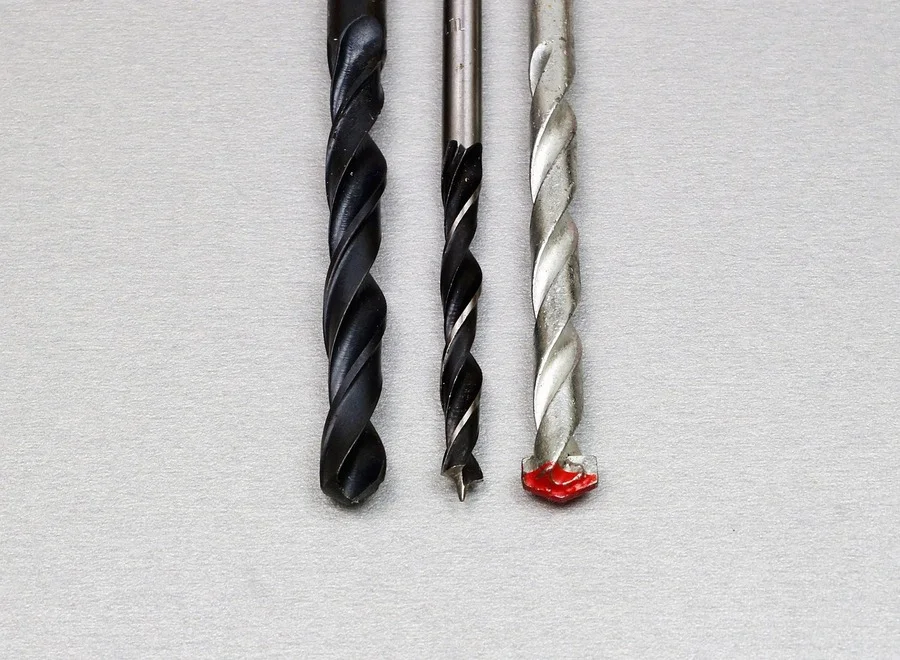
If you are unsure which bit style to buy for the re-drill, our comparison of a paddle bit vs spade bit explains why spade bits are a poor choice when accuracy matters, and the guide to drilling properly covers speed and depth control.
Method 3: Plug the Hole and Re-Drill for a Perfectly Concentric Result
When the new hole has to be exactly in the same place as the old one, or you are widening by more than a bit’s worth of wander, fill the old hole and start fresh. This is slower, but the tip of the bit centers in solid wood, so the result is the most accurate of any method here.
- Match the plug to the old hole: use a dowel or a plug cut with a plug cutter that fits snugly. Aim for the grain of the plug to run the same direction as the surrounding wood so it blends in under stain or paint.
- Glue it in: coat the plug with PVA wood glue, tap it in and leave it a little proud on both faces.
- Let it cure overnight: most wood glue makers quote about 24 hours for full strength, and re-drilling too early can tear the plug loose.
- Trim flush and mark the center: pare or sand the plug flush, then press an awl into the middle of it.
- Drill the new hole: start with a small pilot, then step up to the finished size.
The same idea rescues a hole you drilled too large by mistake. Plug it, then drill again at the right size, and for stripped screw holes see the guide to fixing a stripped screw hole in wood.
Method 4: Use a Hole Saw on Large Holes
A hole saw handles holes of 1 inch and up, but its pilot bit is only about 1/4 inch wide, so in a hole that is already bigger than that the pilot has nothing to grab. Fit a snug plug or a piece of scrap dowel into the old hole first, or clamp a guide block with a hole of the finished size over it. Then set the pilot into the plug and cut at low speed, clearing sawdust often. If you have never mounted one, here is how to attach a hole saw to a drill.
Method 5: Finish by Hand with a Rasp or Round File
For a millimeter or two, hand tools are safer than a drill. A half-round rasp or a round file removes wood from the whole wall of the hole as you rotate it, and you can test-fit the part after every few strokes. Finish with sandpaper wrapped around a dowel. If you want a tapered hole rather than a straight one, a hand reamer is the tool, and we cover that in our guide to reaming out a hole in wood and in drill bit vs reamer.
What Size Should You Widen the Hole To?
Widening to the wrong size just creates a second problem. These are the hole sizes woodworkers commonly use for clearance in wood. Check them against your actual hardware, because screw and bolt shanks vary slightly by maker.
| Fastener | Common clearance hole | Note |
|---|---|---|
| #8 wood screw | 11/64 inch | Drill a smaller pilot in the second piece so the threads bite |
| #10 wood screw | 13/64 inch | Same idea: clearance in the top piece, pilot in the bottom |
| 1/4 inch bolt | 9/32 to 5/16 inch | Use the larger size if the parts must line up loosely |
| 3/8 inch bolt | 13/32 to 7/16 inch | Add a washer so the head does not pull through |
| Wood dowel | Same as dowel diameter | A 3/8 inch dowel goes in a 3/8 inch hole, since dowels are made slightly small |
For a full drill-size chart by fastener, see what size drill bit to use.
Mistakes That Ruin a Widened Hole
- Drilling freehand: without a guide the bit drifts, so use a block, a plug or a drill press.
- Skipping a backer board: the bit blows out the exit side of the wood, so clamp scrap underneath.
- Going too fast: heat dulls bits and burns the wall of the hole, so use low speed and back the bit out to clear chips.
- Holding the wood by hand: when a bit grabs on breakthrough, the workpiece spins, so clamp it and wear safety glasses.
- Not testing on scrap: try the method on an offcut of the same wood first.
A related problem is a hinge or hardware hole that has become too loose over time. Our guide to fixing door hinge holes that are too big covers repairs where the hole needs to get tighter, not larger.
Frequently Asked Questions
What is the easiest way to make a hole in wood slightly bigger?
For a small increase, a round file or a rasp followed by sandpaper wrapped around a dowel is the easiest way to keep the hole centered. In thin stock such as plywood, a step drill bit also works well because its smaller steps ride in the old hole. Avoid simply dropping a larger twist bit into the old hole.
Why does my bit wander when I enlarge a hole?
The old hole is empty, so the bit tip has nothing to bite into at the center. The cutting edges catch on the thicker side of the wood and pull the bit that way. A guide block clamped over the hole, or a glued-in plug for the tip to center in, removes the problem.
Can I widen a hole in wood without a drill?
Yes. A half-round rasp, a round file or a hand reamer will widen a hole by hand, and sandpaper wrapped around a dowel finishes it. It is slow for anything more than about 1/8 inch, but you keep full control of how much wood comes out.
What if I made the hole too big instead?
Plug it. Glue in a dowel or a wood plug cut from matching stock, let the glue cure, sand it flush, then drill a new hole at the right size through the center of the plug. For a stripped screw hole, see our guide to fixing a stripped screw hole in wood.
Whichever way you go, remember the rule that solves most of the trouble: give the cutter something to center on. Drill a guide, plug the old hole, or use a step bit, and the hole stays where you put it. For more on the topic, browse our drilling guides.
Sponsored / affiliate links. As an Amazon Associate I earn from qualifying purchases. I may earn additional commission from eligible campaigns.