How Much Does a Hollow Wall Anchor Cost?
A hollow wall anchor usually costs about $0.10 to $2.00 each, or about $3 to $20 per pack, with heavy-duty toggle anchors often costing more. Buy the wrong type and you can strip the wall, waste fasteners, or pay more for repair than for a better anchor or stud screw. This guide breaks down prices by anchor type, pack size, and load rating, then shows when a stud or better fastener is the cheaper choice.
Anchor prices by type and pack size
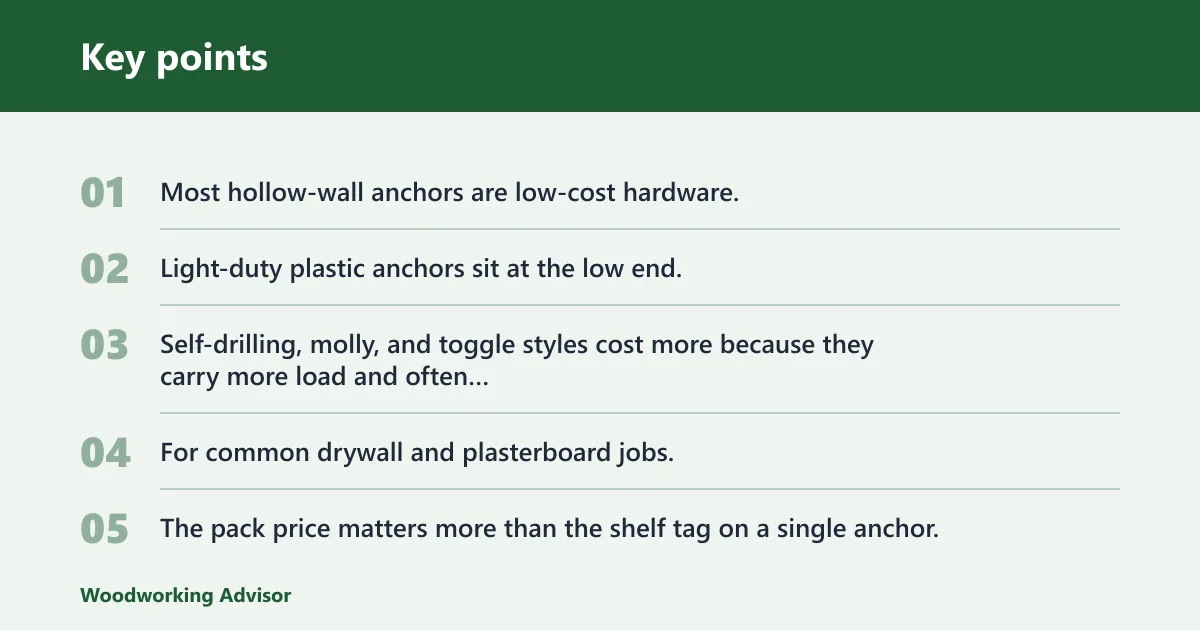

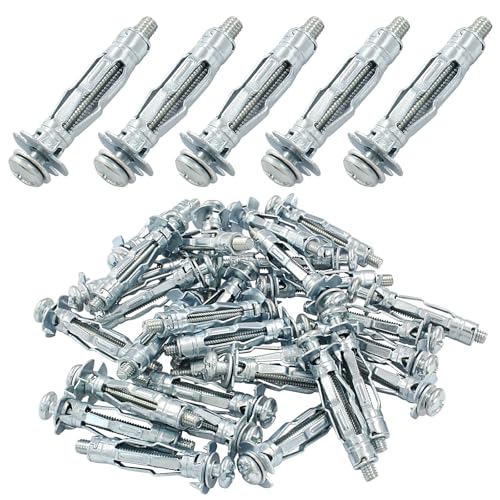

Most hollow-wall anchors are low-cost hardware, but the final price depends on whether you buy singles, small kits, or larger packs. Light-duty plastic anchors sit at the low end. Self-drilling, molly, and toggle styles cost more because they carry more load and often include metal parts or extra installation hardware.
Typical per-anchor price bands
For common drywall and plasterboard jobs, the cheapest plastic expansion anchors often land near the bottom of the range, while metal toggles sit at the top. The pack price matters more than the shelf tag on a single anchor, because larger packs usually cut the per-anchor cost.
Typical pack prices
Small packs are common for one-off home projects. A basic pack may cost about $3 to $20 depending on type, count, and included screws. Kits with a setting tool, specialty bit, or heavier metal hardware usually cost more than plain fasteners in a bag.
What usually changes the unit cost
Pack count, anchor material, load rating, and included screws or tools drive price most. A 10-pack of plain plastic anchors can cost far less per piece than a 4-pack of heavy-duty toggles. If the kit includes screws, a drill bit, or a setting tool, the sticker price rises, but the real job cost may fall because you do not buy those items separately.
What affects the price of hollow wall anchors?
Anchor type, wall condition, and package format matter most. A light-duty plastic anchor for smooth drywall costs less than a metal toggle built for larger loads. The price also changes when you need a specific screw size, a wider drill bit, or a setting tool to finish the install correctly the first time.
Anchor type and material
Plastic expansion anchors are usually the least expensive. Self-drilling anchors cost more because they are quicker to install and often use stronger threads. Molly bolts and toggle bolts sit higher still, with heavy-duty toggles usually at the top because they spread load across more wall surface.
Pack size versus single-anchor packaging
Single anchors often cost more per piece than multi-packs. That is common with specialty metal anchors and repair kits. If you only need one fastener, a single may be fine. If you are hanging several items, a pack often gives a better unit price and leaves spares for future fixes.
Load rating and included hardware
Higher load ratings usually mean more metal, more moving parts, or a larger footprint behind the wall. That raises price. Many kits also include matched screws, and some include a drill bit or setting tool. Those extras can save time and reduce mismatched parts, especially on molly bolts and toggle anchors.
Wall condition and thickness
Drywall in good condition holds anchors better than crumbly plasterboard or damaged wallboard. Thicker wall assemblies and layered plaster often need a different anchor length or style, which can cost more. If the wall is soft, overdrilled, or patchy, a cheap anchor may fail and end up costing more than a stronger option from the start.
Hollow wall anchor price matrix
This matrix gives a practical buying view for common hollow-wall anchors used in drywall and plasterboard. The prices below are typical retail bands, not universal quotes. Exact cost changes with brand tier, pack count, included screws, and the hardware needed to install it cleanly.
| Anchor type | Typical pack size | Per-anchor cost | Max recommended load band | Ideal wall type | Hidden extras |
|---|---|---|---|---|---|
| Plastic expansion | 10 to 50 pieces | $0.10 to $0.30 | Light-duty | Good drywall in light hanging jobs | Often needs only a basic drill bit; screws may be included in some kits |
| Self-drilling | 4 to 25 pieces | $0.30 to $0.80 | Light to medium-duty | Drywall for small shelves, hooks, and brackets | May need a matching screw size; some versions reduce predrilling but still need careful setting |
| Toggle bolt | 2 to 10 pieces | $0.75 to $2.00 | Medium to heavy-duty | Drywall where the cavity is open and access behind the wall is needed | Needs a larger drill hole; the bolt length and wing size affect total cost |
| Molly bolt | 4 to 25 pieces | $0.50 to $1.50 | Medium-duty | Drywall and some plasterboard jobs that need a firmer metal grip | May require a setting tool for best results; screw size must match the insert |
| Heavy-duty toggle | 2 to 6 pieces | $1.50 to $4.00 | Heavy-duty | Drywall for larger loads such as mirrors, cabinets, or mounted rails | Large drill hole, longer bolt, and more install time; sometimes sold as a kit |
Which anchor fits your wall?
For standard drywall and plasterboard, pick the lightest anchor that safely carries the load. If the item is heavy, awkward, or likely to get pulled sideways, move up to a molly or toggle. If a stud is available at the right spot, a stud screw is often cheaper and safer than buying a stronger hollow-wall anchor.
Drywall and plasterboard use cases
Plastic expansion and self-drilling anchors suit small décor, cable clips, and light brackets. Molly bolts and toggles are better for mirrors, towel bars, and medium shelves. Plasterboard that is brittle or patched may need a larger footprint or a different anchor style to avoid blowout around the hole.
When to choose a stud instead
If the load is important, a stud screw is often the better buy. You skip the anchor cost, reduce the chance of pullout, and usually avoid a larger repair if the wall fails. A stud also makes sense when the item is wide enough to let you shift the mounting point by a few inches.
Weight rating by job size
Light-duty anchors suit small frames and hooks. Medium-duty anchors fit towel bars, small shelves, and most everyday wall hardware. Heavy-duty toggles are the right pick for larger objects, but only if the wall is sound and the hole size matches the anchor body. Ratings depend on wall thickness, substrate quality, and installation quality.
Say your 1/2-inch drywall needs a shelf bracket holding modest weight. A self-drilling anchor may look cheaper than a toggle, but if the shelf will be loaded often, the stronger anchor can reduce the chance of rework and a second trip to the store.
A common mistake is buying a premium hollow wall anchor for a small frame when a standard 50-cent option would hold it just as well. If the drywall is crumbly, a larger toggle can still fail because the wall face tears before the wings spread cleanly. In that case, a stud or wall repair is usually the better path.
What does installation add to cost?
Installation adds time, tool cost, and sometimes repair cost. A simple anchor may take only a few minutes, but a bad hole can turn a cheap fastener into a patch-and-redrill job. If you hire a pro, labor can cost more than the hardware itself on small projects.
DIY time and basic tools
DIY installation usually needs a drill, the right bit, a screwdriver, and the correct screw. Some anchors are faster to set than others. Self-drilling models save time on layout and drilling, while toggles and molly bolts can take longer because they need a clean hole and careful tightening.
Drill size and setting tools
Hole size matters. Too small and the anchor will not seat. Too large and the fastener may spin or pull out. Molly bolts may need a setting tool, and some heavy-duty kits need a larger bit than light-duty plastic anchors. Those tool needs raise the true job cost if you do not already own them.
Redo costs from oversized holes
Oversized holes, crumbled drywall, or a wrong-size anchor often mean patching before you can try again. That adds spackle, sanding, drying time, and sometimes a paint touch-up. A cheap anchor can become the most expensive option if it damages the wall or leaves no usable holding power.
When pro labor changes the total
For a straightforward install, pro labor can cost more than the anchors. That is why many homeowners reserve paid help for harder jobs: brittle plaster, multiple anchors, awkward mounting heights, or heavy items. On a small repair, labor often dominates the total more than the hardware does.
Hollow wall anchors versus hollow concrete anchors
Drywall and plasterboard anchors are not the same as hollow concrete anchors. Hollow-wall products grip an interior cavity with plastic, metal wings, or expanding sleeves. Hollow concrete anchors are made for masonry cavities, different base material, and different hole behavior, so pricing and application limits are not interchangeable.
Substrate differences
Drywall anchors rely on the wallboard and the cavity behind it. Hollow concrete anchors rely on masonry units or concrete block with voids. That difference changes the drill bit, the anchoring action, and the way load transfers into the wall. Using the wrong one can make the fastener fail even if the label looks similar.
Why pricing differs
Hollow concrete fasteners are often priced for masonry work, not interior wallboard. Their design, installation needs, and load behavior are different. A drywall toggle may be cheap in a home center, while a masonry hollow-wall fastener can cost more because it is meant for a different substrate and a different hole profile.
Where each fastener belongs
Use drywall and plasterboard anchors on interior hollow walls. Use hollow concrete anchors only where the wall is masonry and the product is rated for that substrate. If you are standing in front of painted drywall, the masonry version is the wrong buy even if the package says “hollow” too.
For context, structural wall-anchor projects are a different market entirely. Foundation-wall anchors are typically $700-$1,200 per anchor installed, with many residential projects totaling $5,000-$15,000. A small repair with 4-6 anchors may run $3,500-$7,000, while the hardware alone can be $150-$300 per anchor. That is not the same task or price structure as drywall fastening.
Frequently asked questions
How much does a hollow wall anchor cost?
Most hollow wall anchors cost $0.10 to $2.00 each, depending on type and package size. Plastic expansion anchors sit near the low end, while heavy-duty toggle anchors cost more. Small packs usually run about $3 to $20, with better unit pricing in larger counts.
How much is an anchor for drywall?
A drywall anchor usually costs pennies to a couple of dollars each. Self-drilling and plastic expansion types are the cheapest, while molly bolts and toggles cost more because they carry more load. If the kit includes screws or a setting tool, the pack price rises.
Are hollow wall anchors sold in kits or packs?
Yes. Many are sold in packs, and some come as kits with screws, drill bits, or a setting tool. Kits cost more upfront, but they can be cheaper overall if you do not already own the needed hardware. Single-anchor packaging is common for specialty metal models.
What size hollow wall anchor do I need?
Choose the size that matches the wall thickness, screw diameter, and load. A small light-duty anchor fits simple wall décor. Larger jobs need a bigger body or a toggle style. If the wall is thick or brittle, check the manufacturer’s hole size and thickness guidance before buying.
How do I install hollow wall anchors?
Mark the spot, drill the correct hole, insert the anchor, and tighten the screw or set the metal body as directed. The hole must match the anchor size closely. If the hole is too large or the wall is damaged, patching and a different anchor may be needed.
What hollow wall anchors hold heavy items?
Heavy items usually call for toggle bolts or heavy-duty toggles, and sometimes molly bolts for medium-heavy loads. These anchors spread force over a wider area behind the wall. If a stud is available near the mounting point, a stud screw is still the safer and cheaper option.
Are hollow wall anchors different from hollow concrete anchors?
Yes. Hollow wall anchors are for drywall and plasterboard. Hollow concrete anchors are for masonry cavities. They use different materials, hole sizes, and load paths, so they are not interchangeable. Using the wrong type can waste money and lead to a failed mount.
Sponsored / affiliate links. As an Amazon Associate I earn from qualifying purchases. I may earn additional commission from eligible campaigns.