Murphy Oil Soap vs Vinegar for Cleaning Wood
Murphy Oil Soap is the safer pick for most finished wood because it is made for wood care, while vinegar is acidic and can damage many finishes. Use vinegar only if the finish maker allows it. Used the wrong way, either cleaner can leave haze, strip sheen, or weaken the surface over time. This guide compares them by finish compatibility first, then residue risk, so you can choose the right cleaner for floors, furniture, or cabinets.
| Decision factor | Murphy Oil Soap | Vinegar for Cleaning Wood | Winner |
|---|---|---|---|
| Compatibility with finished wood | Made for finished wood and other surfaces; best when used as directed. | Too acidic for many finished wood surfaces, especially polyurethane. | Murphy Oil Soap |
| Risk of residue or haze | Can leave film if overapplied or not wiped well, especially on sealed floors. | Can dull polyurethane over time and may leave the surface looking tired. | Murphy Oil Soap |
| Best default for hardwood maintenance | Works on some finished wood when diluted correctly, but not a universal default. | Not a good maintenance choice for finished hardwood. | Murphy Oil Soap |
| Best fit for furniture and cabinets | Acceptable on some finished pieces if the finish is compatible and the cloth is barely damp. | Poor choice for most finished furniture and cabinet finishes. | Murphy Oil Soap |
| Safety on wax- or oil-finished wood | Better than vinegar only when the finish maker allows it, but not the first choice for wax. | Generally the wrong cleaner for wax and a poor fit for oil finishes. | Murphy Oil Soap |
Murphy Oil Soap vs vinegar: which is safer?
Murphy Oil Soap is the safer pick for many finished wood surfaces because it is made for wood care, while vinegar is an acidic household cleaner that can damage or dull finishes over time. The finish on the surface decides the answer, not whether the item is a floor, table, cabinet, or chair.
Polyurethane-finished wood is the most common modern hardwood floor finish, and it is also the surface most likely to show residue, haze, or dulling from incompatible cleaners. Oil-finished wood and wax-finished wood need different care entirely. Unfinished wood should be treated even more cautiously because liquid can soak in quickly.
Murphy Oil Soap
Murphy Oil Soap Original Formula is described as specially designed to clean both finished wood and non-wood surfaces. Its product page claims 98% Natural* Wood Cleaner, and the formula is said not to contain any ammonia or bleach. It is also described as biodegradable and phosphate free.
Vinegar for cleaning wood
Vinegar has a pH of 2 to 3, so it is acidic enough to create long-term finish problems on some wood surfaces. It can gradually dull polyurethane finishes. That makes it a poor default for finished wood, even if it is often used on non-wood surfaces.
Wood cleaner comparison table
The safest choice depends on the finish, the surface area, and how much liquid the wood can tolerate. For most finished floors, a pH-neutral hardwood cleaner applied with a barely damp microfiber mop is the most conservative option. Murphy Oil Soap fits some finished wood surfaces; vinegar should be used only when the finish instructions explicitly allow it.
| Surface | Murphy Oil Soap | Vinegar for Cleaning Wood | pH-neutral hardwood cleaner | Best application method | Red-flag failure mode |
|---|---|---|---|---|---|
| Finished wood | Appropriate if the finish maker allows it and the surface is wiped dry enough. | Not recommended as a routine cleaner. | Appropriate default. | Barely damp microfiber mop or cloth. | Haze, dull sheen, or sticky film. |
| Oil-finished wood | Use only if the product directions and finish maker agree. | Not a good match. | May clean, but oil-compatible care is better. | Light cloth wipe, not a wet mop. | Drying the surface or stripping the oil feel. |
| Wax-finished wood | Usually not the first choice. | Not recommended. | Usually not ideal unless labeled wax-safe. | Dry buffing or wax-compatible cleaner. | Wax softening, dulling, or striping. |
| Unfinished wood | Use with caution and minimal liquid. | Avoid. | May still be too wet for bare wood. | Dry cleaning or very light spot treatment. | Swelling, dark stains, or raised grain. |
Why this table favors finish compatibility first
Wood surfaces fail in different ways. A cleaner that is acceptable on a sealed tabletop can still be wrong for waxed trim or unfinished shelving. That is why the cleaner has to match the finish before you worry about scent, shine, or “natural” marketing.
Say your kitchen cabinets are polyurethane-coated and have a cloudy handprint area near the pulls. A vinegar wipe may seem to clean the smudge, but repeated use can leave the same section duller than the rest. A pH-neutral cleaner on a barely damp microfiber cloth is the safer correction.
Can you use Murphy Oil Soap on wood floors?
Yes, Murphy Oil Soap can be used on some finished wood floors when you follow the label directions and the floor finish is compatible. For floors, the product directions call for 1/4 cup per gallon of warm water, and for heavier cleaning the page recommends 1/2 cup per gallon. The floor instructions also say no rinsing required.
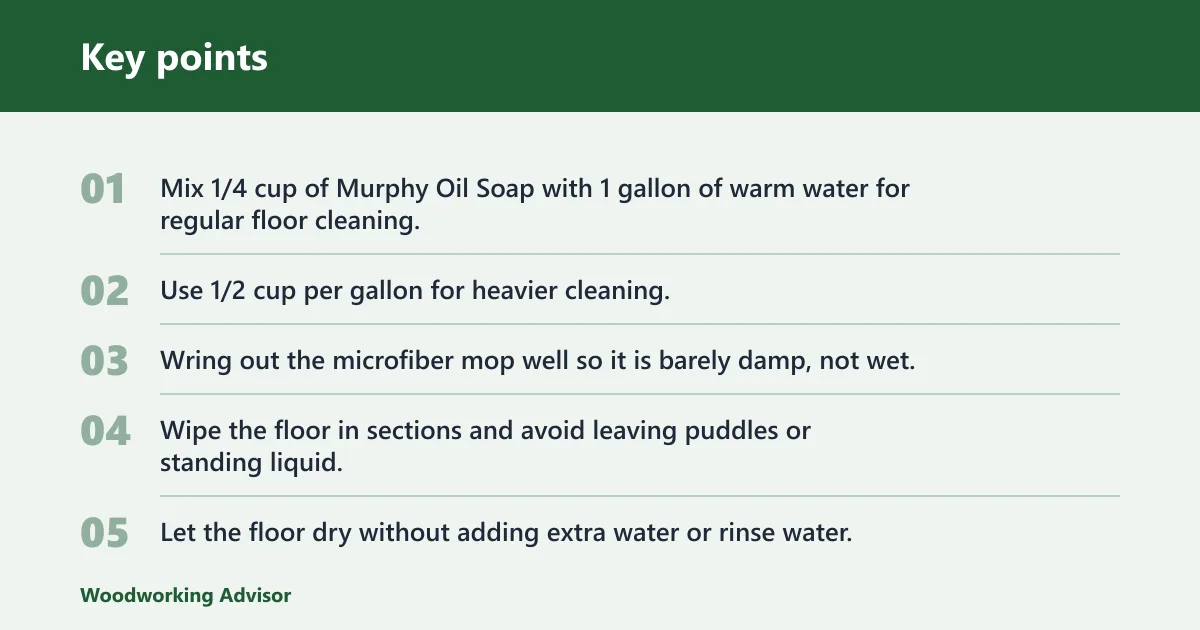
How to dilute Murphy Oil Soap for floors
- Mix 1/4 cup of Murphy Oil Soap with 1 gallon of warm water for regular floor cleaning.
- Use 1/2 cup per gallon for heavier cleaning.
- Wring out the microfiber mop well so it is barely damp, not wet.
- Wipe the floor in sections and avoid leaving puddles or standing liquid.
- Let the floor dry without adding extra water or rinse water.
A regular microfiber mop for heavier cleaning, and notes that some mops push around the dirt and water. That matters because excess water is one of the fastest ways to stress wood floors, especially at seams and edges.
When Murphy Oil Soap fits and when it does not
Murphy Oil Soap fits best on finished wood that tolerates a wood cleaner meant for sealed surfaces. It is not a universal pick for polyurethane floors, and it is not the right choice for wax-finished wood unless the finish maker says it is safe. On antique furniture, test a hidden spot first and keep the cloth only slightly damp.
A common first-timer mistake is soaking a microfiber pad and then passing it over a dining table or floor. The surface may look clean for a day, then show dull patches, drag marks, or a faint film once the water and cleaner dry.
Is vinegar safe on finished wood?
Vinegar is not a safe default for finished wood. Its low pH can interact badly with polyurethane and other surface finishes, and repeated use can gradually dull the sheen. Some hardwood manufacturers and industry flooring groups do not recommend it, which is a strong sign to keep it off routine wood care lists.
Why polyurethane is the problem surface
Polyurethane is the most common modern finish on hardwood floors. It sits on top of the wood, so anything acidic or abrasive works on the coating first, not the grain underneath. Over time, that can lead to patchy shine, haze, or a worn look that no quick wipe fixes.
Vinegar may seem harmless because it is common in other household cleaning tasks. On polyurethane, the risk is cumulative. A single light wipe is not the issue; repeated use on the same surface is where dulling and finish stress become more likely.
Where vinegar belongs instead
Vinegar is better reserved for surfaces where the material and finish can tolerate acidity, and where the manufacturer allows it. That is a different category from finished wood furniture, hardwood floors, and cabinet fronts. If the surface is wood and sealed, a pH-neutral product is usually the better starting point.
Finish-by-finish wood care guide
Finish type matters more than the object type. A tabletop, floor, cabinet door, and dresser can all need different cleaners if their finishes differ. Use this guide before choosing Murphy Oil Soap, vinegar, or a pH-neutral cleaner.
Polyurethane finish
Polyurethane-finished wood is the most forgiving of the common sealed finishes, but it still dislikes acidic cleaners. Murphy Oil Soap may be acceptable if used lightly and according to the label, but vinegar is a poor routine choice. The main risks are buildup, haze, and long-term dulling.
Oil-finished wood
Oil-finished wood needs oil-compatible care, not a surface cleaner intended for polyurethane. Some soap products are made to be gentler on oil-finished surfaces, but vinegar is not the answer here. If the finish is oil-based, check the finish maker’s directions before using any household cleaner.
Wax-finished wood
Wax-finished wood is especially sensitive to water-based cleaning. The wax-finished floor warning is straightforward: use a wax-compatible cleaner or dry buffing. Water-based products can strip or dull the wax, so neither vinegar nor a heavy cleaner is the right default.
Unfinished wood
Unfinished wood absorbs liquid quickly, so both cleaner choice and water amount matter. Avoid vinegar, and keep Murphy Oil Soap use minimal unless the surface is being spot-cleaned and fully dried right away. For bare wood, dry cleaning or very light, controlled cleaning is safer than a wet wipe.
What should you use instead of vinegar on wood?
For most finished wood surfaces, a pH-neutral hardwood cleaner is the safest starting point. Products in this category include options such as Bona, Method Squirt and Mop, and Zep Hardwood and Laminate Floor Cleaner. Apply them with a barely damp microfiber mop, not a soaking mop, and keep the cloth flat rather than saturated.
Furniture and cabinet cleaning tips
Wood furniture and cabinets usually need less liquid than floors. Use a lightly damp microfiber cloth, then dry the area with a second cloth if needed. That approach reduces the chance of streaks, residue, and water marks on edges, pulls, and panel seams.
Suppose a 6-foot dining table has a few cloudy rings from a cleaner used too often. The fix is not more cleaner. The better move is to stop the acidic product, switch to a pH-neutral cleaner or the finish maker’s recommended product, and keep future cleaning to a thin, controlled wipe.
Choose Murphy Oil Soap if… / Choose Vinegar for Cleaning Wood if…
Choose Murphy Oil Soap if the wood is finished, the label directions match the surface, and you want a wood cleaner designed for sealed wood. It is also the better of the two when you need a product for finished furniture, cabinets, or floors that can handle a lightly damp microfiber mop and careful dilution.
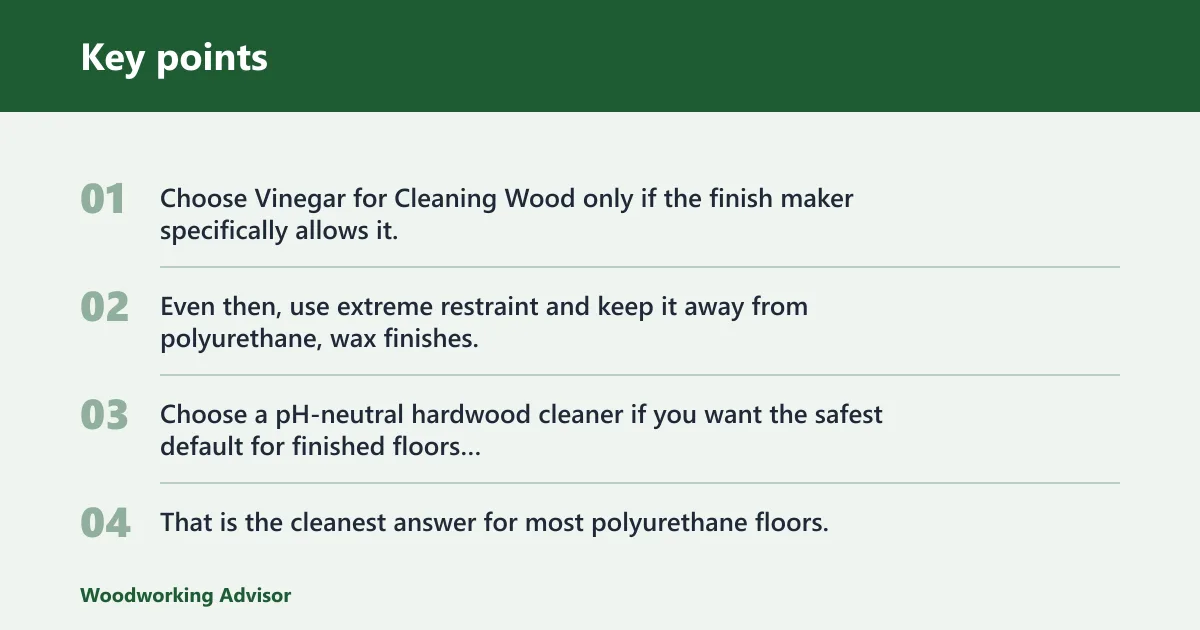
Choose Vinegar for Cleaning Wood only if the finish maker specifically allows it, which is uncommon for routine care on finished wood. Even then, use extreme restraint and keep it away from polyurethane, wax finishes, and any surface where dulling or residue would matter. For most finished wood, skip vinegar.
Choose a pH-neutral hardwood cleaner if you want the safest default for finished floors and you are not sure what the finish can tolerate. That is the cleanest answer for most polyurethane floors, and it is usually the better starting point for cabinets and furniture too.

Frequently asked questions
Is Murphy Oil Soap or vinegar better for cleaning wood?
Murphy Oil Soap is generally better for finished wood because it is made for that use and is less likely than vinegar to attack the finish. Vinegar is acidic and can dull some surfaces over time, especially polyurethane. The right pick still depends on the exact finish, not just the word “wood.”
Is vinegar safe on finished wood floors?
Usually not as a routine cleaner. Vinegar is often reported to have a pH in the low acidic range, and repeated use can gradually dull polyurethane finishes. Some hardwood manufacturers and the National Wood Flooring Association do not recommend it. A pH-neutral hardwood cleaner is the safer default for finished floors.
Will Murphy Oil Soap leave a film on hardwood?
It can, if you use too much cleaner or leave the floor too wet. That risk is higher on polyurethane-finished wood because residue shows more easily there. Follow the dilution directions, use a barely damp microfiber mop, and keep the cleaning pass thin and even.
What should I use instead of vinegar on wood furniture?
Use a pH-neutral cleaner made for finished wood, or a lightly damp microfiber cloth if the furniture only needs dust and fingerprint removal. For more delicate or older pieces, dry dusting or the finish maker’s recommended product is the safer choice. Avoid soaking the surface or the cloth.
Does Murphy Oil Soap work on polyurethane floors?
It can work on some polyurethane floors if the finish maker allows it and you use the label dilution. Polyurethane is the most common modern finish, but it is also the surface most likely to show buildup or haze from the wrong cleaner. If you want the safest default, use a pH-neutral hardwood cleaner instead.
How do I dilute Murphy Oil Soap for floors?
Use 1/4 cup of Murphy Oil Soap per gallon of warm water for regular floor cleaning. For heavier cleaning, the directions call for 1/2 cup per gallon. Always use a microfiber mop that is barely damp, not wet, and do not flood seams or edges.
What cleaner is safest for finished wood surfaces?
A pH-neutral hardwood cleaner is usually the safest choice for finished wood surfaces. It is the least likely to attack polyurethane, and it is a better default than vinegar for floors, furniture, and cabinets. Apply it with a barely damp microfiber mop or cloth, then let the surface dry fully.
Sponsored / affiliate links. As an Amazon Associate I earn from qualifying purchases. I may earn additional commission from eligible campaigns.