Best Rooms for Whitewashed Wood Flooring (2026): We Compared
Whitewashed wood flooring is commonly recommended for bright, low-moisture spaces, medium-traffic living areas, and bedrooms; it is generally better to avoid it in chronically damp rooms unless a water-resistant engineered system is used. Pick the wrong room or finish, and you get faster wear, visible dirt, and moisture-related movement. This guide compares pros and cons, then discusses whitewashed floors for kitchens, baths, halls, and suitable wood species and finish systems for each.
Quick comparison
| Product | Badge | Best for | Price | ||
|---|---|---|---|---|---|
 |
Hardwood Bargains Natural White Oak Engineered HardwoodHardwood Bargains | Our pick | 5" wide · sample · white oak | $0.99
Price as of 31 Oct 2026
|
View |
 |
Real Wood Wall Planks-5" White Shiplap Panel Peel and StickLuxdecor | Also great | $65.99
Price as of 31 Oct 2026
|
View | |
 |
Mysflosy Vinyl Plank Flooring, Self Adhesive Wood Look,Mysflosy | Also great | $79.99
Price as of 31 Oct 2026
|
View | |
 |
White Oak Stair Square Nosing for 3/4" Flooring Match 6ftCherokee Wood Products | Also great | $86.98
Price as of 31 Oct 2026
|
View |
This quick view ranks room fit by light, traffic, and spill exposure. Use it to narrow the field before you compare species, finish systems, and install type.
How we chose
The room match comes first. Whitewashed flooring is a finish technique, not a flooring type, so the same look behaves differently in a kitchen than in a bedroom.
This guide considers four factors: daylight, traffic, spill risk, and maintenance tolerance. Species behavior and finish system matter too, because undertone, grain, and topcoat can change the final color fast.
Sheen matters too. Matte and satin hide dust and wear better than glossier finishes, while water-based topcoats keep the pale look better than oil-based polyurethane.
White oak: best for most rooms
White oak is often a good all-around choice for whitewash because it tends to have a fairly neutral undertone and an open grain that can accept pigment evenly. That makes it the best choice when you want the floor to read pale without turning pink, blotchy, or chalky.
It works especially well in living rooms, bedrooms, and hallways. Those rooms usually get regular foot traffic but less spill exposure than kitchens, so the finish can age more evenly.
White oak also pairs well with matte and satin sheens, which keep the grain visible and soften small scuffs. If you want a lighter room without a flat, washed-out look, this is usually the starting point.
When engineered planks beat site-finished boards
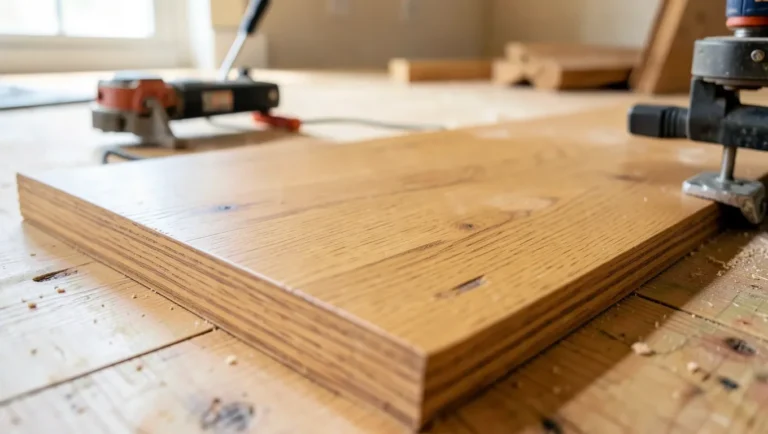
Engineered white oak makes sense when you want the whitewashed look with more installation flexibility. Prefinished versions often use UV-cured aluminum-oxide topcoats, which can be a practical choice for faster installation and more predictable factory color.
That said, wear layer thickness matters. If you may want future refinishing, a thicker wear layer gives you more room to sand later; thin wear layers limit repair options and make whitewash a riskier long-term bet.
European oak: best for open-plan spaces
European oak is close to white oak for whitewash, but its slightly cooler base tone often reads cleaner in large rooms. It is a strong fit when you want a pale floor that does not skew warm under daylight.
This species works well in wide-plank layouts and open-plan rooms, especially where sightlines run through a kitchen, dining area, and living zone. The broader surface area helps the finish read calm instead of busy.
It is also a good match for north-facing rooms.
Where European oak can fall short
European oak can still show variation if the finish is applied unevenly, and wide planks make that more noticeable. If the room has a lot of patched repairs or mixed board sources, color consistency can become harder to control.
Room suitability matrix
This matrix ranks room fit by light, traffic, spill risk, and upkeep. It is the practical way to choose whitewashed flooring, because the best room is the one that fits both the look and the abuse level.
| Room | Sunlight | Traffic | Spill risk | Maintenance burden | Recommended sheen | Species notes |
|---|---|---|---|---|---|---|
| Living room | Low to medium | Medium | Low | Low to medium | Matte or satin | White oak or European oak; wide planks work well |
| Bedroom | Any | Low | Low | Low | Matte | White oak, European oak, or ash if you want more grain contrast |
| Hallway | Medium | High | Low | Medium to high | Matte | White oak preferred; use a durable finish system |
| Entry | Medium | High | Medium | High | Matte | White oak or engineered white oak; choose a tough topcoat |
| Dining room | Medium to high | Medium | Medium | Medium | Satin | White oak, European oak, or ash; pattern installs help hide wear |
| Kitchen | Medium to high | High | High | High | Matte or low satin | Best with engineered white oak or a commercial waterborne system |
Kitchens, entries, and hallways
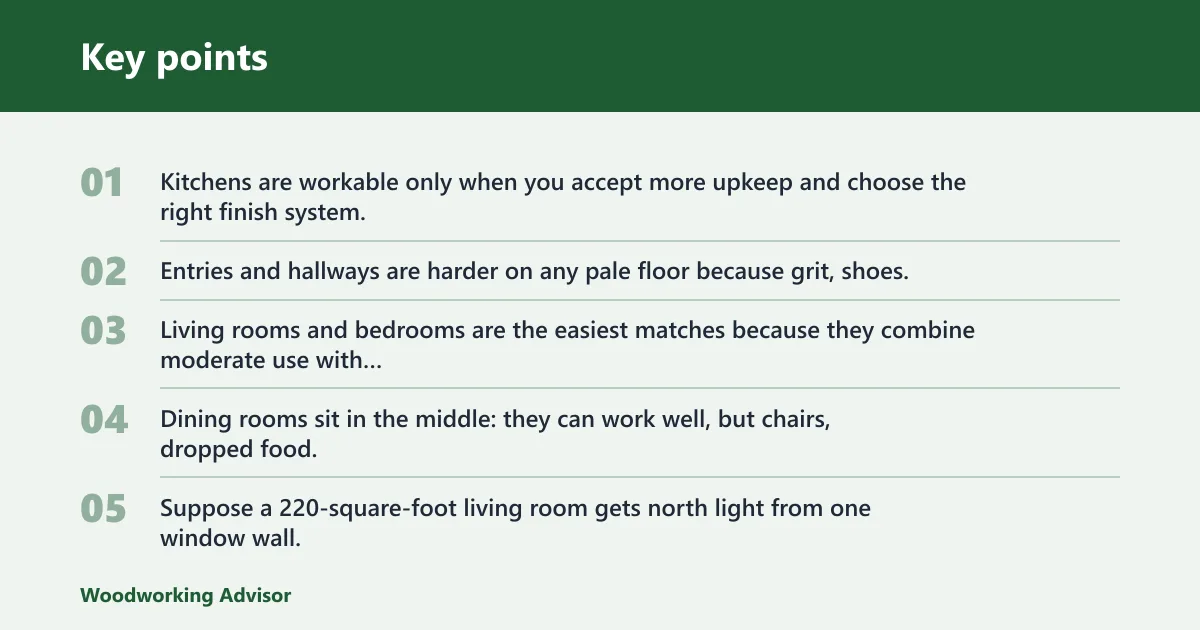
Kitchens are workable only when you accept more upkeep and choose the right finish system. Entries and hallways are harder on any pale floor because grit, shoes, and repeated traffic make wear show sooner.
Living rooms, dining rooms, and bedrooms
Living rooms and bedrooms are the easiest matches because they combine moderate use with lower spill risk. Dining rooms sit in the middle: they can work well, but chairs, dropped food, and frequent cleaning increase the maintenance burden.
Suppose a 220-square-foot living room gets north light from one window wall. A white oak floor with a matte water-based topcoat will usually read brighter without becoming harsh, while the same finish in a busy entry may need more frequent touchups.
What is whitewashed wood flooring?

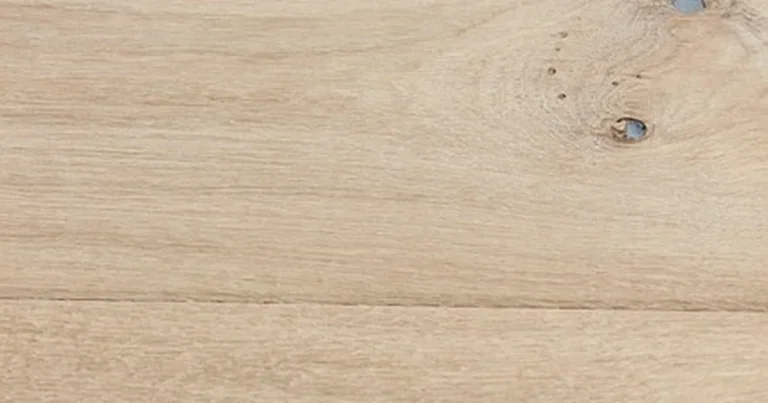
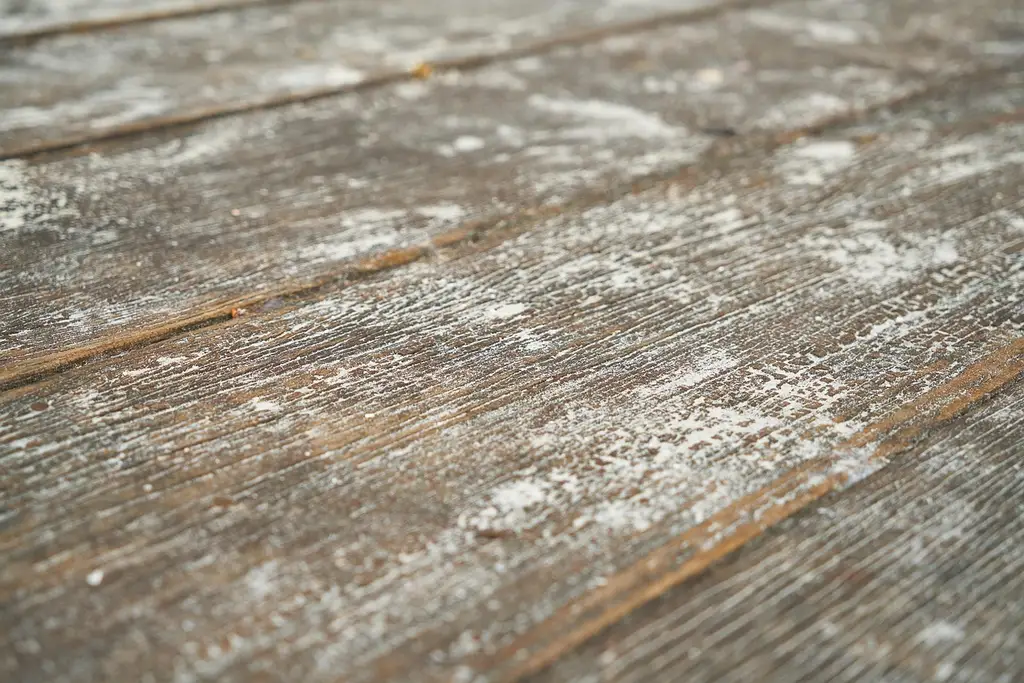
Whitewashed wood flooring is a translucent white stain or pickled finish that leaves much of the grain visible. It keeps much of the underlying wood color visible, so the board still reads like wood rather than painted surface.
It can be site-finished or prefinished, and some sellers call it white washed, whitewashed, limed, or pickled. The exact look depends on species, sheen, and how much pigment the wood absorbs.
This is why whitewashed flooring should be judged by room conditions, not just color. A finish that looks calm in a sunny bedroom can look flat or dirty in a high-traffic mudroom.
What are the pros and cons of whitewashed hardwood floors?
The main advantages are brightness, visible grain, and a lighter room feel. Whitewashed floors can make a dim room look more open, and they usually hide some dust better than dark stains, though pale floors still show tracked-in soil more readily.
The tradeoffs are real. Uneven absorption, blotching, and undertone problems are more noticeable on the wrong species, and whitewash can make sanding/refinishing harder.
Maintenance also depends on sheen and topcoat. Matte and satin hide wear better, while glossier finishes show scratches and cleanup marks more easily.
Daylight and room orientation
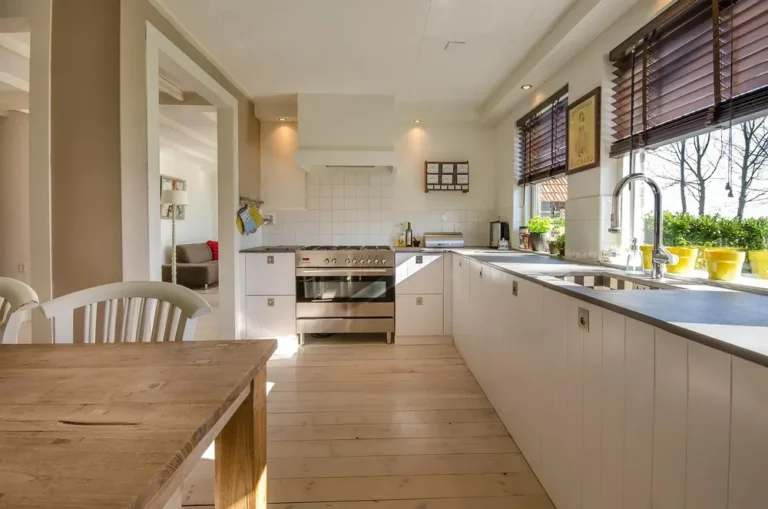
North-facing rooms often benefit the most because whitewashed floors reflect more light back into the room. The floor can help brighten low-natural-light interiors without requiring a much whiter wall color.
South- and west-facing rooms can also work, but strong sun makes undertone shifts easier to see. That matters when you are comparing whitewash with light natural oak or pale beige stains.
Traffic, spill risk, and cleanup burden
High-traffic rooms need tougher finishes and more frequent cleaning. Kitchens and entries collect grit and moisture first, so they punish pale floors faster than a bedroom or formal living area.
If you want whitewashed flooring in a busy space, choose a system that handles wear well and expect more visible maintenance. A pale floor is less forgiving of sticky spills and tracked-in soil than many darker stain colors.
Which wood species take whitewash best?
White oak is the best species for whitewash. European oak is very close behind, ash offers strong grain contrast, and red oak is the risky choice because its pink undertone can bleed through and skew salmon or pink.
Open-grain woods usually accept the effect more evenly than closed-grain species. That does not eliminate variation, but it reduces the odds of patchy color or a washed-out, cloudy look.
White oak and European oak
White oak stays the benchmark because its undertone is neutral and its grain accepts pigment consistently. European oak behaves similarly, with a slightly cooler base tone that can suit modern or open-plan interiors.
Ash and red oak
Ash is useful when you want more visible grain and contrast under the white finish. Red oak is usually discouraged because the pink undertone shows through and can become more obvious after sealing.
A common first-timer mistake is choosing red oak for a pale finish because the sample looked acceptable in a bright showroom. In a north-facing room at home, the same floor can read warmer and pinker once the light changes.
Will whitewashed floors turn yellow over time?
They can, depending on the topcoat. Water-based polyurethane is recommended because oil-based polyurethane may amber over time, which can shift the floor away from the pale look you wanted.
Commercial waterborne systems, including Bona Naturale and Bona Traffic HD systems, are often used when the goal is a near-raw whitewash appearance with better wear resistance. These products are chosen for color stability as much as durability.
Sheen affects the visual aging too. Matte and satin hide small color changes and scuffs better than glossy finishes, which can make the floor look uneven sooner.
Can you whitewash existing hardwood floors?
Sometimes, but not always safely. Existing hardwood can be whitewashed if the current finish can be removed cleanly and the wood has enough material left for sanding; thin engineered floors are the main caution because the wear layer may be too limited.
If the floor is solid white oak, site-applied whitewash is usually more workable than on a thin engineered plank. If the floor is red oak, the undertone risk remains even after sanding.
- Confirm whether the floor is solid wood or engineered hardwood.
- Measure the wear layer if it is engineered.
- Check for past stain, patch repairs, or water damage.
- Test a small area for undertone, grain visibility, and absorption.
- Choose a water-based or commercial waterborne topcoat after the whitewash layer.
Whitewash can be a smart refinish path on solid oak, but it is not a universal fix. If the wood is thin, mismatched, or already heavily sanded, replacement can be the safer option.
Best rooms for whitewashed wood flooring

Living rooms and bedrooms are the safest bets, followed by dining rooms and open-plan spaces with strong daylight. Kitchens and entries can work, but only if you accept higher maintenance and choose a durable engineered or site-finished system.
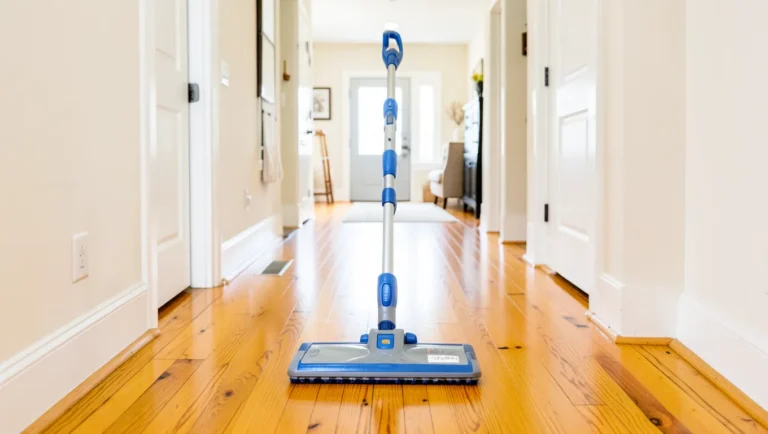
Hallways sit in the middle: they do fine with whitewash, but only when the finish can handle grit and repeated foot traffic. North-facing rooms often get the biggest visual payoff because the floor helps lift the light level.
Wide plank flooring and visual effect
Wide plank flooring, usually 7 inches or wider, fits this style well because the finish reads as a broad, calm field instead of a busy grid.
That extra cost matters more in large rooms. In a small bedroom, standard boards may be fine; in a big living room, wide planks often justify the added expense because they suit the look better.
How much does whitewashed wood flooring cost per square foot?
Cost depends on species, plank width, and whether you install site-finished or prefinished flooring.
Prefinished engineered whitewashed oak and solid white oak unfinished plus site-applied whitewash can vary widely, which shows how much the install method changes the budget.
What finish should be used over whitewashed wood floors?
Use a water-based polyurethane topcoat when you want to preserve the pale tone. It resists yellowing better than oil-based polyurethane and is the better default over site-finished whitewash.
Matte or satin is usually the right sheen choice. Higher gloss makes wear, dust, and color variation easier to see, while lower sheen levels keep the surface calmer in daily light.
Commercial waterborne systems such as Bona Naturale or Bona Traffic HD are good options when you want a near-raw look with stronger wear resistance. That matters most in kitchens, entries, and other rooms that take more abuse.
Which one should you buy?
Choose white oak if you want the safest all-around result. Choose European oak if your room is large, cool-toned, or north-facing and you want a slightly cleaner pale look.
Choose engineered hardwood if you need faster installation, factory finish consistency, or more protection against movement in a room with changing moisture. Choose site-finished solid wood if you want the most control over color and future sanding potential.
If your budget is tight, avoid wide planks first, not species quality. If maintenance tolerance is low, stay with matte or low-satin finishes.
Pick by room use
Bedrooms and living rooms are the easiest rooms for whitewashed floors. Kitchens and entries need tougher finish systems, and hallways sit in between because they collect wear without the benefit of lower traffic.
Pick by budget and install type
Prefinished engineered oak is usually the simpler path for predictable color and less site labor. Site-finished solid white oak costs more in many cases, but it gives you more control over the final look and future refinishing.
Pick by maintenance tolerance
If you want the least fuss, keep to white oak and matte sheen. If you want a whiter, more controlled look in a harder-use room, a commercial waterborne system is worth the extra planning.
Frequently asked questions
Is whitewashed wood flooring good for kitchens?
It can be, but only with the right finish and realistic expectations. Kitchens bring spills, grit, and frequent cleanup, so whitewashed floors work best there when you use durable engineered white oak or a commercial waterborne system with matte or low-satin sheen.
Does whitewashed flooring make a room look bigger?
Often, yes. Light reflectance helps the room feel more open, and whitewashed floors can help brighten low-light spaces. The effect is strongest when walls and trim stay visually quiet.
Sponsored / affiliate links. As an Amazon Associate I earn from qualifying purchases. I may earn additional commission from eligible campaigns.
 East West Furniture SP-7HH02 Sango Premier Engineered Hardwood Flooring - European Oak - 1/2 in x 7 in x Random Length Handscraped, 26.24 sqft/box, Special Walnut
 East West Furniture SP-5HH05 Sango Premier Engineered Hardwood Flooring - European Oak - 1/2 in x 7 in x Random Length Handscraped, 26.24 sqft/box, Shadow Grey