Teak vs Mahogany: Hardness, Rot Resistance and Cost Compared
Teak beats mahogany for outdoor use, but the hardness gap is modest: 1,070 lbf Janka for teak against 900 lbf for Honduran mahogany. The real differences are rot resistance, price and tool wear. This guide compares both woods using published numbers, explains why a “mahogany” label can mean four different woods, and shows which to buy for indoor furniture, patio sets and shop projects.
Teak vs Mahogany: The Short Answer
Best Teak Oil Pick | |
 |
STAR BRITE Premium Golden Teak Oil A ready-to-wipe oil finish sold for teak and other fine hardwoods, indoors or out. It suits either wood in this comparison once the piece is built.
|
As an Amazon Associate we earn from qualifying purchases.
Choose teak when the piece will live outside, sit on a deck or patio, or be hard to maintain. Choose mahogany when the piece stays indoors, you want easier machining and a deep reddish-brown color, and you would rather not pay teak prices.
- Rot and weather: teak heartwood is rated very durable; mahogany ranges from moderately to very durable, depending on species and growing conditions.
- Hardness: teak 1,070 lbf, Honduran mahogany 900 lbf, African mahogany 850 lbf.
- Workability: mahogany is typically very easy to work; teak’s silica content (up to 1.4%) dulls cutting edges quickly.
- Price: teak is among the most expensive lumbers sold; mahogany is mid-range to moderate.
All hardness, density, shrinkage and durability figures in this article come from The Wood Database species profiles for teak, Honduran mahogany, African mahogany, sapele and dark red meranti.
Teak vs Mahogany by the Numbers
A quick comparison of teak against the two true mahoganies: Honduran (Swietenia macrophylla) and African (Khaya species). Everything here is a published figure, not a shop test.
| Property | Teak | Honduran mahogany | African mahogany |
|---|---|---|---|
| Janka hardness | 1,070 lbf | 900 lbf | 850 lbf |
| Specific gravity | 0.55 to 0.66 | 0.52 basic, 0.59 at 12% MC | 0.46 to 0.54 at 12% MC |
| Decay resistance | Very durable | Moderately to very durable | Moderately durable |
| Insect resistance | Resists termites; only moderate against marine borers and powder post beetles | Resists termites; vulnerable to other insects | Moderate to poor |
| Workability | Silica dulls tools | Very easy, occasional tearout in figured grain | Easy, tearout in interlocked grain |
| Relative price | Very expensive | Mid-range | Moderate |
| Conservation status | Not in CITES or IUCN Red List; Myanmar sanctions affect supply | IUCN Endangered; CITES Appendix II | IUCN Vulnerable; CITES Appendix II |
Which Is Harder and More Stable? Closer Than Most Guides Say
Many comparisons treat teak as dramatically stronger and steadier than mahogany. The numbers say otherwise. Teak’s 1,070 lbf is about 19% above Honduran mahogany’s 900 lbf and about 26% above African mahogany’s 850 lbf. That is a real difference for a dent-prone tabletop, but it is nowhere near the gap between mahogany and a truly dense wood like ipe.
Stability is even closer. Teak shrinks 2.6% radially, 5.3% tangentially and 7.2% by volume. Honduran mahogany shrinks 2.9%, 4.3% and 7.5%. The volumetric totals are within 0.3 percentage points of each other. Where they differ is the tangential-to-radial ratio: 2 for teak and 1.5 for Honduran mahogany, and a lower ratio generally means a board shrinks more evenly and is less inclined to cup. So on moisture movement, Honduran mahogany is at least as forgiving as teak. Teak is also only modestly heavier, at 40.9 lb per cubic foot versus 36.8.
Teak’s advantage is not strength or stability. It is what happens when the wood gets wet, and what it costs to buy.
Rot and Insect Resistance: Where Teak Actually Wins
The Wood Database describes teak as considered by many the gold standard for decay resistance, with heartwood rated very durable and resistant to termites. It is only moderately resistant to marine borers and powder post beetles, so it is not immune to everything.
Mahogany’s rating moves around. Honduran mahogany heartwood is described as moderately to very durable depending on density and growing conditions; older wild trees give darker, more durable lumber, while plantation stock is lighter and slightly less rot resistant. African mahogany is rated moderately durable, with moderate to poor resistance to insects and borers. Termite resistance is decent in Honduran mahogany, but it is vulnerable to other insects.
You will see furniture retailers claim teak lasts 80 years outdoors and mahogany 40. We could not find test data behind those numbers, so treat them as sales estimates. What the published ratings do support is the direction: when a piece will sit in rain, sun and wet leaves, teak tolerates neglect better, while mahogany needs a maintained finish and some shelter.
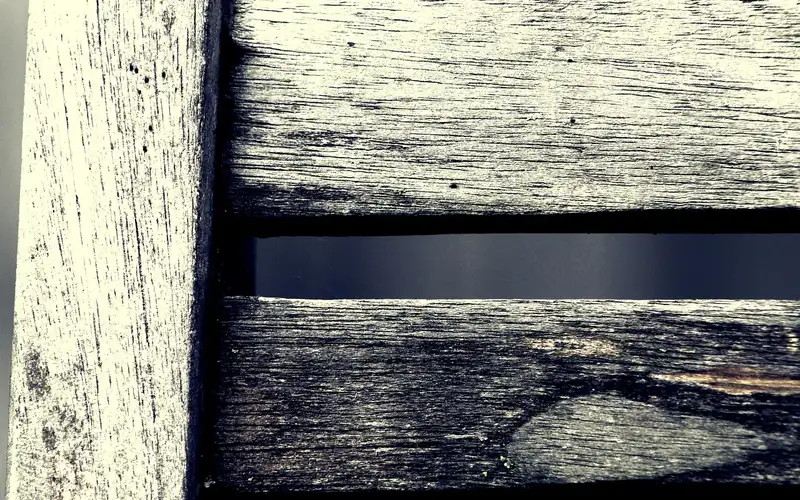
Teak also weathers differently. Left untreated outdoors it fades from golden brown to a silver-gray patina. Some owners like the look; if you do not, an oil finish such as those covered in our tung oil vs teak oil comparison restores the warm color, though it must be reapplied. Mahogany that loses its finish outdoors also dulls, and then needs sanding back before refinishing.
- Keep table and chair feet off wet ground so water cannot wick into end grain.
- Use stainless steel or otherwise corrosion-resistant fasteners on either wood outdoors.
- Let a new oil coat soak in, then wipe off the excess so it does not stay tacky.
For a much harder tropical alternative to both, see our teak vs ipe comparison.
The Mahogany Label Problem: Four Woods, Four Sets of Numbers
Most teak vs mahogany articles quote one set of mahogany numbers and move on. That hides the biggest trap for buyers: “mahogany” on a spec sheet or price tag is sold as four quite different woods, and only two of them are true mahoganies.
| Sold as | Actual wood | Janka | Decay resistance | Worth knowing |
|---|---|---|---|---|
| Honduran or genuine mahogany | Swietenia macrophylla | 900 lbf | Moderately to very durable | IUCN Endangered, CITES Appendix II; mid-range price |
| African mahogany | Khaya species | 850 lbf | Moderately durable | IUCN Vulnerable, CITES Appendix II; moderate price |
| Sapele or “sapele mahogany” | Entandrophragma, not a true mahogany | 1,360 lbf | Moderately to very durable | Harder than teak; interlocked grain; IUCN Vulnerable, not in CITES |
| Philippine mahogany or lauan | Dark red meranti (Shorea) | 800 lbf | Moderately durable to non-durable | Unrelated to true mahogany; susceptible to insects |
Two things follow. First, a “mahogany” outdoor set made of dark red meranti is unlikely to match teak for rot resistance, since its rating runs down to non-durable. Second, sapele sold as mahogany is about 27% harder than teak and about 51% harder than Honduran mahogany, so it behaves differently under a plane and a router. Ask for the botanical name before you buy. Our African mahogany vs sapele comparison goes deeper on those two, and okoume vs mahogany covers another common stand-in.
Color shifts too. Mahogany heartwood runs from pale pinkish brown to darker reddish brown and darkens with age, so a new board will not match an old one. Teak runs from golden to deep brown and only picks up its silver patina when exposed.
Working With Teak and Mahogany in the Shop
Mahogany is the friendlier wood on the bench. It is typically very easy to work with hand and machine tools, sands easily and takes finish well. The exception is figured or interlocked grain, which can tear out; take light passes and keep blades sharp. For a finishing walkthrough, see our guide to staining teak vs mahogany.
Teak is harder on tools than its Janka number suggests, because it contains up to 1.4% silica. The Wood Database notes this has a pronounced blunting effect on cutting edges. In practice, expect carbide-tipped blades and bits to hold up better than plain steel, and plan on sharpening plane and chisel edges more often.
Wear a dust mask when sanding or sawing either wood. The Wood Database notes that teak dust commonly causes eye, skin and respiratory irritation, and can cause reactions such as rash, nausea or asthma-like symptoms. Use dust collection where you can. If you plan to use either species for kitchen items, read whether mahogany is food safe first.
One common practice, not taken from a species profile: teak’s natural oiliness can interfere with glue, so many woodworkers wipe the joint faces with a solvent shortly before gluing. Test a scrap joint first.
Cost, Availability and Sustainability
On price, the ranking is consistent across sources: teak is very expensive, Honduran mahogany is mid-range, and African mahogany, sapele and meranti are moderate. Figured lumber and veneer in any species can climb well above plain boards, so quote by the exact grade and thickness. Sourcing matters too; our note on where to get teak wood for projects lists options.
Sustainability cuts against a simple story. Teak is not listed in the CITES Appendices or on the IUCN Red List, though sanctions on Myanmar affect current availability. Honduran mahogany, by contrast, is IUCN Endangered and in CITES Appendix II after a population reduction of over 60% in the past 180 years, and African mahogany is Vulnerable and also in Appendix II. CITES Appendix II means international trade is regulated. If you buy mahogany, ask for documented, certified sources.
Which Should You Buy?
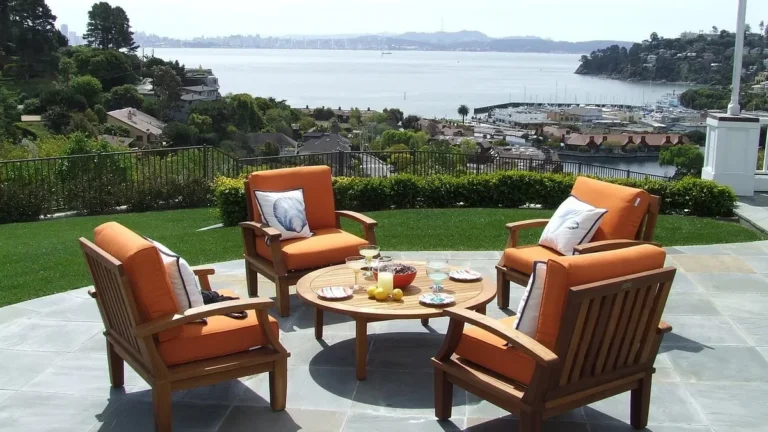
- Patio or deck furniture: teak. It is the better bet if the piece will not be covered or refinished regularly. See also woods that compete with teak if you want other options.
- Indoor dining table, cabinets, desk: mahogany. You get the color, easy machining and lower cost without paying for rot resistance you will not use. Our mahogany uses guide shows typical projects.
- Covered porch or sunroom: either works; choose on color and budget, and finish mahogany.
- Anything sold as “mahogany” for outdoor use: confirm the species first. Meranti will not perform like true mahogany or teak.
Frequently Asked Questions About Teak vs Mahogany
Is teak harder than mahogany?
Yes, but not by much. Teak measures 1,070 lbf on the Janka scale, while Honduran mahogany measures 900 lbf and African mahogany 850 lbf, according to The Wood Database. That makes teak roughly 19 to 26 percent harder. Sapele, often sold as mahogany, is harder than teak at 1,360 lbf.
Is teak or mahogany better for outdoor furniture?
Teak is the safer outdoor pick. Its heartwood is rated very durable against decay and resists termites, while mahogany heartwood ranges from moderately to very durable depending on the species and the tree. Mahogany can live outdoors if it is well finished, kept off wet ground and sheltered, but it forgives less neglect.
Is teak more expensive than mahogany?
Yes. The Wood Database calls teak very expensive and one of the most costly lumbers on the market, while Honduran mahogany is mid-range for an imported hardwood and African mahogany, sapele and meranti are moderately priced. Figured boards and veneers of any of these can cost much more than plain lumber.
Is mahogany the same as teak?
No. They are unrelated woods. Teak is Tectona grandis from tropical Asia, and genuine mahogany is Swietenia from the Americas or Khaya from Africa. They differ in color, grain, hardness, decay resistance and price, although both are used for furniture and boatbuilding.
Does mahogany last outdoors?
It can, if the wood is a durable grade and the piece is protected. Honduran mahogany heartwood varies from moderately to very durable, African mahogany is rated only moderately durable, and both need a maintained finish outdoors. Plantation-grown boards are lighter and slightly less rot resistant than older wild-grown lumber.
Conclusion
Teak wins on rot resistance and outdoor forgiveness; mahogany wins on price and ease of working. The hardness and stability gap is smaller than most guides claim, and the word “mahogany” needs a species name attached before it means anything. Match the wood to where the piece will live, then finish it properly.
Sponsored / affiliate links. As an Amazon Associate I earn from qualifying purchases. I may earn additional commission from eligible campaigns.