Radiata Pine Plywood: Pros, Cons and Best Uses
Radiata pine plywood is a practical pick for painted furniture, cabinet carcasses, shelving, and light-duty utility storage when you want a stable panel that cuts cleanly; skip it for high-wear surfaces, heavy spans, or exterior exposure unless the glue line is rated for exterior use. Choose badly, and soft faces dent fast, edges crumble under fasteners, or panels fail where moisture matters. This guide covers grades, thickness, glue lines, and the best project uses for radiata pine plywood.
What radiata pine plywood
Radiata pine plywood is made from radiata pine, also called Monterey pine. The sheet is built from thin veneers with alternating grain direction, then pressed under heat and pressure so the panel is more stable than solid wood.
The face color is usually pale yellow to light brown, with visible wood grain. That look works well when you want a clean paint base or a light natural finish, but it also means the surface can telegraph grain and earlywood lines if you expect a hardwood-like stain result.
How plywood veneers are built for stability
Each veneer layer is rotated so the grain runs at right angles to the next layer. That cross-laminated structure helps limit seasonal movement and improves panel stability, which matters for cabinet boxes, backs, and shelves that need to stay square.
Stability does not erase softness. The face veneers can still dent, and the edges can crush more easily than denser hardwood plywood when you fasten close to the edge or subject the panel to repeated impact.
Why woodworkers choose it
Woodworkers often pick radiata pine plywood because it is light enough to move and position by hand, easy to cut, rout, and fasten, and often less expensive than hardwood plywood. That makes it practical for large cabinet runs, utility storage, and painted shop furniture.
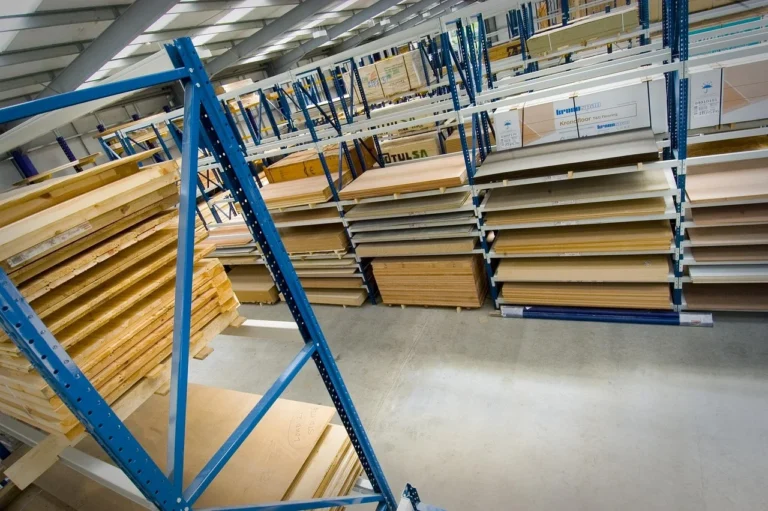
That value only holds when you match the panel grade to the job. A smooth-faced ACX sheet for a visible cabinet side is a different product from a lower-grade structural panel meant for bracing or underlayment.
Cutting, routing, and fastening behavior
Radiata pine plywood usually cuts cleanly with sharp blades and proper support, but soft faces can splinter at exit points. Routing edges is straightforward, yet the corners can fuzz or chip if the cutter is dull or the feed rate is too aggressive.
Fasteners hold well enough for ordinary cabinet and furniture work, but edge-driven screws need care. Pre-drill near ends and avoid placing hardware too close to corners, where the softer plies are more likely to split or crumble.
Is radiata pine plywood good for cabinets?
Yes, radiata pine plywood is a solid option for cabinet carcasses, drawer parts, and painted cabinet boxes when you choose a smooth face grade and a thickness suited to the load. It works best where the cabinet will be painted or otherwise covered, and where edge protection is part of the design.
AC and ACX panels make sense when one or both faces will show. For carcasses, the face quality matters less than straightness, clean edges, and a reliable glue line. If the cabinet will be handled often, plan on edge banding or solid edging to protect vulnerable edges.
Best grades for carcasses and drawer parts
For visible carcasses, ACX is a strong starting point because the face is smooth enough for paint and many laminating jobs. AC can also work where only one good face is needed, such as a wall side or an interior partition with one exposed side.
Drawer parts and internal dividers can use the same sheet quality, but the deciding factor is edge wear. Where drawers slam, scrape, or carry hardware, edge banding and careful hole layout matter as much as the face grade.
Where edge banding matters most
Edge banding matters most on exposed cabinet sides, shelf fronts, and any place where the plywood edge will be seen or touched often. It also helps reduce moisture uptake at the end grain and gives screw holes or shelf-pin rows more protection from chipping.
Radiata pine plywood project matrix
This matrix separates appearance-grade from structural-grade panels so you can match the sheet to the job. The glue line and thickness matter as much as the face grade, especially when a project may see moisture, load, or visible wear.
| Project | Common grade | Thickness | Glue type | Not recommended if… |
|---|---|---|---|---|
| Cabinet carcass | ACX or AC | 12 to 18 mm | Interior MR glue or phenolic exterior glue if needed | You need a hard, dent-resistant edge or expect repeated impact near corners |
| Shelf | ACX for visible shelves; structural panel for hidden storage | 18 to 25 mm | Interior MR glue for dry interiors; phenolic exterior glue for damp areas | The span is long and the load is heavy, which raises sag risk |
| Painted furniture | ACX or smooth AC | 12 to 18 mm | Interior MR glue | You want a stained hardwood look or a high-dent top surface |
| Utility storage | Structural-grade panel | 12 to 18 mm | Interior MR glue for dry storage; phenolic exterior glue for damp utility spaces | Moisture or rough handling is expected and the panel edge will be exposed |
| Light exterior use | Exterior-rated panel, often with compliance stamp | 12 to 18 mm | Phenolic exterior glue | You cannot seal edges well or the panel will sit in direct weather |
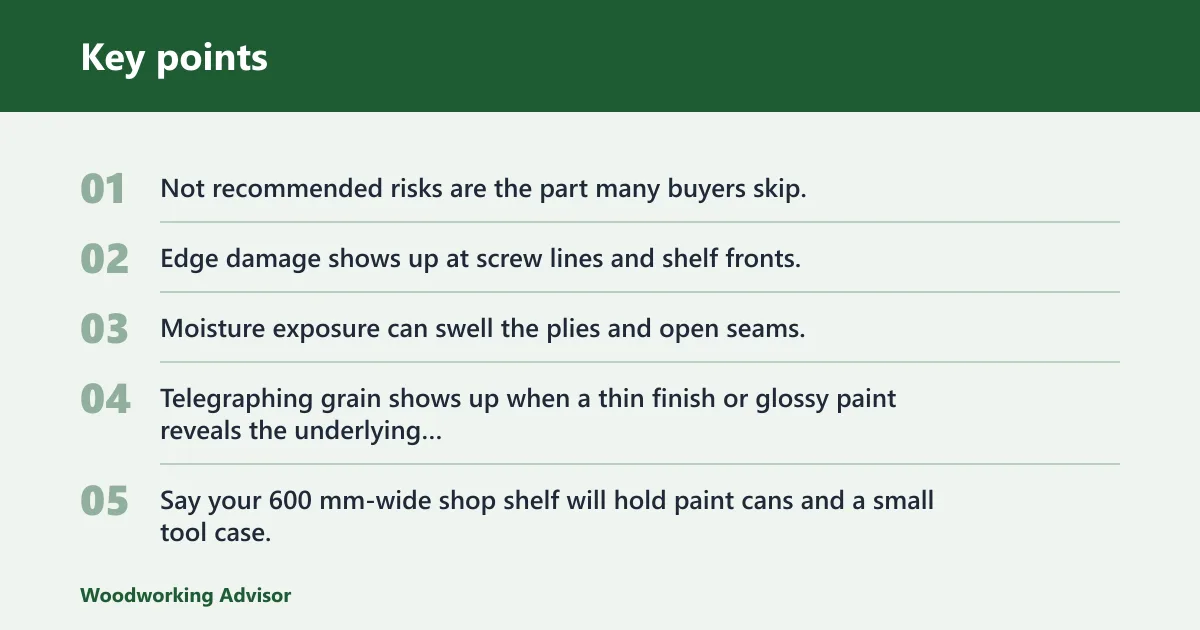
Not recommended risks are the part many buyers skip. Denting shows up first on faces. Edge damage shows up at screw lines and shelf fronts. Moisture exposure can swell the plies and open seams. Telegraphing grain shows up when a thin finish or glossy paint reveals the underlying texture.
Say your 600 mm-wide shop shelf will hold paint cans and a small tool case. A 12 mm panel may look fine at first, but the middle can sag under load, especially if the span is long and the front edge is unreinforced. Moving to 18 mm or adding a front edging strip is the cleaner fix.
What thickness should you use?
The right thickness depends on span, load, and whether the sheet will be visible. In the common 6.5 to 25 mm range, thinner panels suit backs and light linings, mid-range panels suit cabinets and furniture parts, and the thickest panels are better for shelves and higher-load pieces.
6.5 to 9 mm for backs and light panels
Use 6.5 to 9 mm for cabinet backs, drawer bottoms, and light-duty panels where the sheet mainly keeps a box square. These thinner panels are easy to move and cut, but they are not the right choice for load-bearing shelves or edges that will be knocked around.
12 to 18 mm for cabinets and furniture parts
A common rule of thumb is to use about 12 to 18 mm for cabinet carcasses, face frames that rely on sheet stock, painted tables, and many furniture sides. This range gives a better balance of stiffness and weight, and it is the range where radiata pine plywood is most often a practical value pick.
18 to 25 mm for shelves and higher-load parts
A common rule of thumb is to use about 18 to 25 mm for wider shelves, bench parts, and surfaces that need more stiffness. The extra thickness helps resist sag, but it does not remove the need to check span length and support spacing. A thicker softwood panel is still a softwood panel.
Does it paint, stain, and machine well?
Radiata pine plywood paints well when you use a smooth face grade such as ACX or AC and prepare the surface properly. Stain is less predictable because the softwood face can absorb finish unevenly, so a test board and careful surface prep are important before you commit to a visible panel.
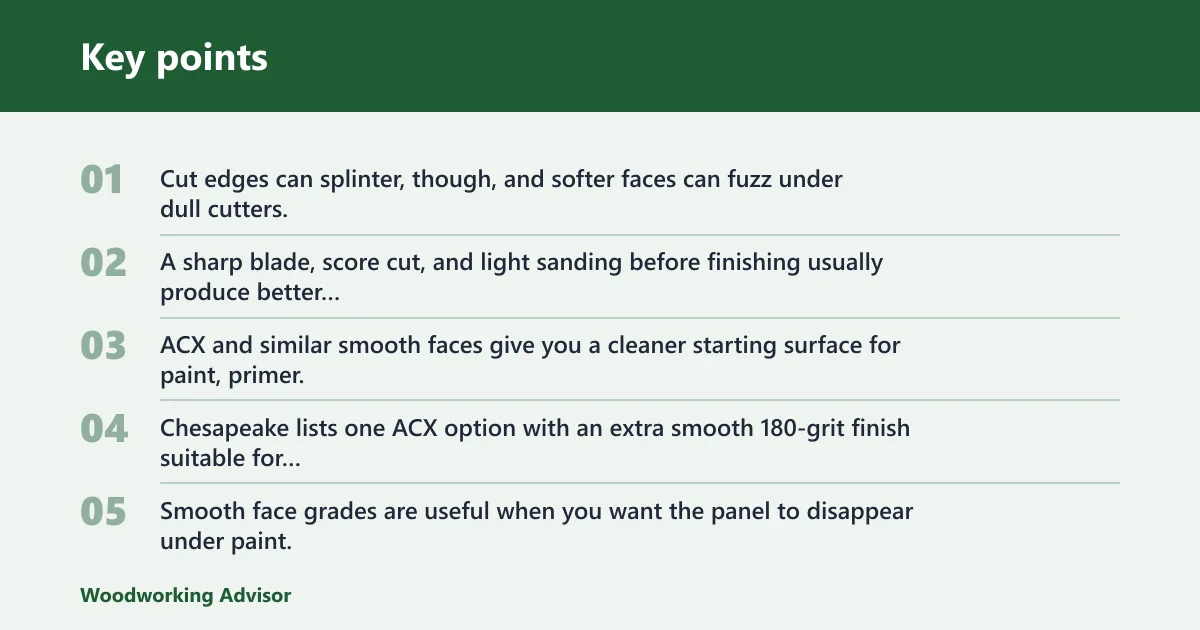
Machine behavior is generally friendly. Cut edges can splinter, though, and softer faces can fuzz under dull cutters. A sharp blade, score cut, and light sanding before finishing usually produce better results than trying to hide roughness later.
Why smooth-face grades suit paint and laminates
ACX and similar smooth faces give you a cleaner starting surface for paint, primer, or laminate. Chesapeake lists one ACX option with an extra smooth 180-grit finish suitable for staining or painting, which is the kind of face prep that reduces sanding time and helps finish coverage.
Smooth face grades are useful when you want the panel to disappear under paint. They are less useful when you want a dramatic natural-wood look, because the pale softwood grain can read unevenly unless you control the finish carefully.
Why stain can be uneven on softwood faces
Softwood faces often blotch because earlywood and latewood absorb stain at different rates. That means a stain that looks even on birch can look patchy on radiata pine plywood unless you use a conditioner, a tinted sealer, or a finish plan built around the panel’s natural variation.
Picture a painted laundry cabinet with exposed shelf edges and a moisture-prone room. If the builder skips edge sealing, the first sign of trouble is often swollen edges around sink-side splashes, not the broad face. That is why finish on the edges matters as much as the paint on the face.
When is it suitable outdoors?
Radiata pine plywood is suitable outdoors only when the glue line and product stamp support exterior use, and even then it needs edge sealing and sensible detailing. Interior or moisture-resistant panels are not the same as exterior-rated sheets, even if they look similar on the rack.
Phenolic exterior glue is the key cue. It is used in some radiata pine plywood products and is suitable for interior and exterior use. By contrast, an interior MR-bond panel is better kept away from direct weather, splash zones, and standing damp.
What PS 1-09 and other stamps can signal
Compliance stamps can tell you more than face appearance. Some panels are stamped for underlayment or structural use, and Chesapeake notes one Radiata Pine ACX plywood as TPI stamped and meeting PS 1-09 underlayment requirements. That kind of marking helps separate a decorative panel from one intended for a specified structural or underlayment role.
FSC and PEFC chain-of-custody claims matter too when sourcing is part of the decision. They do not tell you how the panel performs by themselves, but they do indicate documented supply-chain certification for the wood product.
T1-11 and grooved siding use cases
T1-11 and other grooved sidings are exterior cladding forms, not generic cabinet panels. The grooves create a siding look and a weathered-wood profile, so they belong on walls and sheds where exterior cladding is the goal, not inside a kitchen or a fine furniture carcass.
Frequently asked questions
What is radiata pine plywood used for?
It is commonly used for cabinet boxes, painted furniture, shelving, utility storage, wall panels, packaging, and some construction applications. The best use depends on grade, thickness, and glue type. Smooth appearance grades suit visible projects, while structural-grade panels fit bracing, underlayment, and utility work.
Is radiata pine plywood strong enough for furniture?
Yes, for many furniture parts it is strong enough when you use the right thickness and support. It is better suited to painted furniture, case goods, and moderate-load parts than to slender high-stress members. Shelves and tops need careful thickness selection to avoid sag and edge damage.
How does radiata pine plywood compare to birch plywood?
Birch plywood is usually the better choice when you want a harder face, cleaner edges, and better resistance to denting in visible furniture. Radiata pine plywood is often the better value when weight, easy cutting, and a paint-first finish matter more than surface hardness or premium edge appearance.
Is radiata pine plywood easy to cut and machine?
Yes. It is generally easy to cut, rout, and fasten, especially with sharp tools and good support. The main caution is that the soft face and edges can splinter or fuzz more easily than denser hardwood plywood, so clean tool setup and edge finishing are important.
What are the disadvantages of radiata pine plywood?
The main drawbacks are soft faces that dent and scratch easily, edge damage near fasteners, possible moisture swelling in the wrong glue class, and finish issues such as grain telegraphing or blotchy stain. Resin-system odor or formaldehyde concerns can also matter, so check the product’s stated adhesive type.
Does radiata pine plywood have formaldehyde concerns?
It can, depending on the adhesive system used. Some panels use phenol-formaldehyde adhesive, and buyers concerned about indoor air quality should check the product’s resin type, emission claims, and certification paperwork rather than assuming every sheet is the same. Ventilation during cutting and finishing is still sensible.
Sponsored / affiliate links. As an Amazon Associate I earn from qualifying purchases. I may earn additional commission from eligible campaigns.
 Baltic Birch Plywood Sheets Box of 45 - Laser Engraving Cutting, Scroll Saw Nature Veneer Color, Stronger Than Basswood, A/A Grade,12 x 12 x 1/8”, 3mm Thickness Perfect for Wood Burning
 Double Side Plywood Sheets 4mm or 5mm for Painting Stenciling Wood Burning and Decoration 150x220mm 220x300mm 300x450mm Art Project Wood