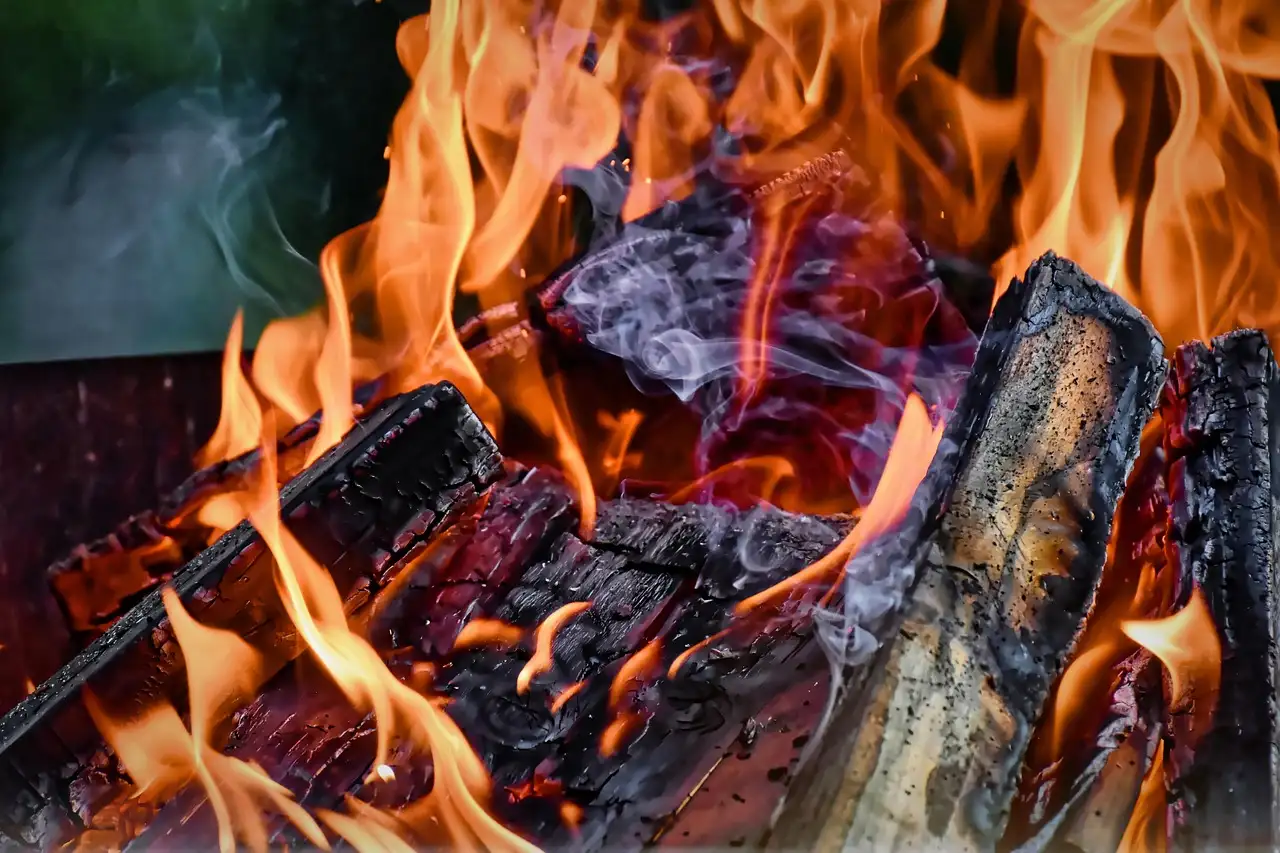
Wood Fireplace Smoke Smell in the House
A wood fireplace smell in the house usually means lingering creosote on porous surfaces, weak draft, or a leak in the flue or insert. If the odor is strong, persistent, or comes with smoke spillage, treat it as a ventilation problem first. Ignoring it can leave soot in drywall and fabrics, waste heat, and raise the risk of carbon monoxide or chimney fire. This guide shows how to sort normal odor from draft failure, identify the most likely cause, and choose the first fix.
Why your house smells smoky


Some fireplace odor after a fire is normal, but it should fade as the system cools and the room airs out. A smell that hangs on for hours, returns on windy days, or gets worse when you light a fire points to a draft issue, dirty flue, or smoke escape path rather than simple residue.
Normal post-fire odor versus a problem
Light smoky scent near the hearth, firebox, or nearby curtains can come from soot and creosote left on surfaces. That is common if the fireplace has not been cleaned recently. A sharper smell that spreads through several rooms, lingers in vents, or arrives before the fireplace is even lit is a different problem and deserves diagnosis before deodorizing.
Smoke odor can cling to curtains, carpets, and furniture, so a room may smell smoky even after the fire is out. That does not rule out a chimney issue. It only means you need to separate surface odor from an exhaust problem.
Winter odor, summer odor, and startup smoke
Winter smells often show up during or right after use. Summer smells often come from a warm chimney or a chimney that pulls odors downward during weather changes. Wind, rain, and heat can make fireplace smells worse, especially if the flue is dirty or the cap is missing or damaged.
Startup smoke is another useful clue. If smoke enters the room when lighting or adding wood, the chimney may need sweeping. That pattern is more serious than a faint residual odor after the fire is out.
Open fireplace, insert, or wood stove differences
An open fireplace spills odor more easily because the firebox is open to the room. A fireplace insert may hold soot and odor around doors, gaskets, and liners. A wood stove often runs under stronger draft, so room smell may point to a loading-door leak, connector issue, or exhaust problem rather than normal open-hearth leakage.
Picture a 20-inch open fireplace that smells smoky every time the range hood runs. The fireplace itself may be fine, but the house air is being pulled the wrong way. The same room with the same fire, but no exhaust fan running, may smell much less.
Smoke smell troubleshooting matrix
Use this matrix as a ranking tool. Start with the symptom that matches your situation most closely, then run the quick test. The first fix should be the least disruptive step that fits the pattern. If the smell points to blockage, creosote, or backdraft, stop at cleaning and inspection instead of repeating deodorizing.
| Symptom | Likely cause | Quick test | Safe first action | When to call a pro |
|---|---|---|---|---|
| Smell appears when lighting a fire | Weak draft or cold flue | Hold a tissue near the firebox opening; it should move toward the flue | Warm the flue gently and open the damper fully before lighting | If smoke spills into the room more than once |
| Smell appears when adding wood | Draft loss from opening the door | Open the door slowly and watch for smoke roll-out | Add smaller loads and keep the door open only as needed | If roll-out happens with a warm, established fire |
| Odor grows stronger during windy weather | Downdraft or cap problem | Notice whether the smell improves when the wind shifts | Check the chimney cap for blockage or missing screen | If wind repeatedly forces smoke back down the flue |
| Smell is strongest near the fireplace but not in other rooms | Creosote or soot in the firebox and surround | Look for glossy black residue or flaky soot | Clean ash, soot, and the firebox with a HEPA vacuum | If residue is heavy or tar-like in the flue |
| Smell spreads through the whole house | Smoke moved through HVAC or porous finishes | Check return grilles, filters, and nearby soft furnishings | Replace the HVAC filter and clean soft surfaces | If the odor returns after cleaning vents and fabrics |
| Smell appears after running a bath fan or range hood | Negative air pressure | Turn the fan off and see whether the odor eases | Reduce competing exhaust and open a nearby window | If exhaust fans repeatedly pull smoke indoors |
| Odor is worse on very dry, tight days | Pressure imbalance in the house | Crack a window and repeat the fire-start test | Balance the room air before lighting the fire | If the fireplace only works with windows open |
| Smoke smell follows a recent storm or rain | Moisture in the flue or wet debris at the top | Inspect the cap for blockage or a missing screen, and look for moisture signs at the damper | Let the system dry out and inspect the cap | If water entry or flue damage is visible |
| Smell is strongest after the fireplace sits unused | Creosote buildup in the chimney flue | Check for tar-like odor near the opening | Schedule sweeping and inspection | As soon as smoke smell returns after cleaning |
| Smell started after a long season without use | Debris, animal nesting, or blocked flue | Look up the flue path with the damper open | Keep the fireplace closed and unlit | If the flue looks blocked, broken, or narrow |
| Odor comes from an insert door or seams | Fireplace insert leak or dirty gasket | Run a hand near the edges after the fire is out | Clean the insert and check the door seal | If the insert leaks smoke or soot repeatedly |
| Smell remains after cleaning the room | Soft furnishings or HVAC spread | Compare the smell in curtains, rugs, and vents | Wash, vacuum, or steam clean the soft surfaces | If odor persists after surface cleaning and ventilation |
Suppose a 2-story house smells smoky only when the kitchen range hood runs during a fire. That pattern points to negative air pressure, not a simple odor problem. The first fix is to stop the competing exhaust, open a nearby window, and retest before assuming the chimney needs replacement.
What causes smoke smell in the house?
The most likely causes are creosote buildup, damp or wet firewood, a blocked or damaged flue, and negative air pressure that pulls smoke back indoors. Household smoke odor can also come from soot or HVAC spread. Sorting those causes matters because some need cleaning, while others need repair.
Creosote buildup in the flue
Creosote is tar-like residue in the chimney flue. It is both an odor source and a fire hazard. If the smell is sharp, sticky, or strongest after the chimney warms up, creosote is a likely culprit. It needs sweeping and inspection, not masking.
A common rule of thumb is to sweep a chimney at least twice a year. That interval does not fit every household, but it gives a practical ceiling for maintenance when the fireplace is used regularly.
Damp firewood and inefficient combustion
Damp or wet firewood burns inefficiently, makes more smoke, and increases odor. Burning dry, seasoned firewood is the prevention step that shows up again and again because it reduces smoke at the source. Wet fuel can also leave more soot behind, which keeps the smell going after the fire is out.
Blocked or damaged flue parts
The chimney flue controls exhaust draft. If it is blocked, cracked, or broken, smoke may not leave the house correctly. A damaged flue can also let odors escape into the structure or bring odors back through the fireplace opening.
The chimney cap helps prevent downdrafts and keeps debris and animals out. If the cap is missing or damaged, wind-driven odor and blockage become more likely.
Negative air pressure and backdrafting
Negative air pressure pulls smoke back indoors. Bath fans, range hoods, clothes dryers, and some HVAC setups can create that condition by exhausting more air than the house can replace. The result can be smoke smell with no obvious chimney defect.
That is why a fireplace can smell worse on days when several exhaust appliances run at once. The fireplace may be fine on its own, but the room air is being pulled the wrong way.
What should you check first?
Start with the signs that separate a simple odor issue from a draft failure. Look for smoke spillage at startup, check the chimney cap and flue path, test for pressure problems from fans and appliances, and inspect ash, soot, and the firebox. Those checks give you the fastest read on whether you need cleaning or repair.
Look for smoke spillage at startup
If smoke enters the room when lighting or reloading, stop and treat that as a warning sign. It can mean weak draft, a cold flue, or blockage. Do not keep trying to light the fire if the room fills with smoke.
Check the chimney cap and flue path
Look for visible debris, animal nesting, or a cap that is bent, clogged, or missing. Then confirm the damper opens fully and the flue path is unobstructed. A chimney cap in poor shape can let downdrafts and debris create repeated odor problems.
Test for pressure issues from fans and appliances
Turn off the bath fan, range hood, and clothes dryer, then retest the fireplace odor or startup behavior. If the smell eases quickly, the issue may be negative air pressure rather than a blocked chimney. Open a nearby window as a temporary test, not as a permanent fix.
Inspect ash, soot, and the firebox
Clean ash and soot from the firebox before you do much else. A HEPA vacuum is recommended for removing ash and soot from the fireplace. If the insert, firebox walls, or surrounding brick are coated with residue, the smell can keep coming back even after the room is aired out.
How do you get rid of the smell?
Once you have ruled out smoke spillage and blockage, focus on cleanup. Ventilate safely, remove ash and soot, clean soft furnishings that hold odor, and use an air purifier or activated charcoal as support. Deodorizers help with lingering smell, but they do not fix a draft problem.
Ventilate safely and remove ash and soot
Open doors and windows for several hours if the weather allows it. Smoke can smell like creosote, and fresh air helps reduce it. Then remove loose ash and soot from the firebox and surrounding surfaces so the smell does not keep recirculating.
Clean soft furnishings that hold odor
Smoke smell can cling to curtains, carpets, and furniture. Wash what can be washed, vacuum upholstered surfaces carefully, and use steam cleaning where fabric care allows it. Rugs and drapes near the fireplace often hold more odor than the hearth itself.
Use an air purifier or activated charcoal
An air purifier with activated carbon filters can help trap smoke particles and odors. Activated charcoal can also absorb odor in bowls or briquettes placed near the affected room. These tools support cleanup, but they do not solve a flue, cap, or pressure problem.
When deodorizing helps and when it does not
Deodorizing helps after the fire is out and the source has been corrected. It does not help if the chimney is blocked, the flue is damaged, or exhaust fans are pulling smoke indoors. If the smell returns every time you light a fire, repeat cleanup will waste time.
Prevent the smell from coming back
Prevention starts with fuel, maintenance, and airflow. Burn seasoned wood, keep the chimney swept, inspect the cap and flue, and clean the firebox and insert before residue builds up. Those steps matter more than any room spray or absorbent.
Burn seasoned firewood
Burn dry, seasoned firewood instead of damp logs. That reduces smoke, soot, and creosote formation. If wood feels heavy, cool, or looks freshly cut, it is a poor choice for odor control and safe combustion.
Schedule chimney sweeping and inspection
Regular sweeping removes creosote before it becomes a stronger odor source or fire risk. A yearly inspection is often the minimum for seasonal fireplace use, and more frequent sweeping may be needed with heavy use. If smoke smell has already returned more than once, inspection should move up the list.
Keep the chimney cap and flue in working order
Check the chimney cap for blockage or a missing screen after storms and look for signs of a blocked or broken flue. The cap helps prevent downdrafts and keeps debris and animals out. A small repair at the top of the chimney can prevent repeated odor complaints inside the house.
Keep the firebox and fireplace insert clean
Clean the firebox, soot, and any fireplace insert regularly so odor does not collect between burns. Inserts can hold odor around doors, seams, and liners, so they need to be included in routine maintenance. If you leave residue in place, the room may smell smoky even after the fire is gone.
When should you call a pro?
Call a pro when the smell returns after cleaning, when smoke enters the room, or when you see signs of creosote, blockage, or flue damage. If the fireplace only works with windows open, or if odor gets worse during normal use, repair is usually a better answer than repeated deodorizing.
Repair beats cleanup when the issue sits in the chimney system itself. That is especially true for heavy creosote, a blocked flue, a failing cap, or a damaged insert seal. Persistent smoke smell should be treated as a system problem, not a housekeeping problem.
Frequently asked questions
Does a fireplace make your house smell like smoke?
It can, especially after use, but the smell should not linger strongly for long periods. A faint odor near the hearth is common. A whole-house smell, recurring smoke spillage, or odor that returns in windy weather points to draft, flue, or pressure problems rather than normal fireplace use.
Why does my fireplace smoke in the house?
Smoke enters the room when the chimney does not draft correctly. Common reasons include a cold flue, blocked cap, creosote buildup, damp wood, or negative air pressure from exhaust fans and HVAC imbalance. If smoke backs up more than once, stop using the fireplace until the cause is checked.
How do I get rid of wood fire smoke smell in house?
Start by removing ash and soot, airing out the room, and cleaning soft surfaces that hold odor. Then use an air purifier with activated carbon filters or activated charcoal as support. If the smell keeps returning, inspect the flue, cap, and draft before relying on deodorizing again.
How long does smoke smell last in a house?
That depends on how much smoke entered the space and whether porous materials absorbed it. Light odor may fade after several hours of ventilation. Heavier odor can last much longer in curtains, rugs, upholstery, and vents if the source is not corrected and the residue is not removed.
What should I check first if smoke comes into the room?
Check whether the damper is fully open, whether the chimney cap is clear, and whether any bath fans, range hoods, or dryers are running. Then look for ash buildup and smoke spillage at startup. If the room fills with smoke, stop and have the fireplace inspected.
How do I prevent fireplace smoke smell from coming back?
Burn dry, seasoned wood, sweep the chimney on a regular schedule, and keep the cap and flue in good condition. Clean the firebox and any insert before buildup grows. Also watch for exhaust fans that create negative air pressure, since they can trigger odor even when the fire itself is burning well.
Sponsored / affiliate links. As an Amazon Associate I earn from qualifying purchases. I may earn additional commission from eligible campaigns.