Polycrylic vs Polyurethane for Butcher Block Countertops
Use polyurethane on butcher block countertops near sink splashes, heat, or heavy wear; choose polycrylic only for lightly used, dry areas where cleanup is simple and recoating is fast. A poor finish choice can cause swelling, peeling, and stained wood around joints and sinks. This guide compares prep, water exposure, repair tolerance, and maintenance so you can choose the finish that fits your countertop use.
This guide is part of our Which Wood Finish to Use: Polyurethane, Oil, Wax or Varnish and How to Apply It series.
| Decision factor | Polycrylic | Polyurethane for Butcher Block Countertops | Winner |
|---|---|---|---|
| Food-prep tolerance | Better for dry, lightly used tops; interior use only. | Better for protective film on kitchen wood that sees more wear. | Polyurethane for Butcher Block Countertops |
| Water resistance | Not the right pick near water exposure. | Water-based and oil-based versions both give stronger moisture protection than polycrylic; sink-adjacent use still needs careful sealing. | Polyurethane for Butcher Block Countertops |
| Heat and ambering | Non-yellowing look, but not a hot-pan solution. | Oil-based can amber; neither version should be treated as heat-proof for hot cookware. | Polycrylic for appearance, tie for heat |
| Repairability and upkeep | Easier cleanup and faster recoats, but less durable film. | More durable, but failed film finishes usually mean more sanding and fuller refinishing. | Polycrylic for quick touch-up, Polyurethane for durability |
| Best-use zone | Decorative top or dry bar area. | Prep island or sink run, if you want a hard film finish. | Depends on zone |
Countertop zones need different finishes
Polycrylic is a water-based, low-VOC, quick-drying finish for interior surfaces. Polyurethane is a protective film finish available in water-based and oil-based formulas, and the oil-based version is the more durable, scratch-resistant option, with a slight yellowish tint as it dries. Butcher block can change the choice because the countertop may see moisture, knife traffic, seam movement, and edge wear. (Minwax)
That means the real question is not “which finish is better in general?” It is “which finish fits this zone of the countertop and your willingness to maintain it?” A prep island, sink run, and decorative bar top may not need the same level of protection.
Food-contact zones are not all the same
A butcher block used for chopping is different from one used for plating, washing, or coffee service. A film finish can protect the wood from spills and cleanup, but it does not turn the top into a cutting board surface.
Say your island is 72 inches long, with the center used for mixing bowls and the end near the sink getting daily splashes. That end faces a different risk profile than the dry center, so the finish choice should follow the wettest area, not the driest one.
Butcher block decision matrix
This matrix focuses on the countertop conditions that actually change finish performance. It separates direct food prep from sink exposure, because those are not the same problem.
| Criterion | Polycrylic | Water-based polyurethane | Oil-based polyurethane | Best fit | Verdict |
|---|---|---|---|---|---|
| Food-prep tolerance | Low on active kitchen tops with moisture | Moderate for sealed interior wood | Moderate to high for wear, with finish intact | Decorative top | Polycrylic for dry, low-wear zones; polyurethane for harder-use zones |
| Water resistance | Weak near sinks or repeated splashes | Better than polycrylic | Best of the three for moisture-prone use | Sink run | Polyurethane for Butcher Block Countertops |
| Heat resistance | Not a hot-pan finish | Not a hot-pan finish | Not a hot-pan finish | None | Tie: do not rely on any of them for hot cookware |
| Ambering risk | Low; non-yellowing look | Low to moderate depending on product | Higher; slight yellowish tint is common | Light-colored wood | Polycrylic for clear color retention |
| Repairability | Easier spot touch-up, but failures still need prep | Better than oil-based for recoating ease | Harder to patch invisibly if the film fails | Rental kitchen | Polycrylic if easy recoat matters most |
| Maintenance interval | Shorter service life on a kitchen top | Longer than polycrylic | Longest of the three for a hard film finish | High-traffic kitchen | Polyurethane for Butcher Block Countertops |
| Odor/VOC burden | Low | Lower odor than oil-based | Higher odor and VOC burden | Occupied home during application | Polycrylic or water-based polyurethane |
Food-prep tolerance and water resistance
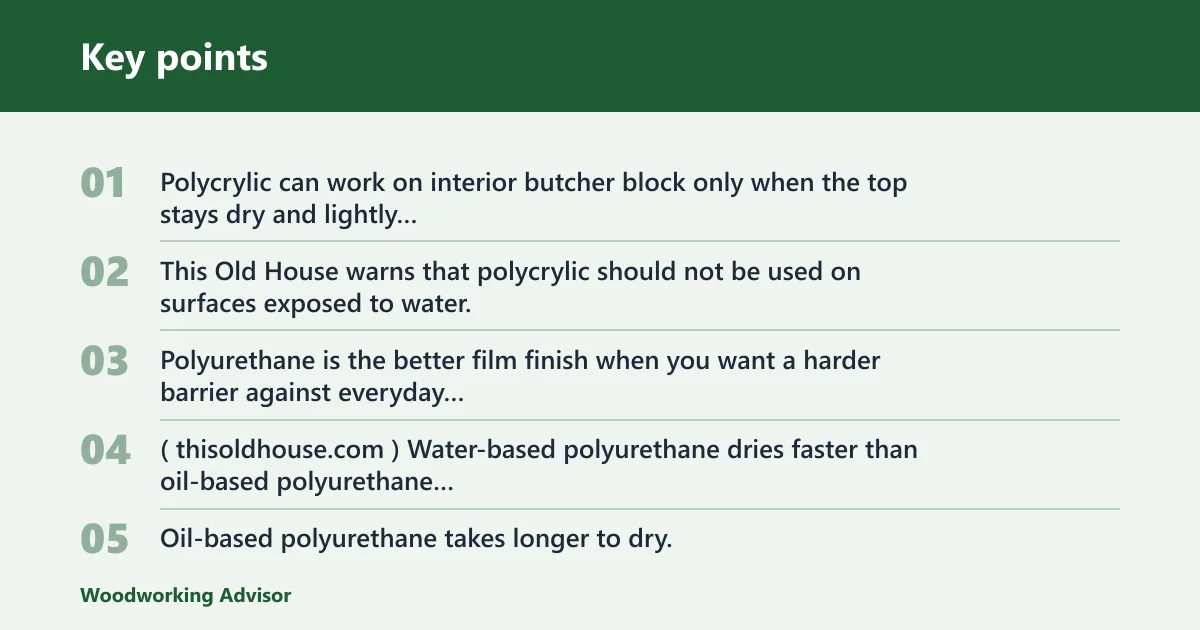
Polycrylic can work on interior butcher block only when the top stays dry and lightly used. This Old House warns that polycrylic should not be used on surfaces exposed to water, which makes it the weaker match for sink-adjacent butcher block. Polyurethane is the better film finish when you want a harder barrier against everyday spills and wipe-downs. (Thisoldhouse)
Water-based polyurethane dries faster than oil-based polyurethane and leaves a clearer finish. Oil-based polyurethane takes longer to dry, but it is the stronger choice for wear and scratch resistance, especially where hands, utensils, and wet dish edges constantly contact the surface. (Familyhandyman)
Heat and color change
Neither finish should be treated as a safe landing zone for hot pans. That warning matters more than sheen choice. Oil-based polyurethane tends to dry with a slight yellowish tint, while polycrylic keeps a clearer look on lighter wood.
Polycrylic can take on a milky appearance on dark wood or paint, so appearance on walnut or very dark stain can be a problem. That is a visual issue, not a heat solution.
Repairability and upkeep
Polycrylic is easier to clean up and faster to recoat, which helps when a topcoat on a dry decorative surface needs refreshing. But if the film fails near a sink seam, the repair usually starts with sanding back loose material and reworking the whole affected area so the patch does not telegraph.
Polyurethane lasts longer, but that durability cuts both ways. If a failed section lifts along a seam or around the sink cutout, you may need more aggressive prep before recoating because a hard film finish does not blend as easily as oil-and-wax maintenance does.
Can you use polycrylic on butcher block countertops?
Yes, but only for interior butcher block that stays dry, lightly used, and away from sink splash. Polycrylic is a water-based sealer with low VOCs and quick drying, so it fits best where odor and fast recoating matter more than long-term wear resistance.
This Old House says polycrylic should be used only on interior surfaces and should not be used on surfaces exposed to water. That makes it a poor choice for the sink run, but a workable option for a decorative bar top or a prep island that sees limited moisture.
Where polycrylic fits
Use it where the countertop acts more like a display surface than a working prep zone. A low-traffic serving counter, tray station, or dry beverage area can benefit from its clearer look and lower odor.
Where polycrylic falls short
It falls short at seams, around sinks, and anywhere standing water can sit. Once moisture gets under a weak film edge, butcher block can swell and lift the coating at joints.
When low odor matters more than wear
Choose it when the room needs a lower odor burden during application and the counter is not expected to take repeated wet cleanup. This is a convenience choice, not a durability choice.
Can you use polyurethane on butcher block countertops?
Yes. Polyurethane can be used on butcher block countertops, and it is the better film finish when the top sees kitchen wear, sink exposure, or frequent cleanup. Water-based polyurethane dries faster, while oil-based polyurethane brings stronger wear resistance and a warmer amber tone.
That said, polyurethane is not a single product. Water-based and oil-based formulas behave differently, so the right pick depends on whether you want clearer color, lower odor, or more durability.
Water-based polyurethane
Water-based polyurethane dries faster than oil-based polyurethane and gives a clearer finish. It is a strong choice when you want less odor and less color shift on maple or other light butcher block species.
Oil-based polyurethane
Oil-based polyurethane is described as durable and scratch-resistant, and it tends to dry with a slight yellowish tint. That makes it the better fit when the countertop is going to take harder wear and you do not mind some ambering.
Which polyurethane works best for a kitchen top?
For most kitchen butcher block, water-based polyurethane is the practical middle ground because it keeps the wood color clearer and dries faster. Choose oil-based only when wear resistance matters more than ambering and longer dry time.
Surface prep and cure time for a film finish
Film finishes fail early when the surface is oily, dusty, or uneven. That is especially true on butcher block, where existing mineral oil, beeswax, and seam movement can block adhesion.
Remove oil or wax before coating
If the countertop has been maintained with mineral oil or beeswax, remove as much of that residue as possible before applying a film finish. A film coat needs clean wood to bond properly; leftover maintenance oil can cause adhesion problems and patchy curing.
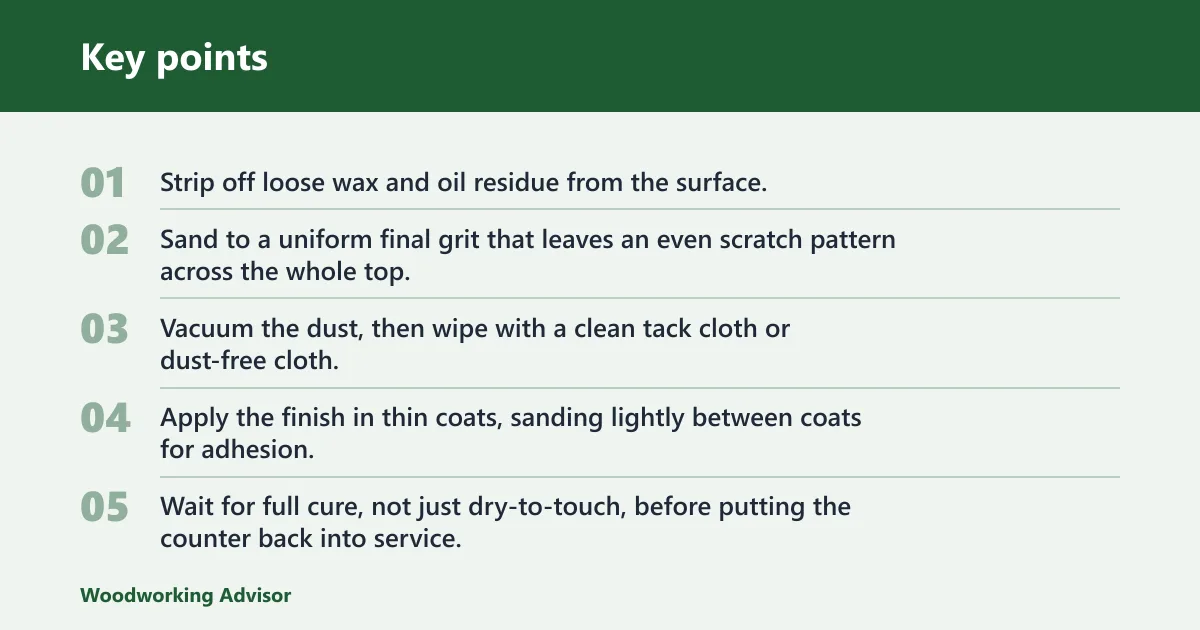
- Strip off loose wax and oil residue from the surface.
- Sand to a uniform final grit that leaves an even scratch pattern across the whole top.
- Vacuum the dust, then wipe with a clean tack cloth or dust-free cloth.
- Apply the finish in thin coats, sanding lightly between coats for adhesion.
- Wait for full cure, not just dry-to-touch, before putting the counter back into service.
A common first-timer mistake is sanding only the center field and skipping the sink cutout edge. That leaves a visible change in sheen after the first coat and can create weak adhesion right where water usually lands.
Dry-to-touch versus fully cured
Dry-to-touch only means the surface no longer feels tacky. Full cure is what gives the film its real scratch and dent resistance, and that can take longer than the label’s drying window. Using the top too early can leave impression marks, especially around seams and edge grain.
This is why a fast-drying product is not automatically the best answer. A quick recoat window helps with scheduling, but full cure is what matters for the counter’s working life.
Which finish fits a sink run or prep island?
Sink runs need the most moisture resistance, while prep islands need the most wear resistance. Decorative tops need the least of both. That split is the simplest way to choose between polycrylic and polyurethane.
Sink-adjacent runs
Use polyurethane for sink-adjacent butcher block. Water-based polyurethane is the clearer, lower-odor choice; oil-based polyurethane is the tougher choice when durability matters more than ambering.
Prep-only islands
For a prep island that stays dry and sees light use, polycrylic can be acceptable if low odor and easy cleanup matter most. If the island gets heavy mixing, spilled water, or repeated wipe-downs, polyurethane is the safer film finish.
Decorative bar tops and low-wear zones
Polycrylic is the better fit when the top is mostly decorative and you want a clear, quick-drying interior finish. A bar top that sees glasses and platters is still not a good candidate for direct cutting or hot pans.
Choose Polycrylic if… / Choose Polyurethane for Butcher Block Countertops if…
Choose Polycrylic if the top is low-wear, dry, and inside the home, and if low odor or a faster recoat matters more than long-term toughness. Choose Polyurethane for Butcher Block Countertops if the surface is near a sink, gets frequent cleanup, or needs a harder film that can better handle kitchen traffic.
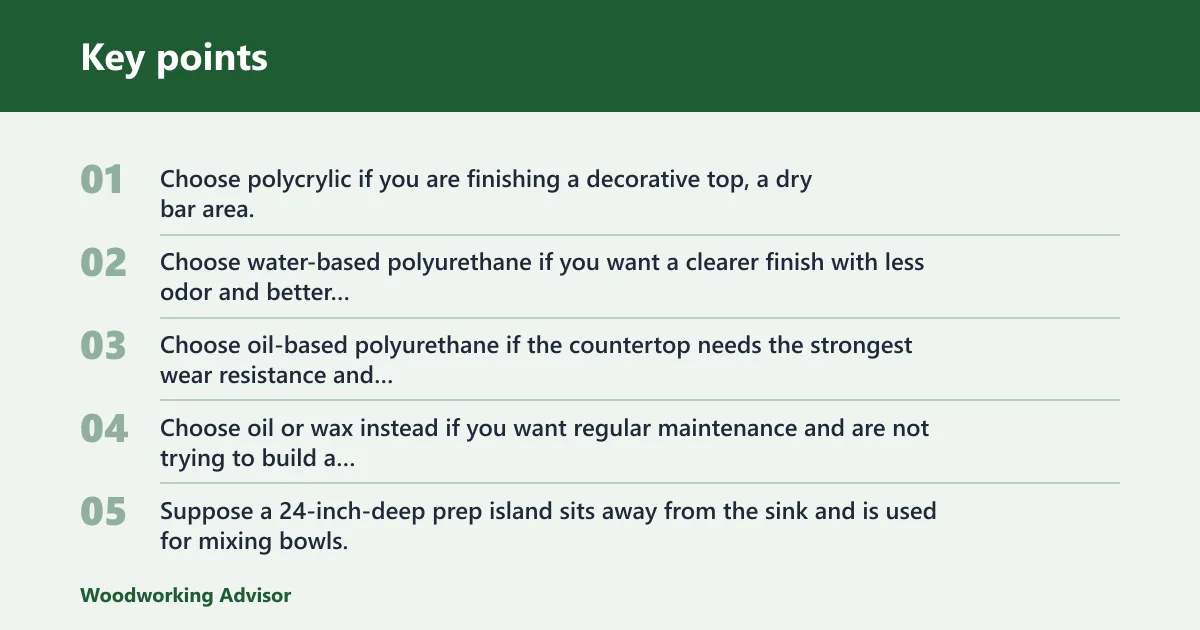
Choose polycrylic if you are finishing a decorative top, a dry bar area, or a lightly used prep zone with no standing water. Choose water-based polyurethane if you want a clearer finish with less odor and better moisture resistance. Choose oil-based polyurethane if the countertop needs the strongest wear resistance and you can accept ambering and longer dry time. Choose oil or wax instead if you want regular maintenance and are not trying to build a hard film.
Suppose a 24-inch-deep prep island sits away from the sink and is used for mixing bowls, pastry work, and serving. Water-based polyurethane fits that use better than polycrylic because cleanup resistance matters more than quick drying. If that same island is purely decorative, polycrylic can be enough.

Frequently asked questions
Should you polyurethane butcher block countertops?
Yes, if the butcher block will see water, wear, or heavy kitchen use. Polyurethane is the better protective film finish for those conditions, though you still need to sand properly and let it fully cure before normal use.
How durable is polyurethane on a kitchen countertop?
It is the more durable film finish of the two here, especially in oil-based form. Durability still depends on proper surface prep, sanding between coats, and allowing full cure before the countertop sees real kitchen use.
Can you cut food directly on a polyurethane-coated butcher block?
No. A polyurethane-coated butcher block is a film-finished countertop, not a cutting board surface. Cutting through the film can damage the coating and open a path for moisture to reach the wood below.
How do butcher block countertop care instructions affect finish choice?
If you want mineral oil or beeswax care with regular reapplication, leave the top unfinished or choose a maintenance-based surface instead of a hard film. If you want less routine upkeep and better spill resistance, choose a film finish and accept the need for future refinishing if it fails.
Sponsored / affiliate links. As an Amazon Associate I earn from qualifying purchases. I may earn additional commission from eligible campaigns.