Why Do Doors Stick in the Winter?
Wood doors stick in winter because changing moisture and temperature make the slab, frame, and hardware shift. Check where they rub first, because top-edge, latch-side, and threshold rubs point to different fixes. If you guess wrong and sand the wrong spot, you can ruin the fit, weaken the seal, or leave the door worse all season. This guide shows how to diagnose swelling, hinge sag, misalignment, and threshold problems by the rub marks before you cut or plane anything.
Understanding moisture dynamics and rub locations
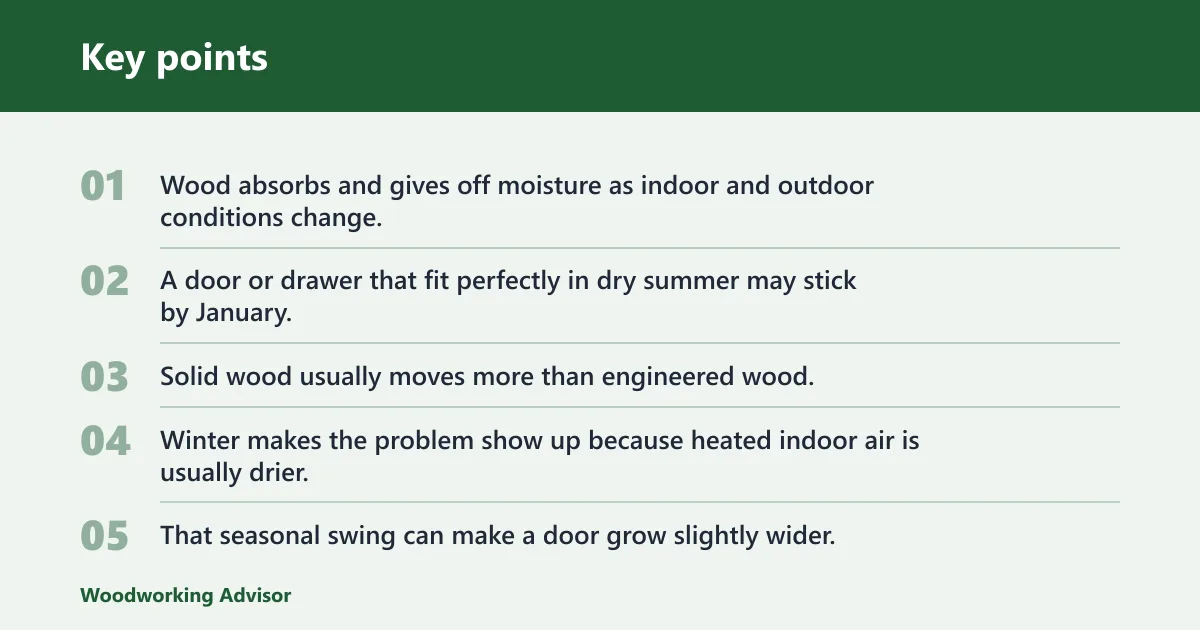


Wood absorbs and gives off moisture as indoor and outdoor conditions change. When air dries, wood shrinks. When moisture rises, it expands. A door or drawer that fit perfectly in dry summer may stick by January. Solid wood usually moves more than engineered wood, and a good finish slows moisture uptake.
Winter makes the problem show up because heated indoor air is usually drier, while damp outdoor conditions can add moisture to exposed wood. That seasonal swing can make a door grow slightly wider, or it can make the frame move enough to change the gap around the slab. A door that worked in wet November weather may still work then, because small gaps can help smooth operation.
Interior doors and exterior doors fail for different reasons. An interior door often reacts to indoor humidity changes, while an exterior door faces both indoor climate and outdoor weather exposure. Cold temperatures can also stiffen hardware, and materials can contract enough to change alignment even when the wood itself is not the only issue.
Where the door rubs, what it means, and what to try first
| rub location | most likely cause | safe DIY check | escalation trigger |
|---|---|---|---|
| top | frame shift, hinge sag, or slight slab swelling | Close the door slowly and look for a shiny scrape line across the top edge or the top corner near the latch | Top rub across most of the edge, or the gap changes after tightening hinges |
| latch side | frame out of alignment, swollen wood, or latch misalignment | Check whether the latch bolt lines up with the strike without forcing the knob | Latch must be lifted, pushed, or slammed to close |
| hinge side | loose screws, sagging hinges, or a frame that shifted with the slab | Inspect for screw heads that spin, gap changes near the hinges, or a door that drops when opened | Hinge-side rub returns after screw tightening |
| bottom or threshold | floor contact, threshold contact, sweep interference, or seasonal swelling | Look for scrape marks on the bottom edge and check the sweep clearance against the threshold | Door drags in more than one place, or the sweep already touches hard before closing |
Is it the door, the frame, or the hinges?
Start with the rub location, because the symptom often tells you which part moved. Hinge sag, frame movement, and wood swelling can look similar from a distance, but they leave different marks. A loose hinge can mimic swelling. A shifted frame can make a latch problem look like a door-size problem.
If the door drops on the latch side and the top gap narrows near the handle, hinge sag is a strong suspect. If the frame and slab both seem tight at the top or bottom, the frame may have moved along with the door. If the latch will not catch without pressure, the real issue may be alignment, not the latch hardware itself.
What hinge sag looks like
Loose screws make sticking worse. A hinge that has loosened can let the slab drop a small amount, and that small amount is often enough to create top-corner rubbing or a latch that will not meet the strike cleanly. Cold weather can make hinge parts feel stiffer too, which adds drag without changing the wood size much.
Check whether the hinge leaves sit flat and whether the screws bite firmly. If a screw spins, replace it with a longer screw of the same type so it can reach solid framing behind the jamb. Tightening is a first step, but it should not be used as a cure for swelling wood.
How frame movement changes the fit
The door frame can move with the slab, and it can go out of alignment. It may swell or contract differently than the door, which can create rubbing at the top, bottom, or latch side. That is why a door can stick even when the slab itself looks straight.
Suppose a 30-inch interior bedroom door rubs at the top latch corner every January, but the same door closes freely by late spring. That pattern points to seasonal movement, not a sudden structural failure. If the same corner binds even after hinge tightening, the frame may be shifting or the jamb may no longer be square.
When a latch problem is really an alignment problem
A latch that will not catch cleanly often points to misalignment between the strike plate and the bolt. That can happen after a frame moves, a hinge loosens, or a slab swells slightly. The latch may seem at fault, but the door path is off by just enough to prevent a smooth close.
Check the strike plate before filing anything. If the bolt hits high, low, or to one side, the better fix is usually to correct the door position first. Filing the strike can help only when the door already swings and closes in the right path.
What to try first
The safest first moves are mechanical checks, not sanding. Tighten loose hinge screws, apply the right lubricant to hinge pins, and look for obvious threshold or sweep contact. That sequence addresses the most common non-wood causes before you remove material from the door.
- Open the door and test each hinge screw for tightness.
- Listen for squeaks or grinding at the pins.
- Close the door slowly and mark the exact rub point with pencil or low-tack tape.
- Check the bottom edge, sweep, and threshold for contact.
- Recheck the fit after each change so you do not chase the wrong problem.
A lubricant can reduce hinge friction and help with creaking. Use a product meant for door hardware, not a swelling fix. If the door is binding because the wood or frame moved, lubricant may make the swing quieter but will not restore the lost clearance.
Say your hallway door squeaks and drags at the top hinge corner, then closes more easily after the hinge screws are tightened. That points to hinge sag, not swollen wood. If the same door still scrapes the bottom after the hinge work, the threshold or sweep is likely part of the problem too.
Can sanding fix a sticking door?
Sanding can help when the rub point is confirmed and the needed removal is small. It should be limited to the actual contact area, because over-sanding can create a permanent gap that may be visible all year. Use it as a seasonal clearance fix, not as a guess.
Do not sand before you check hinge tightness, hinge alignment, or threshold contact. If the latch side is rubbing because the frame shifted, sanding the opposite edge will only hide the cause. If the bottom drags because of a sweep or threshold issue, sanding the slab will not solve it.
When sanding is appropriate
Sanding is most appropriate when the rubbing is localized, the door is otherwise aligned, and the contact point is easy to confirm. The finish should come off only where the wood actually touches. A light pass is enough in many cases, especially for seasonal sticking that appears only in winter.
How much material to remove
Remove as little as possible. The goal is to restore clearance, not reshape the door. If a rub mark is narrow, start by taking off a small amount and test the fit again. If the whole edge is contacting, stop and re-evaluate the frame, hinges, or threshold.
When to stop and choose another repair
Stop sanding if the door still sticks after the rub point is corrected, if the clearance changes from month to month in a large way, or if the scrape moves to a different edge. Those signs usually mean the door is changing position, not merely swollen at one spot. At that point, planing, rehanging, or frame repair may be the better path.
Paint, finish, or another sealant slows moisture exchange on wooden doors and frames. That matters because sealed wood absorbs moisture more slowly, which can reduce seasonal size changes. A high-quality finish like oil or paint is especially useful on wooden doors and frames that see regular humidity swings.
Keep indoor humidity from swinging too far. Ventilation helps balance indoor moisture and can reduce extreme changes that make doors bind in winter. Steady indoor temperatures also help, because large temperature changes can alter how materials and hardware behave from one day to the next.
Watch for recurring seasonal gaps and the same rub marks returning each year. Gaps that help the door move smoothly during damp November weather may shrink later, then come back again the next season. That cycle is a sign to inspect the finish, hardware, and frame before winter arrives.
When to call a pro
Call a pro when the sticking is year-round, when the door suddenly worsens, or when the problem affects more than one edge at once. Those signs can point to a larger alignment issue, framing movement, or threshold work that goes beyond a simple seasonal fix. If the door keeps binding after hinge tightening and a careful rub-point check, a bigger repair is likely.
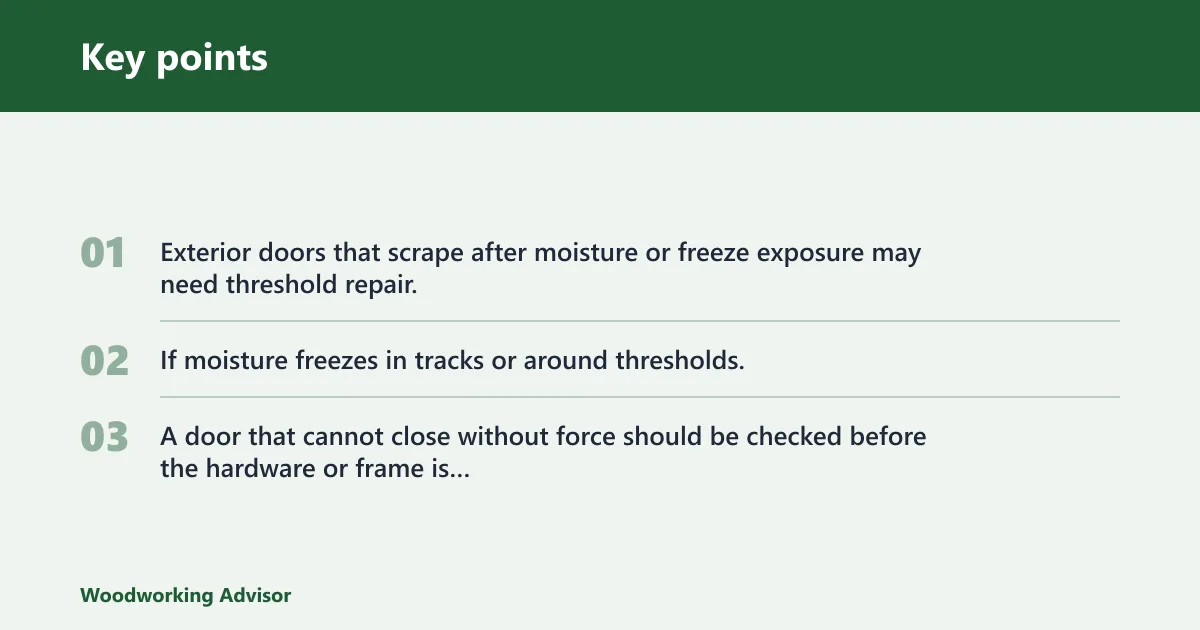
Exterior doors that scrape after moisture or freeze exposure may need threshold repair, weatherstripping changes, or frame adjustments. If moisture freezes in tracks or around thresholds, the problem is no longer just about wood movement. A door that cannot close without force should be checked before the hardware or frame is damaged further.
Frequently asked questions
Why do doors stick in the winter?
Doors stick in winter because moisture and temperature changes alter the size and position of wood, frames, and hardware. Winter heating can dry indoor air, while damp outdoor conditions can add moisture to exposed parts. That can make a door swell, shift, or rub at the top, latch side, or bottom.
Why do my doors stick in the winter?
If more than one door sticks, the cause is often seasonal humidity change inside the home. Check whether the same side rubs on each door. If the issue is mostly hinge-side or latch-side, looseness or misalignment is more likely than swelling alone.
Why do interior doors stick in the winter?
Interior doors usually stick because indoor air dries out during heating season, which changes wood size and can shift the fit in the jamb. The frame can move too. Interior doors often show top or latch-side rubbing first, especially when the house runs dry for long stretches.
Why does my door stick in winter?
Start with where it rubs, not with the assumption that the slab swelled. Top rub often points to hinge sag or frame shift. Bottom rub often points to the threshold, sweep, or floor contact. Latch-side rub often means the frame and strike are no longer lined up.
What quick fixes actually work without damaging the door?
Tighten loose hinge screws, apply a lubricant made for door hardware, and check for threshold contact before sanding. Those steps can solve many sticking doors without removing wood. If you must sand, limit it to the confirmed rub point and stop as soon as the door clears.
When is a sticking door a sign of a bigger problem?
It is a bigger problem when the sticking is present year-round, gets worse quickly, or moves from one edge to another after a minor fix. That pattern can mean frame movement, hinge failure, or threshold trouble. If the door needs repeated correction every winter, a deeper alignment issue is likely.
Sponsored / affiliate links. As an Amazon Associate I earn from qualifying purchases. I may earn additional commission from eligible campaigns.