Danish Oil vs Tung Oil: Which Is Better for Furniture?
For most furniture, Danish Oil is the better first choice because it dries faster, is easier to renew, and usually leaves a warmer, low-sheen surface. Choose pure Tung Oil when you want a harder-to-build natural finish and can accept longer cure times. Pick the wrong one, and you may buy extra coats, wait longer between them, or end up with a finish that is hard to spot-repair. This guide compares Danish Oil and Tung Oil on repairability, appearance, and real maintenance cost so you can choose the right finish for your furniture.
| Factor | Danish Oil | Tung Oil | Winner |
|---|---|---|---|
| Drying and recoat speed | Usually faster because brand formulas often include polymerized linseed oil or tung oil plus solvents and driers. | Slower; pure tung oil is known for a longer drying period and may take three days or more to dry. | Danish Oil |
| Water resistance | Moderate protection; good for normal indoor furniture, but brand formulas vary. | Higher moisture resistance in pure form; suited to furniture that sees spills, humidity, or frequent wipe-downs. | Tung Oil |
| Spot repair and maintenance cost | Easier to refresh in small areas and often needs less fuss for future upkeep. | Also repairable, but the slower cure and more careful application can raise the maintenance burden. | Danish Oil |
| Appearance change | Usually a satin or mid-sheen look with noticeable grain pop. | More natural, often lower sheen; can deepen color without the same built-in luster. | Danish Oil |
| Best fit for high-touch furniture | Good for cabinets, decorative pieces, and many indoor tables when regular renewal is acceptable. | Better when you want moisture resistance first and can wait longer before full use. | Tung Oil |
What is the difference between Danish oil and tung oil?
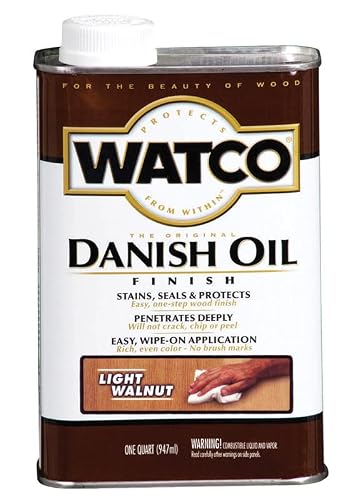
Danish Oil is a blended finish, and its formula varies by brand; sources commonly describe it as made with polymerized linseed oil or tung oil, plus solvents and drying agents. Tung Oil is a penetrating finish made from tung tree seeds, and pure tung oil cures more slowly but resists water well.
Pure tung oil and how it cures
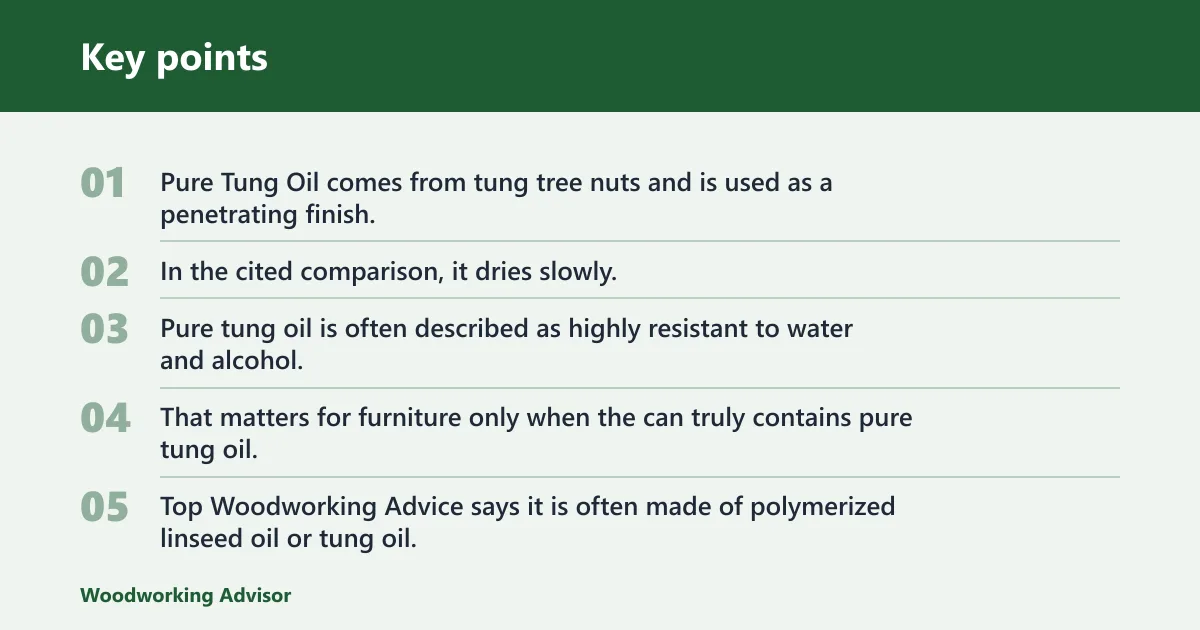
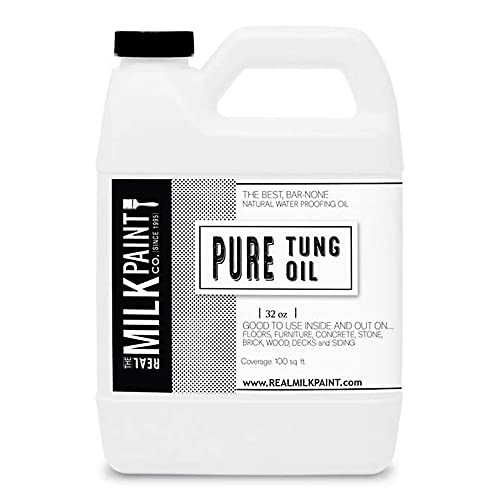
Pure Tung Oil comes from tung tree nuts and is used as a penetrating finish. In the cited comparison, it dries slowly, and that slow cure is part of why it is valued for moisture resistance and a more natural-looking surface.
Pure tung oil is often described as highly resistant to water and alcohol, and as food-safe and non-toxic when used in pure form. That matters for furniture only when the can truly contains pure tung oil, not a blend with added solvents or resins.
How Danish oil blends vary by brand
Danish Oil is not one fixed formula. Top Woodworking Advice says it is often made of polymerized linseed oil or tung oil, and Johnstone’s Trade says its Danish oil contains tung oil and is suitable for interior and exterior application.
That variation is why you should read the label, not the category name. Some versions behave more like a wiping oil with added drying help, while others lean toward a harder-drying finish with a mid-sheen look.
Where teak oil fits, and where it does not
Teak oil is a different blend, and it should not be treated as a direct synonym for Danish Oil or Tung Oil. Homedit says teak oil is made with tung oil and linseed oil, can dry in less than ten hours, and can give wood a warm and radiant glow.
That faster dry time does not make it the same as Tung Oil. It also means teak oil can include additives or solvents that change drying, odor, and appearance, so it belongs in its own bucket when you are choosing a furniture finish.
How long do they take to dry and cure?
Danish Oil usually gives you a shorter wait between coats, while Tung Oil asks for more patience before full use. In practical terms, drying time affects how long furniture sits untouched, how soon you can recoat, and whether the surface is ready for handling or still soft underneath.
Recoat timing versus full cure
The same source says teak oil can dry in less than ten hours, and the same source says Tung Oil may take three days or more to dry. For pure tung oil, that longer cure is normal, especially if the coat is applied too heavily.
Many Danish Oil products are designed for faster recoating, because the blend includes drying components. The exact timing still depends on the can, so treat the label as the final word and not the product family name.
Why temperature and humidity matter
Both finishes slow down in cool, damp air and move faster in warm, dry rooms. Higher humidity stretches cure time, and that matters more with Tung Oil because a slow-drying coat that is applied thickly can stay tacky far longer than expected.
Ventilation also matters. Fresh air helps solvents leave the film, but rushing the process with heat can make the top skin dry before the coat underneath has cured.
How many coats each finish usually needs
Pure Tung Oil often needs multiple thin coats, and the first coat can be cut 1 to 1 with thinner, according to RMP Finishes. Danish Oil also builds gradually, but many projects reach a usable look with fewer coats than a pure tung oil schedule.
Say your dining table needs a weekend refresh before guests arrive. Danish Oil is the safer bet because you can usually recoat sooner and get the surface into service faster, while pure Tung Oil may still be curing when the table should already be in use.
Which finish protects furniture better?

Tung Oil wins for moisture resistance, while Danish Oil wins for easier upkeep and faster renewal. For furniture, “better protection” is not one score; it depends on spill exposure, handling wear, and how often you want to refresh the finish without stripping the whole piece.
Water resistance and moisture protection
Pure Tung Oil is the stronger choice when water resistance matters most. It is often described as highly resistant to water and alcohol, which makes it a useful fit for furniture that may see spills, damp glass rings, or humid rooms.
Danish Oil still gives useful moisture protection, but the finish varies by brand and is not always built for the same level of water resistance as pure tung oil. That difference matters on tabletops, nursery furniture, and pieces near windows or radiators.
Appearance, color shift, and grain pop
Danish Oil usually leaves wood with a satin or mid-sheen look, and Johnstone’s Trade describes its finish as mid sheen. It also tends to boost grain contrast, so many furniture makers like it for a warmer, more finished appearance.
Tung oil usually keeps the surface looking more natural and lower sheen. It still deepens grain, but the visual change is often subtler than with a typical Danish Oil blend. On porous wood, either finish can darken the surface somewhat, so test on a hidden area first.
Wear, spot repair, and maintenance cost
Danish Oil is easier to touch up. If a chair arm gets scuffed or a cabinet edge goes dull, you can usually refresh that area without a full strip-and-refinish cycle, which lowers the real maintenance cost over time.
Tung Oil can also be repaired, but the slower cure and heavier reliance on thin coats make it less convenient for frequent spot fixes. Picture a kitchen table with one water ring near the center and normal wear everywhere else; a simpler, faster-to-renew finish usually wins that job.
Furniture finish decision matrix

| Criterion | Danish Oil | Tung Oil | Recommended for |
|---|---|---|---|
| Appearance change | Satin to mid sheen; stronger grain pop | Lower sheen; more natural look | Decorative pieces: Danish Oil |
| Dry time | Usually faster | Slower; may take three days or more to dry | Fast turnaround builds: Danish Oil |
| Water resistance | Moderate, formula-dependent | Stronger in pure form | Spill-prone tops: Tung Oil |
| Spot repair | Easy to renew locally | Possible, but slower and more careful | High-touch furniture: Danish Oil |
| Beginner-friendliness | More forgiving on schedule | More forgiving only if you accept long cure time | First oil finish: Danish Oil |
| Smell and VOC concern | Depends on solvents in the can | Pure tung oil has a simpler profile | Low-additive preference: Tung Oil |
| Indoor furniture suitability | Strong choice for most indoor pieces | Strong choice where moisture resistance matters most | General indoor use: Danish Oil |
| Recoat frequency | Often easier to refresh on a schedule | Less frequent when fully cured, but slower to build | Maintenance-light look: Tung Oil |
| Dining tables | Good if you want quick renewal and a warmer look | Better if spill resistance matters more than speed | Depends on use; slight edge to Tung Oil |
| Chairs | Good for arms, rails, and fast touch-ups | Good if you want a more natural finish | Danish Oil |
| Cabinets | Often the easiest maintenance choice | Good where moisture and handling are moderate | Danish Oil |
| Decorative pieces | More visual pop | More muted, natural look | Danish Oil |
Dining tables and high-touch surfaces
For dining tables, the choice hinges on spill protection versus upkeep. Tung Oil is the stronger pick if the table sees water rings, wet glasses, or frequent wiping, but Danish Oil is easier to renew when the top starts looking tired.
That trade-off matters because a table usually needs both appearance and serviceability. If you want a faster project and expect to spot-repair the finish later, Danish Oil is often the more practical choice.
Chairs, cabinets, and decorative pieces
Chairs and cabinets usually favor Danish Oil because these pieces get scuffs, hand contact, and occasional touch-ups. The finish is easy to renew in small areas, and the mid-sheen look suits many indoor furniture styles.
Decorative pieces are another good fit. If the goal is grain pop with a clean, finished look and maintenance is occasional, Danish Oil is the simpler choice.
Pine, hardwoods, and oily species
Can I use Danish oil on pine furniture? Yes, but pine can go blotchy, so test first and sand evenly before the first coat. Softwoods often soak finish unevenly, which can make one board look darker than the next.
Hardwoods usually behave more predictably, and RMP Finishes notes that pure tung oil can be used on hardwood floors and wood countertops. Oily species need extra caution because excess oil can sit on the surface and stay tacky if the wood already has natural oils or residue.
When a later topcoat or wax may matter
Topcoat compatibility is a real limit. If you want wax, varnish, or polyurethane later, do not assume every oil finish accepts it without preparation; an oily surface can block adhesion or cause weak bonding.
That warning matters especially if the piece may need a harder film finish later. Choose the oil with the future finish in mind, and plan for full cure before any topcoat decision.
Choose Danish Oil if… / Choose Tung Oil if…
Choose Danish Oil if you want a faster project, easier spot repair, a satin or mid-sheen look, or a finish for cabinets, chairs, and most decorative indoor furniture. Choose Tung Oil if you want stronger water resistance, a more natural low-sheen appearance, or a finish for a table that will see regular moisture and a slower cure is acceptable.
- Choose Danish Oil if: you want a simpler maintenance cycle; you are finishing pine or another softwood after careful sanding; you expect future touch-ups; or the piece will stay indoors and see normal wear.
- Choose Tung Oil if: you want pure-oil moisture resistance; you can wait longer between coats; the furniture may face spills or humidity; or you prefer a less glossy, more natural surface.
Suppose you are finishing a 48-inch dining table for a small apartment. If you need it ready quickly and plan to refresh the top every so often, Danish Oil fits better. If the table will see frequent drink spills and you can live with a longer cure, Tung Oil is the stronger protection choice.
How do you apply each oil on furniture?
Application is similar for both finishes: clean, sand, wipe on thin coats, and remove all excess oil. The main difference is patience. Tung Oil needs more time to cure between coats, while Danish Oil usually moves faster through the schedule.
Surface preparation before the first coat
Start with clean wood. Remove dust, grease, and old wax, then sand to an even surface so the oil does not telegraph scratches or patchy spots through the finish.
If the piece already has a previous finish, strip or fully remove it where needed. Oil finishes do not reliably sit on top of waxy residue, and uneven prep is a common cause of blotches and tacky patches.
Wiping off excess oil the right way
Apply a thin coat, let the wood absorb what it will, then wipe off every wet area that remains on the surface. Leaving excess oil behind is the fastest way to get sticky spots, uneven sheen, and a slow cure.
For the first coat of pure tung oil, a common approach is to cut it 1 to 1 with thinner, then apply thinly. Follow the label for later coats, and do not rush recoats before the previous layer has cured enough to accept them.
Drying, recoating, and cleanup basics
- Sand the bare wood evenly and remove all dust.
- Apply a thin coat with a cloth or pad.
- Wait for the finish to set according to the label and the room conditions.
- Wipe away any remaining surface oil before it skins over.
- Recoat only after the previous layer is ready, not merely dry to the touch.
Cleanup is easier when you keep coats thin and dispose of oily rags safely. Rags soaked with drying oils can generate heat as they cure, so do not leave them bunched up in a trash can. (Wikipedia)
Frequently asked questions
Is Danish oil better than tung oil for furniture?
For most indoor furniture, yes. Danish Oil is usually better when you want faster drying, easier spot repair, and a warmer low-sheen look. Tung Oil is the better pick when moisture resistance matters more and you can accept a longer cure time.
Which oil is more durable on wood furniture?
Durability depends on what kind of wear you mean. Tung Oil is more resistant to water and humidity, so it protects better against moisture-related problems. Danish Oil is often more practical for handling wear because it is easier to renew and repair without a full strip.
Does Danish oil darken wood more than tung oil?
Usually, Danish Oil produces the more noticeable color shift because many formulas leave a warmer, mid-sheen look and add more visual grain pop. Tung Oil often keeps a more natural appearance, though both finishes can deepen color, especially on porous woods and test areas.
How many coats does tung oil need?
There is no single coat count that fits every brand or wood species. Pure Tung Oil often needs several thin coats, with the first coat sometimes cut 1 to 1 with thinner. The right stopping point is a uniform sheen and a surface that no longer drinks finish quickly.
How long does tung oil take to dry?
In the cited comparison, Tung Oil may take three days or more to dry, and humidity or low temperature can stretch that even further. Thin coats, good ventilation, and patience matter more with tung oil than with faster-drying blended finishes.
Sponsored / affiliate links. As an Amazon Associate I earn from qualifying purchases. I may earn additional commission from eligible campaigns.