Red Oak vs White Oak Hardwood Flooring: Which to Choose?
Choose White Oak if you want a more neutral floor, stronger odds with light or gray stain, and a slightly better moisture margin. Choose Red Oak if you want a warmer, pinker look, lower material cost, or an easier match to existing red oak flooring. The right choice affects not only appearance, but also stain results, dent resistance, and how well the new floor blends with cabinets and adjacent rooms.
In sample-board comparisons under the same finish schedule, White Oak typically stays cleaner in pale and gray tones, while Red Oak often shows a warmer cast that can read pink under light stains. That difference is why species selection matters before stain color is even chosen.
| Factor | Red Oak | White Oak | Winner |
|---|---|---|---|
| Color and grain | Pink or reddish undertones; more pronounced open grain | Tan to neutral with subdued grain | White Oak |
| Hardness | About 1,290 lbf on the Janka scale | About 1,360 lbf on the Janka scale | White Oak |
| Moisture resistance | More porous structure | Heartwood vessels often plugged with tyloses, reducing liquid permeability | White Oak |
| Stain flexibility | Can read pink in light finishes | Often preferred for lighter stain or no stain | White Oak |
| Price pressure | Usually more affordable and more widely available | Usually costs more | Red Oak |
Color, grain, and undertones
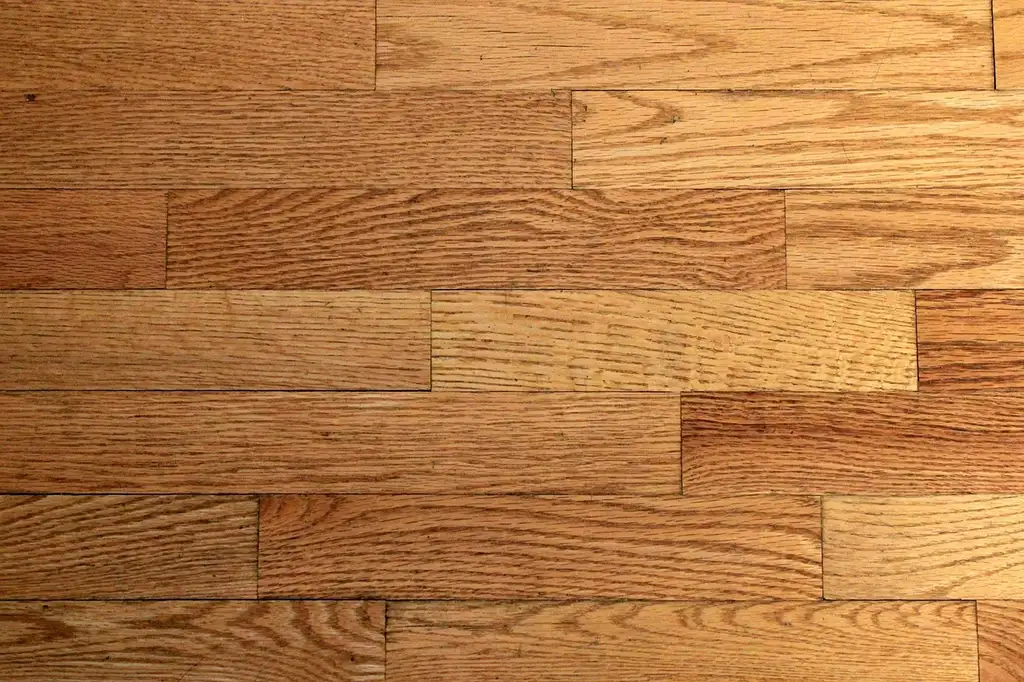
White Oak usually reads tan with beige or grayish undertones, while Red Oak tends to show pink or reddish notes and a more open grain. That difference matters more than many buyers expect, because finish color can reveal the species instead of hiding it.
Species alone does not set the final look. Board grade, cut, width, and finish sheen can shift the result as much as the label on the bundle.
Why the grain changes the room
Red Oak’s open grain gives it more visible movement on the floor, which works well in traditional spaces and rooms where you want the wood pattern to stand out. White Oak’s tighter, straighter grain reads quieter, so the floor often feels calmer under pale cabinets and low-contrast trim.
Quarter-sawn boards and visual stability
Quarter-sawn oak applies to both species. It can improve stability and may show medullary ray fleck, which is a visible pattern some homeowners want and others do not. If you want a more controlled look, ask to see sample boards in the same cut, not just the same species.
Red Oak vs White Oak table
White Oak is a bit harder than Red Oak on the Janka scale, and it usually handles liquid exposure a little better because tyloses reduce permeability in the wood’s vessels. Red Oak often wins on price and availability, but the final project cost also depends on grade, plank width, finish system, and installation complexity.

| Criterion | Red Oak | White Oak | Winner |
|---|---|---|---|
| Janka hardness | About 1,290 lbf | About 1,360 lbf | White Oak |
| Liquid permeability | More porous | Lower permeability from tyloses | White Oak |
| Material cost | $3 to $11 per square foot | $4 to $12 per square foot | Red Oak |
| Availability | More widely available | Less widely available in some markets | Red Oak |
What the Janka scale does and does not tell you
The Janka hardness scale measures the force needed to embed a steel ball halfway into wood. It helps compare dent resistance, but it does not predict everything about a floor’s life, because finish choice, grit, and traffic all affect wear. Industry references commonly place Red Oak at about 1,290 lbf and White Oak at about 1,360 lbf, a difference of roughly 70 lbf.
The roughly 70 lbf gap between these two species is real, but it is modest. You should not expect it to turn one floor into a soft surface and the other into a tank.
Why moisture resistance is still limited
White Oak’s tyloses reduce liquid permeability, which is why it has a long history in barrels and moisture comparisons. The anatomy behind that advantage is well documented: White Oak heartwood vessels are often blocked by tyloses, while Red Oak vessels are typically open, which makes Red Oak more permeable to liquids. That makes White Oak the better oak choice for spill-prone rooms, but neither species is waterproof. Prompt cleanup still matters.
Which oak flooring fits your room?

For kitchens, entryways, and other spill-prone spaces, White Oak usually makes the safer visual and practical choice. For living rooms and bedrooms where the goal is warmth and budget control, Red Oak can be the better fit, especially if you want the floor to coordinate with existing red oak elsewhere.
Kitchens, entryways, and other spill-prone spaces
Choose White Oak when you want a calmer look with a little more resistance to liquid intrusion. It is still wood, so a dropped water bowl or tracked-in slush needs quick cleanup, but the species gives you a better margin than Red Oak.
Living rooms, bedrooms, and higher-sun areas
In sunlit rooms, the choice often comes down to how the floor will age visually. White Oak stays more neutral under changing light, while Red Oak can warm up and read more pink over time, especially under pale finishes.
Suppose you are replacing 300 square feet of flooring in a family room with large south-facing windows. A light finish that looks clean on a sample board in the store may turn warmer at home, so test both species in that actual light before you buy.
Existing-floor matching in remodels
When the project involves an adjacent hall or a nearby room with existing oak, the bigger question is whether the new floor must blend with what is already there. If the old floor is Red Oak, matching it is usually easier with Red Oak than trying to force White Oak into the same visual family.
A common first-timer mistake is chasing a “fresh” white-oak look in one room while the connected rooms remain red oak. The result is often a mismatch that appears accidental rather than intentional.
White oak flooring and red oak flooring decisions
Light, neutral, and gray stain goals usually point to White Oak. Warm traditional finishes often point to Red Oak, especially if you want the grain to read clearly and the color to feel familiar rather than washed down.
Light, neutral, and gray stain goals
White Oak accepts light stain and gray stain more cleanly, so it is often preferred for a pale, natural, or softly gray floor. Red Oak can hold pink undertones in light finishes, which can make a gray stain look warmer than planned.
Picture a kitchen with white shaker cabinets and a pale countertop. If the homeowner wants a low-contrast floor, White Oak usually gives you the cleaner starting point and fewer surprises after finish application.
Warm traditional finishes
Red Oak still makes sense when the room calls for warmth. Its reddish undertone and more visible grain work well with traditional trim, classic cabinetry, and darker stains that intentionally lean warm.
Can red oak be made to look like white oak?
Not reliably. Red Oak can be toned down, but light or gray finishes can fail because the species often keeps a pink cast, especially in the wrong light. If the room demands a true White Oak look, starting with White Oak is the safer path.
Which oak is harder and more durable?
White Oak is slightly harder than Red Oak, but that difference is only part of the durability story. The grain structure, finish system, traffic pattern, and whether the floor is solid or engineered all affect how dents and wear show up.
Pet dents, chair legs, and everyday wear
For pets and kids, White Oak gets a small edge because of its higher Janka rating and tighter grain. That said, chair leg pads, entry mats, and regular cleanup matter more than a modest hardness gap.
Why grain and finish still matter
Open grain can make wear marks, filler, and touch-ups more visible. A matte or low-sheen finish often hides everyday scuffs better than a glossy one, regardless of species.
Oak flooring moisture and stain tests
White Oak’s tyloses make it less permeable, so it usually handles moisture and pale finishes better than Red Oak. In side-by-side sample-board comparisons, light stain often settles into Red Oak’s open grain with a warmer cast, while White Oak tends to keep the finish color cleaner and more neutral. Red Oak can still work in many rooms, but its pink undertones can show through light stain, which is why sample boards matter so much.
Why sample boards are worth reviewing in your actual light
Always check sample boards in the room, not under store lighting. North light, warm bulbs, and bright afternoon sun can each change how a stain reads, and the same board can look different beside white cabinets than beside walnut trim. A flooring installer’s practical rule is simple: if the board looks right in the room at three times of day, it is far less likely to disappoint after installation.
Finish system matters too
The finish can deepen color, mute grain, or sharpen contrast. If you want a pale floor, test the exact stain and topcoat combination on both species before ordering the full job. Even when the stain formula is identical, White Oak and Red Oak often finish as different species rather than different shades of the same wood.
Solid vs engineered oak flooring
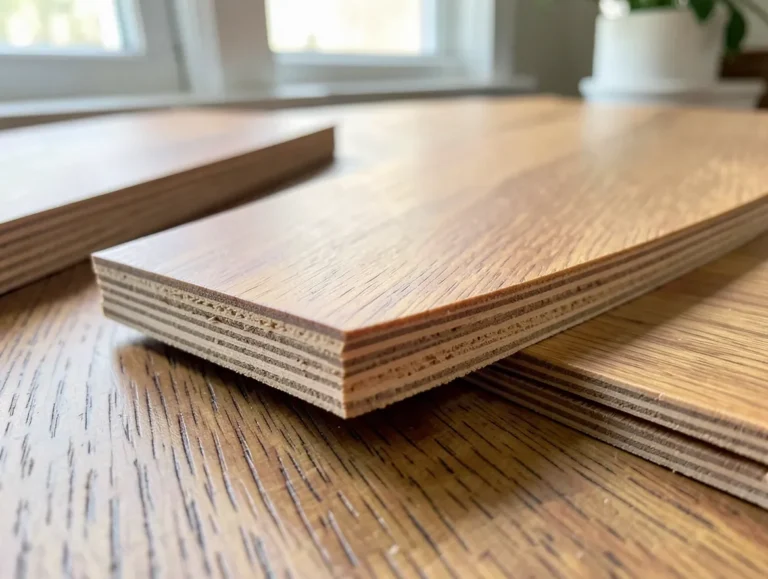
Solid hardwood is the better choice when you want a floor that can be refinished multiple times and the installation sits above grade. Engineered hardwood offers better dimensional stability, which makes it a safer pick for basements and other moisture-prone spaces.
Where solid hardwood makes sense
Choose solid oak when the subfloor and room conditions are suited to it and future sanding matters to you. Solid boards move more with humidity than engineered boards, so they are best used where seasonal moisture swings are controlled.
Where engineered hardwood is the safer call
Engineered oak is often the better choice below grade or where moisture exposure is higher. Some products have thick wear layers, which can still allow future refinishing, but the number of refinishes depends on that wear layer and the product build.
How thickness and wear layer affect future refinishing
If you may want to change color later, ask for the wear layer thickness and the manufacturer’s refinishing guidance. A thicker wear layer gives you more options, but it does not make the floor immune to sanding limits.
Buyer decision matrix
This matrix ties the species choice to the actual buying situation. The scores below use a 1-10 scale, where 10 means best fit for the scenario. The recommendation goes to the higher score unless the project’s top priority is matching existing flooring.
| Buyer scenario | Red Oak | White Oak | Recommendation | Do not choose this if… |
|---|---|---|---|---|
| Light, neutral stain | 4/10 | 10/10 | White Oak | You need a crisp gray or near-natural finish |
| Warm traditional look | 10/10 | 6/10 | Red Oak | You want a quiet, low-contrast floor |
| Existing red oak match | 10/10 | 3/10 | Red Oak | The new room must disappear into the old floor |
| Kitchen moisture | 5/10 | 9/10 | White Oak | You expect frequent spills or damp cleanup delays |
| Pet dents | 6/10 | 8/10 | White Oak | You want the better dent resistance of the two |
| Resale neutrality | 7/10 | 9/10 | White Oak | The home already leans strongly traditional |
| Budget pressure | 9/10 | 6/10 | Red Oak | Species price is the main limit, not the finish |
| Refinishing flexibility | 7/10 | 8/10 | White Oak | You plan to keep a warm red-oak palette forever |
Methodology note: White Oak wins when the scenario rewards neutral color, lower permeability, or broader design flexibility. Red Oak wins when the scenario rewards warmth, easier matching to existing floors, or lower material cost. Scores are relative to the specific buyer scenario, not a universal quality ranking.
Choose Red Oak if… / Choose White Oak if…
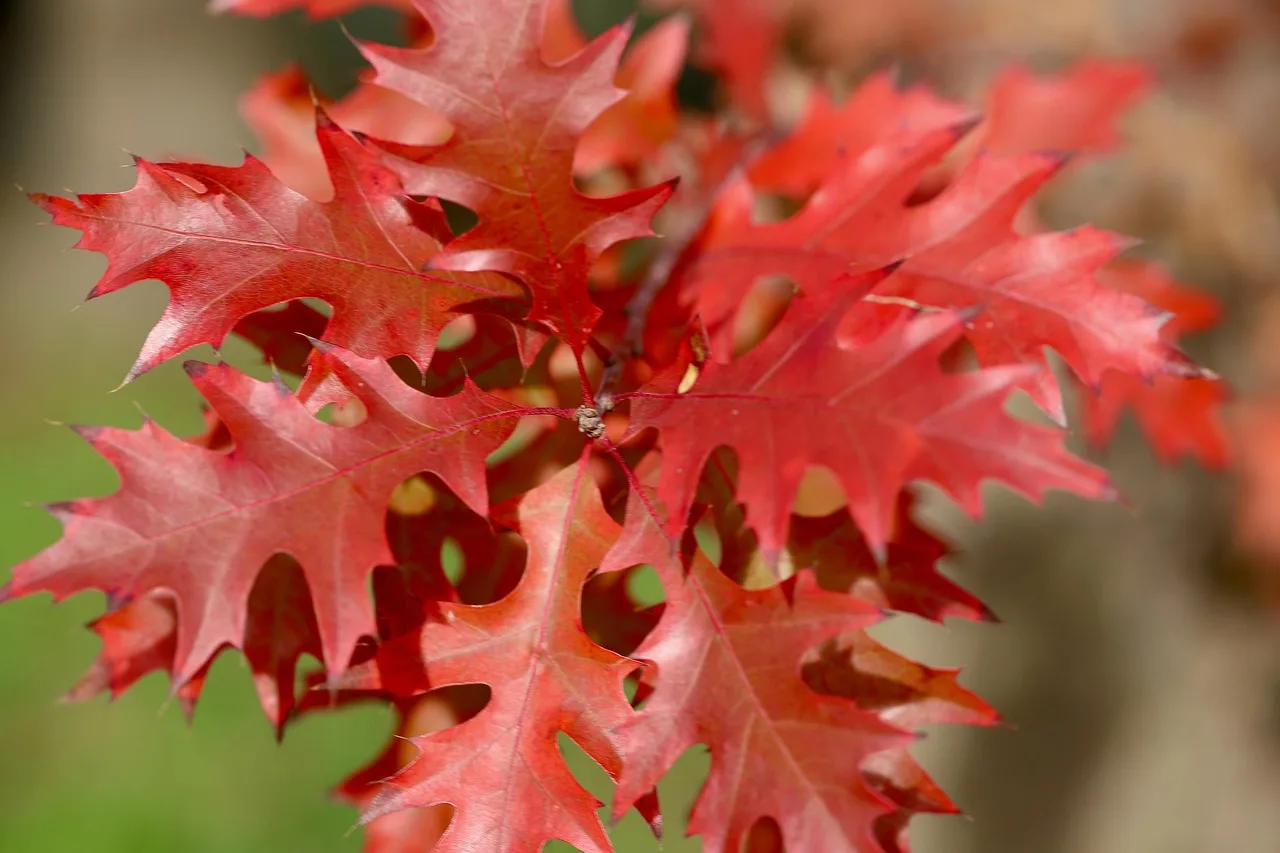
Choose Red Oak if the home already has red oak in nearby rooms, the budget is tight, or you want a warm, classic floor that accepts darker stain well. Choose White Oak if you want a lighter, more neutral finish, better odds with gray stain, slightly better dent resistance, or a safer choice for kitchens and other spill-prone areas.
Choose White Oak if the floor must feel modern without looking cold, or if you may want to shift toward pale finishes later. Choose Red Oak if the grain should stand out and the goal is to match existing oak instead of starting a new visual direction.
- Identify the room and the spill risk.
- Check whether the new floor must match an existing oak floor.
- Choose the species that fits the final color, not the unfinished board.
- Test the exact stain and topcoat on sample boards in the room.
- Confirm solid or engineered construction before ordering.


Frequently asked questions
Is white oak or red oak better for hardwood floors?
White Oak is usually the better choice if you want a more neutral look, a slight moisture advantage, and better odds with pale finishes. Red Oak is better if you want warmth, lower material cost, or easier matching to older red oak flooring in adjoining rooms.
What is the difference between red oak and white oak flooring?
White Oak usually reads tan to neutral with subdued grain, while Red Oak often shows pink or reddish undertones and a more open grain. White Oak also has tyloses in the heartwood that reduce liquid permeability, while Red Oak is more porous and usually more affordable.
Which oak flooring is harder, red oak or white oak?
White Oak is a bit harder on the Janka scale, about 1,360 lbf, versus about 1,290 lbf for Red Oak. That gap is modest, but it does give White Oak a small edge for dent resistance in family rooms, kitchens, and other high-traffic areas.
Does white oak resist water better than red oak?
Yes, White Oak usually resists liquid intrusion better because its heartwood vessels are often plugged with tyloses, which reduce permeability. It is still not waterproof, so spills need prompt cleanup. The better moisture behavior is an advantage, not a free pass.
Which wood takes light stain better, red oak or white oak?
White Oak usually takes light stain and gray stain more cleanly. Red Oak can hold pink undertones, and that can show through pale finishes in a way that surprises buyers. Always test sample boards in the actual room light before committing.
Should I choose solid or engineered red oak or white oak?
Choose solid hardwood if the floor is above grade and you want the option to refinish multiple times. Choose engineered hardwood if the space is below grade or moisture-prone. A thick wear layer can still allow refinishing, but the product specs set the limit.
Sponsored / affiliate links. As an Amazon Associate I earn from qualifying purchases. I may earn additional commission from eligible campaigns.