Are Wood Stoves Safe to Leave Unattended?
You can leave a wood stove unattended only for a short time if it is installed correctly, the fire is controlled, the door and air settings are secure, and you have working smoke and carbon monoxide alarms. If you are leaving the house, shut it down. A bad burn can spread fire, overheat nearby materials, or fill the home with smoke or carbon monoxide. This article covers the checks that make a short absence lower risk, when to let the fire die, and what to do before bed or before you leave.
Can you leave a wood stove unattended?


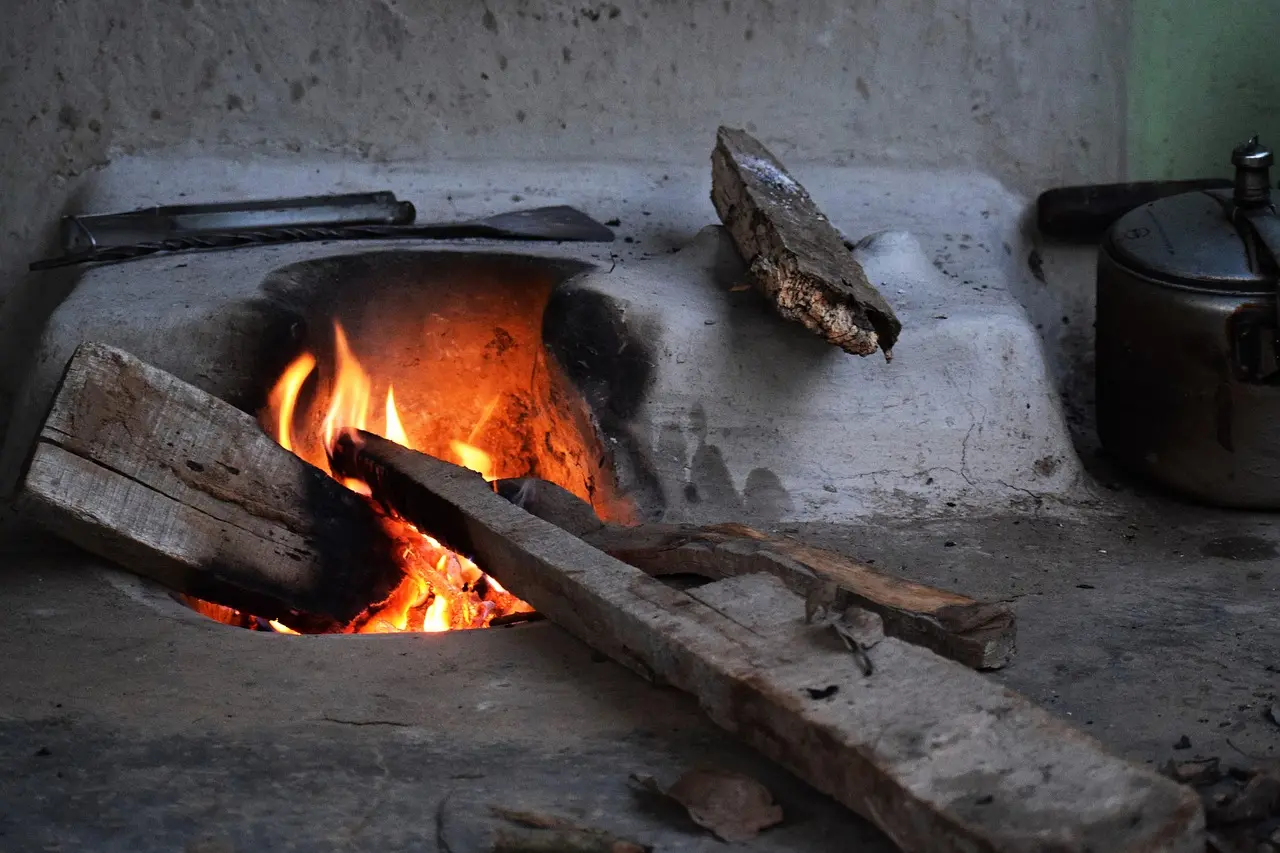
Only in a narrow sense. A wood-burning stove can sometimes be left alone for a few minutes or, with strict checks, for a short monitored absence. It should not be left burning while you leave the house, and overnight use needs more caution because the risk rises if draft, fuel load, or temperature is not controlled.
What “unattended” means in real use
For a wood stove, “unattended” can mean four different things. A few minutes away in another room is not the same as a short errand, sleeping, or leaving the home. The risk grows with time away because you lose the chance to notice smoke, a smell, a changing flame pattern, or an overheat condition.
The safest default is to shut the stove down before you leave the house. A wood stove is an enclosed firebox with air vents, a door seal or gaskets, and a chimney connection, so small changes in air supply or venting can change how it burns. A fire that looks steady can still turn unsafe quickly.
Situations that raise the risk fast
Risk rises quickly if the stove is older, the gaskets are worn, the damper is damaged, the wood is damp, or the room has children or pets. Poor draft, a smoky start, or any odor of smoke or hot metal means you should not step away and assume the burn will settle on its own.
Say your stove is running with a small flame, the air control is nearly closed, and the room feels comfortable. That may look calm, but a smoldering fire can make more creosote and raise the chance of smoke rollback or chimney fire later. A calm-looking burn is not the same as a safe one.
What goes wrong first?
The first problem is often draft loss, smoke rollback, or an overfire caused by too much air, too much fuel, or a door that does not seal well. From there, you can get excessive smoke, a hotter-than-planned stove body, more creosote in the chimney, and, in the worst case, carbon monoxide exposure.
Draft loss and smoke rollback
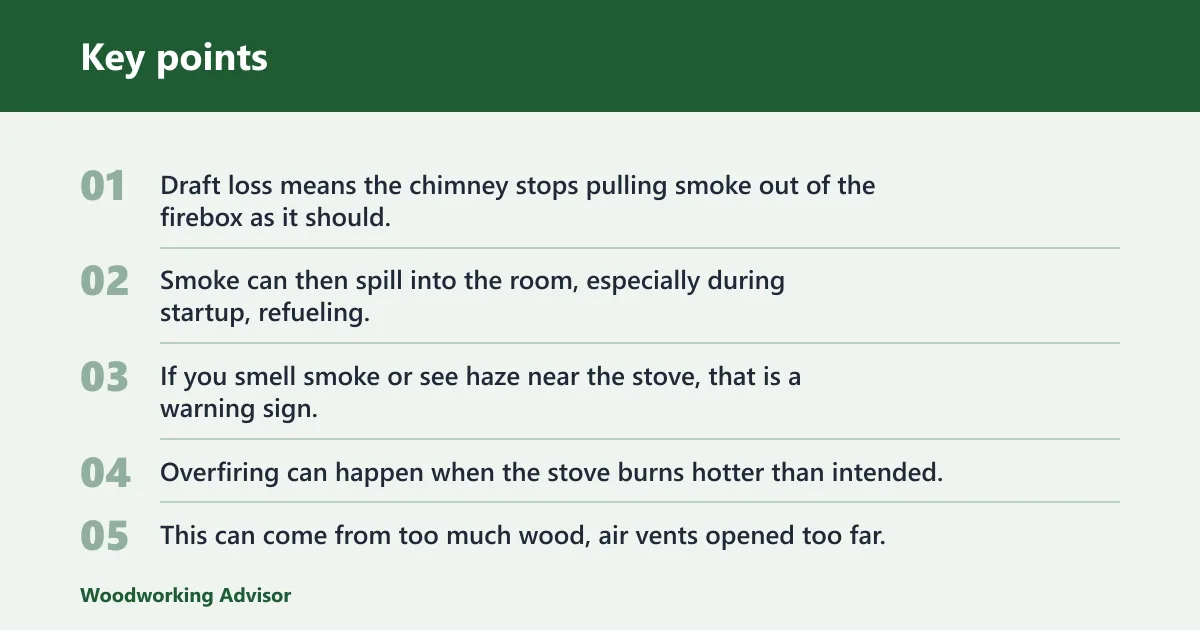
Draft loss means the chimney stops pulling smoke out of the firebox as it should. Smoke can then spill into the room, especially during startup, refueling, or windy conditions. If you smell smoke or see haze near the stove, that is a warning sign, not something to monitor casually.
Overfiring from too much air or fuel
Overfiring can happen when the stove burns hotter than intended, such as from too much wood, air vents opened too far, or a faulty gasket. This can come from too much wood, air vents opened too far, or a faulty gasket that feeds the fire more air than expected. Overheating can damage the stove, the chimney connection, and nearby combustible materials.
Creosote ignition and chimney fire
Creosote is a flammable chimney deposit that forms from incomplete combustion. It is linked to smoldering burns and increases chimney-fire risk. Creosote can catch fire very easily inside the chimney, which is why annual inspection and cleaning matter so much for unattended burn risk.
Carbon monoxide from poor combustion
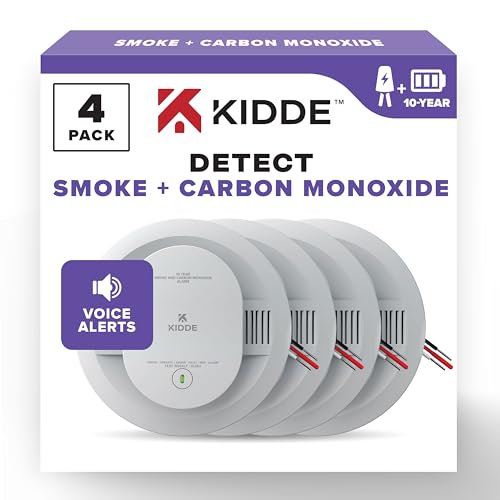
Carbon monoxide has no smell at all, so your nose gives you no warning. Poor ventilation, weak draft, wet fuel, and incomplete combustion increase the risk. A detector is commonly considered essential in a wood-heated home because it provides an early warning if the stove or chimney starts to fail.
Wood stove safety checklist
Use this checklist before any decision to stay home, step away briefly, sleep, or leave the house. If any item fails, shut the stove down or stay with it. The point is not to “set and forget” a wood fire. The point is to know when the burn is stable enough for the next few minutes only.
| Decision path | Checks to complete | Go / no-go |
|---|---|---|
| Stay home | Door latch fully seated; air control set for the intended burn; fuel load not overpacked; stove thermometer in the normal operating range; ash bed not spilling toward the door; smoke alarm and CO alarm status normal; no combustibles within the required clearance zone | Go only if all checks pass and you remain nearby |
| Short absence | Same checks as above, plus no smoke smell, no visible smoke spill, stable draft, and a controlled flame or coal bed that is not surging; confirm the stove temperature is steady, not climbing | Go only for a brief, monitored absence |
| Overnight / leave house | Door latch secure; air control reduced only to the manufacturer’s safe low setting, not fully sealed; fuel load modest; stove temperature falling or stable, not rising; ash bed contained; smoke and CO alarms active; nearby combustibles cleared; no sign of poor draft, odor, or smoke | No-go if you are leaving the house. Let it burn down first. |
How do you make it safer before you leave the house?
The safest move before leaving is a controlled shutdown. If you must step away briefly, make the stove as stable as possible first: secure the door, set the air control correctly, verify the temperature, and clear flammables away from the stove area. Do not leave with a lazy, smoky fire or a packed firebox.
Check the door latch, gasket, and air control
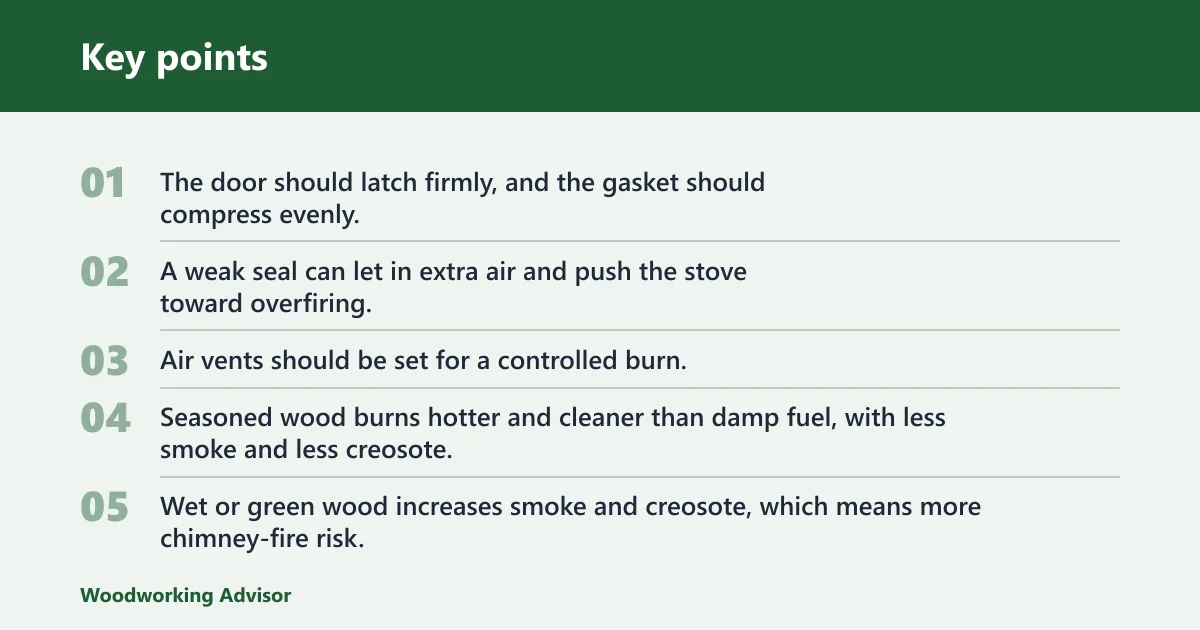
The door should latch firmly, and the gasket should compress evenly. A weak seal can let in extra air and push the stove toward overfiring, or it can create unstable combustion that sends smoke where it should not go. Air vents should be set for a controlled burn, not fully open and not fully sealed unless the stove manual allows that setting for the current stage.
Use only seasoned wood and avoid overloading
Seasoned wood burns hotter and cleaner than damp fuel, with less smoke and less creosote. Wet or green wood increases smoke and creosote, which means more chimney-fire risk. Keep the load modest. A stove packed too full is harder to control and more likely to overheat when you are not watching it.
Suppose a firebox takes split logs that fill it nearly to the top and the stove thermometer climbs past the normal range after the air is turned down. That is not a “longer burn” success. It is a sign to reduce the load next time and shut the stove down now if the temperature keeps rising.
Confirm the stove temperature is in range
A stove thermometer gives you a visible check on burn control and overheating. Place it where the manufacturer recommends, then watch for a stable reading before you step away. If the temperature is climbing fast or sitting above the normal operating range, stay with the stove and correct the burn.
Clear flammables from the stove area
Keep firewood, paper, rugs, furniture, tools, and kindling outside the clearance area required by your installation and local code. Clear space matters because overheating risk is not limited to flames touching an object. Heat can damage nearby material long before anything bursts into flame.
What maintenance lowers unattended-fire risk?
Maintenance is part of unattended-fire safety, not a separate chore. Annual chimney inspection and cleaning, blockage checks, and creosote removal reduce the chance that a normal burn turns into a chimney fire or smoke backup. Alarms and thermometers need routine checks too, because they are only useful when they work.
Annual chimney inspection and sweeping
Have the chimney inspected and cleaned every year, and sooner if the stove smokes, drafts poorly, or burns a lot of wet fuel. The inspection should check for blockage, damage, loose joints, and creosote buildup. Cleaning removes the flammable deposit before it can ignite.
Thermometer use and alarm checks
Use a stove thermometer to monitor heat, and test it against the manufacturer’s guidance if the reading seems odd. Smoke alarms should be on every level of the home, and carbon monoxide detectors should be near sleeping areas and near the stove as recommended. Test them regularly and replace batteries as required.
Carbon monoxide alarms are a legal requirement in some regions, including new combustion appliances in England since October 2022. Local rules vary, so the exact requirement depends on where you live. Even where a law is not explicit, the safety need does not change.
Does code or insurance matter?
Yes. Local building codes can govern installation rules, clearances, and chimney requirements, and those rules vary by city, county, and state. Insurance can also matter if a fire starts during careless use. A claim may be disputed if the stove was operated outside the policy conditions or against the manufacturer’s instructions.
Local clearances and installation rules
Code compliance is not a formality. The chimney connection, wall clearances, floor protection, and venting setup all affect how safely the stove works. If the installation is not right, the stove can be more prone to overheating, smoke rollback, and fire spread when left alone.
Possible insurance exclusions for careless use
Home insurance policies may include careless-use exclusions or similar language. That can create liability exposure after a fire, especially if the stove was left unattended in a way the policy or manufacturer does not allow. If you are unsure, read the policy language before relying on it as a safety net.
When should you shut the stove down?
Shut the stove down if the draft is unstable, smoke is present, the temperature is rising out of range, or the stove has older parts and worn seals. Also shut it down if children, pets, or sleeping occupants raise the risk, or if you are leaving for longer than a short monitored absence.
Older stoves and worn parts
Older stoves can still be serviceable, but worn gaskets, weak latches, damaged dampers, and tired firebricks make control less predictable. If the stove no longer responds cleanly to small air adjustments, you should treat unattended burning as a poor bet and shut it down earlier.
Children, pets, and sleeping occupants
Children and pets can change the risk by moving near the stove, opening doors, or blocking airflow around the appliance. Sleeping occupants cannot notice smoke or rising heat. If people are asleep, you need the alarms, the draft, and the fire condition to be especially reliable, and even then a shutdown before bed is often the safer choice.
Longer absences
If you are leaving for a work shift, a long errand, or a whole night and the stove has not reached a fully controlled and verified state, let it burn down. A slow smolder is not a good substitute for supervision. It usually creates more smoke and more creosote, which adds risk instead of reducing it.
Frequently asked questions
Are wood stoves safe to leave unattended?
Not in a general sense. A wood stove can be left alone only for a short time if the fire is controlled, the door seals well, the air setting is stable, and alarms are working. For leaving the home, the safer choice is to shut it down and let it die out first.
Can I leave a wood stove unattended overnight?
Overnight burning is generally riskier than a monitored daytime fire because there is less chance to notice draft loss, overfiring, smoke rollback, or a CO alarm. If you cannot verify a stable burn and proper temperature, do not rely on a low-and-slow setup. Shut it down before bed.
Can you leave a wood burning stove unattended while sleeping?
Sleeping is not the same as supervision. If you are asleep, you cannot respond to smoke, odor, or a change in stove temperature. A stove with working alarms and a clean chimney is safer, but a shutdown is still the better choice when you are not awake to watch it.
Is it OK to leave a stove unattended for a few hours?
Only if “few hours” means you are still nearby, the stove is in a stable burn state, and every check passes. If you are leaving the house, the answer is no. A short monitored absence is different from a long one, and it should be treated that way.
What are the biggest risks of leaving a wood stove alone?
The biggest risks are draft loss, smoke rollback, overfiring, creosote ignition, chimney fire, and carbon monoxide buildup. Any one of those can become serious quickly. A wood stove with poor draft or a smoky burn is not safe to ignore, even if the flame looks small.
Does insurance cover a fire caused by an unattended wood stove?
Sometimes, but not always. Coverage can be affected by careless-use exclusions, installation problems, code violations, or failure to follow manufacturer instructions. If a fire starts after an unattended burn, the insurer may review whether the stove was used in a reasonable and allowed way.
What should I do instead of leaving the stove burning unattended?
Build a smaller fire, use seasoned wood, and shut the stove down before you leave. If you need heat while away, set up the home so the stove can burn out safely rather than trying to stretch the fire. A controlled shutdown is usually the better risk decision.
How can I tell if my wood stove is too hot or unsafe?
A stove is too hot if the thermometer climbs above the normal operating range, the metal glows, the room smells overheated, or the fire roars after you reduce the air. Smoke in the room, a weak draft, or a CO alarm also means the stove is not safe to leave alone.
Sponsored / affiliate links. As an Amazon Associate I earn from qualifying purchases. I may earn additional commission from eligible campaigns.