Can You Stain Wood in High Humidity?
Yes, if the wood’s moisture content is within the stain label’s limit, usually 12–15% for exterior lumber; high air humidity alone is not a deal-breaker. Staining while the wood is still too wet can cause poor penetration, blotching, slow drying, and early failure. This article gives a moisture-first checklist, explains why air humidity differs from wood moisture, and shows when stain can go on now or should wait.
Why wood moisture matters more than humidity
Yes, but only when the wood itself is dry enough and the weather window stays clear long enough for drying and early cure. Relative humidity (RH) slows evaporation, but wood moisture content matters more because stain has to move into dry fibers, not water-filled ones.
Why air humidity is not the same as wood moisture
RH measures water vapor in the air. Wood moisture content measures water inside the board. A day can feel sticky and still be workable if the lumber has dried to a stain-ready range, while a board can look dry and still hold too much internal moisture to accept stain evenly.
That difference matters most on exterior projects and small woodworking parts. Thin trim, rails, panels, and fresh replacement boards can look ready at the surface while still holding moisture in the core, which is where blotching and tackiness often begin.
When humid weather still gives you a usable window
Humid weather can still work if the forecast stays clear, the board has dried below the stain maker’s limit, and the surface is not close to dew formation. Most manufacturers recommend avoiding application above roughly 85 percent humidity, and they also recommend avoiding application when rain is expected within the next 24 to 48 hours.
Say your cedar fence boards read dry on a meter, the afternoon stays breezy, and the overnight low stays far enough above the dew point. That can be a workable day. If the same boards sit under trees and cool fast after sunset, the answer changes.
📊 Consumer Reports says wood stain prices range from $22 to $130 per gallon. Source: Wood Stain Buying Guide.
Wood stain readiness checklist
Use this checklist the same morning you plan to stain. It separates air conditions from the wood itself and gives you a go/no-go decision based on four checks, not on appearance alone.
| Check | Readiness range | Reason |
|---|---|---|
| Measured wood moisture content | Below about 15%; follow the stain label if it is stricter | Stain penetrates and cures better when the wood is dry enough inside, not just on the surface. |
| Overnight dew risk | No rain expected for 24 to 48 hours; overnight low should stay safely above the dew point | Late condensation can re-wet a surface that looked ready earlier in the day. |
| Airflow and shade assessment | Good airflow, limited deep shade, no north-facing slow-dry pocket | Moving air and sun help drying; shade and still air hold moisture longer. |
| Go or no-go verdict for same-day staining | Go only if all three checks pass; otherwise wait | One weak condition is enough to cause tacky stain, poor penetration, or early failure. |
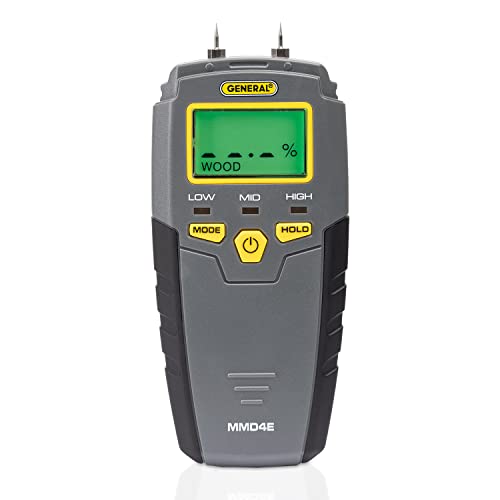
Use a moisture meter for the first check. Pin and pinless meters both work as readiness tools; pin meters probe deeper, while pinless meters are quicker for broad surface checks. A meter reading beats a dry-looking surface every time.
- Measure the board in several spots, especially ends, knots, and shaded faces.
- Check the forecast for rain, heavy dew, and the next overnight low.
- Look at where the wood sits: open sun, partial shade, or a cool north-facing side.
- Stain only if the reading is below the product limit and the weather window stays clear.
How humidity affects stain drying
High RH slows evaporation, so stain can stay tacky longer than expected. That affects both dry time and cure time. A coating that feels dry to the touch can still be soft underneath if humid air keeps solvent or water from leaving the film fast enough.
Relative humidity and slower evaporation
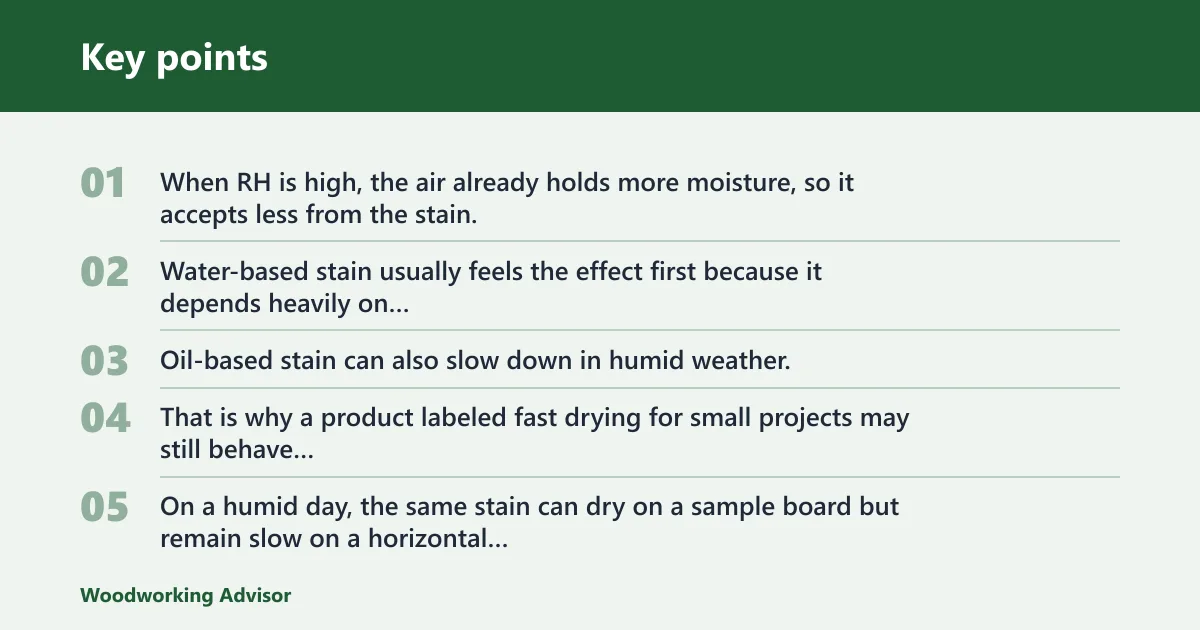
When RH is high, the air already holds more moisture, so it accepts less from the stain. Water-based stain usually feels the effect first because it depends heavily on evaporation. Oil-based stain can also slow down in humid weather, especially on dense wood or in shaded areas where air movement is weak.
That is why a product labeled fast drying for small projects may still behave differently outdoors. On a humid day, the same stain can dry on a sample board but remain slow on a horizontal rail or a board tucked near a wall.
Dew point and overnight re-wetting
Dew point is the temperature at which moisture condenses on a surface. If the board cools to that point overnight, a thin film of water can form even after a dry afternoon. That is a common failure mode on shaded, north-facing, or slow-drying boards.
Picture a pine handrail that looks dry at 4 p.m. but sits in shade after sunset. If the board cools to the dew point by midnight, the stain film may absorb moisture before it has set. The next morning, the surface can feel sticky or uneven.
Why tacky or uneven results happen
Humidity can create two problems at once: slow evaporation from the stain and moisture pickup from the air or dew. The result is often a blotchy finish on porous wood, or a sticky film on dense wood that resists even wiping. Both failures are more likely when the surface is only barely dry to begin with.
How dry should wood be before staining?
For most exterior wood projects, aim for moisture content below approximately fifteen percent before staining. That is a practical target, not a promise for every stain type or species. The label on the specific product still controls the final call, especially for pressure-treated lumber and dense hardwoods.
Why species changes the reading
Cedar, pine, and hardwoods do not behave the same way. Cedar usually dries faster and takes stain more evenly when it is in range. Pine often absorbs stain quickly and can blotch if the moisture is uneven. Hardwood boards can hold moisture longer and may need more drying time before they accept stain consistently.
Species also change how obvious the problem looks. A cedar board may show slight unevenness. A denser hardwood can hold on to surface moisture longer and stay gummy even when it appears ready from a distance.
Why a meter beats guessing from appearance
A board can feel dry, look dry, and still read too wet. Sun can dry the face while the back stays damp. Ends and knots can lag behind the rest of the board. A moisture meter catches those differences before the stain turns them into visible defects.
Most DIY failures start with a guess. A meter reduces that risk because it reads the wood itself, not the air around it.
Can you stain when it’s humid without rain?
Yes, if the next 24 to 48 hours stay dry, the wood moisture reading is in range, and the board will not cool into a dew-prone surface overnight. Humid air without rain is only part of the equation. Dew risk, shade, and airflow can matter just as much.
The 24 to 48 hour weather window
Most manufacturers recommend avoiding application when rain is expected within the next 24 to 48 hours. That window gives the coating time to set before rain or overnight moisture can disrupt the finish. If your forecast shows a late shower, the safer choice is to wait.
That caution matters for small woodworking projects too. A table top, planter box, or exterior trim piece can be ruined by a short damp spell because the surface area is small and the finish film is thin.
Morning dryness versus overnight moisture
Morning dryness does not guarantee a safe finish. A board can be dry at noon and wet again before sunrise. If the overnight low drops near the dew point, or the board sits in a cool pocket with weak airflow, the surface can re-wet before the stain finishes curing.
A common first-timer mistake is to assume the shop is dry enough just because the rain has stopped and the air feels cooler. The better rule is to check the evening low, not just the daytime humidity.
Shade, airflow, and surface temperature
Sun warms a board and helps it dry. Airflow carries away moisture. Shade slows both. North-facing walls, tree cover, and tight fence bays often dry last and re-wet first. If those spots are part of the project, they deserve the strictest moisture check.
Which stain type handles humidity best?
Solid stains usually tolerate uneven appearance better than transparent stains, but no stain type can rescue wet wood. Oil-based and water-based products also behave differently in humid weather. Choose based on exposure, substrate, and how much maintenance you can accept later.
Solid versus semi-transparent versus transparent
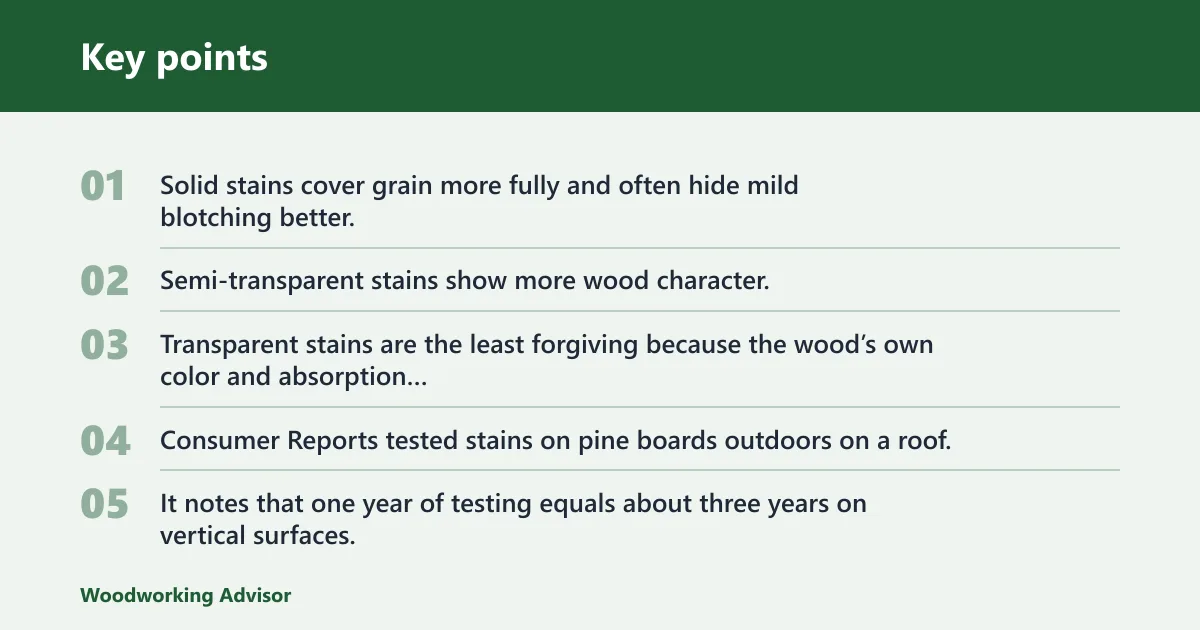
Solid stains cover grain more fully and often hide mild blotching better. Semi-transparent stains show more wood character, so moisture variation becomes more visible. Transparent stains are the least forgiving because the wood’s own color and absorption pattern show through more clearly.
Consumer Reports tested stains on pine boards outdoors on a roof, oriented south and at an angle. It notes that one year of testing equals about three years on vertical surfaces, and that its test climate includes high humidity. That kind of exposure is why product choice matters as much as weather timing.
Oil-based versus water-based drying behavior
Water-based stain usually dries faster to the touch, but it can be more sensitive to high humidity during application and early cure. Oil-based stain often penetrates well and may be more forgiving on some woods, yet it can still stay tacky longer when the air is damp or the board is cool.
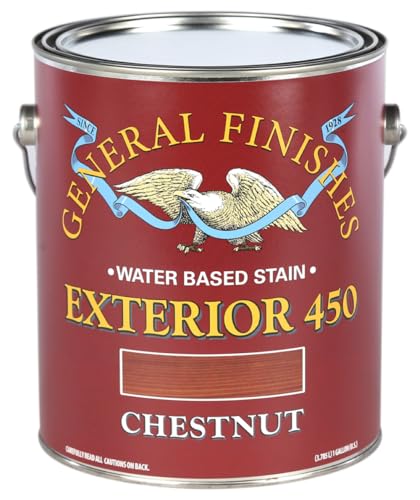
A finish is often described as fast drying for small projects, but that label does not override weather conditions or wood moisture readings. Another example product listed on a woodworking site is Ready Seal 512, which is often discussed in exterior-stain comparisons. Product labels still matter more than general reputation.
Exterior durability tradeoffs in humid climates
Durability matters more than cosmetic appearance alone. Consumer Reports says solid stains last three to five years on a deck, which is useful as a planning range, not a guarantee for every site. In humid climates, faster dry time does not automatically mean better service life. Mildew resistance, UV exposure, and water shedding all matter. (Consumerreports)
VOC regulations matter too. For exterior projects, look for products that meet local VOC rules and fit the required low-VOC limits where applicable. Lower odor is often easier on nearby occupants, and regulatory compliance matters as much as finish performance.
Frequently asked questions
Can you stain wood in high humidity?
Yes, if the wood moisture content is below the stain maker’s limit and the forecast gives you enough dry time. High humidity alone is not a stop sign. The real risks are slow drying, dew re-wetting, and a board that is still too wet inside.
Should you stain wood in high humidity?
You should stain wood in high humidity only when the project has a clear 24 to 48 hour dry window, the surface is out of the dew zone, and your meter reading is in range. If any of those checks fail, waiting is the safer choice.
Can you stain when it’s humid?
Yes, but the wood must be dry enough and the site must stay dry enough after application. Humid air slows drying, especially for water-based products, and shaded boards can re-wet overnight. A meter reading is more reliable than a dry-looking surface.
Does humidity affect staining wood?
Yes. Humidity slows evaporation, stretches dry time, and raises the chance of tacky or uneven results. It also increases the risk of overnight condensation when the board cools to the dew point. That is why airflow, shade, and evening temperatures matter so much.
What humidity is too high to stain wood?
Most manufacturers recommend avoiding application above roughly 85 percent humidity. That figure is a practical warning, not the only factor. If humidity is lower but rain is near, dew risk is high, or the board still reads above the moisture target, wait.
How dry does wood need to be before staining?
Exterior wood projects perform best when moisture levels remain below approximately fifteen percent. Some products call for a stricter limit, and some species dry faster than others. Use the stain label first, then confirm with a moisture meter before you start.
Sponsored / affiliate links. As an Amazon Associate I earn from qualifying purchases. I may earn additional commission from eligible campaigns.