Oil Based Stain Temperature Range: Minimum and Maximum Temps
Use oil-based stain only when the board temperature stays between about 50°F and 90°F, and keep it there through application plus the next 24 to 48 hours. Outside that range, stain can thicken, wipe on unevenly, and dry slowly enough to leave blotches or tacky spots. This guide gives a practical cold-weather schedule rule based on board temperature, not just air temperature, plus minimum and maximum temps.
This guide is part of our Cold Weather Wood Finishing: What Works Below 50°F series.
Practical temp rules for oil-based stain application


Most stains can be applied between 50°F and 90°F, and the ideal temperature for staining wood is between 55°F and 90°F. For oil-based stain specifically, many formulas land around that band, but product labels vary. Some premium oil-based stains can go on at temperatures as low as 35°F, while other lines call for warmer conditions.
Typical minimum application temperature
For a practical field rule, plan on a minimum board temperature of 50°F unless the specific label says otherwise. Woodrich recommends a minimum of 50°F for Timber Oil Deep Wood Stain, and DeckStainHelp says most stains require a minimum air temperature of 45 degrees F. DG Floors says oil-based stains can often go on as low as 40 to 45°F, but that lower edge is not universal.
The safe takeaway is simple. Do not use the air reading alone. Match your schedule to the actual board surface temperature and the product label, because one stain may tolerate cooler wood than another.
Typical maximum application temperature
Most guidance places the upper limit near 90°F, with some oil-based products extending to about 95°F. The same source states the maximum is around 90 to 95°F, and DeckStainHelp warns not to stain when temperatures exceed 90 degrees. That upper end matters because heat speeds solvent loss and can shorten open time before the stain is wiped even.
If the deck board is already hot to the touch, do not trust a mild air reading from your weather app. Sun on the wood can push the surface well past the forecast.
Why labels vary by brand
Formulation changes the working range. Resin type, solvent package, and intended use all affect how well the stain penetrates and how fast it flashes off. A penetrating deck stain and a specialty oil finish may not behave the same way at 45°F or at 92°F, even if both are oil-based.
Follow the product label first. Use the ranges in this guide as a planning rule, not a replacement for manufacturer instructions.
Does board temperature matter more than air temperature?
Yes. Board surface temperature matters more than air temperature because wood can sit much colder or hotter than the surrounding air. In direct sun, a board can heat well above the forecast, and in shade or on a cool substrate it can stay colder than the air. That difference changes penetration, wiping behavior, and drying speed.
How sun can change board temperature
Direct sunlight can drive the board surface far above air temperature. Folyline says an 80°F day can produce a 110 to 120°F deck surface. That is hot enough to make oil-based stain flash dry, which shortens working time and increases lap marks if you cannot keep a wet edge.
Shade can swing the other direction. A shaded board may stay cool even while the air feels mild, especially early in the day or after a cool night. That is why a surface reading gives a better decision than a weather app alone.
How to read a board surface temperature
- Measure the board with an infrared thermometer or a contact thermometer before opening the can.
- Check several boards, not just one spot, because sun and shade can differ across the same deck.
- Read the board surface where the stain will actually be applied, not the railing post or nearby concrete.
- Compare the surface reading with the product label, the overnight forecast, and the dew point.
A common first-timer mistake is to see 68°F air and start staining a south-facing deck in full sun. The board can be much hotter than that, which changes how fast the stain soaks in and how easy it is to wipe evenly.
Dew point, humidity, and overnight lows
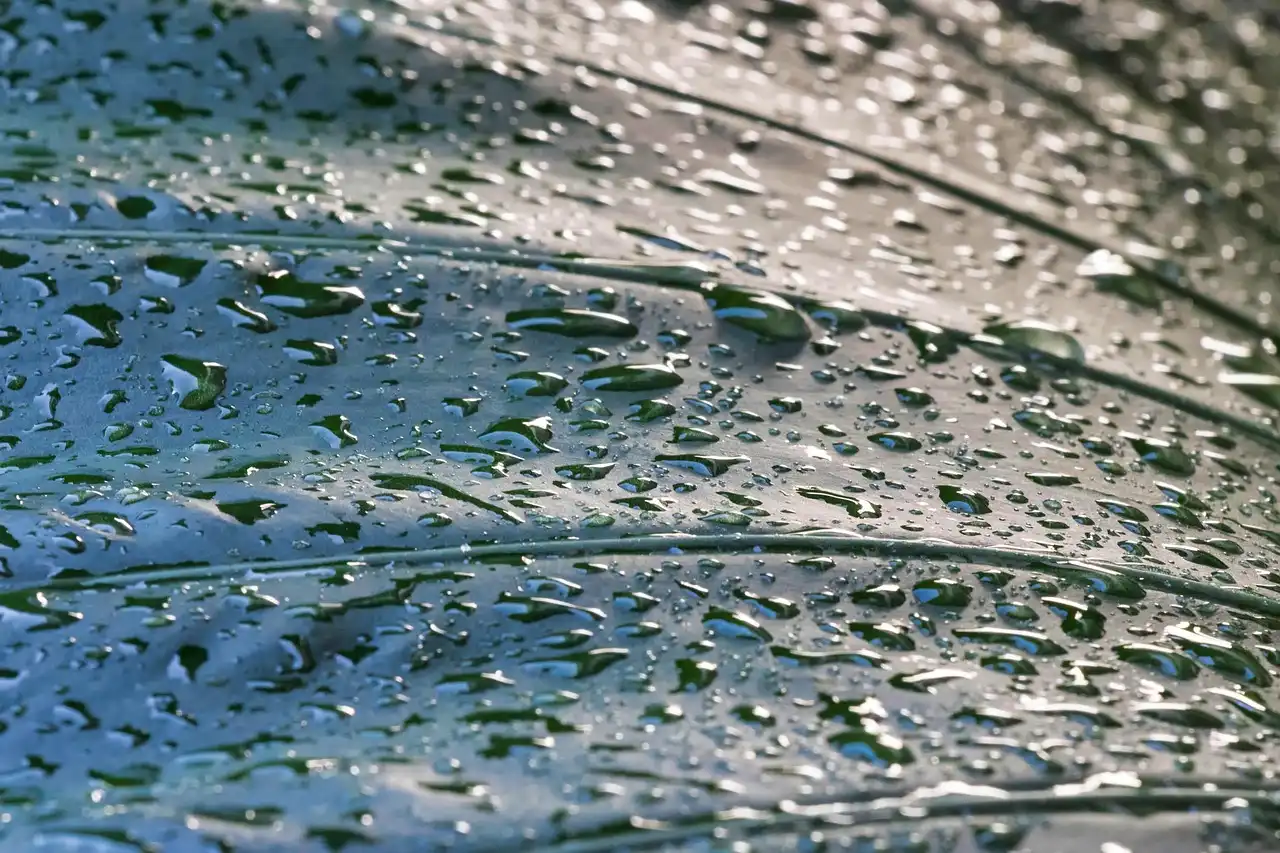
Surface moisture can stop stain from penetrating cleanly. The board should stay above the dew point during application and drying so condensation does not form on the wood. The same source says the surface should be at least 5°F above the dew point during application and drying.
Why condensation stops penetration
When wood cools to the dew point, moisture can form on the surface. That thin film blocks uniform absorption and can leave pale areas, sticky patches, or uneven color. Even if the board feels dry to the touch, condensation later in the day or before sunrise can disrupt the finish.
Humidity matters here, but dew point is the more useful check. High humidity pushes the dew point closer to the wood temperature, which raises the condensation risk. The same source says ideal relative humidity for staining is about 40 to 70 percent.
How long the stain needs mild nights
Oil-based stain should stay above freezing for 24 to 48 hours after application, and one published rule places the temperature between 45 and 95 degrees F for 8 to 12 hours after application. That is because oil-based stain cures by solvent evaporation and oxidation, and both processes slow in cold weather.
Suppose you have a warm afternoon and the deck reads 62°F. If the overnight low drops to 31°F, that warm window is not enough. The surface can cool, moisture can condense, and the stain may remain tacky far longer than expected.
Do not count on a single afternoon. Check the forecast for the next two nights, especially if one of them threatens frost or freezing. A warm day followed by a hard freeze is a poor staining schedule.
Oil-based stain decision table
This table turns the weather forecast into a go/no-go decision. Use the board surface temperature, the expected overnight low, and the dew point gap together. The drying-risk notes assume a moderate product and normal ventilation, not a specific brand.
| Scenario | Air temp | Board surface temp | Expected overnight low | Dew point gap | Recommended action | Estimated drying risk at 40°F / 50°F / 60°F / 90°F |
|---|---|---|---|---|---|---|
| Cool morning, warm afternoon, mild night | 58°F | 56°F | 48°F | 8°F | Apply after the wood warms; keep a close eye on shade shifts. | High / Moderate / Low / High flash-dry risk |
| Sunny cold day, cold night | 46°F | 53°F in sun | 29°F | 4°F | Wait; the overnight low is too cold and the dew point gap is too small. | Very high / High / Moderate / Very high if the board overheats in sun |
| Hot afternoon, hot board, dry air | 88°F | 101°F | 67°F | 20°F | Shift to shade or later in the day; do not apply on an overheated surface. | Very high / High / Moderate / Severe flash-dry risk |
| Borderline cool, stable weather | 50°F | 49°F | 45°F | 6°F | Wait or move the job to a warmer time; the board is below the practical minimum. | Very high / High / Moderate / High |
| Mild afternoon, two cold nights ahead | 64°F | 62°F | 33°F | 7°F | Wait; the temperature drop within 24 to 48 hours is the problem. | High / Moderate / Low / High if reworked in sun |
Can you stain in direct sunlight?
Yes, but only if the board stays within range and does not overheat. Direct sun can help raise a board from too cool to workable, but it can also push the surface far above the air temperature. When the wood gets too hot, oil-based stain can flash dry, lap mark, and leave uneven color.
When sun helps
Sun can help on a cool morning if the board temperature is a few degrees below your target range and the forecast remains mild for the rest of the day. In that case, the sun may bring the surface up to a usable temperature without pushing it past the product limit.
When sun causes flash drying
If the surface is already near the upper end of the label range, direct sun is a problem. The stain can dry on top before it has time to penetrate and level, which makes wiping harder and can leave overlap marks. Shade the work area or wait for a cooler part of the day.
What to do if the stain is too thick in cold weather?
If oil-based stain feels thick in cold weather, warm the product only within the manufacturer’s limits and stir it thoroughly. Do not thin it unless the label allows it. Cold solvent and resin can make the stain harder to spread, but extra thinner can change color, penetration, and drying behavior.
Warm, stir, test
Bring the can to a temperature the label permits, then stir from the bottom until the color and body are uniform. Test a small area on a board scrap or hidden section before coating the whole surface. That small check can show whether the stain still wipes cleanly.
If the stain still drags or sits on top, the board may be too cool, the humidity may be too high, or the wood may be damp from condensation. The answer is often to wait, not to force the material.
Keep your schedule simple
- Check the board temperature first.
- Compare the forecast for the next 24 to 48 hours.
- Confirm the dew point gap.
- Move the job to shade or a warmer time if the board is hot.
- Wait if nights will dip near freezing.
Frequently asked questions
What is the minimum temperature for oil based stain?
A practical minimum is 50°F for many products, though some oil-based stains can go lower and some labels call for warmer conditions. Use the specific product label first. If the board is below the stated minimum, wait for a warmer surface temperature before applying the stain.
What is the maximum temperature to apply oil based stain?
A common upper limit is 90°F, with some products stretching to 95°F. Above that, oil-based stain can flash dry before it penetrates evenly. If direct sun pushes the board over the limit, move to shade or stain later in the day.
Can I stain wood if it will get cold at night?
Only if the overnight low stays mild enough for the finish to dry and begin curing. A warm afternoon is not enough when the temperature will fall near freezing after sunset. Plan for the next 24 to 48 hours, not just the moment you start.
Does wood surface temperature matter more than air temperature?
Yes. The board surface is the number that controls penetration, wipe time, and flash drying. Wood can be much hotter or cooler than the air, especially in sun or shade. Measure the surface directly with an infrared thermometer or contact reading before you stain.
How long does oil based stain take to dry in cool weather?
Cool weather slows both touch-dry time and full cure. Oil-based stains may take 72 hours to cure completely, and low temperatures can stretch that longer. Do not treat a surface that feels dry as fully cured if the nights stay cool or humid.
What humidity is too high for staining wood?
There is no single cutoff for every product, but ideal relative humidity is about 40 to 70 percent. Higher humidity raises the dew point and slows drying, while very low humidity can make the surface dry too fast. Avoid staining when condensation is likely on the board.
Sponsored / affiliate links. As an Amazon Associate I earn from qualifying purchases. I may earn additional commission from eligible campaigns.