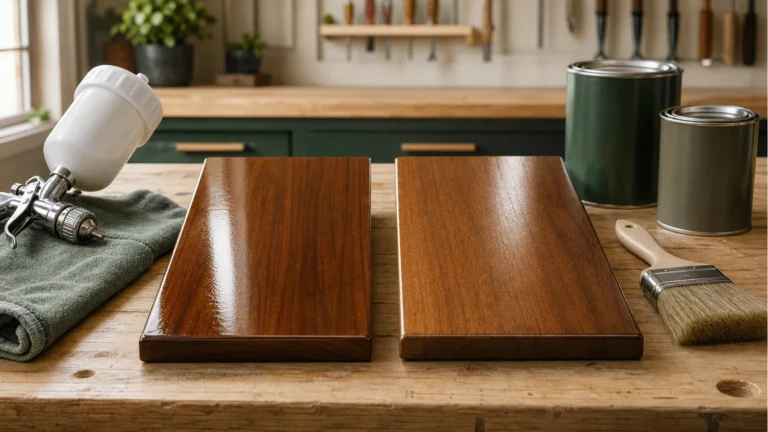
Best Grit Sandpaper for Lacquer Finishes: 7 Compared (2026)
The short version: stay at 320 grit between build coats of lacquer, and save 400-600 grit for the pass right before your final coat only. We priced seven real sandpaper products against that exact schedule and normalized every sheet to a common cost-per-standard-sheet figure — the purpose-built 3M Wetordry 320 (99421NA) comes out at $0.90 per sheet, the best value for the stage that matters most.
Lacquer behaves differently under sandpaper than paint or polyurethane does — it is a thin, fast-drying film that re-melts into itself with each new coat rather than mechanically layering. That is exactly why the grit and the stage matter more than the brand: sand too fine too early and the next coat has nothing to grip; sand too coarse too late and you cut through a film that is often no thicker than a few coats stacked together. If you have not sprayed or brushed the finish itself yet, see our guide on how to apply lacquer to wood first — everything below assumes the finish is already on and it is time to sand it.
Sandpaper for Lacquer, Compared
Every price below was pulled live from Amazon on the day this guide was last updated. The last column normalizes every sheet-format pick to a standard 9×11 in. (99 sq. in.) sheet-equivalent, so a 50-pack of quarter-size mesh sheets and a 5-pack of full sheets are actually comparable — something no price tag on its own tells you.
| Product | Grit | Material | Schedule Stage | Price | Cost / Std. Sheet* |
|---|---|---|---|---|---|
| 3M Pro Grade Precision 220/320/400 | 220 / 320 / 400 | Aluminum oxide, dry or wet | Grain-raise prep → between-coat | $16.99 (9 sheets) | $1.89 |
| 3M Wetordry 320 (99421NA) | 320 | Silicon carbide, waterproof | Between-coat scuffing | $22.58 (25 sheets) | $0.90 |
| Mirka Abranet 320 Mesh | 320 | Aluminum oxide mesh, dustless | Between-coat scuffing (vacuum-connected) | $43.59 (50 sheets) | $6.28* |
| Micro-Mesh 9-Grade Kit | 1500–12000 | Cushioned micro-abrasive cloth | Rub-out / gloss buffing, post-cure | $35.95 (9 sheets + block) | n/a** |
| Norton SandWet 800 | 800 | Aluminum oxide, waterproof | Pre-rubout leveling | $16.99 (5 sheets) | $3.40 |
| Dura-Gold 50-Sheet Assorted | 150–3000 (10 grits) | Silicon carbide, waterproof | Covers full schedule | $13.99 (50 sheets) | $0.84 |
| 3M Pro Grade Sponge 220 | 220 | Aluminum oxide foam | Contours & edges, any stage | $9.57 (2 sponges) | n/a*** |
*Normalized to a standard 9×11 in. sheet so pack size and sheet format don’t distort the comparison — see the price note under each pick for the raw, unnormalized number. **Micro-Mesh bundles nine different grits with a foam block as one kit; a single per-sheet figure would misrepresent a heterogeneous product, so it’s discussed in prose instead. ***Sanding sponges aren’t a flat-sheet format and aren’t comparable on a per-sheet basis.
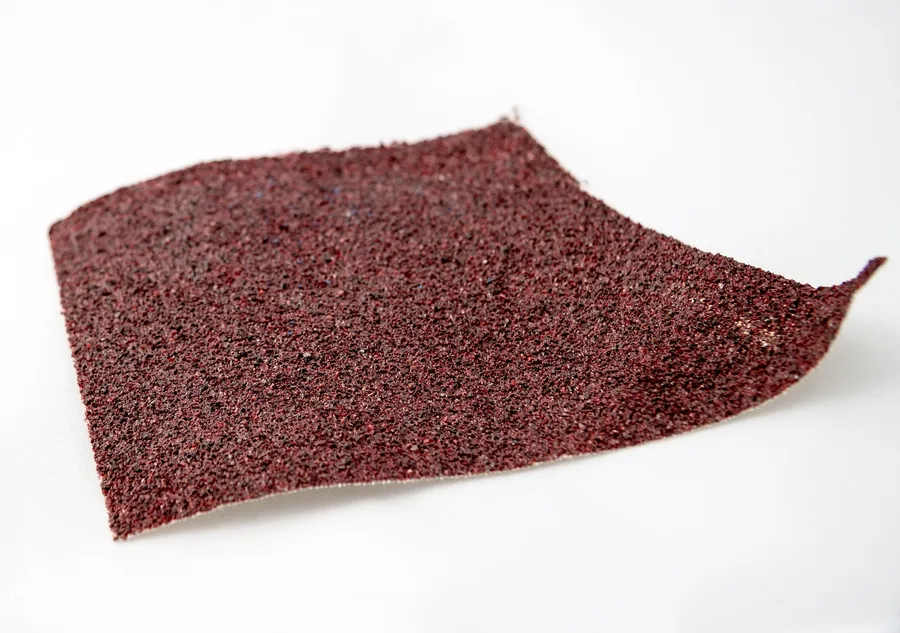
Best Grit Sandpaper for Lacquer Finishes
Seven products, each mapped to a real stage of a lacquer job — from raising the grain on bare wood through buffing a fully cured top coat to a mirror. Award labels match how woodworkers actually search for this stuff, not generic adjectives.
1. 3M Pro Grade Precision Assorted Grit Sandpaper (220/320/400) — #1 Best Overall
Price: $16.99 for 9 sheets (3 each of 220/320/400) · View on Amazon
- Grit: 220, 320, and 400 — three sheets of each, nine total
- Size: full 9×11 in. sheets
- Aluminum oxide abrasive, no-slip grip backing
- Works wet or dry
- Cost per standard sheet: $1.89
This is the one box that covers a full lacquer job start to finish without buying three separate packs. The 220 handles grain-raise prep on bare wood, the 320 covers every between-coat scuff in the schedule below, and the 400 is there for the single pre-final-coat pass where a finer grit is actually appropriate. The no-slip grip backing is a real, noticeable difference when a sheet is folded into quarters for hand sanding — it doesn’t slide against itself the way plain-backed paper does.
Where it’s bad: nine sheets total — three of each grit — doesn’t go far on anything bigger than a small project. A dresser or a tabletop can burn through the three 320-grit sheets in a single recoat pass, and you’ll be shopping for a single-grit refill before the 220s or 400s are even opened.
Main drawback: treat it as a starter/sampler pack, not a production quantity.
2. 3M Wetordry 320 Grit Sandpaper (99421NA) — Best for Wet-Sanding Between Coats
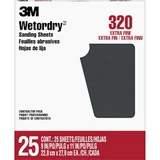
Price: $22.58 for 25 sheets, 9×11 in. · View on Amazon
- Grit: 320 (extra fine)
- Size: full 9×11 in. sheets, 25 per pack
- Silicon carbide abrasive, waterproof paper
- Marketed by 3M specifically for sanding between coats of varnish, lacquer, and paint
- Cost per standard sheet: $0.90 — the cheapest full-size sheet in this lineup
This is the one product in the lineup 3M markets by name for the exact job: the packaging itself says it’s for sanding between coats of varnish, lacquer, and paint. Silicon carbide cuts faster than aluminum oxide on a cured finish film, and running it wet keeps the film from gumming up the paper mid-sheet the way dry sanding a soft, still-curing lacquer film tends to.
Where it’s bad: it’s 320 grit only. If a project needs the pre-final-coat 400-600 step or the post-cure 800+ leveling step, this pack alone won’t get you there — pair it with the Dura-Gold assortment or the Norton pick below.
Main drawback: single-grit pack; not a complete solution on its own.
3. Mirka Abranet 320 Grit Mesh Sanding Sheets — Best for Dust-Free Scuff Sanding
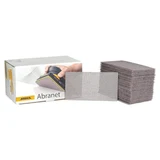
Price: $43.59 for 50 sheets, 2.75×5 in. · View on Amazon
- Grit: 320
- Mesh structure with hook-and-loop backing
- Dust pulls through the net into a vacuum instead of loading the grit
- Aluminum oxide abrasive, usable on wood, filler, paint, plastic, and metal
- Cost per sheet (actual): $0.87 · cost per standard-sheet-equivalent: $6.28
Mesh instead of solid paper means dust pulls through into a vacuum instead of loading the grit and glazing over. That’s worth real money if between-coat scuffing happens indoors in a finish room where airborne lacquer dust is a genuine hazard, not just a nuisance. The hook-and-loop backing also means it works on a hand sanding block with the matching pad, not only on a powered sander.
Where it’s bad: on a sticker-price basis it looks close to the Dura-Gold box — $43.59 for 50 sheets isn’t far from $13.99 for 50 sheets. But the Abranet sheet is about a seventh the area of a full 9×11 sheet. Normalized to a standard sheet, it actually runs about $6.28 — seven times the Wetordry sheet above. You’re paying a real premium for dust control, not getting a bargain on paper.
Main drawback: small sheet size means more sheet changes on a large panel.
4. Micro-Mesh 9-Grade Woodworkers Kit — Best for High-Gloss Buffing Prep
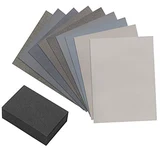
Price: $35.95 for 9 grades (1500–12000) plus a 2×3 in. foam block · View on Amazon
- Nine grades: 1500, 1800, 2400, 3200, 3600, 4000, 6000, 8000, 12000
- Cushioned micro-abrasive cloth, not conventional coated paper
- Per the kit’s own grit chart, 1500 Micro-Mesh is roughly equivalent to 400-grit conventional wet/dry paper
- Usable wet or dry; works over polyurethane, polyester, epoxy, and lacquer
- Cost per sheet (actual): $4.00 — not normalized, see note below
Nothing else in this lineup gets past 1000 grit. This is the real path to a rubbed-out, optically clear lacquer finish — the kind luthiers and high-end furniture finishers use — cycling from 1500 up through 12000 after the final coat has fully cured. Per the kit’s own instructions, sanding 1500→3600 between coats also removes orange peel and dirt nibs without cutting through the film, and the sequence from 2400 through 12000 after the last coat is what actually builds the shine; nothing goes further because the human eye stops registering a difference past that point.
Where it’s bad: it’s not a between-coat workhorse. At roughly $4.00 actual per small 3×4 in. cloth — bundled with a block as one heterogeneous kit, which is why it’s excluded from the normalized price column above — it’s the most expensive material per sheet in this lineup. Using it for ordinary 320-grit scuffing would waste it.
Main drawback: a finishing-stage specialty tool, not a general-purpose sandpaper substitute.
5. Norton SandWet 800 Grit Sandpaper — Best for Final Level-Sanding Before Rub-Out
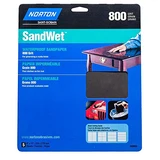
Price: $16.99 for 5 sheets, 9×11 in. · View on Amazon
- Grit: 800
- Aluminum oxide, waterproof backing
- Packaging states it’s for generating a matte finish when used wet
- Size: full 9×11 in. sheets
- Cost per standard sheet: $3.40
This fills the gap between the last build coat (400-600) and the Micro-Mesh range (1500+) — the stage where the lacquer is fully cured and you’re leveling dust nibs and light orange peel, not still building the film. Norton’s SandWet line is a straightforward waterproof paper without the mesh premium Abranet carries.
Where it’s bad: single grit, small 5-sheet pack. At $3.40 per standard sheet it’s the second-most-expensive full-size sheet in this comparison, so it’s a top-off buy, not a primary pack.
Main drawback: five sheets covers a small-to-mid project at most; a tabletop-scale rub-out needs a second pack.
6. Dura-Gold Premium 50-Sheet Assorted Wet/Dry Sandpaper — Best Value
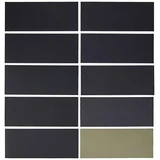
Price: $13.99 for 50 sheets across 10 grits, 5 each · View on Amazon
- Grits: 150, 220, 320, 400, 600, 800, 1000, 1500, 2000, 3000 — five sheets each
- Silicon carbide, waterproof
- Works wet or dry
- Sheet size: 3-2/3×9 in. — a third the area of a full 9×11 sheet
- Cost per standard sheet: $0.84 — best per-area value once normalized
One box covers nearly every stage in the schedule below — grain-raise prep through post-cure leveling, five sheets of each grit. The raw sticker price ($0.28 per sheet) makes it look like a runaway bargain next to the Wetordry sheet’s $0.90, but the Dura-Gold sheet is a third the area. Normalized to a standard sheet it’s still the best per-area value here at $0.84 — just not the “seven times cheaper” the raw price implies.
Where it’s bad: five sheets per grit is thin for a full refinish project. Expect to reorder the 320 and 400 rows before the pack’s less-used grits (1500, 2000, 3000) are anywhere close to gone.
Main drawback: smaller sheet size means more sheet changes than a full 9×11 pack for the same coverage.
7. 3M Pro Grade Precision 3-in-1 Sanding Sponge (220 Grit) — Best for Contours & Edges
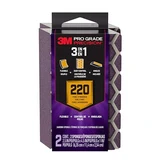
Price: $9.57 for 2 sponges · View on Amazon
- Grit: 220 (fine)
- Aluminum oxide abrasive on flexible foam
- Three usable faces: contoured, angled, and flat
- Washable and reusable
- Not a flat-sheet format — priced per sponge, not per standard sheet
Turned legs, mouldings, and carved details are exactly where a flat sheet either skips the low spots of a profile or sands through the high points — the burnishing risk covered below applies double on a rounded edge. The sponge’s foam backing conforms to a round-over or ogee the way a stiff sheet physically can’t, and because it’s washable it survives more than one project instead of loading up and getting tossed.
Where it’s bad: only available at 220 grit in this listing, which makes it a prep/early-coat contour tool, not a substitute for the 320+ between-coat or rub-out stages on flat surfaces.
Main drawback: two sponges per pack; a project with a lot of turned or carved surface area will need more than one.
How We Picked These
We did not physically test these seven products for this guide — no lab, no stopwatch, no fabricated hours-of-use claim. What we actually did: priced every pick live through Amazon’s product catalog, cross-checked each grit claim against its own packaging and listing copy, and normalized every sheet-format pick to a common cost-per-standard-sheet figure so the prices in the table above are genuinely comparable across brands, formats, and pack sizes.
One catch worth mentioning: an earlier candidate ASIN for the 320-grit Wetordry pick shipped with a product photo showing a 600-grit package — a mismatched listing image on Amazon’s side, not a 3M packaging error. We caught it by looking at the actual photo instead of trusting the title text, and swapped to a different, independently-confirmed 320-grit listing before publishing. It is a small thing, but it is the kind of check most roundups skip.
The between-coat grit guidance below (stay at 320, do not jump to 400+ for every coat) is sourced from a public WoodWeb forum thread of working finishers discussing conversion-varnish adhesion, not invented for this article. Amazon’s review-rating data came back empty for every ASIN in this batch, so no star ratings or review counts appear anywhere in this guide — we would rather show nothing than copy a number from a competitor or make one up.
What to Consider When Buying Sandpaper for Lacquer
Grit Number and What It Actually Means
Grit is a count of abrasive particles per square inch of backing — the lower the number, the coarser and fewer the particles, the more material each pass removes. 80-150 grit strips and levels; 220 raises and knocks down wood grain before a sealer coat; 320-400 scuffs a cured finish film for the next coat to grip; 600 and up stops cutting and starts polishing. None of the seven picks above cover the full range alone — that is why the schedule further down maps a grit to each stage instead of pushing one all-purpose number.
Aluminum Oxide vs. Silicon Carbide
Four of the seven picks above are aluminum oxide (the 3M Pro Grade sheets and sponge, the Norton SandWet, the Mirka Abranet mesh); two are silicon carbide (the 3M Wetordry, the Dura-Gold assortment). See our full aluminum oxide vs. silicon carbide sandpaper comparison for the general case; the short version for lacquer specifically follows. Aluminum oxide is tougher and fractures to expose fresh cutting edges, which suits bare-wood prep and general-purpose sanding. Silicon carbide is sharper and harder but more brittle, and it is the standard abrasive for wet-sanding a cured finish film — which is exactly why 3M’s own between-coat lacquer product (pick #2) uses it. Neither abrasive is universally “better”; a bare-wood prep sheet in silicon carbide would dull faster than aluminum oxide on the same job, and an aluminum oxide sheet run wet on a cured film will cut slower than silicon carbide at the same grit.
Wet Sanding vs. Dry Sanding
Wet sanding — a few drops of water or mineral spirits on the surface, sanded with a waterproof paper — reduces clogging, cuts down on airborne dust, and produces a finer scratch pattern at the same grit number than dry sanding does. It is the standard method from 400 grit up. Plain, non-waterproof papers will disintegrate if used wet; check the pack before assuming a sheet can go in water. All seven picks above except the 220/320/400 3M Pro Grade Precision sheets are explicitly rated for wet use.
Sheet, Mesh, or Sponge Format
A flat sheet is the default and the cheapest per standard area, as the table above shows. Mesh (Mirka Abranet) trades a real price premium for dust-free sanding, worth it mainly for indoor finish-room work. A sponge (pick #7) is the only format that conforms to a contour or profile without rounding over the high points. None of the three formats is strictly better — they solve different problems, which is why this list includes all three instead of seven variations on one.
Stearated (Anti-Clog) Papers
Stearated papers carry a soap-like zinc stearate coating that keeps softened finish from sticking to the grit as it heats up under friction — useful for dry-sanding a sealer coat that has not fully hardened yet. None of the seven picks above are marketed as stearated specifically; if dry-sanding a still-soft sealer coat is part of the job, look for that word on the package before buying, since a non-stearated paper will glaze over and stop cutting within a few passes on soft material.
Between-Coat Grit: Why Higher Is Not Always Better
This is the correction most sandpaper guides skip. The common shorthand — use 320-400 grit between coats — treats those two numbers as interchangeable. Working finishers on WoodWeb’s forum draw a sharper line: 320 is the workhorse for every ordinary between-coat scuff, because a catalyzed or lacquer finish needs real scratches to mechanically grip the next coat, and 400 is described as getting pretty fine for that job. Reserve 400 (and the Norton 800 pick above) for the single pass immediately before your last coat, when leveling matters more than adhesion. Going straight to 400+ on every coat can under-scuff the surface and risk a weaker bond between layers — not a dramatic failure, but exactly the kind of subtle mistake that shows up months later as peeling at a stress point.
Matching Grit to Gloss Level (Matte vs. High-Gloss)
Stop at 400 grit for a satin or matte look — the scratch pattern itself scatters light and keeps the sheen down. Push to 600 and buff for a standard gloss finish. For a true rubbed-out, mirror-gloss lacquer finish, nothing in a conventional grit range gets there; that is the Micro-Mesh pick’s job, cycling 1500 through 12000 after the final coat has fully cured. Micro-Mesh’s finer grades also roughly line up with steel wool grades if that is what your shop already stocks — see our sandpaper-to-steel-wool grit equivalent guide for the exact matchups. And if lacquer itself is not yet the settled choice for this project, our roundup of the best clear coat and clear finish options for wood compares it against polyurethane, varnish, and shellac before you commit to a sanding schedule at all.
Cost Per Sheet vs. Cost Per Pack
The sticker price on a box of sandpaper is close to useless for comparing brands, because pack size and sheet size both vary without warning — a $43.59 box of 50 mesh sheets and a $13.99 box of 50 paper sheets in the comparison table above are not the same product at three times the price; they are a small sheet and a third-size sheet, which is why every price in this guide is shown both raw and normalized to a standard 9×11 in. sheet-equivalent.
How Many Sheets You Will Actually Need
For a single small project — a jewelry box, a set of picture frames — the 3M Pro Grade 9-sheet starter pack (pick #1) is usually enough on its own. For a tabletop or a dresser, budget for at least one full pack per grit stage: a 25-sheet Wetordry pack for between-coat scuffing alone is realistic on a project with four or five build coats, since each full recoat of a large panel can use two to three sheets before the grit dulls. The Dura-Gold assortment’s five-sheets-per-grit ratio is the first thing to run short on a multi-coat project — plan to reorder the 320 and 400 rows specifically, not the whole box.
Storing Sandpaper So It Does Not Go to Waste
Sandpaper absorbs ambient humidity, and a humid sheet cuts slower and clogs faster — a real, measurable difference, not a myth. Keep opened packs in a sealed bag or container away from a damp shop corner, and keep stearated and waterproof papers separate from plain dry-only sheets so a quick grab under time pressure does not end with a dry-only sheet disintegrating on a wet-sanded surface.
The Lacquer Sanding Schedule, Stage by Stage
This is the piece most sandpaper roundups leave out entirely: which grit, at which stage, and why. Six stages, mapped to a specific pick from the comparison above.
| Stage | Grit | Pick From This List | Why |
|---|---|---|---|
| 1. Raise grain / bare-wood prep | 220 | 3M Pro Grade Precision (220 sheet) | Knocks down raised grain fibers before the sealer coat without leaving swirl marks |
| 2. Seal-coat and early build-coat scuff | 320 — stop here | 3M Wetordry 320 or Mirka Abranet 320 | Leaves enough scratch pattern for the next coat to mechanically bond; going straight to 400+ here risks a coat that does not grip |
| 3. Final build-coat leveling (last coat before top coat only) | 400–600 | Dura-Gold assorted (400 or 600 sheet) | This is the one stage where the finer half of 320-400 advice actually applies — right before the last coat, not every coat |
| 4. Post-cure wet-level (before rub-out) | 800–1000 | Norton SandWet 800 | Removes orange peel and dust nibs after the finish is fully hard, not while still curing |
| 5. Rub-out / gloss buffing | 1500–12000 | Micro-Mesh 9-grade kit | Cycling 1500→3600 removes the 800-grit scratch pattern, then 2400→12000 builds the shine |
| 6. Contours, turned parts, mouldings | 220–400, any stage | 3M Pro Grade sponge | Foam backing conforms to a profile a flat sheet would round over |
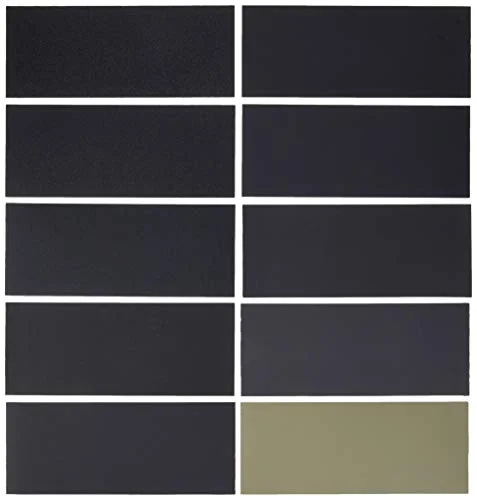
Quick Steps: A Full Lacquer Sanding Cycle
- Raise the grain on bare wood with 220 grit before the first sealer coat.
- Scuff every build coat at 320 grit, not finer, so each new coat has enough tooth to bond.
- Switch to 400-600 grit for the single pass right before your final coat.
- Let the final coat cure fully, then wet-sand at 800-1000 grit to remove dust nibs and orange peel.
- Cycle Micro-Mesh 1500 through 12000 to rub out a high-gloss finish, or stop earlier for satin or matte.
- Use a sanding sponge instead of a flat sheet on any turned, carved, or moulded surface at any stage.
Common Mistakes to Avoid
Most lacquer sanding problems trace back to one of three habits, and all three are easy to fix once you know which one is causing the issue in front of you.
Using the Wrong Grit for the Stage
Jumping straight to a fine grit to save time between build coats is the single most common mistake in this list — it looks smoother immediately and causes an adhesion problem that does not show up until weeks or months later. Match the grit to the stage in the schedule above, not to how smooth the surface feels under a fingertip.
Sanding Too Aggressively
Lacquer film is thin. A coarse grit or heavy hand pressure can cut straight through a build coat and into the coat below, or the bare wood, in seconds, especially on an edge or corner. Let the grit do the work and use a block or sponge for even pressure — bare fingers conform to the surface instead of cutting across the high spots, which burnishes the texture rather than removing it evenly.
Not Using Proper Safety Measures
Dry-sanding a cured lacquer film produces fine dust that is an inhalation hazard, and wet-sanding produces a slurry that is a slip hazard on a hard shop floor. A basic respirator rated for fine dust and a dedicated wet-work area, or at minimum a drop cloth, cost far less than either problem does.
Troubleshooting Common Sanding Issues
If something looks wrong after sanding, the fix is almost always in this list rather than a sign the finish itself has failed.
Scratches Appear After Sanding
Usually caused by a grit that is too coarse for the stage, or debris trapped under the sheet. Step back one stage in the schedule above, sand out the scratch with the correct grit, then work back up through the finer grits in sequence — skipping a step leaves the previous grit’s scratch pattern behind under the new one.
Uneven Finish or Sheen
Usually uneven pressure or an inconsistent number of passes across the surface, not a bad batch of finish. Sand lightly and evenly with a block, never bare fingers, across the entire surface, in the same direction, the same number of passes per section.
Sandpaper Clogging Quickly
Sanding lacquer before it is fully dry is the most common cause — soft, uncured finish gums up any paper almost immediately. Confirm full cure time on the product’s own label before sanding, switch to a waterproof paper for that stage, and clean the sheet with a stiff brush between passes rather than pressing harder through a loaded sheet.
Frequently Asked Questions
What grit sandpaper should I start with for sanding lacquer?
Start at 220 grit on bare wood to raise and knock down the grain before the first sealer coat. Once the sealer and build coats are on, switch to the between-coat schedule, 320 grit for ordinary scuffing, rather than starting over at a coarse grit. Working over an old painted piece instead of raw wood? Strip the paint first — our sandpaper grit guide for paint removal covers that stage.
What is the best grit for sanding between lacquer coats?
320 grit for ordinary between-coat scuffing. Reserve 400-600 grit for the single pass immediately before your final coat — going finer than 320 on every coat can under-scuff the surface and weaken adhesion between layers, per working finishers discussing this on WoodWeb’s forum.
Can I use the same sandpaper for both dry and wet sanding?
No, not safely. Plain, non-waterproof paper disintegrates when wet. Check the package: a paper marketed as wet or dry or waterproof, like the 3M Wetordry, Norton SandWet, and Dura-Gold picks above, can do both; a standard dry-only sheet cannot go in water.
How can I tell if I have sanded enough between coats?
The surface should look uniformly dull or matte across its full area with no shiny, unsanded low spots and no through-sanded bright spots at edges or high points. Run a hand across it in raking light — any gloss spots mean more passes are needed in that area specifically, not a full re-sand.
What should I do if the lacquer finish has runs or sags?
Let the run cure completely — sanding a soft run just smears and clogs the paper. Once hard, level it with a coarser grit than the surrounding surface, 220-320, worked flush, then blend back into the schedule at the grit that stage calls for before recoating.
Is Micro-Mesh better than regular sandpaper for a lacquer finish?
Not better across the board — different job. Micro-Mesh only makes sense above 1500 grit, for rubbing out a fully cured final coat to a high gloss. For every earlier stage, grain-raise, between-coat, pre-final-coat leveling, a conventional aluminum oxide or silicon carbide sheet is the right and far cheaper tool.
How much does a full grit progression for lacquer sanding cost?
Roughly $35 to $45 to cover every stage in the schedule above using the specific picks in this guide: about $17 for the 3M Pro Grade multi-grit pack or the Dura-Gold assortment, covering prep through pre-final-coat leveling, about $17 for the Norton SandWet 800 for post-cure leveling, and $35.95 for the Micro-Mesh kit if a rubbed-out gloss is the goal — that last purchase is optional for a satin or standard-gloss finish.
Final Thoughts
For most lacquer jobs, two purchases cover the whole schedule: the 3M Wetordry 320 ($22.58, 25 sheets) for every ordinary between-coat scuff, and the Dura-Gold 50-sheet assortment ($13.99) to fill in grain-raise prep, pre-final-coat leveling, and post-cure work. Add the Micro-Mesh kit only if the project is headed for a rubbed-out high-gloss finish. And whatever grit ends up in your hand between coats, the one number worth remembering from this whole guide is 320, not 400, unless you are on the very last coat.
Prices and ASIN availability were live-checked at the time this guide was last updated and can change; if a linked product is ever discontinued or repriced, the schedule and grit guidance above still hold regardless of which specific pack you end up buying.
Related Guides
- More wood finishing guides on the site
- How lacquer stacks up against polyurethane
- Spraying and brushing technique for lacquer
- Deciding how many build coats a project needs
- A deeper look at abrasive mineral types
- Comparing every clear finish option, not just lacquer
Sponsored / affiliate links. As an Amazon Associate I earn from qualifying purchases. I may earn additional commission from eligible campaigns.