Temperature to Pour Epoxy: Winter Rule for Clean Cures
A common rule of thumb is to work at about 70 to 75°F room temperature, keep resin and hardener near 72°F, and make sure the wood is at least 65°F before pouring epoxy. Cold materials hold bubbles, slow cure, and can leave a tacky surface that ruins the pour. This guide gives separate temperature targets for air, resin, and wood so winter pours cure cleanly in cool shops.
The best temperature to pour epoxy resin is between 72°F and 78°F, and a stable room temperature of 72–78°F is recommended for epoxy work. Stability matters. A shop that reads right at mixing time but drops overnight can still cause cloudy patches, sticky edges, or a slower cure.
What temperature should epoxy be poured at?

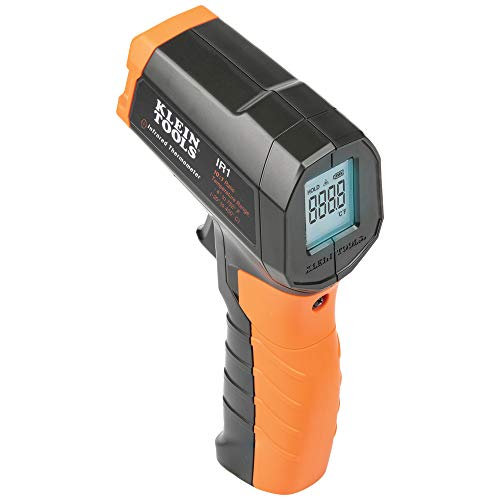

Use the product data sheet as the final limit. CHILL EPOXY recommends mixing, pouring, and curing at 72F, and says the work area should stay at 22°C/72°F throughout the job. That is the safer model for winter work: do not treat a single thermometer reading as enough if the room cools near a door, window, or slab floor.
Separate air, resin, and wood temperature
Ambient temperature is the room condition around the project, but it is only one part of the setup. Epoxy resin, part B hardener, and the wood or substrate can each sit at a different temperature, and each one affects flow and cure. Cold wood can pull heat out of the pour even if the air feels fine.
Viscosity rises when epoxy is cold. That thicker mix flows more slowly, releases bubbles less easily, and can bridge over pores instead of wetting them out. Cold part A and part B also mix less efficiently because thicker liquid is harder to blend into a uniform mass.
Why stable conditions beat a one-time reading
Room temperature stability matters from mix through cure. Overnight temperature swing risk is high in winter shops, especially near garage doors, drafty windows, or unheated corners. A pour started at 72°F and left in a room that falls below the cold threshold can cure unevenly at the surface and in the edges.
Cold ambient temperature slows polymerization time. Warm air does the opposite, but it can shorten working time and create more bubbles if the mix heats too fast. The best setup is a steady room, steady materials, and no draft moving across the pour.
Epoxy pour checklist
Use this checklist before mixing. It separates what you check from what you do next, so winter pours do not fail because one part of the setup was overlooked.
| Check | Target or risk | Action |
|---|---|---|
| Shop air temperature | 72–78°F stable through mix and cure | If the room drifts below 72°F or has draft exposure, pre-heat the space and delay the pour until it holds steady. |
| Resin temperature | About 72°F for parts A and B | Warm sealed containers to room temperature before opening. If they are still cold-thick, wait longer or use a low-temp formula. |
| Wood or substrate temperature | At least 65°F before pouring | Pre-warm the board or slab. If the wood stays cold, hold the pour until the substrate is warmer than the air-dry surface feel suggests. |
| Relative humidity | Keep moisture controlled; avoid damp, cold air | Dry the workspace, limit condensation risk, and avoid conditions that raise amine blush or surface haze. |
| Airflow | No direct draft on the pour | Close doors, block cold air near windows, and avoid fan blast across the surface during cure. |
| Heat during cure | Hold temperature steady | Maintain heat through the full cure period, not just during mixing. |
- Check the room air, resin, and wood separately.
- Warm sealed resin and hardener to room temperature before opening.
- Confirm the substrate is at least 65°F.
- Measure humidity and remove drafts from the work area.
- Choose the product only after checking its technical data sheet.
- Keep the shop warm and stable until the epoxy reaches full cure.
Say your shop air reads 72°F, but a tabletop slab stored against a concrete wall still feels cold. The pour may level well at first, then thicken at the wood interface and trap bubbles along the edge. The cure can also look dull or cloudy where the substrate steals heat.
Can you pour epoxy at 60 degrees?
You can sometimes pour at 60°F, but it is outside the preferred range and it raises risk. At that temperature, epoxy viscosity is higher, flow is slower, and bubble release is weaker. It becomes a judgment call based on pour depth, substrate temperature, and the product’s data sheet.
What 60 F means for flow
Cold resin moves less easily. That matters in flood coats, repair fills, and deep pours because the mix must wet edges, pore walls, and corners before it starts to gel. At 60°F air, the pour may still fail if the wood is colder than the room.
For thin flood coats on small parts, 60°F may be workable if the room stays stable, the resin is warmed first, and the wood is not cold-soaked. For deeper pours, that same temperature is riskier because deeper masses depend more on predictable reaction speed and steady heat.
When 60 F is workable and when it is risky
Suppose a shallow river table fill is poured over a thick slab that has been pre-warmed and held dry. That setup is far safer than the same pour over a cold board near a garage door. The wood temperature, not just the air reading, decides whether the pour will behave.
If the room cannot hold temperature overnight, do not pour simply because the thermometer looked acceptable at noon. Stable room temperature matters more than a one-time check, and cold air near doors or drafts can create edge cure problems that do not show up until the next day.
How cold is too cold for resin?
Below 65°F is the referenced cold threshold for epoxy issues, and that is cold enough to slow cure, thicken the mix, and raise the chance of sticky edges. Cold part A and part B also become harder to measure and blend, which hurts mixing efficiency before the pour even starts.
Cold thickening in part A and hardener
Epoxy storage temperature is recommended at 72°F to 74°F in dry, low-humidity conditions. Storage guidance also warns that colder temperatures increase viscosity of parts A and B. That means cold containers can hurt flow before the resin reaches the cup.
Higher starting temperatures can lead to yellowing and shrinkage, so warming is not a free pass to make the material hot. Warm it to room temperature, not beyond it. For storage, keep sealed containers out of cold floors, damp basements, and sun-warmed shelves.
Slower cure, sticky edges, and bubble hold-up
In cold conditions, the exothermic reaction slows. That means the epoxy builds heat more slowly, stays fluid longer in some cases, and may remain tacky at the edges after the center seems set. A full cure takes longer than tack-free time, so a surface that feels dry can still be soft underneath.
System Three’s rule cited by Resin Calculators says an 18°F change roughly doubles or halves cure time. That is why a room that drops overnight can stretch the schedule far beyond the first surface read. TotalBoat ThickSet is listed with a tack-free time of 6–8 hours at a ½-inch coating, but that is not the same as full cure.
When to switch formulas or wait
If the room cannot stay in the recommended window, a low-temperature formula may be the better choice. Use it only within the manufacturer’s limits. If the product is not rated for cold work, wait for the room, resin, and wood to reach a stable temperature before pouring.
Why warm epoxy can fail
Too much heat speeds the exothermic reaction, shortens working time, and can increase bubble formation. The hot threshold for epoxy issues is above 80°F, so warm weather or an overheated shop can create the opposite problem from cold weather: the mix can kick too fast to level cleanly.
Faster exotherm and shorter working time
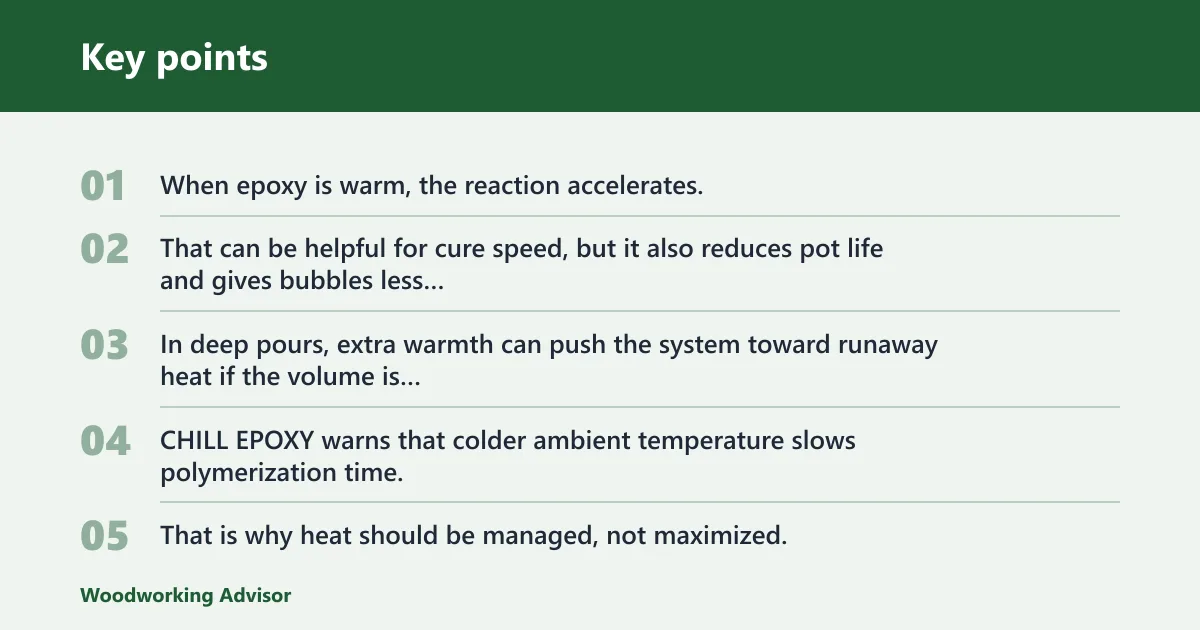
When epoxy is warm, the reaction accelerates. That can be helpful for cure speed, but it also reduces pot life and gives bubbles less time to rise out. In deep pours, extra warmth can push the system toward runaway heat if the volume is large enough.
CHILL EPOXY warns that colder ambient temperature slows polymerization time, but the reverse is just as important: warm conditions can move the cure too fast. That is why heat should be managed, not maximized.
Bubble rise, surface defects, and yellowing risk
Warm resin can outgas from the wood and release trapped air more quickly, which may sound helpful. In practice, if the reaction gets too fast, bubbles can freeze in place before they escape. High starting temperatures can also raise yellowing and shrinkage risk.
Deeper pours need extra caution because the center of the mass can heat itself. A thin flood coat and a deep cast do not respond the same way. Treat them as different jobs with different thermal risk.
Why winter pours go wrong
Cold wood, cold resin, or cold air can cause a cloudy finish, bubbles, slow cure, or sticky edges. The problem is often a combination, not one bad reading. A room that feels warm can still fail if the board is colder than the air and the temperature drops before full cure.
Cloudy finish from poor cure conditions
Cloudiness can come from moisture, poor temperature stability, or a surface that starts curing unevenly. Relative humidity matters because damp air can increase amine blush and dull the finish. Keep the workspace dry and avoid condensation near cold surfaces.
Bubbles from thick mix and cold substrate
Cold resin is thicker, so bubbles move more slowly. Cold wood can also release air as it warms under the pour. That combination is common in winter and is one reason the substrate temperature must be checked separately from the room.
Slow cure versus full cure versus tack-free time
Tack-free means the surface no longer feels sticky. Full cure means the material has reached its final hardness. Those are not the same point. Do not sand, flood, or assemble too early just because the top feels dry.
A common mistake is to assume the epoxy is ready because the garage feels comfortable, even though the mixed resin is still too cool to flow and level properly. If the shop cools again at night, the top may seem ready while the body of the epoxy is still soft. Hold heat through the full cure window.
Frequently asked questions
What temperature to pour epoxy
The practical target is 72°F to 78°F, with the room held steady through mixing and cure. Keep the resin and hardener around 72°F, and make sure the wood is at least 65°F. If the room swings cold overnight, delay the pour or hold heat until conditions stay stable.
What temperature to pour resin
Pour resin when the mixed system and the workspace are in the recommended range, not just one of them. For most winter woodworking setups, that means about 72°F for the resin and a stable room of 72–78°F. Cold resin thickens, flows poorly, and can trap bubbles.
What temperature to pour epoxy resin
Epoxy resin pours best between 72°F and 78°F, with the work area staying at 72°F or close to it throughout the job. If the wood is colder than 65°F, the pour is still at risk even when the air temperature looks acceptable. Check all three temperatures before mixing.
Can you pour epoxy at 60 degrees: sometimes, but it is outside?
Sometimes, but it is outside the preferred window and should be treated as risky. At 60°F, epoxy is thicker, cures more slowly, and releases bubbles less readily. It may work for small flood coats if the wood is warm and the room stays steady, but deep pours are much less forgiving.
Will epoxy cure at 50 degrees?
It may cure eventually, but 50°F is cold enough to create serious problems with cure speed, surface quality, and edge tack. The epoxy can stay soft far longer than expected, and a stable room temperature is lost if the space cools further overnight. Wait for warmer, steadier conditions when possible.
Should epoxy and hardener be warmed before mixing?
Yes, warm both parts to room temperature before mixing, but do not overheat them. Cold part A and part B are thicker, harder to blend, and more likely to trap air. The goal is about 72°F storage and mixing temperature, especially in dry conditions that avoid condensation and blush.
Sponsored / affiliate links. As an Amazon Associate I earn from qualifying purchases. I may earn additional commission from eligible campaigns.