Minwax Polyurethane Temperature: Minimum Application Temp
Start only when the room air and the wood stay above the product label’s minimum. Use 50°F as the practical floor, with 65°F to 85°F as the safe working band. Cold wood still slows drying and can leave a cloudy finish even when the air feels warm enough.
This guide is part of our Cold Weather Wood Finishing: What Works Below 50°F series.
What you’ll need


- A thermometer for room air
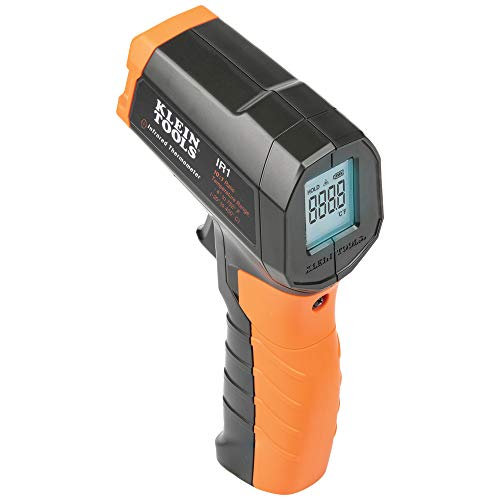
- A surface thermometer or infrared thermometer for the wood
- A fan for gentle air movement
- A temporary heat source for a garage or enclosed room, if needed
- Lint-free applicators
- 220-grit sandpaper
- Clean tack cloth or vacuum for dust removal
- Basic safety gear, including ventilation and a respirator rated for organic vapors if the label calls for it
Can you apply Minwax below 40°F?
No. If temperatures are below about 40°F, postpone the job. Cold temperatures slow drying and curing, and the finish can stay soft long enough to attract dust or turn whitish. If the project itself is cold-soaked, warming only the room air is not enough.
Below 50°F, polyurethane is difficult to dry and cure properly. That makes sub-40°F conditions a poor bet for an oil-based finish.
Why sub-40°F is a bad bet
At that temperature, the finish can lose flow and hold onto solvent longer. The risk is not only slow drying.
When to postpone instead of forcing it
Postpone if both the room and the wood are below 50°F, or if the surface feels cold to the touch after heating the space. A cold garage, basement, or unheated shop usually needs time to warm the air and the stock before coating.
How warm should it be to apply polyurethane?
A practical target is about 65°F to 85°F for both application and early hold time. That gives the finish enough warmth to flow and dry without rushing or blushing.
Room temperature matters, but surface temperature matters more. A thermostat can read 68°F while a tabletop still sits at 48°F. That colder wood can slow drying from the bottom up and raise the chance of a milky film.
Why the wood itself matters more than the thermostat
Wood absorbs heat slowly. If the air warmed up recently, the finish area may still be cold, especially on thick furniture, tabletops, or floors over an unheated slab. Check the surface directly before you open the can.
How long to hold the space warm after coating
Keep the space warm through the early drying window, not just during application. A finish that cools quickly after brushing can set unevenly. For cold rooms, maintain steady warmth until the film is no longer tacky and the recoat window is reached.
What to check before opening the can
- Room air temperature at the work surface
- Wood surface temperature, not just the air
- Whether the wood is dry to the touch and free of condensation
- Relative humidity in a moderate, stable range
- Ventilation path for fumes and overspray from dust
Minwax polyurethane application steps
- Heat the room and the project area until both stay at least 50°F, then hold them near 65°F to 85°F if possible.
- Measure the wood surface temperature directly. If it is cold-soaked, keep warming before coating.
- Stir gently and apply a thin coat. Thin coats level better and cut the risk of cold-weather trapping.
- Keep ventilation moving. Use a fan for air exchange, not a blast aimed at the wet film.
- Wait for the label’s recoat window. For Minwax Fast-Drying Polyurethane 350 VOC, the product page lists a 4 hour recoat time.
- Lightly sand with 220-grit between coats, then remove all dust before the next coat.
- Recheck temperature before each coat.
Minwax Fast-Drying Polyurethane 350 VOC is a clear, oil-based protective finish for interior use only. The product page lists 24 hour – 48 hour dry time, 4 hour recoat time, and two coats. Apply in thin coats and sand lightly with 220-grit between coats. (Minwax)
Say your basement workshop reads 68°F after lunch, but a tabletop stored against the slab still measures 46°F. The air looks fine, but the wood is not. Warm the piece longer and recheck the surface before brushing on the first coat.
Suppose a chair seat gets coated at 52°F and the room drops to 44°F overnight. Drying can stall, and the finish may look hazy by morning. That is a hold-time problem, not just an application problem.
What if the finish turns milky?
A whitish film or blushing can appear when cold temperatures slow drying. The surface can look cloudy or pale. In some cases, after the first coat has fully dried, a second thin coat can help diminish the undesired whitish color.
Do not rush to sand or strip the piece immediately. First, warm the project area, restore ventilation, and give the film time to clear if it is only slow-drying. If the clouding stays stable after warming, the finish may need more than time.
Salvage checklist for a milky coat
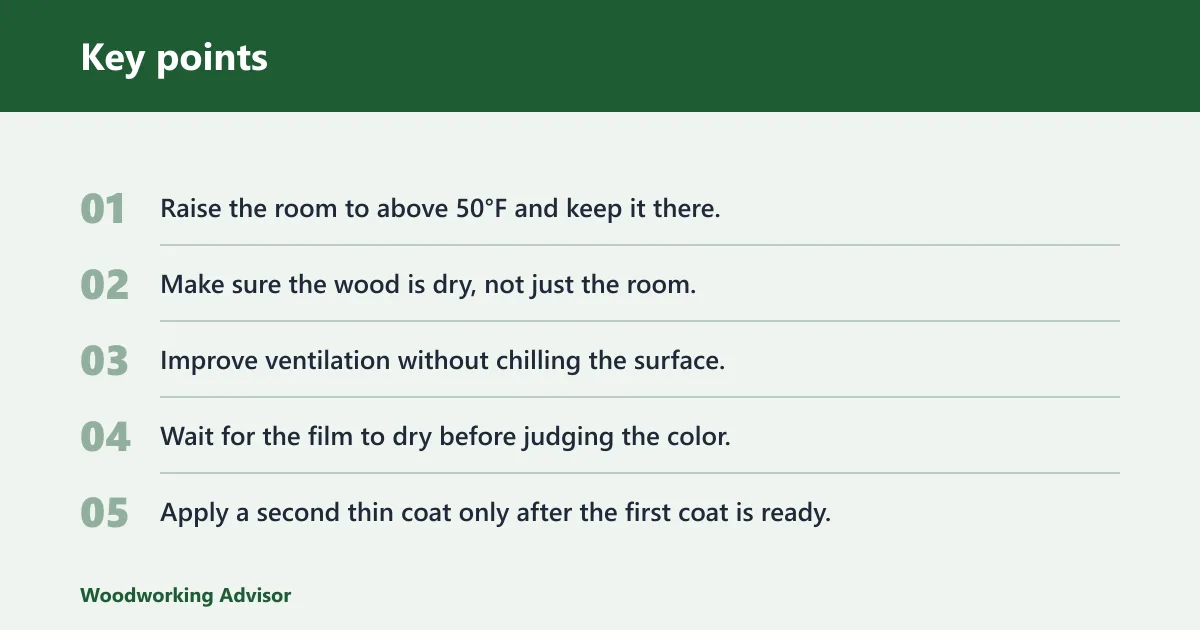
- Raise the room to above 50°F and keep it there.
- Make sure the wood is dry, not just the room.
- Improve ventilation without chilling the surface.
- Wait for the film to dry before judging the color.
- Apply a second thin coat only after the first coat is ready.
- If the cloudiness remains under the film, consider sanding back and refinishing.
If that didn’t work, try this next
- Warm the space with a space heater placed safely for temporary use in a garage or enclosed area, well away from solvent fumes and other ignition sources.
- Check that the air is moving enough to clear fumes, but not so hard that dust blows onto the wet film.
- Wait another drying cycle before recoating.
- If the film stays milky after a second thin coat, sand and refinish the affected area.
Temperature decision table
| Surface temperature | Room temperature | Recommended action | Notes |
|---|---|---|---|
| Below 40°F | Below 40°F | Postpone | High whitening risk, slow drying, and poor cure. Heat the space and the project before coating. |
| 40°F to 49°F | 40°F to 49°F | Warm both room and wood, then recheck | Drying delay is likely. If the wood stays cold, do not apply. |
| 50°F to 64°F | 50°F to 64°F | Apply only if the wood is dry and conditioned | Minimum workable zone. Watch for whitening, especially on thick or cold-soaked stock. |
| 65°F to 85°F | 65°F to 85°F | Best application range | Lower whitening risk, more predictable drying, and better leveling if humidity stays controlled. |
Humidity matters here too. Keep it moderate and stable. Outside that, blushing and bubbling become more likely, and drying can slow enough to cause a cloudy look.
A space heater can help in a garage or enclosed area, but only as temporary warming. Keep it far enough from finishes, dust, and solvent fumes to avoid a hazard. Warm the air and the project, then keep ventilation moving.
Common mistakes
- Coating cold wood because the room thermometer looks acceptable.
- Using a heater in a closed garage without enough ventilation.
- Recoating before the surface is ready, which can trap solvent and moisture.
- Ignoring relative humidity and only watching temperature.
- Trying to force a finish at below 50°F instead of waiting for a warmer window.
Prevention: check both the air and the wood surface before each coat. That one extra reading prevents most cold-weather failures.
Frequently asked questions
What is the minimum temperature to apply Minwax polyurethane?
Use 50°F as the practical floor for Minwax polyurethane application, with better results above that. The wood surface should also be warm and dry, not just the room air.
Can you apply Minwax polyurethane below 40 degrees?
No. Below 40°F, the finish is likely to dry too slowly and may blush or stay tacky longer than expected. Warm the room and the wood first, or wait for a better window. A cold project is better postponed than rescued later.
What happens if you apply polyurethane when it’s too cold?
The film can dry slowly, trap moisture, and form a whitish haze. If the coat is already on, keep the space warm and ventilated, then judge the surface only after the label’s drying window passes.
How long does polyurethane take to dry in cold weather?
Drying takes longer in cold weather, and the product page for Minwax Fast-Drying Polyurethane 350 VOC lists 24 hour – 48 hour dry time. In cold rooms, expect the longer end of that range or more. Recoat only when the surface is ready, not when the clock says so.
Should the wood itself be warm before applying polyurethane?
Yes. The wood should be dry and temperature-conditioned before application. A warm room with a cold tabletop can still cause slow drying and clouding. Check the surface directly, especially on thick furniture or slab-backed pieces that hold cold longer.
Can I use a space heater to apply polyurethane in a cold garage?
Keep it in a safe location, maintain ventilation, and warm both the air and the project before coating. Do not let the heater create a dust blast or an enclosed fume trap.
Does humidity affect polyurethane application?
Yes. Keep humidity moderate and stable for polyurethane. Higher humidity can raise blushing and bubbling risk. Keep airflow steady, but not harsh.
How can I fix whitish film from cold-weather polyurethane?
First warm the project area and give the finish time to clear. If the whitening is light, a second thin coat can help diminish the undesired whitish color. If the cloudiness remains after warming and drying, sand back the affected area and refinish it.
Is fast-drying polyurethane better in cold temperatures?
Fast-drying products can help some, but they do not solve a cold wood surface or a cold room. Minwax Fast-Drying Polyurethane 350 VOC still needs proper temperature, ventilation, and a dry substrate. Use the label’s timing, but do not treat fast-drying as cold-weather permission.
Sponsored / affiliate links. As an Amazon Associate I earn from qualifying purchases. I may earn additional commission from eligible campaigns.