7 Types of Ash Wood: Janka Hardness, Color & Best Uses Compared
Ash wood splits into seven commercially recognized species — White, Green, and Black Ash dominate U.S. lumber yards, while Blue, Oregon, European, and the color-variant Olive Ash fill smaller niches. Picking the wrong one costs real money: White Ash’s 1,320 lbf Janka hardness beats red oak, but emerald ash borer has shrunk the supply of large, mature logs nationwide. This guide compares hardness, weight, and best use for every type, plus what’s actually available to buy right now.
Quick Answer
There are seven commercially recognized types of ash wood: White, Green, Black, Blue, and Oregon Ash in North America, plus European Ash and its darker-streaked color variant, Olive Ash. White Ash is the strongest and most common in furniture and tool handles; Black Ash is the softest and most flexible, traditionally split for basket weaving.
What Are the Different Types of Ash Wood?
Best Ash Wood Finish Pick
Minwax Wipe-On Polyurethane Satin, 1 Quart
A thin, hand-applied topcoat that soaks into ash’s open grain instead of sitting on top, so it protects without hiding the wood’s straight grain pattern.
- Best for: ash furniture, tool handles, and flooring that need a durable everyday topcoat
- Why we picked it: wipe-on application avoids brush marks on ash’s coarse, open-pore texture
- Main drawback: needs 3-4 thin coats for full durability, so it’s slower than a brushed finish
Compare more ash wood finishing options
 Option 1 Tried & True Original Wood Finish
|
 Option 2 Hope’s 100% Pure Tung Oil
|
 Option 3 Howard Feed-N-Wax Conditioner
|
As an Amazon Associate we earn from qualifying purchases.
Ash wood is a ring-porous hardwood from trees in the genus Fraxinus, valued for its strength, shock resistance, and straight, open grain. In North America, the three species that reach lumber yards in any real volume are White Ash, Green Ash, and Black Ash; Blue Ash and Oregon Ash are far more regional. European Ash fills the same role across the Atlantic, and Olive Ash is simply a darker-streaked color variant of European Ash heartwood, not a separate species.
All ash species share a coarse, straight grain and pale color, which is what makes them look similar on a lumber rack — but their hardness, weight, and best use vary enough that picking the wrong one for a load-bearing project or a woven basket matters. See the full types of wood guide for how ash compares to other hardwood and softwood families.
White Ash (Fraxinus americana) — The Strongest, Most Common Type
White Ash is the premium species: light brown heartwood, a straight and fairly wide grain, and a Janka hardness of 1,320 lbf — harder than red oak and close to white oak. At roughly 41-42 lb/ft³ dry, it’s dense enough for structural work but flexible enough to bend without snapping, which is exactly why baseball bats, hockey sticks, tool handles, and oars have used White Ash for generations.
Confusingly, “American Ash” in the trade almost always means White Ash. See our dedicated American Ash Wood profile for growth regions and grading detail, or Ash Wood Furniture for how to spot White Ash quality and true cost when buying finished pieces.
Green Ash (Fraxinus pennsylvanica) — The Budget-Friendly Alternative
Green Ash is White Ash’s more abundant, slightly softer cousin — about 1,200 lbf on the Janka scale and 37-38 lb/ft³ dry. It’s the most widely planted ash species in North America (including as a street tree), which keeps supply higher and prices lower than White Ash, even with emerald ash borer pressure on both species. Grain and color run darker and less uniform than White Ash, so mills sometimes grade the two together as “mixed ash.”
Green Ash is occasionally sold under the name “red ash” in some regional lumber markets — a labeling quirk worth knowing before you buy. Our Red Ash Wood guide untangles which two actual trees “red ash” can refer to.
Black Ash (Fraxinus nigra) — Softest and Most Flexible
Black Ash is the outlier: only about 850 lbf on the Janka scale and 33-34 lb/ft³ dry, with a weaker bond between growth rings that lets it split into thin, flexible splints along the grain instead of across it. That’s a liability for furniture but the entire reason Black Ash has been the traditional basket-weaving and chair-seat wood of the Northeast and Great Lakes region for centuries — no other North American ash species pounds apart into usable splints the same way.
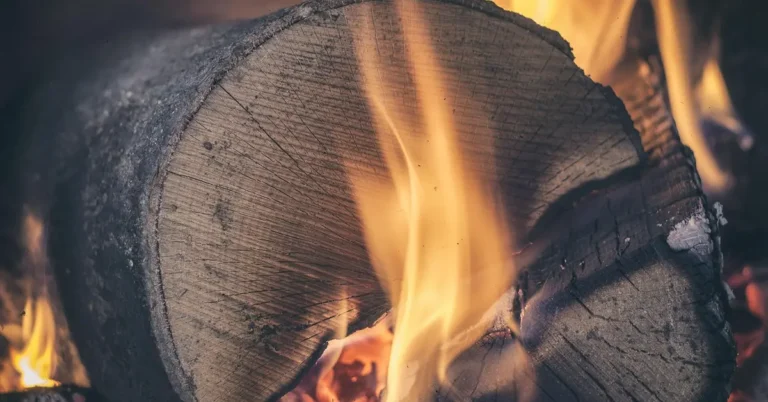
Because it’s lighter and less dense, Black Ash also burns cooler than White or Green Ash — a difference worth knowing if you’re buying ash specifically for firewood; see Is Ash Wood Good to Burn for full firewood comparisons.
Blue Ash, Oregon Ash & Other Regional Species
Blue Ash (Fraxinus quadrangulata)
Named for the blue dye that develops when its inner bark oxidizes, Blue Ash is a hard, dense, slow-growing species limited to the Midwest and upper South. It’s genuinely rare in lumber form, but it has drawn attention for showing partial natural resistance to emerald ash borer — a trait researchers are studying for future breeding programs.
Oregon Ash (Fraxinus latifolia)
The only ash native to the West Coast, Oregon Ash grows in wet bottomlands from Washington to northern California. It’s mechanically similar to Green Ash — medium density, straight grain, decent workability — and shows up regionally in furniture and millwork where White Ash would otherwise have to be shipped in.
European Ash (Fraxinus excelsior) and Olive Ash
European Ash plays the same role across the UK and continental Europe that White Ash plays in North America: furniture, flooring, tool handles, and sports equipment, with comparable strength and a slightly lighter, more uniform color. Olive Ash isn’t a separate tree at all — it’s the name given to European Ash heartwood that develops dark, olive-toned streaking, prized by furniture makers for figure the way spalted or curly grain is prized in other species.
Manchurian and Pumpkin Ash
Manchurian Ash, common in Chinese and Japanese furniture and instrument making, is mechanically close to White Ash. Pumpkin Ash is a wetland species from the southeastern U.S. that tolerates standing water better than any other ash — useful ecologically, but rarely seen in retail lumber since it’s harvested in much smaller volumes than the big three.
| Species | Janka Hardness | Dry Weight | Firewood (BTU/cord) |
|---|---|---|---|
| White Ash | 1,320 lbf | ~41-42 lb/ft³ | ~23-24 million |
| Green Ash | ~1,200 lbf | ~37-38 lb/ft³ | ~20 million |
| Black Ash | ~850 lbf | ~33-34 lb/ft³ | ~18-19 million |
Janka hardness and weight figures are commonly cited averages for seasoned lumber; individual boards vary with moisture content and growing conditions.
Finishing Ash Wood
Ash’s open, coarse grain takes stain and oil finishes well but shows brush marks more readily than tighter-grained woods like maple. A wipe-on oil-based polyurethane builds a durable, even topcoat without leaving lap marks in the open pores; straight tung or linseed oil finishes penetrate deeper and keep the surface food-safe for cutting boards and utensils, at the cost of less water resistance than a film finish.
Whatever finish you choose, dust ash furniture regularly with a soft cloth and keep it out of direct sunlight, which fades the pale heartwood unevenly over time. Wipe up spills immediately — open grain absorbs liquid faster than closed-pore hardwoods like maple or cherry.
Why Ash Wood Is Getting Harder (and Pricier) to Find
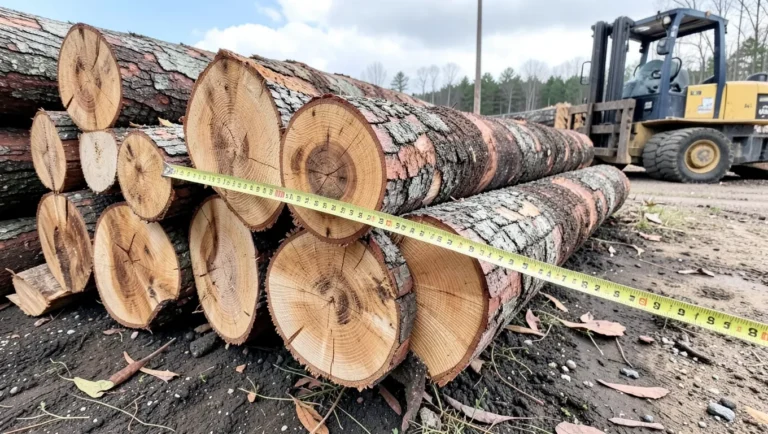
The emerald ash borer, an invasive beetle first detected in Michigan in 2002, has killed hundreds of millions of ash trees across North America and continues spreading. Every native ash species — White, Green, Black, Blue, and Oregon — is a host, and none has shown strong natural resistance except the still-rare partial tolerance seen in some Blue Ash populations.
📊 FAS-grade American ash logs are trading around $430-$920 per MBF (Doyle scale) for prime grade in 2026, up from pre-infestation levels, as emerald ash borer continues to reduce the supply of large, mature, slab-quality ash trees across North America.
Salvaged, borer-killed timber flooded some regional markets in the years right after an infestation hit, temporarily lowering prices for lower grades. But that salvage wave is finite, and large, mature, slab-quality ash logs — the grade furniture and flooring mills actually want — are becoming genuinely difficult to source in many regions. If you’re buying ash for a long-term project, expect fewer wide, clear boards and more variability between suppliers than you’d have found a decade ago.
How to Identify Ash Wood
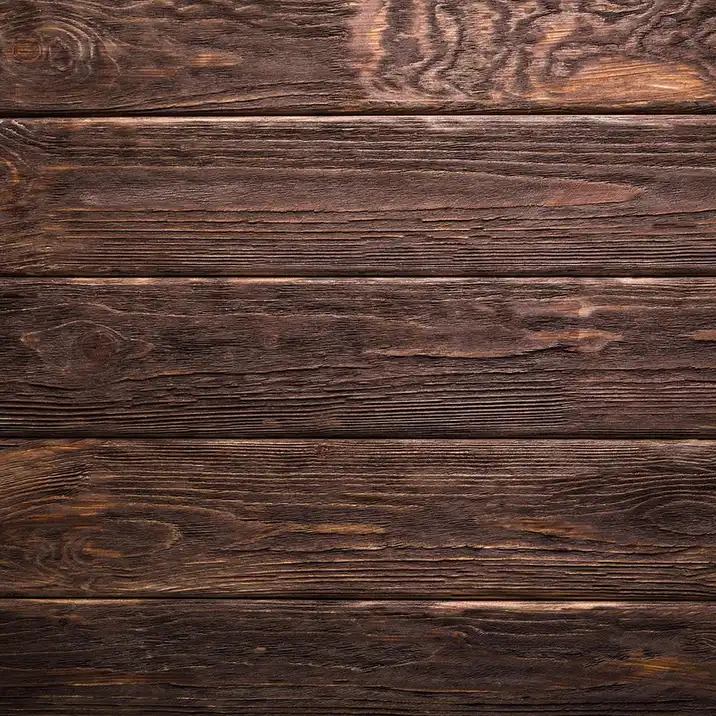
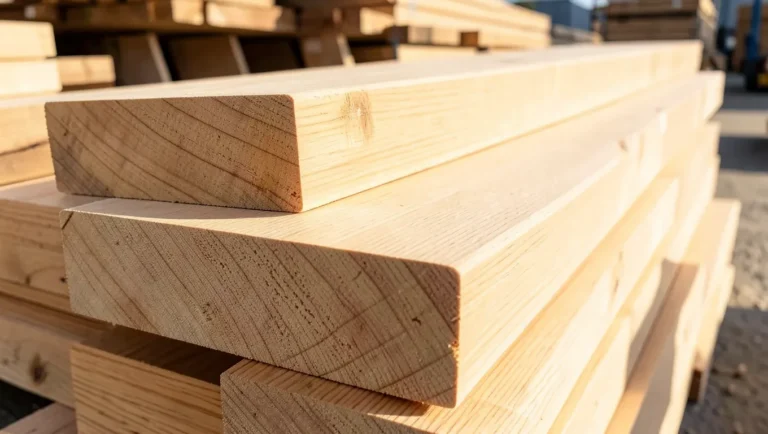
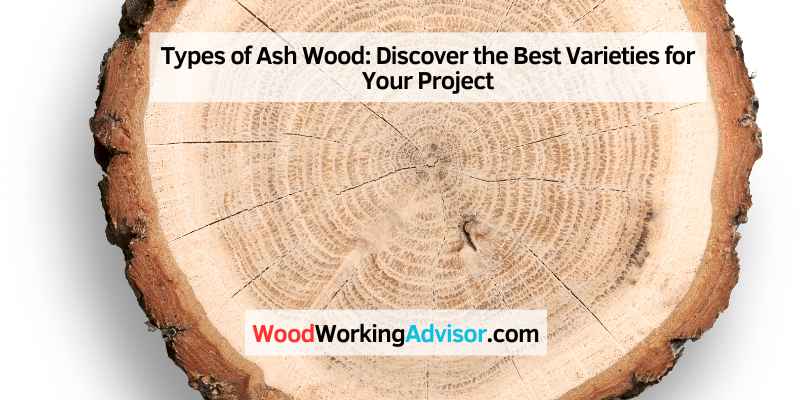
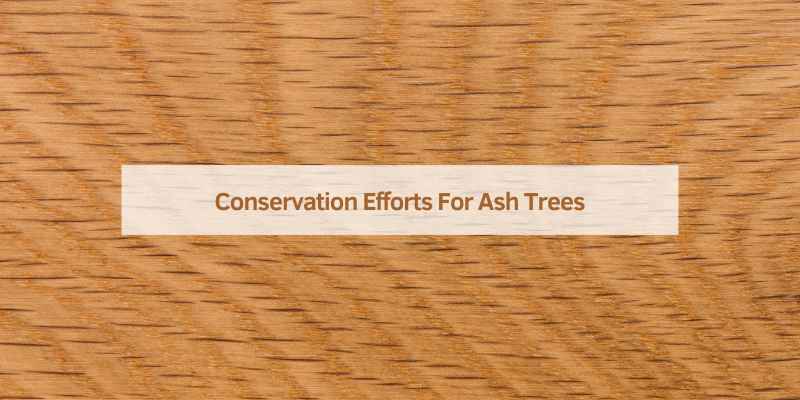
- Grain: straight, coarse, and open-pored, with distinct growth rings visible even without sanding — see our visual grain guide for side-by-side photos.
- Color: pale cream to light brown sapwood; heartwood runs slightly darker tan to light brown, never reddish like cherry or yellow like poplar.
- Weight and flex: noticeably heavier than pine or poplar of the same size, but bends further before breaking than oak — the trait that makes it a bat and handle wood.
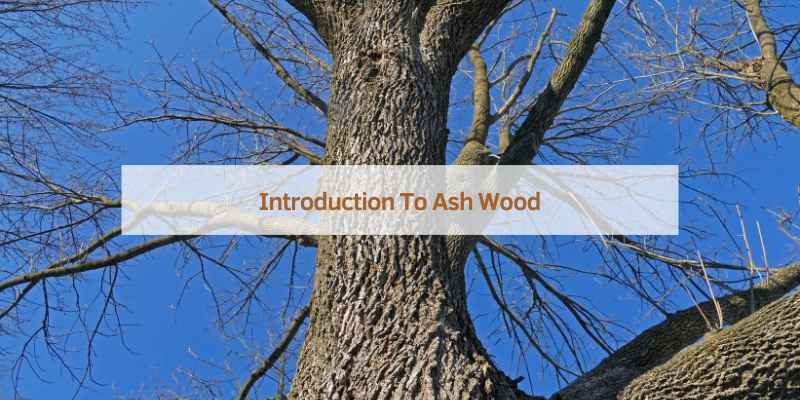
- Bark (on standing trees): tight, diamond-shaped furrows on mature trunks, a pattern most other North American hardwoods don’t share.
Choosing the Right Ash Wood for Your Project
For furniture, flooring, or anything load-bearing, White Ash’s combination of hardness and flexibility makes it the default choice whenever it’s available and your budget allows it. Green Ash is the practical substitute when White Ash is scarce or priced out — the mechanical difference is real but small enough that most projects won’t suffer. Reach for Black Ash only when you specifically need its flexibility, such as basket weaving, or for 2×4 dimensional stock where Ash Wood 2×4 covers what’s actually sold in standard lumber sizes.
Inspect any board before buying regardless of species: look for consistent color and grain, avoid pieces with loose knots or checking cracks, and ask the supplier how the wood was dried and stored — improperly seasoned ash warps and checks more than most hardwoods once it’s back in a dry interior.
Frequently Asked Questions
How many types of ash wood are there?
There are seven commercially recognized types of ash wood: White, Green, Black, Blue, and Oregon Ash native to North America, plus European Ash and its color variant Olive Ash. Manchurian Ash and Pumpkin Ash are also traded regionally but see far less use in general woodworking.
What is the strongest type of ash wood?
White Ash is the strongest and hardest commonly available type, with a Janka hardness of 1,320 lbf — harder than red oak. That strength-to-weight ratio is why White Ash dominates baseball bats, tool handles, and hockey sticks.
What’s the difference between white ash and black ash?
White Ash is denser, heavier (about 41-42 lb/ft³ dry), and stronger, making it the choice for furniture, flooring, and sporting goods. Black Ash is lighter (about 33-34 lb/ft³), splits easily along its growth rings, and bends without breaking — properties that make it the traditional choice for woven baskets and chair seats, not structural pieces.
Is ash wood getting harder to find?
Yes. Emerald ash borer has killed hundreds of millions of ash trees across North America since the early 2000s, and large, mature, slab-quality logs are now the hardest grade to source. Prime-grade ash sawlogs were trading around $430-$920 per MBF in 2026, and mills report tightening supply even as salvaged, borer-killed timber keeps some lower grades available.
What wood is closest to ash?
Hickory is the closest working alternative — both are dense, shock-resistant hardwoods used for tool handles and sporting goods, though hickory runs harder (roughly 1,820 lbf) and has a bolder, more variable grain. For a closer color and grain match, especially in flooring, white oak is often the better substitute.
Every commercially traded ash species shares the same core traits — strength, flexibility, and an open, workable grain — but they aren’t interchangeable. White Ash for strength and flooring, Green Ash when budget matters more than a small hardness gap, Black Ash for flexibility work like basket weaving, and the regional species when that’s what your local supplier actually has in stock. With emerald ash borer continuing to shrink the supply of large, mature logs, buying the right species the first time matters more than it used to.
Sponsored / affiliate links. As an Amazon Associate I earn from qualifying purchases. I may earn additional commission from eligible campaigns.