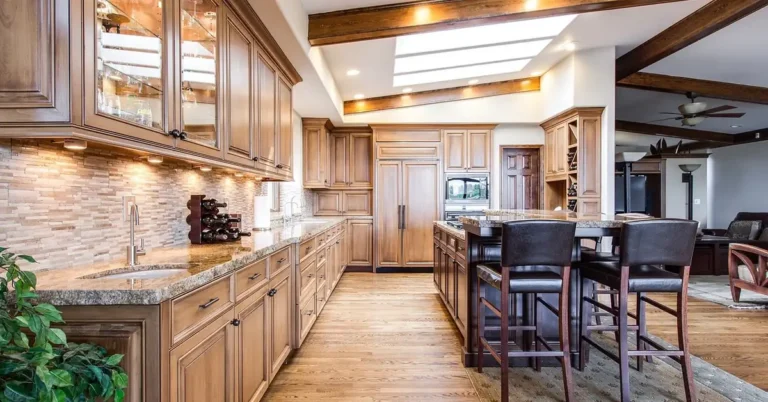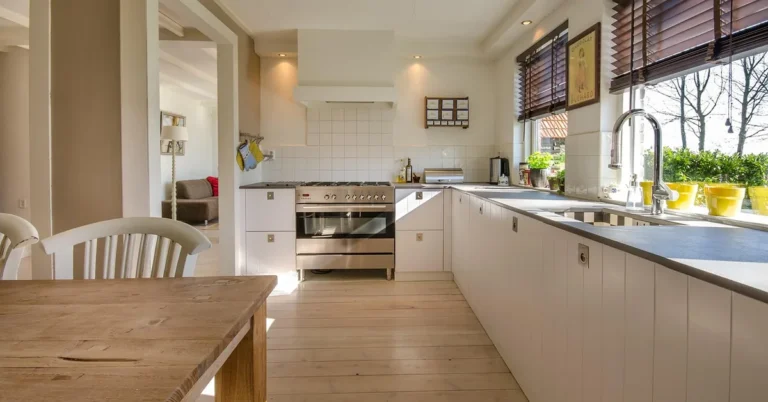
Walnut vs Oak for a Modern Wood Interior: Which to Choose?
Choose walnut when you want a darker, warmer contrast in a modern interior. Choose oak when you need a lighter base that keeps working as finishes, furniture, and daylight change. Pick the wrong species and the room can feel too dark, too yellow, or visually out of step. This guide compares walnut and oak for floors, cabinetry, lighting, finish, and resale so you can choose with confidence.
| Factor | Walnut | Oak For A Modern Wood Interior | Winner |
|---|---|---|---|
| Modernity | Deep brown tone reads clean and upscale, especially in minimal rooms. | White oak reads more contemporary; red oak reads busier and warmer. | Oak For A Modern Wood Interior |
| Undertone stability | Can shift warmer or slightly honeyed with UV exposure. | White oak stays more neutral; red oak leans pink-red and is harder to calm. | Oak For A Modern Wood Interior |
| Grain visibility | Distinct grain, but darker color can visually soften it. | Prominent grain; white oak can read calmer when quarter-sawn or rift-sawn. | Tie |
| Light sensitivity | More likely to feel heavy in small or low-light rooms. | Handles north light, warm LEDs, and daylight changes more easily. | Oak For A Modern Wood Interior |
| Maintenance and wear | Hardness varies by species, and darker surfaces can show dust and scratches sooner. | White oak is a stronger floor choice in many interiors; red oak is common but less modern. | Oak For A Modern Wood Interior |
| Best-use scenarios | Feature walls, furniture, doors, and darker cabinetry accents. | Floors, built-ins, kitchen cabinetry, and whole-room base finishes. | Oak For A Modern Wood Interior |
Walnut vs oak at a glance
Walnut gives you deeper contrast and a more enclosed feel. Oak gives you a lighter base that stays usable as the room changes around it. For a modern home, white oak usually fits the widest range of layouts, while walnut works best when you want the wood itself to carry the visual weight.
That difference matters most in open-plan rooms. Walnut can look deliberate and refined, but too much of it in one view can feel heavy. Oak, especially white oak, is easier to run across floors, cabinets, and millwork without closing the room in.
Where each wood usually fits
Walnut is commonly used as a premium interior wood for furniture, accent cabinetry, wall paneling, and statement millwork. Oak is more common in flooring and cabinetry, with white oak leading contemporary projects and red oak staying more common in traditional or budget-driven work.
Which wood looks more modern, walnut or oak?
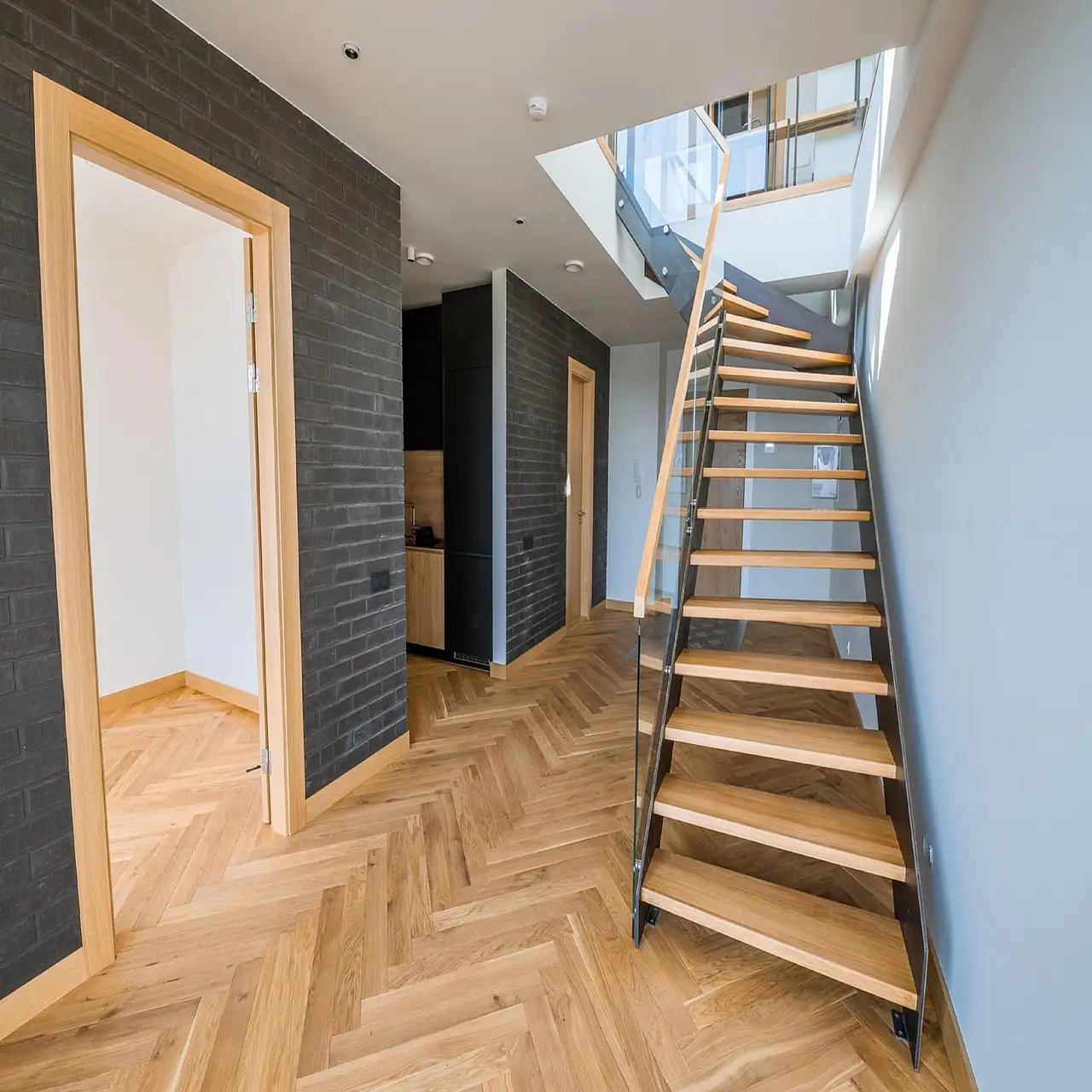
White oak usually reads more modern because its lighter tone, neutral-to-warm undertone, and calmer grain fit clean-lined interiors with less effort. Walnut can also look modern, but it needs tighter control of sheen, lighting, and surrounding colors to avoid reading formal or dated.
Why white oak usually reads more contemporary
White oak sits in a lighter-to-medium tone range, so it leaves room for matte finishes, pale walls, black metal, and stone. Quarter-sawn or rift-sawn white oak is especially common in contemporary flooring because it reduces visible grain movement and keeps the surface composed.
A common first-timer mistake is choosing a wood tone from a small sample under warm showroom lighting. A 3-by-3-inch white oak sample can read gray-beige in some showroom lighting, then turn warmer beside around 2700K lamps at home.
When walnut feels current instead of traditional
Walnut feels modern when the room stays restrained: simple slab fronts, minimal hardware, matte finishes, and few competing tones. Its dark brown range works well as contrast against plaster white, pale stone, or blackened metal.
How board width changes the result
Narrow planks add more seam lines and can make walnut look busier. Wide plank flooring tends to feel more contemporary for both species, but it matters more with walnut because fewer seams let the darker color read as one deliberate surface instead of a patchwork of boards.
Is white oak better than red oak?
For contemporary design, yes: white oak is usually the better choice because it has a more neutral-to-warm undertone and a calmer visual profile. Red oak’s pink-red cast and more open grain make it look busier, and many designers stain it to mute that color before using it in modern interiors.
White oak for contemporary flooring and cabinetry
White oak is frequently specified for modern flooring because it handles light variations better and stays visually steady under different finishes. In cabinetry, it works well in natural or lightly toned stains, especially when you want the wood to support the architecture rather than lead it.
Why red oak reads warmer and busier
Red oak has a more obvious pink-red undertone and a more open grain than white oak. That grain pattern can be attractive, but it is harder to make read minimal, especially in bright daylight or under warm LEDs where the reddish cast becomes more noticeable.
When red oak still works
Red oak still makes sense when the budget is tighter, when the space leans transitional rather than strictly modern, or when you plan to apply a stain that neutralizes some of the color. It is less common in ultra-modern interiors, but it is still a practical material.
Does walnut work better for floors?
Walnut can work for floors, but oak is usually the safer floor choice in a modern interior. Walnut’s hardness can vary by species, and its darker surface may show dust, abrasion, and finish wear more readily, while white oak is often chosen as a durable, adaptable floor base for everyday use.
Walnut in floors versus walnut in vertical surfaces
Walnut often works better as cabinetry, furniture, or wall cladding than as a full-floor material. On floors, its darkness can be strong in a large, bright room, but it is less forgiving in compact spaces and can visually lower the room if the ceiling is already low.
Janka hardness and dent resistance
The Janka hardness scale is a relative dent-resistance measure, so it helps compare how different woods respond to foot traffic and dropped objects. White oak is commonly favored for flooring because it balances appearance with wear resistance, while walnut’s performance depends more on the exact species and finish.
Where oak is the safer floor choice
Choose oak for floors when the room gets frequent traffic, when you want easier coordination with changing rugs and furniture, or when you expect the floor to serve as the main modern backdrop. White oak is especially useful because it tolerates a wide range of design shifts without fighting the rest of the room.
How finish, sheen, and lighting change the result
Finish can move either wood toward or away from a modern look. Matte and satin keep the surface quieter, hardwax oil tends to soften grain and color, and polyurethane can add more apparent sheen if you want a sharper, more sealed finish.
Matte, satin, hardwax oil, and polyurethane
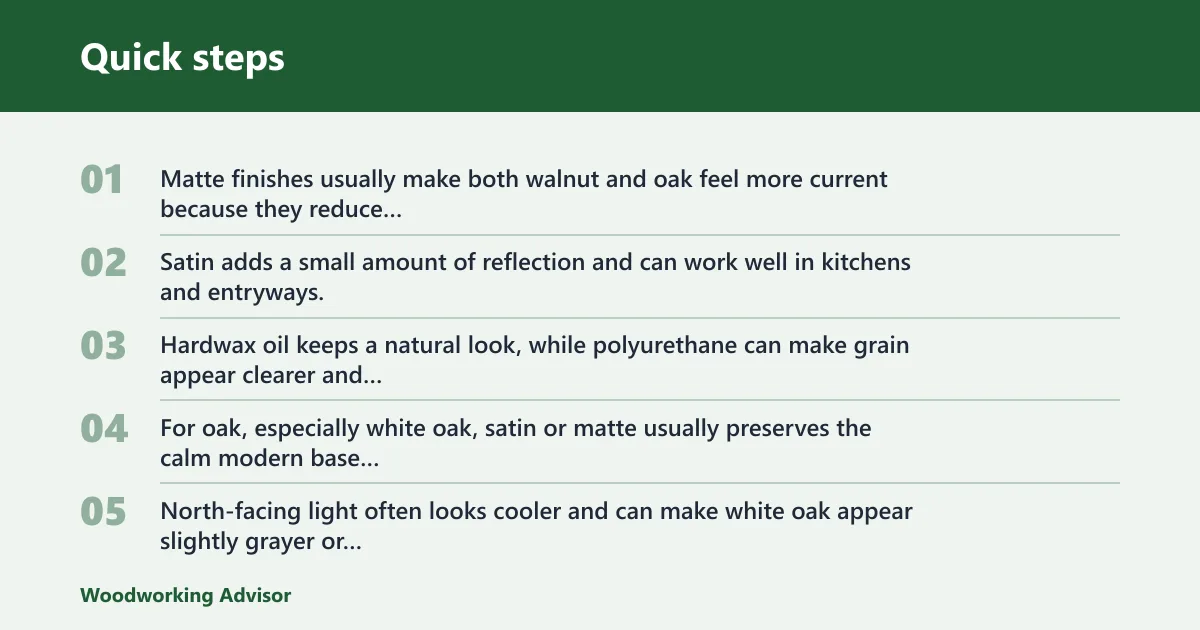
Matte finishes usually make both walnut and oak feel more current because they reduce glare and let the wood read as material rather than decoration. Satin adds a small amount of reflection and can work well in kitchens and entryways. Hardwax oil keeps a natural look, while polyurethane can make grain appear clearer and the surface more polished.
For walnut, lower sheen often works best. For oak, especially white oak, satin or matte usually preserves the calm modern base designers want.
North-facing light and warm LEDs
North-facing light often looks cooler and can make white oak appear slightly grayer or flatter, while walnut may read deeper and more dramatic. Warm LEDs do the opposite: they push both species warmer, which can make red oak feel more pink and walnut feel more golden than expected.
Daylight temperature also matters. A room that shifts from morning cool light to late-afternoon warmth may make sample matching unreliable unless you check the wood at several times of day.
UV exposure and sample matching
UV exposure changes color over time, and walnut is especially relevant here because it can darken and shift tone as it ages. That means a sample taken from a protected closet or a freshly opened board package may not match the finished floor or cabinet once the room receives months of daylight.
Suppose a south-facing living room has a wide walnut media wall and a smaller walnut shelving run beside it. The wall near the window can deepen or warm faster than the shaded shelving, so the two pieces may stop matching cleanly unless you account for UV exposure and finish differences.
Choose walnut if… choose oak if…
Choose walnut when you want contrast, depth, and warmer minimalism. Choose oak when you need a lighter base that adapts to changing finishes, mixed materials, and shifting daylight. For resale, oak is usually the safer broad-market choice, while walnut is stronger when the home already leans high-end and deliberately restrained.
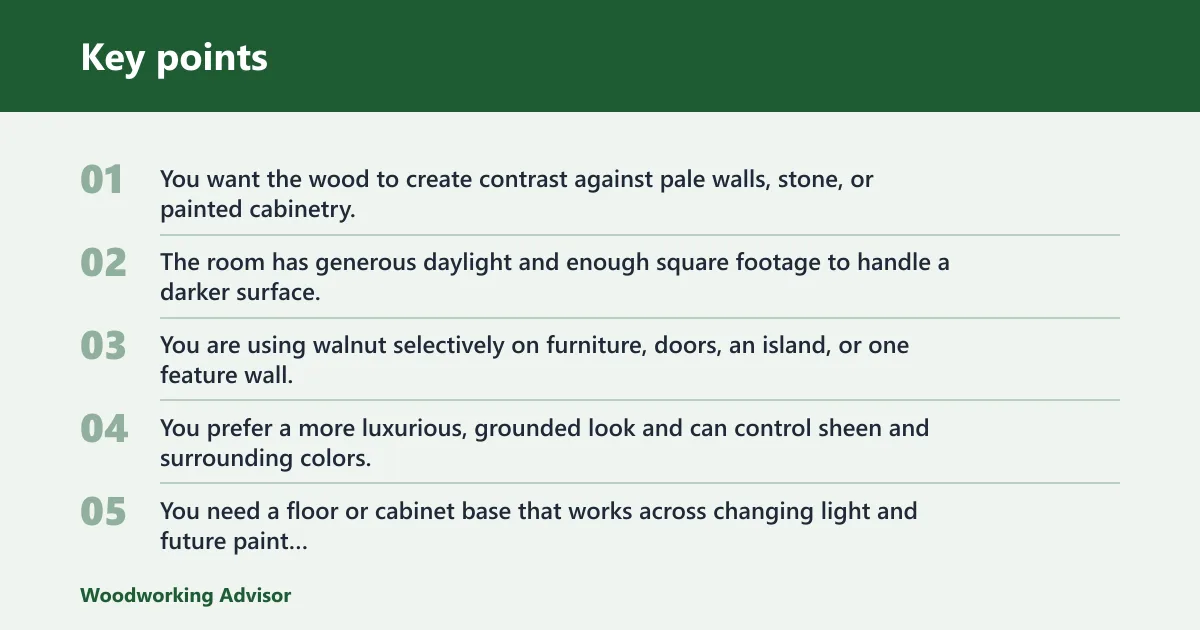
Choose Walnut if…
- You want the wood to create contrast against pale walls, stone, or painted cabinetry.
- The room has generous daylight and enough square footage to handle a darker surface.
- You are using walnut selectively on furniture, doors, an island, or one feature wall.
- You prefer a more luxurious, grounded look and can control sheen and surrounding colors.
Choose oak for a modern wood interior if…
- You need a floor or cabinet base that works across changing light and future paint updates.
- You want a more contemporary default, especially with white oak in flooring or cabinetry.
- You are mixing wood with stone, metal, fabric, and painted finishes in one sightline.
- You want the room to feel lighter, more open, and less sensitive to undertone shifts.
Picture a 220-square-foot north-facing living room with one wide window, pale walls, and a low sofa. Walnut flooring there can feel heavy unless the rest of the room stays very light; white oak flooring keeps the room open and makes the furniture easier to coordinate.
Mixed-material interiors and resale
Walnut and oak can sit in the same home, but they should not fight in the same view cone. If you use walnut cabinetry, keep the floor in white oak or a similar neutral base. If you use walnut floors, keep the millwork lighter and quieter so the room does not become too dark.
For resale, oak usually gives more flexibility because it suits a wider range of buyers and finish changes. Walnut can still help a home stand out, but it is most effective when used in measured doses rather than as the only wood tone in the entire interior.

Frequently asked questions
Is walnut or oak better for a modern interior?
Oak is usually better for a modern interior when you want a lighter, more adaptable base. Walnut is the stronger choice when you want deeper contrast and a warmer, more enclosed mood. If the room has limited daylight, oak is usually the safer default.
Does walnut make a room look darker than oak?
Yes. Walnut’s dark brown color range absorbs more visual light than oak, so it can make a room feel smaller or lower if used across large surfaces. That effect is strongest in compact rooms, low ceilings, and north-facing spaces with cooler light.
Is white oak better than red oak for contemporary design?
Usually yes. White oak has a more neutral-to-warm undertone, a calmer grain when quarter-sawn or rift-sawn, and a look that works better with modern finishes. Red oak can still work, but it is more often stained to reduce its pink-red cast.
Which wood species works better for floors, walnut or oak?
Oak is often the better floor species, especially white oak. It is commonly used in flooring because it offers a stronger practical base for everyday wear and a lighter tone that supports modern design. Walnut can work, but it is better reserved for larger, brighter rooms or lower-wear areas.
Does walnut scratch more easily than oak?
In practice, walnut often shows wear sooner because of its darker color, even when the actual hardness difference is not dramatic. The Janka hardness scale varies by species, so it is better to compare the exact walnut and oak species rather than assume one universal result.
How do walnut and oak compare on price for interiors?
Walnut is typically the more expensive interior wood, especially when you want clear, furniture-grade material. Oak is generally available in wider price ranges, with white oak often costing more than red oak. That difference is one reason oak is common for larger floors and whole-house cabinetry.
Sponsored / affiliate links. As an Amazon Associate I earn from qualifying purchases. I may earn additional commission from eligible campaigns.
 East West Furniture SP-7HH02 Sango Premier Engineered Hardwood Flooring - European Oak - 1/2 in x 7 in x Random Length Handscraped, 26.24 sqft/box, Special Walnut
 East West Furniture SP-5HH05 Sango Premier Engineered Hardwood Flooring - European Oak - 1/2 in x 7 in x Random Length Handscraped, 26.24 sqft/box, Shadow Grey