What Is S4S Lumber? Meaning, Actual Sizes & S3S/S2S Chart
S4S means “surfaced four sides”: both faces and both edges have been machine-planed, so the board has two flat, parallel faces and two flat, parallel edges. The catch is size. A 1×6 S4S board measures 3/4 x 5-1/2 inches, and 4/4 hardwood usually surfaces to 13/16 or 3/4 inch, not a full inch. This guide covers S4S vs S2S, S3S, S1S1E and rough lumber, plus a chart of actual sizes.
What S4S Means
Best Planer for Making Your Own S4S
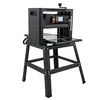 |
VEVOR 13″ Benchtop Thickness Planer, $306.99 If you would rather buy rough-sawn boards and surface them yourself than pay for S4S, a thickness planer is the machine that brings the second face parallel to the first. This one cuts up to 13 inches wide and 6.3 inches thick.
As an Amazon Associate we earn from qualifying purchases. |
The American Softwood Lumber Standard, PS 20, lists S4S alongside S1S, S2S, S1E, S2E, S1S1E, S1S2E and S2S1E as ways lumber can be dressed, meaning machined for a smooth surface and uniform size.
Two limits are worth knowing. S4S covers the faces and edges only, so the ends are left as cut. And S4S does not guarantee the board stays flat: wood keeps moving with humidity, and a pre-milled board that left the mill flat can cup or twist before it gets to your project. Check each board by eye before you buy.
S4S is what you usually find in the hardwood section of a big-box store, and 2x4s and 2x6s are surfaced the same way, which is why a “2×4” is not 2 by 4 inches.
How Much Wood Actually Gets Removed Going From Rough-Sawn to S4S
Planing rough-sawn lumber down to S4S removes real thickness, which is why a “1-inch” rough board finishes at 3/4 inch or a little more. Two steps take material off:
- Face-jointing (flattening one face on a jointer to remove saw marks and cupping) typically takes off about 1/16 to 1/8 inch.
- Planing (running the board through a thickness planer to make the opposite face parallel and smooth) removes another 1/32 to 1/16 inch per face.
Together that is typically 1/8 to 1/4 inch from rough to S4S, according to a hardwood supplier thickness guide. Here is what that does to the thickness numbers on a hardwood order:
| Hardwood thickness | Rough thickness | Typical S4S thickness |
|---|---|---|
| 4/4 | 1 inch | 13/16 to 3/4 inch |
| 5/4 | 1-1/4 inch | 1-1/16 to 1 inch |
| 6/4 | 1-1/2 inch | 1-5/16 to 1-1/4 inch |
| 8/4 | 2 inches | 1-13/16 to 1-3/4 inch |
The range exists because suppliers surface to different targets: 13/16 inch is the traditional finish for 4/4, while many suppliers mill to a flat 3/4 inch. Ask which one you are getting before you design around a thickness. Our guide to 8/4 wood explains the quarter system in more detail.
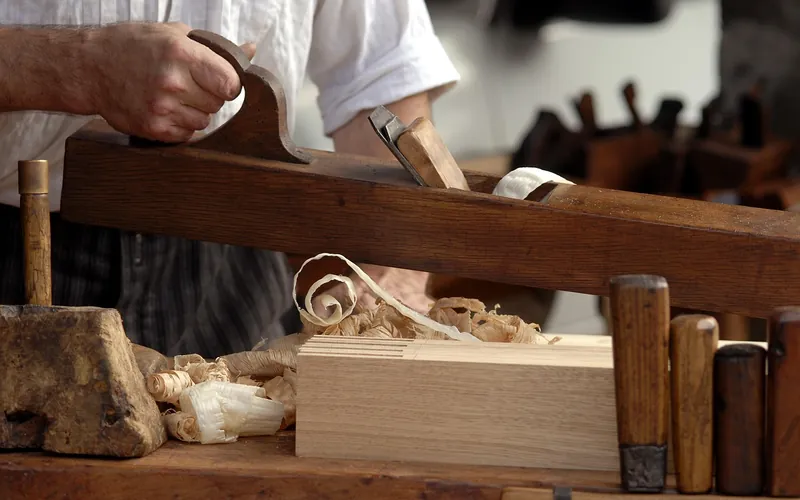
Rough boards must start thicker than the finished size. PS 20 requires the minimum rough thickness of dry lumber 1 inch or more to be at least 1/8 inch greater than the minimum dressed thickness (up to 20 percent of a shipment may be 3/32 inch greater). Source: NIST PS 20-25, section 5.1
If you buy rough stock to surface yourself, plan to lose the full 1/8 to 1/4 inch and buy at least that much extra thickness over your finished target. One more cost fact: board feet are figured on the nominal, rough thickness, not the surfaced one, so surfacing is a service you pay for rather than a discount.
Benefits of S4S Lumber
S4S lumber saves you the step of flattening and smoothing wood yourself. Every face is already planed square and to a consistent thickness, so boards from the same batch measure the same and sit flush against each other without extra prep. That matters most for anything joined edge to edge, where even a 1/16 inch mismatch shows as a visible step.
The trade-off is cost. You pay a premium over the same species rough-sawn, because the supplier is doing the jointing and planing for you. For a one-off project, that premium is usually cheaper than buying a jointer and planer. If you go through a lot of lumber, owning both machines pays off over time.
Common Applications
S4S lumber shows up anywhere the wood stays visible or gets handled directly. Furniture making is the most common use: tabletops, chair legs, and shelving all need square, consistent stock so joints fit tight and finishes go on evenly. Interior trim is nearly always surfaced too.
Cabinetry, drawer boxes, and anything edge-glued into a panel, like a cutting board or tabletop, also call for S4S. S2S stock would need its edges jointed or ripped straight first, and rough stock would need all four sides machined.
S4S vs S2S vs S1S vs Rough Lumber: Full Comparison
The same board can be sold in several stages of surfacing. Here is how S4S compares with the others so you can match the stage to your shop. For more on buying, see our guide to buying lumber for woodworking.
| Type | What It Means | Surfaces Smooth | Typical Use | Price (relative) |
|---|---|---|---|---|
| S4S (Surfaced 4 Sides) | Both faces and both edges planed smooth | 4 of 4 | Furniture, cabinets, trim, edge-glued panels | $$$ |
| S3S (Surfaced 3 Sides) | Both faces planed, one edge ripped straight | 3 of 4 | Buyers who will rip the second edge to width themselves | $$ |
| S2S (Surfaced 2 Sides) | Both faces planed, edges left as sawn | 2 of 4 (faces only) | Buyers who will joint and rip the edges themselves | $$ |
| S1S1E (Surfaced 1 Side, 1 Edge) | One face and one edge planed | 2 of 4 | Stock where only one face and edge need to be smooth | $$ |
| S1S (Surfaced 1 Side) | One face planed, the other left rough | 1 of 4 | Stock where only one face shows | $$ |
| RGH (Rough Cut) | As sawn, no planing and no jointed edges | 0 of 4 | Resawing, timbers, rustic projects, boards you will surface yourself | $ |
Quick tip: choose S4S when the wood will be visible and you want to start cutting joinery right away.
S4S Lumber Sizes and Actual Dimensions
S4S lumber is sold by nominal size, but the actual finished size is smaller because the board is dried and planed on all four sides. The chart below uses the minimum dressed sizes in PS 20, Table 3 (NIST PS 20-25). “Dry” means 19 percent moisture or less, which is how most boards sold in stores are surfaced; “green” means above 19 percent.
| Nominal Size | Actual Dry Size (inches) | Actual Green Size (inches) | Common Use |
|---|---|---|---|
| 1 x 2 | 3/4 x 1-1/2 | 25/32 x 1-9/16 | Trim, edging, small frames |
| 1 x 3 | 3/4 x 2-1/2 | 25/32 x 2-9/16 | Shelf edging, battens |
| 1 x 4 | 3/4 x 3-1/2 | 25/32 x 3-9/16 | Baseboards, face frames, shelving |
| 1 x 6 | 3/4 x 5-1/2 | 25/32 x 5-5/8 | Paneling, shelves, drawer fronts |
| 1 x 8 | 3/4 x 7-1/4 | 25/32 x 7-1/2 | Wide shelving, cabinet sides |
| 1 x 10 | 3/4 x 9-1/4 | 25/32 x 9-1/2 | Wide panels, tabletops |
| 1 x 12 | 3/4 x 11-1/4 | 25/32 x 11-1/2 | Shelving, tabletop boards |
| 2 x 4 | 1-1/2 x 3-1/2 | 1-9/16 x 3-9/16 | Light framing, workbench legs |
| 2 x 6 | 1-1/2 x 5-1/2 | 1-9/16 x 5-5/8 | Framing, benches, outdoor furniture |
| 2 x 8 | 1-1/2 x 7-1/4 | 1-9/16 x 7-1/2 | Joists, heavy benches |
| 2 x 10 | 1-1/2 x 9-1/4 | 1-9/16 x 9-1/2 | Joists, stair stringers |
| 2 x 12 | 1-1/2 x 11-1/4 | 1-9/16 x 11-1/2 | Joists, wide beams |
| 4 x 4 | 3-1/2 x 3-1/2 | 3-9/16 x 3-9/16 | Posts, heavy legs |
Notice the pattern: widths of 6 inches and under lose 1/2 inch from nominal, and widths of 8 inches and over lose 3/4 inch. These are minimum sizes measured at manufacture, and lumber shrinks or swells with moisture, so a board in your shop can measure a hair different.
Hardwood S4S is different. It is usually sold in random widths and lengths rather than fixed nominal widths, and thickness is specified in quarters (see the rough-to-S4S table above). Always confirm actual dimensions with your supplier before ordering, because finished thickness varies slightly by mill.
Rough Cut Lumber
Rough cut lumber comes straight off the saw with no planing. The surface is uneven and often shows saw marks. It is usually the cheapest option per board foot and is the right choice for timbers, resawing into thinner stock, or rustic projects where the sawn texture is part of the look. It needs face-jointing and planing before it is ready for glue-ups or a finish.
Dimensional Lumber
Dimensional lumber is softwood milled to the standard construction sizes in the chart above (2×4, 2×6 and so on) and surfaced on all four sides. It is ready to cut and fasten without further prep, which is why it is the default at every home center. For how 1x and 2x boards compare, see our guide to 1x vs 2x lumber dimensions.
How to Choose S4S Lumber
A few things matter more than others when picking S4S boards. Hardwoods like maple and oak wear better but cost more and are harder on tools than pine. Moisture content matters just as much. Ask for kiln-dried (KD) stock, since wetter boards shrink and can warp or cup after you have built with them.
Measure the actual thickness before you design around it, since S4S from different suppliers can differ by 1/16 inch. Check each board for straightness, cracks, and knots, and buy a little extra to cut around defects.
Cost Considerations
Price depends mostly on species and thickness. Softwoods like pine and fir are the cheapest S4S option. Hardwoods vary more: poplar and red oak sit at the affordable end, while walnut and cherry cost noticeably more per board foot.
Buying S4S instead of rough-sawn adds a real premium, but it replaces hours of jointing and planing and the cost of the machines to do it. Remember that you are billed on the rough, nominal thickness, so compare suppliers by price per board foot of the same species and thickness, not by the final measured size.
Best Hardwood Species for S4S Lumber
Not all hardwood is sold pre-surfaced, but the most popular species are widely available as S4S boards. Here are the best options by project goal:
- Hard Maple: one of the hardest domestic hardwoods. Best for cutting boards, workbench tops, and cabinets.
- Red Oak: widely available, affordable, and easy to work. Ideal for furniture frames and shelving.
- Walnut: a premium choice with deep brown heartwood. Best for furniture and tabletops.
- Poplar: the budget hardwood, machines easily, and a first choice for painted cabinets and trim.
- Cherry: a fine-grained hardwood that deepens in color with age. Used for high-end furniture.
- White Oak: denser and more water-resistant than red oak, so it also suits outdoor projects.
Buying tip: look for kiln-dried S4S boards with moisture content below 8 percent for indoor furniture. Boards with higher moisture will shrink and can warp after installation, a common cause of gaps in finished cabinet doors.
Caring for and Sourcing S4S Lumber Responsibly
Finished S4S lumber needs little upkeep before it is built into a project: keep it dry, stack it flat with stickers between layers for airflow, and keep it out of direct sun so it does not dry unevenly. Once it is part of a finished piece, a coat of oil, wax, or varnish protects it from moisture and wear. See our guide on applying linseed oil to wood for a simple natural finish.
Frequently Asked Questions
What Is S4S Wood Used For?
S4S wood is used for furniture, cabinetry, interior trim, shelving, and any project where the wood stays visible or gets edge-glued into panels. It is ready to cut and join without extra jointing or planing.
Is S4S Lumber More Expensive Than Rough-Sawn?
Yes. S4S costs more per board foot because the mill has already done the jointing and planing. Board feet are figured on the rough, nominal thickness, so you pay for 1 inch even though a 4/4 S4S board measures 3/4 to 13/16 inch. For a one-off project the premium usually costs less than buying the machines to surface rough stock yourself.
What Is The Difference Between S4S And S2S?
S4S has both wide faces and both edges planed smooth and square. S2S only has the two wide faces planed; the edges are left as sawn. S4S suits visible woodwork you can use right away, while S2S suits buyers who will straighten and rip the edges themselves.
How Much Thickness Does A Board Lose Going From Rough-Sawn To S4S?
Typically 1/8 inch to 1/4 inch in total, split across face-jointing (about 1/16 to 1/8 inch) and planing (about 1/32 to 1/16 inch per face). That is why a rough 4/4 (1-inch) board usually finishes between 3/4 and 13/16 inch once it is S4S.
Is S4S Lumber Always Perfectly Straight?
It is flat and square when it is milled, but wood keeps responding to humidity after that. A board that was straight when you bought it can still cup or bow later if it is not stored flat, stickered, and kept dry.
What Does S3S Mean in Lumber?
S3S means surfaced three sides: both faces are planed and one edge is ripped straight, while the second edge is left as is. It sits between S2S and S4S and suits buyers who will rip the last edge to width on their own table saw.
Is a 1×6 S4S Board Really 1 Inch Thick?
No. Under the PS 20 softwood standard, a nominal 1-inch board is dried and surfaced to a minimum of 3/4 inch thick, and a nominal 6-inch width to 5-1/2 inches, so a 1×6 measures 3/4 x 5-1/2 inches. A board measured while still green, above 19 percent moisture, can run slightly larger at 25/32 x 5-5/8 inches.
Conclusion
S4S lumber trades a cost premium for ready-to-use, consistently sized boards, smooth on both faces and both edges. Knowing the actual sizes and how much material surfacing removes helps you order the right thickness the first time, whether you buy S4S or run rough-sawn boards through your own planer. For more projects and fixes, browse our woodworking projects and tips guide.
Buying rough stock to surface yourself? See how to buy rough cut lumber. And for species grading terms, see what SPF lumber means: SPF describes the species group, while S4S describes how the board was milled.
Sponsored / affiliate links. As an Amazon Associate I earn from qualifying purchases. I may earn additional commission from eligible campaigns.