What Is a Frost Line and Why Does It Matter for Footings?
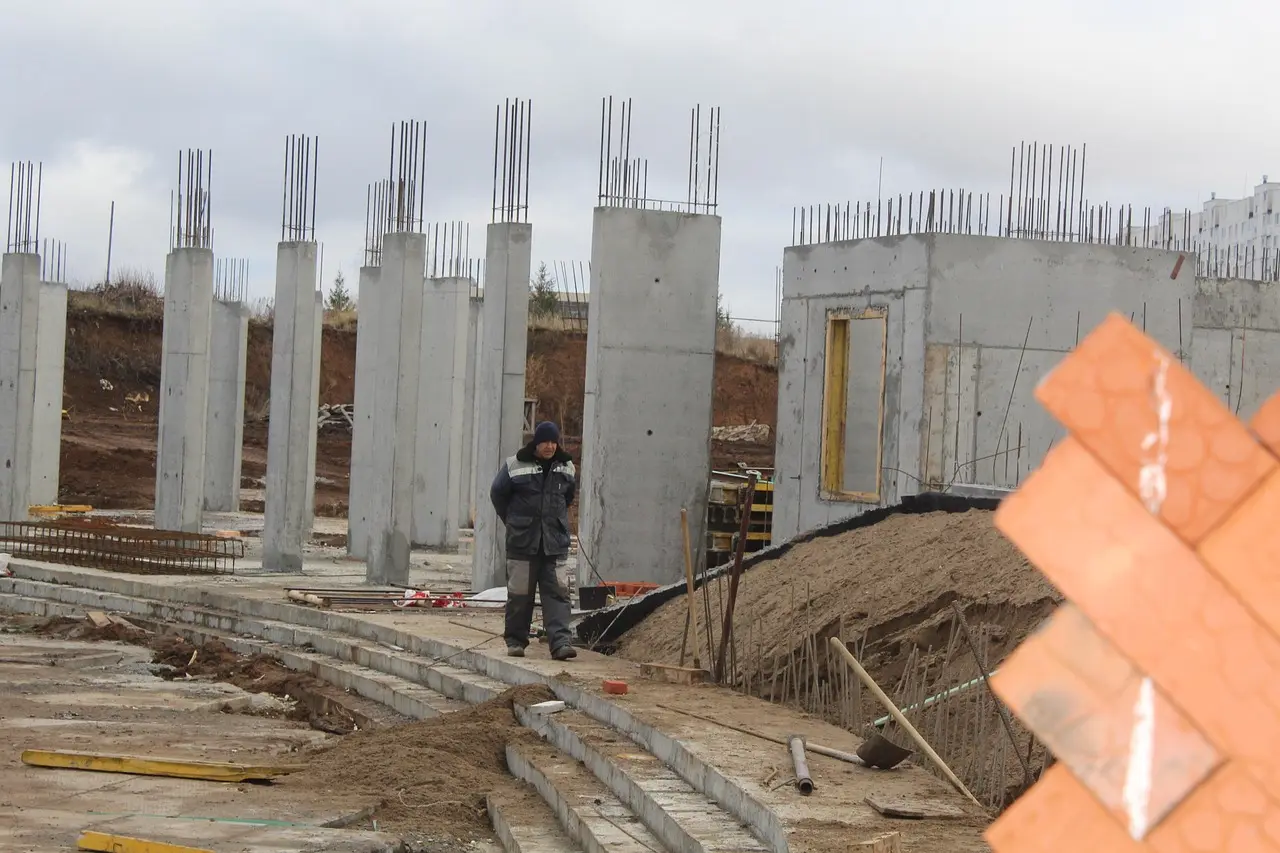
The frost line is the maximum expected depth of ground freezing, so your posts should usually extend below your local frost depth or use a frost-protected or engineered alternative. Shallow footings can heave, tilt, crack, and pull fences or decks out of alignment. This guide explains how frost depth affects soil movement, how to check local depth, and when drainage, soil conditions, or a different footing system matters.
What is the frost line?
The frost line, or frost depth, is the maximum depth the ground is expected to freeze in a typical winter. It is not one fixed number. Local building departments use it to set minimum footing depth, and that depth changes with climate, soil type, snow cover, and moisture.
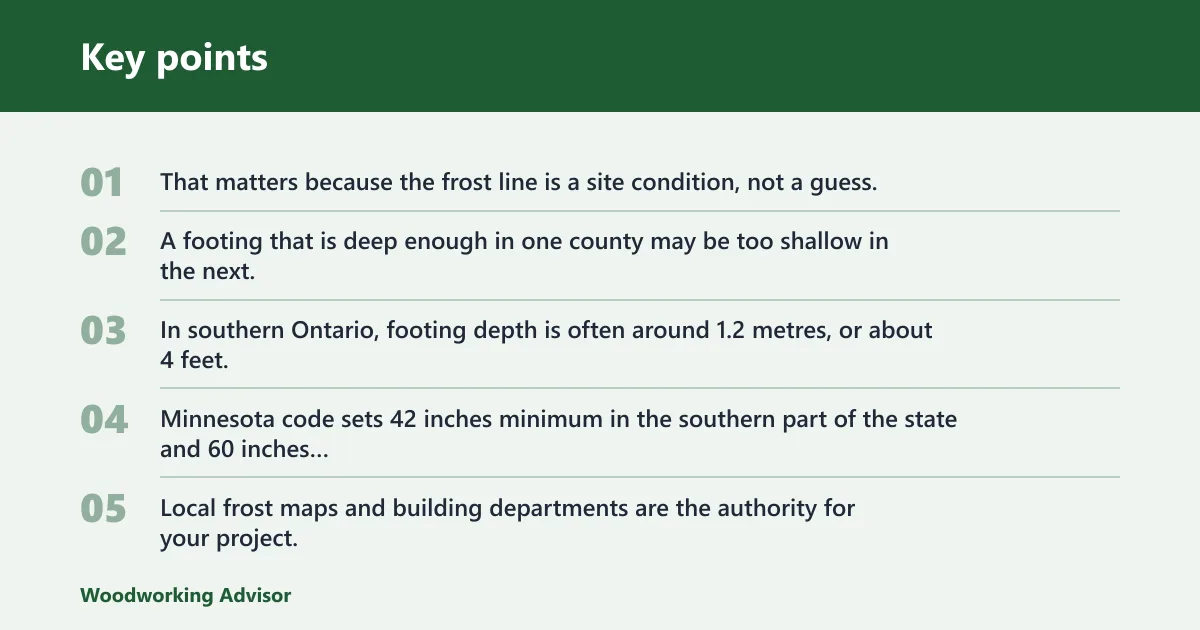
That matters because the frost line is a site condition, not a guess. A footing that is deep enough in one county may be too shallow in the next. In southern Ontario, footing depth is often around 1.2 metres, or about 4 feet. Minnesota code sets 42 inches minimum in the southern part of the state and 60 inches minimum in the northern part of the state.
Local frost maps and building departments are the authority for your project. If your area publishes a frost depth, use that number first, then check the site itself for wet soil, fill, or drainage problems.
Why local frost depth changes
Climate drives the biggest difference, but soil and surface conditions matter too. Decks.com notes that frost lines are commonly 36 to 60 inches, while deeper frost depths can reach 60 to 96 inches. Some interior Alaska areas may experience 8 to 10 feet of frost. Family Handyman reports that Missouri may have a frost depth of only 12 inches.
Snow cover can reduce frost penetration because it insulates the ground. That does not mean a snowy site is safe by default. Wind, exposed ground, thin cover, and long cold snaps can still push frost deeper than you expect.
Why does frost heave happen?
Frost heave happens when water in the soil freezes, expands, and forms ice lenses that push the soil upward. That upward force can lift footings, posts, and deck structures. Soil that is both moisture-rich and frost-susceptible, including some clay-heavy soils and silts, is particularly prone to frost heave.
The failure is usually gradual. A footing may move a little one winter, then settle unevenly, then move again the next season. Over time, repeated heaving can leave posts leaning, railings out of plumb, and deck surfaces out of level.
Why shallow posts fail over time
Shallow supports tend to move with seasonal freeze and thaw cycles. A fence post can lean a little, then get straightened, then lean again. That repeated correction may hide the real problem: the support is sitting in soil that still freezes and expands around it.
Picture a 6-foot privacy fence on a wet clay lot with posts set too shallow. One winter, several posts rise unevenly. The owner re-levels the fence in spring, but the next freeze repeats the movement. That cycle can distort rails, loosen fasteners, and shorten the life of the fence.
How deep should footings go?
Footings should extend below the local frost depth, and that minimum depth comes from code, not from a rule of thumb. Depth is about frost protection first, then load support. A footing can carry weight but still fail if frost can get under or around it.
Some guidance goes a little deeper than the frost line for margin. The same source recommends digging a footing four to six inches deeper than the frost depth. Local code may require different dimensions and details, so check the local building department before using that as a rule. (Familyhandyman)
For code work, the local building department decides the minimum. For a DIY project, that means you should verify the frost depth before you dig, not after the forms are set.
Depth versus load support
Structural depth and frost depth are related, but they are not the same thing. Structural depth is about carrying the load from the deck, porch, fence, or house. Frost depth is about resisting uplift from freezing soil. A footing can be strong enough for weight and still be wrong for a cold climate.
That distinction matters most on light structures. A deck post or fence post may carry a modest load, yet still heave if the base sits in freezing soil. A heavier building may need both deeper support and larger footings, depending on the plan and local code.
Which soils raise frost risk?
Clay-heavy soils raise frost risk because they hold water, and water is the fuel for frost heave. Sandy, well-drained soils are less susceptible. Wetlands, high groundwater, and sites that stay saturated after rain are also higher risk because the soil has more water available to freeze.
Soil type changes the footing decision as much as climate does. A shallow footing in well-drained sand may perform better than the same depth in wet clay, but neither should bypass local frost-depth rules. The code minimum still applies.
How snow cover changes frost penetration
Snow cover can insulate soil and slow frost penetration. Thin, patchy, or wind-scoured snow offers less protection than a stable blanket of snow. That is why the same yard can freeze differently from one winter to the next.
Do not count on snow as a footing strategy. It may reduce frost depth, but it is variable, temporary, and outside your control. Footings still need to meet the local frost requirement for the site conditions you are actually building on.
Frost line decision table
This table gives a simple decision framework for footing depth. It separates project type, soil condition, moisture condition, and frost risk so you can tell when depth alone is enough and when you need more than depth.
| Project type | Soil condition | Moisture condition | Local frost risk | Recommended action |
|---|---|---|---|---|
| Fence post | Well-drained sand | Low to moderate | Moderate | Set below local frost depth and verify post size and embedment with code. |
| Fence post | Clay or mixed fill | High or stays wet | Moderate to high | Use deeper footing, improve drainage if possible, and ask the building department before digging. |
| Deck footing | Well-drained soil | Low | High | Use concrete pier or sonotube footing below local frost depth; check deck code and beam loads. |
| Deck footing | Clay, wet site, or high groundwater | High | High | Depth alone is not enough; get drainage and foundation-system input, and consider an engineered alternative. |
| Porch or small outbuilding | Native soil, not fill | Moderate | High | Use code-based footing depth and confirm bearing plus frost protection before forming. |
| Small outbuilding | Questionable fill or disturbed soil | Any | Any | Stop and call the building department or engineer; do not rely on depth alone. |
| Pergola | Sandy, well-drained soil | Low | Moderate | Use local frost depth and wind-load guidance; lighter structures still need frost-safe support. |
- Find the local frost-depth requirement for your address.
- Check whether the site is clay, sand, fill, wetland, or high groundwater.
- Decide whether the project is a fence, deck, porch, pergola, or small outbuilding.
- Choose a footing system that reaches below frost depth and fits the soil.
- If the site is questionable, stop and get local code or engineering input before digging.
Should you use helical piers?

Helical piers can be a practical frost-protection option because they are often used to help resist heaving, and they may be chosen when deep concrete footings are difficult or slow to install. They can be a strong choice for decks, porches, and light structures when the soil profile suits them.
They are not the answer everywhere. Rocky soil can limit their use, and a poor site still needs a proper design. Concrete piers and sonotube footings remain common choices when the soil is workable and the code calls for below-frost-depth support.
Where concrete piers and sonotubes fit
Concrete piers and sonotube footings are common for decks and post foundations in cold climates. A sonotube is a smooth-sided footing form, usually a waxed cardboard tube. Rebar is often used in these footings when the design calls for it.
These footings still need to be placed below local frost depth. A smooth-sided tube does not erase frost risk; it just helps the concrete behave better in the soil. Bell-shaped bottoms can also be used in some designs when they are permitted and detailed correctly.
Site limits that call for another system
Call for another system when the site has wet fill, unstable soil, high groundwater, or rocks that make proper installation doubtful. That is also the point where an engineer can help decide whether a deeper pier, a different layout, or a helical system is the better fit.
A common first-timer mistake is to treat deeper holes as the only fix. On a wet clay lot, extra depth without drainage may still leave the footing in a freeze-prone zone. In that case, the right answer is a site-specific fix, not just more concrete.
When to call the building department or an engineer
Call before digging if the soil is questionable, the site is wet, or the project is anything more than a simple replacement in known good ground. A building department can confirm the local frost depth and footing rules. An engineer is the right step when conditions are outside normal code assumptions.
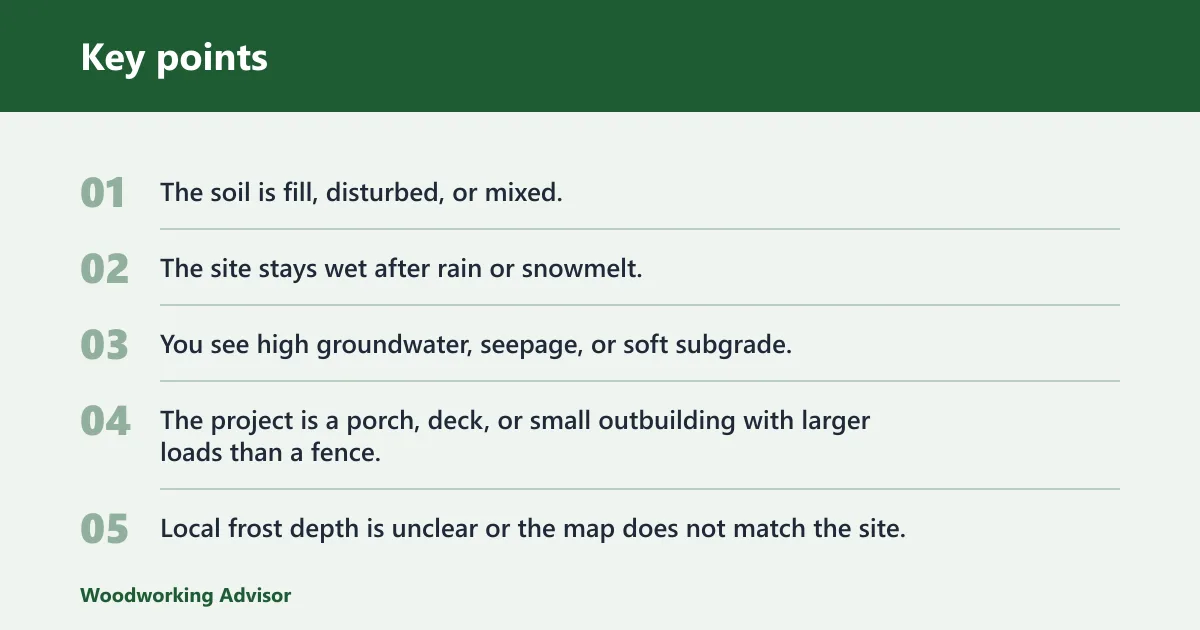
Use this short checklist before you pour:
- The soil is fill, disturbed, or mixed.
- The site stays wet after rain or snowmelt.
- You see high groundwater, seepage, or soft subgrade.
- The project is a porch, deck, or small outbuilding with larger loads than a fence.
- Local frost depth is unclear or the map does not match the site.
- You are considering helical piers in rocky or irregular soil.
Frequently asked questions
How deep do footings need to be below the frost line?
Footings should extend below the local frost depth, and that minimum comes from code. The same source recommends going four to six inches deeper than the frost depth. That extra depth may help, but it does not replace drainage fixes or a better footing system where the soil is wet or unstable.
Does the frost line vary by location?
Yes. The frost line changes with climate, soil, snow cover, and moisture. Minnesota requires 42 inches minimum in the southern part of the state and 60 inches minimum in the northern part. The same source notes Missouri may have a frost depth of only 12 inches, while some interior Alaska areas may reach 8 to 10 feet.
How deep should deck footings be in a cold climate?
Deck footings in a cold climate should usually go below the local frost depth and meet local code. In practice, that often means concrete piers or sonotube footings instead of shallow blocks. If the site is wet clay or high groundwater, depth alone may not be enough, and drainage or another system may be needed.
Are helical piers better than concrete footings for frost protection?
Helical piers can be very good for frost protection because they resist uplift and reduce heaving concerns. They are not automatically better everywhere. Rocky soil can limit their use, and some sites are better served by concrete piers or sonotube footings that fit the code and the soil conditions.
Sponsored / affiliate links. As an Amazon Associate I earn from qualifying purchases. I may earn additional commission from eligible campaigns.