How Much Does It Cost to Stain a Fence?
Fence staining usually costs about $1.25 to $3.50 per linear foot for a basic project, with many homeowners spending about $250 to $1,200 depending on fence size, prep, and stain type. Skip prep or choose the wrong product, and you can pay for peeling, lap marks, and an early recoating. This guide shows how to estimate costs from fence dimensions, surface condition, labor, and stain choice before you request quotes or buy materials.
Typical cost range
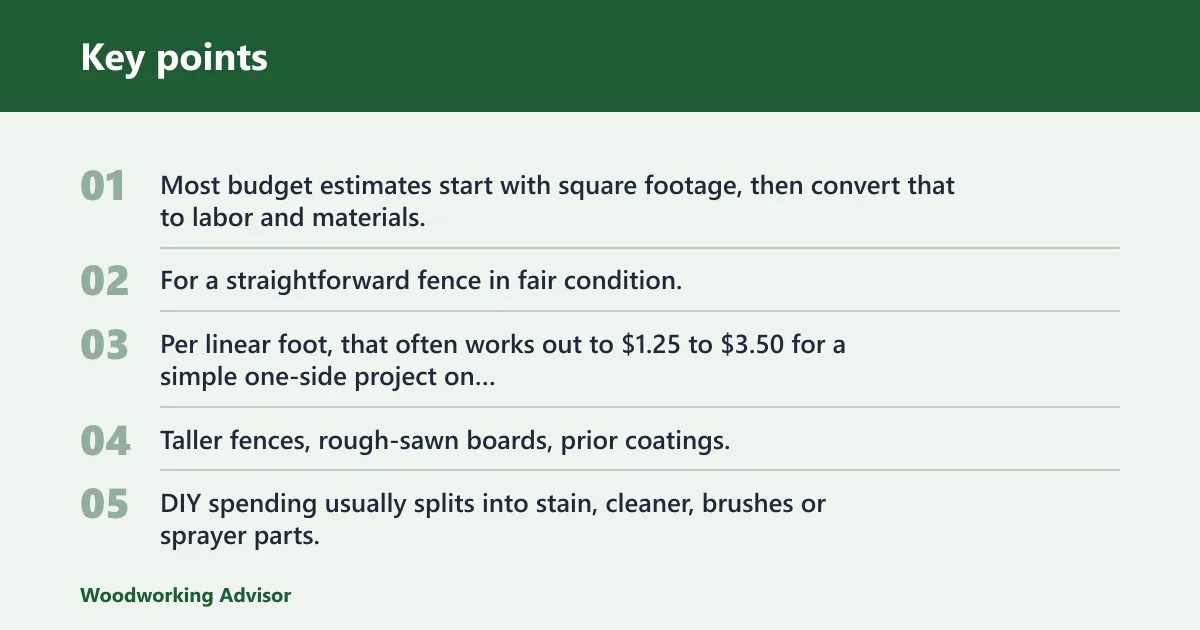


Most budget estimates start with square footage, then convert that to labor and materials. For a straightforward fence in fair condition, a common planning range is about $1.00 to $3.00 per square foot for DIY materials and supplies, or about $2.50 to $7.00 per square foot when you hire a contractor and the job includes prep and application.
Per linear foot, that often works out to $1.25 to $3.50 for a simple one-side project on an average-height fence. Taller fences, rough-sawn boards, prior coatings, and repair work push the number higher because they add both surface area and labor time.
DIY versus pro budget ranges
DIY spending usually splits into stain, cleaner, brushes or sprayer parts, masking supplies, and a washer rental if needed. Professional pricing bundles labor, materials, setup, cleanup, and sometimes minor repairs, so the quote looks larger even when the work scope is similar.
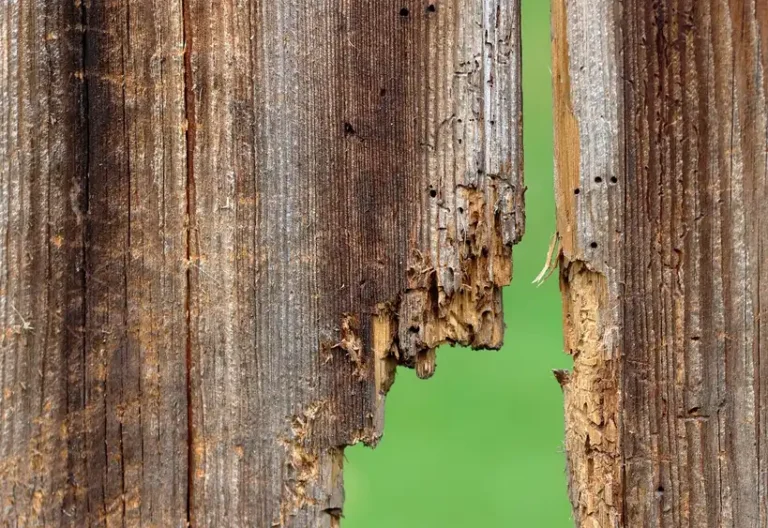
A clean-and-stain package typically costs less than a stain-and-seal package if the sealer is built into the stain. Repair add-ons are separate again. That separation matters because rotted pickets, loose rails, and failed old coatings can double prep time before the first coat goes on.
What moves the price most
Fence size is the biggest cost driver, but it is not the only one. Height, fence style, roughness, mildew removal, and whether the existing finish must be stripped all change the final bill.
Weather matters too. Stain needs dry wood, a dry forecast, and temperatures within the label range. If the fence stays damp after washing, the project stalls until the moisture level drops enough to accept coating.
Fence cost estimator table
| Estimator item | Example value | DIY budget | Pro budget |
|---|---|---|---|
| Fence length | 200 linear feet | — | — |
| Average height | 6 feet | . | . |
| Total square footage | 1,200 sq ft, one side | . | . |
| Prep level | Moderate: wash, spot sand, mildew treatment | $75 to $175 | $200 to $500 |
| Stain type | Semi-transparent, water-based | $245 to $840 | $245 to $840 |
| Material gallons | 14 gallons with waste allowance | $245 to $840 | $245 to $840 |
| Labor range | Brush, roller, or sprayer application | $0 to $150 for tools and rental | $1,200 to $3,000 |
| Final budget range | One-side project on a 6-foot fence | $320 to $1,165 | $1,645 to $4,340 |
This table assumes one coat system with enough material for touch-ups and waste. If you need two coats, heavy stripping, or both sides of a privacy fence, the material and labor ranges rise fast. A board-on-board fence may also need more stain than a simple picket fence because of overlap and shadowed edges.
How do you estimate fence size?
Estimate fence size by multiplying linear feet by average height, then adjust for fence style. A 100-foot run at 6 feet high gives you about 600 square feet on one side. Double-sided staining, common on some privacy fences, roughly doubles the surface area.
Convert linear feet to square feet
The basic formula is simple: linear feet × average height = square feet for one side. A 150-foot fence at 4 feet high equals 600 square feet. The same length at 8 feet high equals 1,200 square feet, which changes both stain volume and labor time.
Adjust for average fence height
Use the average height if the fence steps with the grade. A fence that ranges from 5 to 7 feet tall does not cost the same as a flat 6-foot run, but 6 feet is a practical budgeting estimate when you are pricing the whole line.
Account for privacy, picket, and board-on-board designs
Privacy fences usually have the most paintable surface because they cover more board area and often get stained on both sides. Picket fences have gaps that reduce surface area, while board-on-board fences add overlap, extra edges, and more time per linear foot. That is why two fences with the same length can cost very different amounts.
What changes labor cost
Labor cost changes with prep time, fence condition, and local rates. Contractor pricing by square foot is often around $1.00 to $4.00 per square foot for application and related prep. More difficult surfaces can land above that range.
Hourly rates versus per-square-foot pricing
Hourly pricing works better when the fence has unknown issues such as loose boards, old finish, or thick mildew. Per-square-foot pricing is easier to compare across bids, but you still need to confirm what is included: washing, sanding, stripping, masking, stain, cleanup, and any repair allowance.
Prep time and site conditions
Prep can take as long as the coating step. Power washing, sanding rough fibers, and removing mildew all add labor. If the fence is heavily weathered or coated with failing stain, stripping can become the largest line item because it slows down every later step.
Suppose a 120-foot cedar fence already has peeling stain on the shaded side. The contractor may spend more time on stripping and sanding than on the actual application, which means a quote based only on fence length will understate the real cost.
Regional price differences
Labor rates vary by region, season, and contractor demand. Urban markets and areas with short staining seasons often price higher because crews have less open schedule time. Climate also matters: humid regions may require more mildew treatment and longer dry windows before coating.
How much do materials add?
Material cost depends on coverage rate, coat count, and waste. Most fence stains list coverage somewhere around 150 to 300 square feet per gallon, but rough or porous wood can cut that number down. For budgeting, a waste factor of 10% to 20% is a safer starting point.
Coverage rate per gallon
Transparent and semi-transparent stains often spread farther than solid color products, but rough-sawn wood absorbs more than smooth lumber. A 1,200-square-foot fence side may need 5 to 8 gallons for one coat or 10 to 16 gallons for two coats, depending on product and surface loss.
Waste factor and rough wood loss
Sprayers, tray spills, and end-grain absorption all eat into usable coverage. Rough, weathered lumber also drinks more stain than new wood. If the fence is dry and textured, add more material rather than assuming the label coverage will hold exactly.
One coat versus two coats
One coat is cheaper, but it may not be enough on very dry or faded fences. Two coats improve color consistency and often improve water resistance, though the second coat adds both labor and material. That is why a stain-and-seal project may price higher than a single-coat stain job, even when the stain itself is similar.
Which stain type costs more?
Transparent stain usually costs the least in material, semi-transparent falls in the middle, and solid color stain often costs the most because it carries more pigment and usually uses more product. Oil-based stains can cost more to buy and may require more careful cleanup than water-based products, though exact pricing varies by brand and region.
Transparent stain
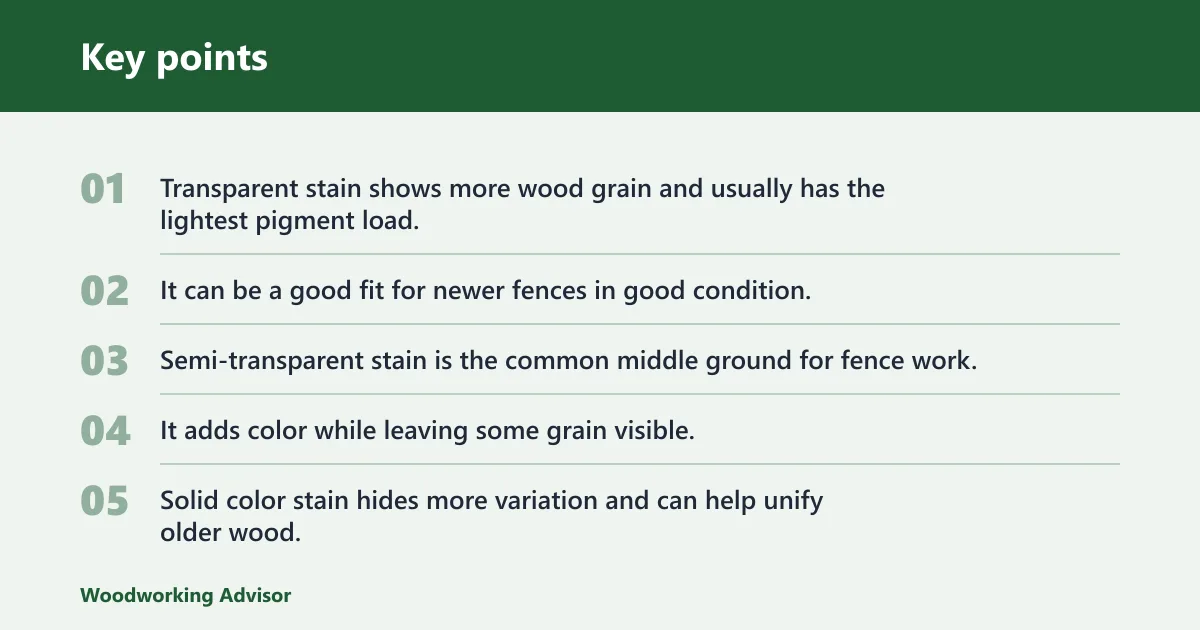
Transparent stain shows more wood grain and usually has the lightest pigment load. It can be a good fit for newer fences in good condition, but it gives less color control and may need more frequent recoating in harsh sun.
Semi-transparent stain
Semi-transparent stain is the common middle ground for fence work. It adds color while leaving some grain visible, and it often fits homeowners who want a natural look without paying for a fully opaque finish.
Solid color stain
Solid color stain hides more variation and can help unify older wood, but it is less forgiving if the surface has uneven absorption. It also tends to show prep flaws if the old finish was not removed well enough before coating.
Oil-based versus water-based products
Oil-based products often penetrate well and can be easier to feather on some woods, while water-based products dry faster and usually clean up with water. Faster dry time can shorten the project schedule, but only if the fence is dry enough and the forecast stays clear.
Prep work and application costs
Prep work is where many fence jobs run over budget. Power washing, sanding, and mildew removal are separate tasks, and each one adds time before staining starts. On a weathered fence, the prep bill can be close to the application bill.
Power washing, sanding, and mildew removal
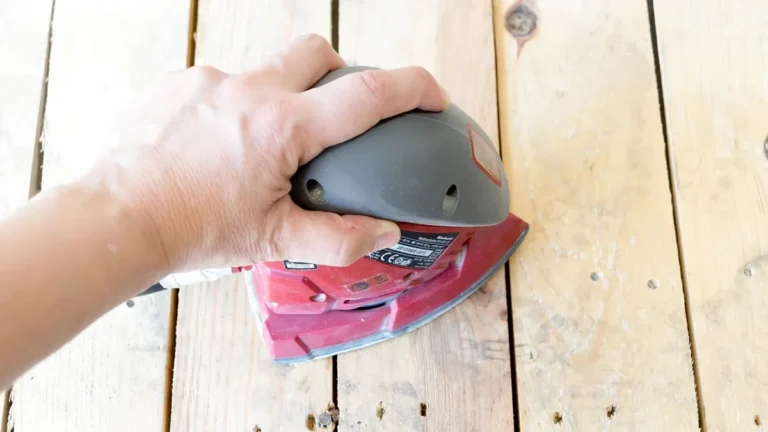
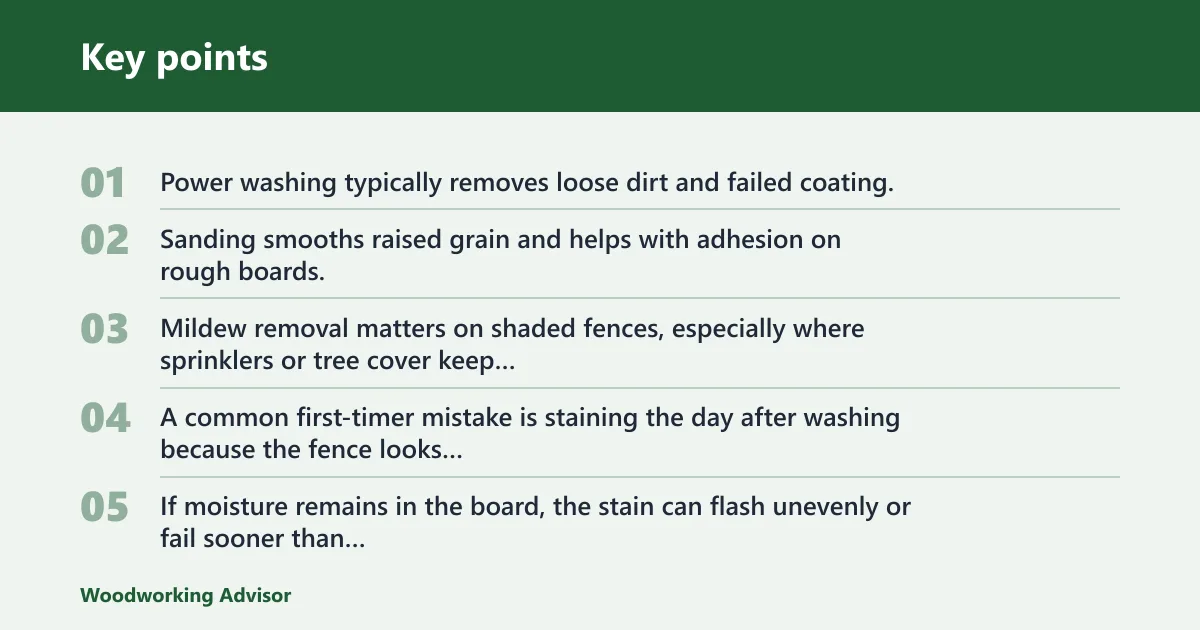
Power washing typically removes loose dirt and failed coating, but it must be followed by enough dry time. Sanding smooths raised grain and helps with adhesion on rough boards. Mildew removal matters on shaded fences, especially where sprinklers or tree cover keep the wood damp.
A common first-timer mistake is staining the day after washing because the fence looks dry on the surface. If moisture remains in the board, the stain can flash unevenly or fail sooner than expected.
Dry time before staining
Most stain labels call for a dry substrate, and that means more than a dry-looking board. After washing, wait for the wood to dry through its surface and core. In humid weather, that may take longer than a single sunny afternoon.
Brush, roller, sprayer, and back-brushing
Brushes and rollers give more control on rough boards and around hardware. Airless sprayers are faster, but overspray control matters near siding, plants, and windows. Back-brushing after spraying helps work stain into the grain and reduce lap marks, which can improve finish quality on absorbent wood.
Picture a 60-foot picket fence beside a driveway. A sprayer speeds the coating step, but the contractor still needs masking and back-brushing to keep overspray off the pavement and to avoid streaks on the pickets.
How much does it cost to stain a fence yourself?
DIY fence staining often costs $250 to $900 for a modest project, depending on stain type, washer rental, brushes or sprayer parts, masking supplies, and any cleaner or mildew remover. The main advantage is lower labor cost. The tradeoff is more time and more risk if prep is rushed.
For a simple DIY budget, include stain, cleaner, sandpaper, gloves, drop cloths, and a buffer for waste. If you need to rent a washer or sprayer, add those fees separately. DIY is usually cheapest on a sound fence with light prep and one coat of semi-transparent stain.
How much does it cost to stain a fence professionally?
Professional fence staining commonly lands between $1,500 and $4,000 for an average-sized, one-side project with prep, materials, and labor included. The final price depends on fence condition, stain type, access, and whether the quote includes cleaning, stripping, or minor repairs.
Contractors may price some jobs by linear foot and others by square foot, but the best quote should still break out prep, materials, and application. That makes it easier to compare bids that look different on paper but cover the same work.
How much does it cost to clean and stain a fence?
Cleaning and staining together often cost less than hiring those tasks separately, but you still need to see the line items. For a typical fence, cleaning may add $0.25 to $1.00 per square foot before stain is applied. Heavy mildew, algae, or old coating can push that higher.
This package makes sense when the fence is dirty but structurally sound. If boards are failing or the previous finish is peeling badly, cleaning alone will not solve the problem and stripping or repair work may be necessary.
How much does it cost to stain and seal a fence?
Stain-and-seal work usually costs more than a basic stain job because the coating system must provide both color and moisture protection. Budget about 10% to 30% more than a plain stain project when the product includes added protection or when the contractor applies a separate sealer after staining.
That extra cost is easier to justify on new wood or on fences exposed to heavy sun and rain. On older fences with patchy absorption, the result depends heavily on prep quality and on whether the previous coating was fully removed.
How much does it cost to stain 200 feet of fence?
A 200-foot fence typically costs about $320 to $1,165 for a basic DIY project and about $1,645 to $4,340 for professional work if the fence averages 6 feet high and needs moderate prep. If the fence is taller, rougher, or stained on both sides, the total rises quickly.
That estimate uses 1,200 square feet for one side. If the fence is a board-on-board privacy design and both faces are coated, plan on roughly double the material and more labor time for edges and overlap areas.
How much does it cost in labor to stain a fence?
Labor alone often accounts for a large share of the total, especially on weathered fences. A reasonable planning range is about $1.00 to $4.00 per square foot, or roughly $40 to $100 per hour, depending on region, surface condition, and whether the job includes washing, sanding, or stripping.
Labor climbs when access is awkward, the fence has many corners or gates, or the crew must stop for dry time between cleaning and coating. The simplest way to hold labor down is to start with a fence that is clean, dry, and free of repairs.
How much does it cost to stain a wood fence?
Wood fence staining cost depends on species, age, and surface condition. New pine can take stain differently than cedar or pressure-treated lumber, and weathered boards often need more product because the wood is drier and rougher. For budgeting, the same square-foot ranges apply, but the upper end is more likely on old wood.
If the fence already has a failing finish, the cost of stripping and sanding can matter more than the stain itself. A clean, bare surface usually accepts stain more predictably than a patched or partially coated one.
How much does it cost to power wash and stain a fence?
Power washing and staining often costs $1.50 to $4.50 per square foot combined, depending on fence size, mildew level, and dry time requirements. That range rises if the wash has to remove old coating or if the fence needs extra rinsing and sanding before staining.
Washing is only the first step. If the fence cannot dry fully before coating, the schedule stretches and the labor total can increase even when the stain volume stays the same.
How to estimate your total budget
- Measure the fence length in linear feet.
- Measure or estimate the average height.
- Multiply length by height to get square footage for one side.
- Decide whether you are staining one side or both.
- Check the fence condition for washing, sanding, stripping, or repair needs.
- Choose the stain type and confirm label coverage per gallon.
- Add 10% to 20% for waste and rough-wood loss.
- Price labor by the hour or by the square foot, then compare three quotes.
Frequently asked questions
How much does it cost to stain a fence per square foot?
For a straightforward project, fence staining usually runs about $1.00 to $3.00 per square foot for DIY materials and $2.50 to $7.00 per square foot for professional work. Rough wood, stripping, and heavy prep can push the price above those ranges.
How much does it cost to stain a fence per linear foot?
Most homeowners can budget about $1.25 to $3.50 per linear foot for a basic fence stain job. Taller fences, privacy fences with more surface area, and boards with existing finish problems cost more because they need more stain and more labor.
Sponsored / affiliate links. As an Amazon Associate I earn from qualifying purchases. I may earn additional commission from eligible campaigns.