Sequoia vs Redwood: The Real Difference (Height, Size & Lifespan)
Coast redwoods (Sequoia sempervirens) are the tallest trees on Earth at about 380 feet, but giant sequoias (Sequoiadendron giganteum) are the most massive, and only the redwood became a common lumber species. The two grow in different parts of California, with different cones, leaves and bark. This guide covers size, lifespan, range, identification, and how their wood compares for woodworkers.
Are Sequoias and Redwoods the Same Tree?
No, they are two different species from two different genera, but both are called redwoods in the botanical sense. Dawn redwood (Metasequoia glyptostroboides) is the third living redwood species, a deciduous tree from central China. When people search sequoia vs redwood, they almost always mean giant sequoia vs coast redwood, which is what the rest of this page compares.
Best Redwood ID Field Guide Pick
 |
Peterson Field Guide to Western Trees (387 Species), $23.48 Cones, needles and bark are how you tell these two trees apart in person, and both species grow in the western United States, so a western-trees guide is the natural book to carry on the trail.
|
As an Amazon Associate we earn from qualifying purchases. Price checked 2026-10-05 and may change.
Sequoia vs Redwood Side by Side
Figures below come from the Save the Redwoods League and the National Park Service, and wood numbers from the Wood Database and its giant sequoia entry. Where sources disagree or give a range, we say so.
| Trait | Coast redwood | Giant sequoia |
|---|---|---|
| Scientific name | Sequoia sempervirens | Sequoiadendron giganteum |
| Height | Up to about 380 feet (tallest known is 379 feet) | Rarely over 320 feet; General Sherman is 274.9 feet |
| Bulk | Trunks up to about 26 feet across | General Sherman holds about 52,500 cubic feet of wood, the most of any tree |
| Lifespan | Over 2,000 years, average 500 to 700 | Oldest known estimated over 3,200 years |
| Range | Narrow coastal band from central California to just over the Oregon border | Western slope of the Sierra Nevada, 4,000 to 8,000 feet, in fewer than 100 groves |
| Cones | Under an inch long | About the size of a chicken egg |
| Leaves | Flat, needle-like, like green feathers | Pointed, tapering, scale-like needles |
| Bark | Fibrous, reddish brown, weathers to gray | Fibrous, cinnamon-orange, often more than a foot thick |
| After damage | Resprouts from the base | Does not typically resprout, regrows from seed |
Which Is Bigger, a Sequoia or a Redwood?
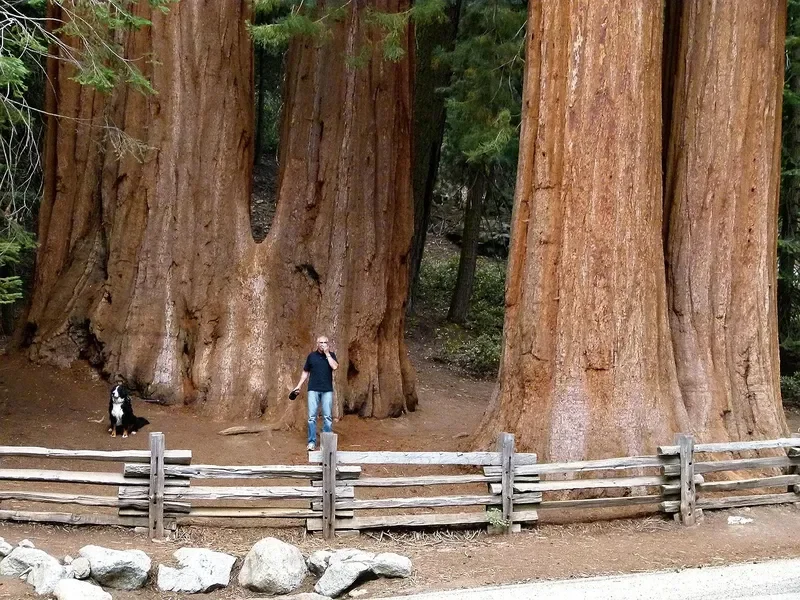
It depends on what you measure, and this is where most pages blur the answer. Coast redwoods win on height; giant sequoias win on mass. The tallest coast redwood is about 60 feet taller than the roughly 320-foot giant sequoia ceiling, but General Sherman alone holds about 52,500 cubic feet of wood.
Data point: the General Sherman Tree has a height above base of 274.9 feet and an estimated volume of 52,500 cubic feet, more wood than any other tree on Earth, according to the National Park Service. Its age estimate is about 2,200 years. A tree that is roughly 100 feet shorter than the tallest redwood is still the world’s heaviest because of that trunk.
How to Tell Them Apart in the Field
Height is hard to judge from the ground, so use features you can see up close:
- Where you are. Fog-belt forest near the Pacific is coast redwood country. A mountain grove between 4,000 and 8,000 feet in the Sierra Nevada is sequoia country.
- Cones. Pick one up. Under an inch means coast redwood; chicken-egg size means giant sequoia.
- Needles. Flat, feathery sprays point to coast redwood. Short, pointed, scale-like leaves point to giant sequoia.
- Bark color. Cinnamon-orange suggests sequoia. Reddish brown that has weathered gray on old trees suggests redwood.
- Stumps. A ring of young trunks around an old stump, often called a fairy ring, points to coast redwood, because giant sequoias do not typically resprout.
Giant sequoias, not coast redwoods, are the Sierra Nevada trees. If you are planning a Yosemite trip, our page on whether there are redwood trees in Yosemite covers what grows there.
Where Each Tree Grows
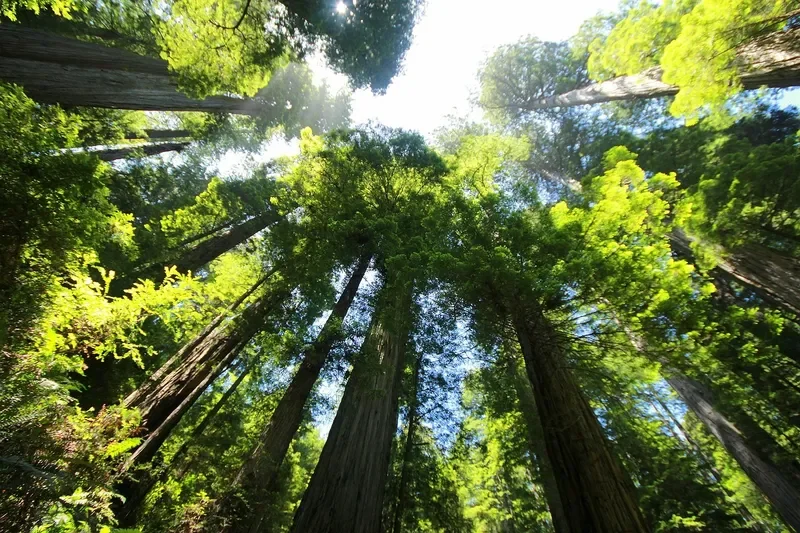
Coast redwoods hug a narrow strip of coast. Save the Redwoods League notes they can absorb water directly through their leaves from fog, which supplements groundwater in the dry summers, and that their root systems are surprisingly shallow at only 6 to 12 feet deep, spreading wide and interconnecting with neighboring trees. Giant sequoias live in widely separated groves along less than 300 miles of the Sierra Nevada, and their bark and fire history matter more than fog.
That fire detail is the other big difference. Heat helps dry and open giant sequoia cones so they release seed, and because they do not resprout like coast redwoods, each new generation has to start from seed. Save the Redwoods League also reports that nearly 20% of all mature giant sequoias have been killed by extreme fire in the past decade, which is part of why both species are listed as endangered by the IUCN according to the Wood Database.
Sequoia vs Redwood Wood for Woodworkers
Here is the angle most identification pages skip: only one of these trees became lumber. Save the Redwoods League says coast redwoods were extensively harvested for timber, while giant sequoia wood proved brittle and poorly suited for lumber, which ironically helped preserve many large trees. The Wood Database numbers back that up.
| Wood property | Coast redwood | Giant sequoia |
|---|---|---|
| Janka hardness | 450 lbf average (old-growth to 480) | 420 lbf overall (old-growth 360, second-growth 470) |
| Dried weight | 26 lbs per cubic foot | 23.3 lbs per cubic foot (old-growth 19.4) |
| Bending strength (modulus of rupture) | 8,950 lbf per square inch | Old-growth 5,870; second-growth 9,340 |
| Decay resistance | Moderately to very durable | Moderately to very durable |
| Documented uses | Construction lumber, beams, posts, decking, exterior furniture, trim | Fence posts, shingles, match sticks |
The surprise: giant sequoia is unusual among conifers because wood from old-growth trees is weaker, lighter and more brittle than wood from second-growth trees. The decay resistance is similar, but the old-growth strength gap is why sequoia never took off for structural work.
If you are building outdoors, the practical choice is coast redwood. Our pages on redwood deck boards and cedar vs redwood decking cover grades, sizes and rot ratings. Curious about the classification? See whether redwood is a hardwood and whether redwoods are pine trees. For other species comparisons, start with our guide to the types of wood.
Three Myths About Sequoias and Redwoods
- Myth: giant sequoias are the tallest trees. They are the most massive, but the coast redwood is the tallest, at about 380 feet against a giant sequoia ceiling of roughly 320 feet.
- Myth: redwood lumber is cut from sequoias. Redwood lumber is coast redwood. Giant sequoia wood is brittle and was never a mainstream building material.
- Myth: only one of them is a true redwood. There are three living redwood species. The third, dawn redwood, is deciduous: each autumn its feathery needles turn copper-orange and fall. It grows naturally in central China (Hubei, Hunan and Chongqing), was known only from fossils until it was found alive in the 1940s, and commonly reaches 100 to 130 feet.
That third tree belongs to a different genus, Metasequoia, and it is not what most people mean when they search for sequoia vs redwood.
Frequently Asked Questions About Sequoias and Redwoods
Are sequoias redwoods?
Yes, in the broad sense. Giant sequoias, coast redwoods and dawn redwoods are the three living redwood species. In everyday use, though, “redwood” means the coast redwood (Sequoia sempervirens) and “sequoia” means the giant sequoia (Sequoiadendron giganteum). They are different species in different genera.
Are sequoias bigger than redwoods?
Sequoias are bigger by volume, redwoods are taller. The General Sherman giant sequoia holds about 52,500 cubic feet of wood and stands about 275 feet, while the tallest coast redwoods reach roughly 380 feet. So the answer depends on whether you measure height or total mass.
Which lives longer, a sequoia or a redwood?
Giant sequoias. Save the Redwoods League says the oldest known individuals are estimated at over 3,200 years, while the National Park Service says coast redwoods can live over 2,000 years, with an average age of 500 to 700 years.
Is a sequoia a hardwood?
No. Giant sequoia and coast redwood are both conifers, and their wood is a softwood. The Wood Database lists giant sequoia at 420 lbf Janka and coast redwood at 450 lbf, both far softer than a typical hardwood like oak.
Can you buy sequoia lumber?
Giant sequoia lumber is not a standard building material. Old-growth sequoia wood tends to be weak and brittle, and its documented uses are things like fence posts, shingles and match sticks. The redwood sold at lumberyards is coast redwood.
Bottom Line
Redwood means tall and coastal, sequoia means massive and mountain-grown. Coast redwoods reach about 380 feet and supply the lumber, while giant sequoias hold the record for volume and age but have brittle wood. Check where you are, then look at the cones and needles, and you will rarely get them wrong.
Sponsored / affiliate links. As an Amazon Associate I earn from qualifying purchases. I may earn additional commission from eligible campaigns.