What Is MDF Used For? 9 Real Uses (Plus Weight & Safety Facts)
MDF (medium-density fiberboard) is used for furniture, cabinets, interior trim, doors, and soundproofing — but not bathrooms, exterior work, or load-bearing shelving, since it swells when wet and can sag under weight. At 45–52 lb per cubic foot, a 3/4-inch, 4×8 sheet weighs about 96 lbs, nearly double a same-size 1/2-inch pine plywood sheet. This guide covers MDF’s best uses, how it compares to plywood, and what CARB2/TSCA limits mean for your indoor air.
What Is MDF Made Of?
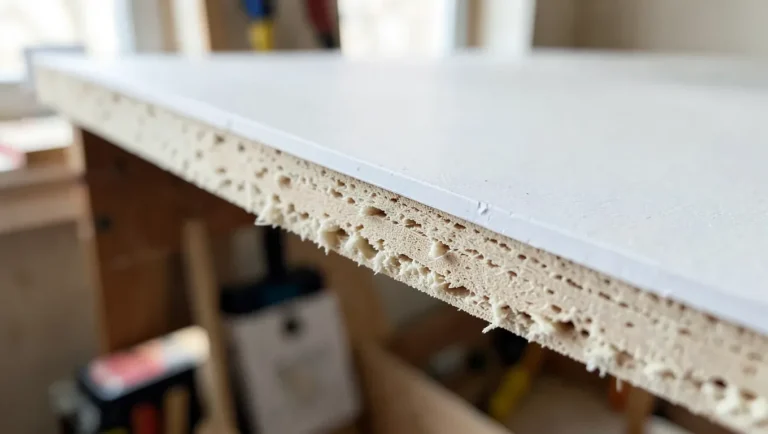
MDF stands for medium-density fiberboard. Manufacturers break hardwood and softwood residuals into fine fibers, mix them with wax and a resin binder, then press the mat under heat and pressure into a flat, grain-free panel. For the full breakdown of how it is made and how it differs from plywood and particle board, see our guide to what MDF wood actually is.
Because MDF has no grain, knots, or voids, it cuts and machines cleanly and takes paint evenly — which is why it dominates painted furniture and trim work. The tradeoff is moisture sensitivity and weight, both covered below. See our full list of MDF advantages and disadvantages for the complete pros-and-cons picture.

How Much Does MDF Weigh? (Density & Thickness Chart)
MDF runs 45–52 lb per cubic foot depending on the manufacturer — noticeably denser than plywood (28–40 lb/ft³) or solid pine (~28 lb/ft³). That density is exactly why MDF machines so cleanly, and exactly why a full sheet is harder to carry alone than the same size in plywood.
| Thickness | Weight per sq ft | Full 4×8 Sheet |
|---|---|---|
| 1/4″ | 1.0 lb | ~32 lbs |
| 1/2″ | 2.0 lb | ~64 lbs |
| 3/4″ | 3.0 lb | ~96 lbs |
| 1″ | 4.0 lb | ~128 lbs |
Practical takeaway: get help carrying a full 3/4″ sheet, and don’t hang unsupported MDF shelving longer than about 24″ without a center support — the combination of weight and low bending strength is what causes the sag people associate with cheap MDF shelves.
How to Fasten MDF Without Splitting It
Standard wood screws driven straight into MDF’s edge strip out or split the panel, because MDF has no long wood fibers to grip the threads the way solid wood does. Three adjustments fix this reliably.
- Pre-drill every pilot hole: use a bit about 90% of the screw’s minor diameter, and always drill face fastening holes, never rely on the raw edge alone.
- Use coarse, deep-thread screws made for MDF or particleboard: their wider thread gap bites into the compressed fiber core instead of just crumbling it.
- Add glue at load-bearing joints: PVA wood glue plus screws outperforms screws alone, since the glue spreads the load across the whole joint instead of one point.
“We have split more than one MDF shelf edge by driving a standard drywall screw straight in with no pilot hole — switching to a coarse-thread MDF screw and drilling first solved it every time after that.”
Best MDF Screw Pick
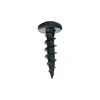 |
Rok Hardware #10 x 3/4″ Coarse Deep-Thread MDF Screws (100-Pack) – $8.99 The deep-thread, coarse-pitch design this guide’s fastening section calls for — built specifically to bite into MDF’s fiber core instead of stripping it.
|
As an Amazon Associate we earn from qualifying purchases.
MDF vs Plywood vs Particle Board vs Solid Wood
All four are common substrates for painted or built-in projects, but they trade off differently on cost, weight, and moisture tolerance. For the deep-dive comparison, see our dedicated MDF vs solid wood breakdown and our MDF vs particle board guide; the quick comparison below covers the basics.
| Material | Density | Moisture Resistance | Best For |
|---|---|---|---|
| MDF | 45–52 lb/ft³ | Low (swells) | Painted furniture, trim |
| Plywood | 28–40 lb/ft³ | Moderate–good | Structural panels, cabinets |
| Particle Board | 35–45 lb/ft³ | Low | Budget flat-pack furniture, subfloor underlayment |
| Solid Wood | ~28–45 lb/ft³ (species-dependent) | Good–excellent | Structural, heirloom, outdoor |
Furniture, Cabinets & Kitchen Uses
Furniture is MDF’s largest single use — see our full breakdown of why MDF is used for furniture for the cost, stability, and machining reasons behind that. Its smooth, grain-free face takes paint and veneer evenly, so it’s the go-to core material for painted tables, dressers, and built-ins where solid wood’s grain and cost aren’t needed. Kitchen and bathroom cabinet doors are the most common commercial application — see our answer to whether MDF kitchen cabinets are actually a good idea for the moisture caveats specific to that room.
Office partitions, retail display units, and hollow-core interior doors with MDF skins round out the commercial side — all applications that benefit from MDF’s flat, consistent surface and don’t expose it to standing water or structural load.
Trim, Wall Paneling & Interior Decor
MDF trim — baseboards, crown molding, chair rails, and wainscoting — is now more common than solid-wood trim in new construction, because it doesn’t split when nailed and machines to a crisp profile. Wall paneling and accent walls follow the same logic. See our guide to cutting MDF paneling for the blade and feed-rate settings that keep edges from chipping.
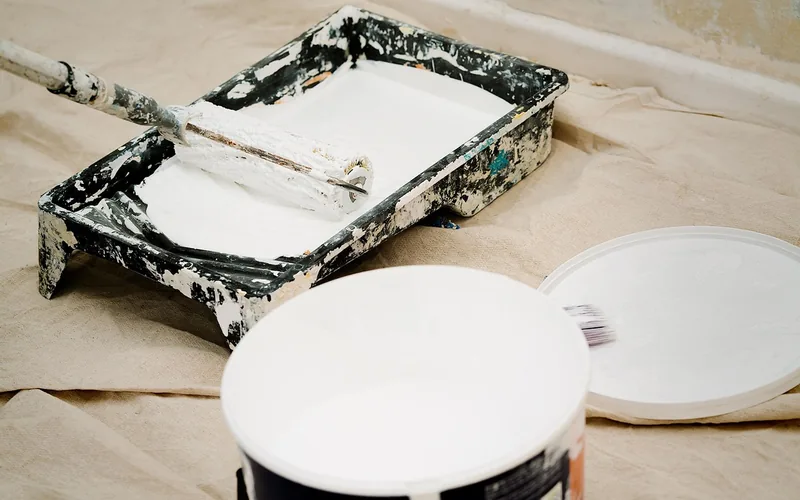
Before painting any of it, prime both faces and every cut edge — MDF’s edge is the most porous, absorbent part of the panel. Our MDF priming guide covers why skipping the edges is the single most common finishing mistake on MDF trim.
Is MDF Good for Flooring? (Myth vs Reality)
Not directly, and this is a common mix-up worth correcting: raw MDF panels are not installed as a wearing floor surface. What you actually see marketed as “MDF flooring” is almost always HDF (high-density fiberboard) — a denser, harder cousin of MDF — used as the core layer under a laminate wear layer. Standard MDF is too soft and too moisture-sensitive to survive direct foot traffic or occasional spills on its own.
If a floor-adjacent project needs moisture tolerance — a bathroom vanity base, a mudroom bench — check our guide to making MDF waterproof before you build, rather than finding out after the first spill.
Arts, Crafts & Small Projects
MDF’s smooth, splinter-free surface makes it a favorite for picture frames, model bases, stencils, and classroom projects — it cuts cleanly with a hobby knife or scroll saw and holds craft paint and glue well. For a full list of build ideas by skill level, see our roundup of MDF board projects.
Is MDF Safe? Formaldehyde, CARB2/TSCA Limits & Ventilation
Most MDF sold in the US today is manufactured to meet CARB Phase 2 and the matching EPA TSCA Title VI formaldehyde emission standard, which caps MDF at 0.11 ppm — look for a CARB2 or TSCA Title VI stamp on the panel edge or invoice before buying for an enclosed space like a bedroom or nursery build.
📊 CARB Phase 2 / EPA TSCA Title VI caps MDF formaldehyde emissions at 0.11 ppm — Source: EPA TSCA Title VI formaldehyde standards, 2026
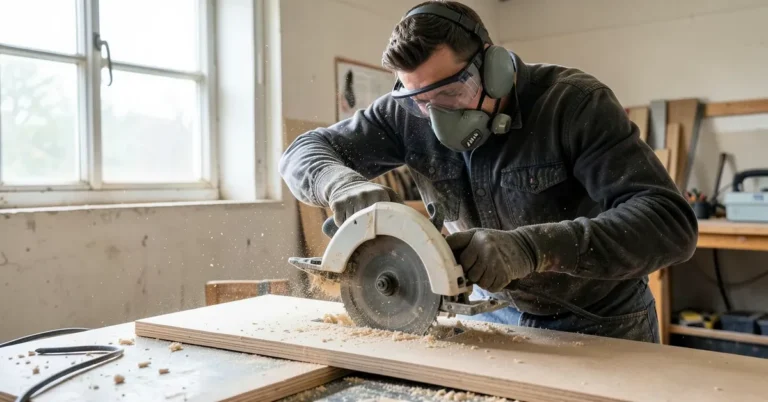
Sealing every cut edge with primer or edge banding measurably cuts emissions, since raw, unsealed edges are the largest exposed surface area on a typical panel. Cut MDF outdoors or with dust collection running when possible — the dust carries the same resin content as the board itself, and a basic dust mask (not just a cloth mask) is worth wearing for extended cutting sessions.
MDF is made largely from recycled wood residuals that would otherwise go to waste, which is a genuine environmental upside — but recycling MDF at end of life is difficult, since the resin binder can’t be separated from the wood fiber at most facilities. Low-formaldehyde or NAUF (no-added-urea-formaldehyde) options exist for projects where indoor air quality is a priority; ask your supplier directly, since it isn’t always marked clearly on the shelf label.
Frequently Asked Questions
When Should You Not Use MDF?
Avoid MDF in bathrooms, kitchens near sinks, or any outdoor setting — it swells and deteriorates when exposed to water. It’s also a poor choice for structural or heavy-load applications, since it lacks the tensile strength of solid wood or plywood. Choose moisture-resistant (MR) MDF, plywood, or solid wood for these situations instead.
What Is the Main Use for MDF?
Furniture and cabinetry are MDF’s biggest uses by volume, followed closely by interior trim and molding. Its smooth, grain-free surface takes paint and veneer more evenly than solid wood, which is why it dominates painted furniture and millwork specifically.
Is MDF Stronger Than Plywood?
No. MDF is denser than plywood but has lower tensile and shear strength because it has no cross-grain layers to resist bending or racking. Plywood outperforms MDF for shelving spans, structural panels, and anywhere the material carries load.
How Do You Keep MDF Screws From Stripping?
Pre-drill a pilot hole at roughly 90% of the screw’s minor diameter, use coarse deep-thread screws designed for MDF or particleboard, and add wood glue at load-bearing joints. Driving a standard fine-thread screw straight into an MDF edge with no pilot hole is the single most common cause of stripped or split MDF joints.
Does MDF Off-Gas Formaldehyde?
Some, but current US MDF is required to meet the CARB Phase 2 / EPA TSCA Title VI limit of 0.11 ppm, a sharp reduction from older, unregulated boards. Sealing all cut edges with primer or edge banding reduces emissions further, since unsealed edges release more than a painted or laminated face.
Conclusion
MDF earns its popularity honestly: it’s affordable, paints smoother than solid wood, and covers most indoor furniture, cabinet, and trim needs. Its limits are just as real — keep it away from standing water, respect its weight when designing shelving spans, and fasten it with the right screws and a pilot hole every time. Check the full MDF guide hub for sealing, priming, and cutting walkthroughs before your next build.
Sponsored / affiliate links. As an Amazon Associate I earn from qualifying purchases. I may earn additional commission from eligible campaigns.