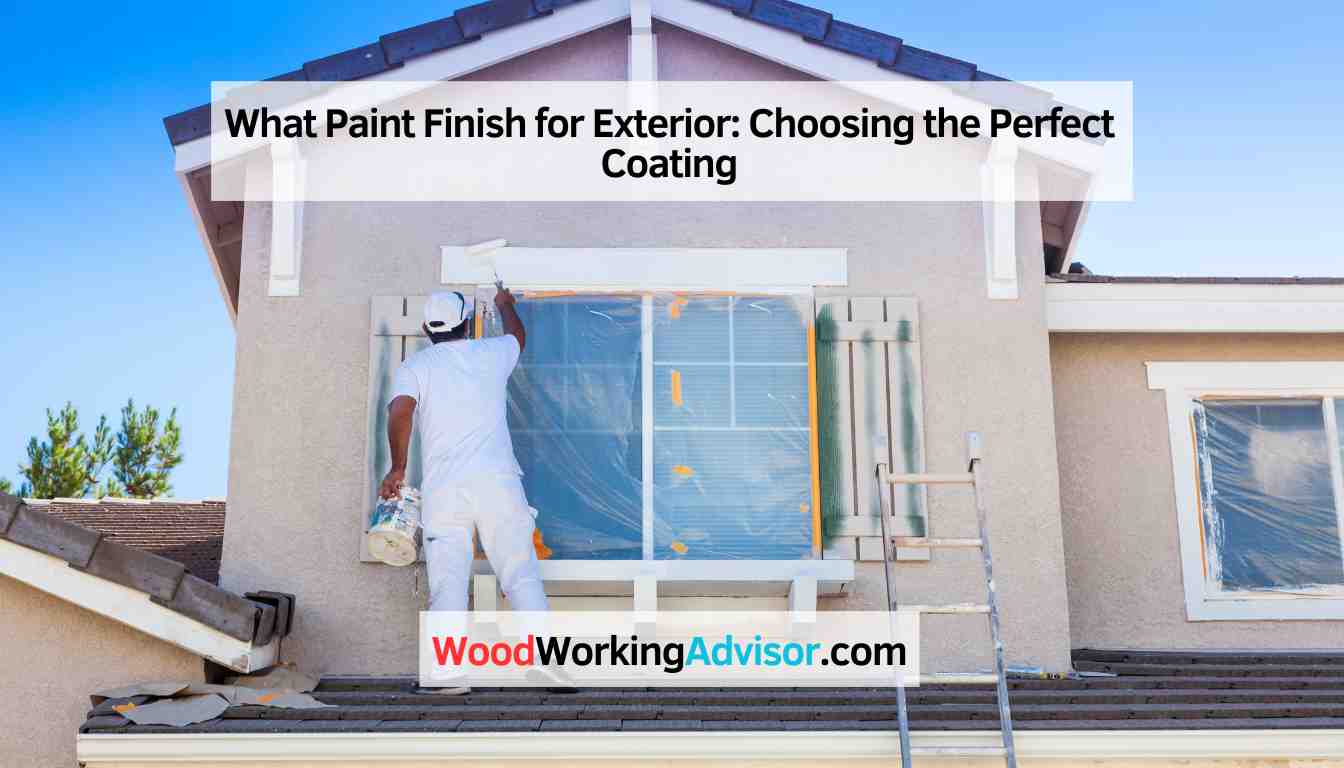
What Paint Finish for Exterior? Satin vs Semi-Gloss by Surface
The best paint finish for exterior siding is satin, but stucco and brick need a flatter sheen to hide texture and trim needs semi-gloss for durability. Sherwin-Williams rates satin at 25-35% light reflectance versus under 5% for flat, and using the wrong sheen on trim can peel within a few seasons. This guide covers the right finish for siding, trim, stucco, and vinyl, plus real cost ranges and application tips.
Insert your Affiliate Disclosure reusable block here
Quick Answer
Use satin (or eggshell) on wood, fiber-cement, and vinyl siding for the best balance of durability and easy cleaning. Switch to semi-gloss on trim, doors, and shutters where moisture resistance matters most, and use flat or matte on stucco or brick so the sheen doesn’t highlight texture and imperfections.
Understanding Exterior Paint Finishes
Choosing the right paint finish for your exterior can drastically enhance the overall look and longevity of your property. Each sheen level reflects a different percentage of light, and that percentage is what actually drives durability, cleanability, and how much surface texture it hides.
Types of Exterior Paint Finishes
- Flat/Matte Finish: Reflects less than 5% of light. Hides surface imperfections best but is less durable and prone to dirt buildup.
- Eggshell Finish: Reflects 10-25% of light. A step up in durability from flat while still hiding minor flaws.
- Satin Finish: Reflects 25-35% of light. Provides a subtle sheen while staying easy to clean and maintain.
- Semi-Gloss Finish: Reflects 35-70% of light. Highly durable, moisture-resistant, and ideal for trim and accents.
📊 Flat paint reflects under 5% of light while semi-gloss reflects 35-70% — Source: Sherwin-Williams Gloss & Sheen Guide, 2026
That reflectance difference is also why higher-sheen finishes resist moisture better: the extra resin in satin and semi-gloss formulations creates a tighter film, which is why those sheens dominate on trim, doors, and anywhere exposed to direct rain and humidity. That same flexible-resin chemistry is also what separates exterior paint from interior paint entirely — see our full breakdown of the difference between exterior paint and interior paint for why the two formulations aren’t interchangeable.
Which Paint Finish Is Best for Your Siding Material?
The right sheen depends heavily on what you’re painting, not just personal preference. Wood siding and fiber-cement generally look best in satin, while stucco, brick, and vinyl each have their own best match.
| Surface Material | Recommended Finish | Why It Works |
|---|---|---|
| Wood & fiber-cement siding | Satin or eggshell | Hides grain and minor imperfections, still washable |
| Vinyl siding | Satin (low-sheen) | Low-lustre premium satins minimize visible seams and panel lines |
| Stucco & masonry | Flat or matte | Absorbs light instead of reflecting it, masking rough texture |
| Brick | Flat or matte | Preserves natural texture instead of making it look artificial |
| Trim, doors, shutters | Semi-gloss | Best moisture resistance for high-touch, high-exposure areas |
For garage doors and entry doors, semi-gloss is worth the extra care during application since it shows brush marks more than lower sheens. If you’re still comparing paint lines rather than sheens, our Behr exterior paint comparison breaks down which product line fits which budget.
Selecting the Perfect Coating
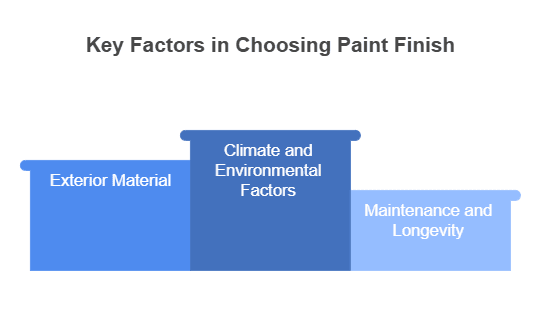
Beyond matching sheen to the material you’re covering, two more factors decide how long an exterior paint finish actually lasts on your specific house.
Assessing the Climate and Environmental Factors
Homes in high-UV or high-humidity climates benefit from higher-sheen finishes with better moisture resistance, even on siding where a lower sheen would otherwise be preferred. Coastal and high-rain regions in particular should prioritize satin over flat on any wood surface.
Considering Maintenance and Longevity
Choose a finish that matches how often you’re willing to clean and touch up. Satin and semi-gloss both wash easily with a garden hose and mild detergent; flat finishes need a soft brush and more frequent attention since dirt sits in the matte surface rather than sheeting off.
Application Techniques and Real Costs
The application techniques for different paint finishes vary, and understanding the best practices for each type makes a real difference in the final result.
Best Practices for Applying Different Paint Finishes
- Flat or Matte Finish: Apply with a high-quality roller for smooth, even coverage; use a brush for edges and corners.
- Eggshell Finish: Use a brush or roller, applying in a “W” pattern for an even coat.
- Satin Finish: Apply with a brush or sprayer, maintaining a wet edge to prevent lap marks.
- Semi-Gloss or Gloss Finish: Use a high-quality brush or sprayer, applying thin, even coats to avoid drips and runs.

A sprayer speeds up large siding jobs considerably and gives a more even coat than a roller on textured surfaces, though it needs more masking prep around windows and trim.
Best Exterior Paint Sprayer Pick
VEVOR 750W Airless Paint Sprayer – $166.90
Lays down an even satin coat on siding faster than a roller, exactly the wet-edge, no-lap-mark application this guide recommends for higher-sheen exterior finishes.
- Best for: Full-house exterior siding repaints
- Why we picked it: 3000 PSI handles satin and semi-gloss without thinning
- Main drawback: Needs more masking prep around trim than a roller
Compare more exterior paint sprayer options
 Option 1 HomeRight Super Finish Max – $52.40
|
 Option 2 WORKPRO 700W Sprayer – $239.99
|
 Option 3 InoKraft NEO Sprayer Kit – $169.99
|
As an Amazon Associate we earn from qualifying purchases.
Tips for Achieving Professional Results
- Surface Preparation: Properly clean and prime the surface before painting to ensure adhesion and longevity.
- Weather Conditions: Choose a dry, moderate-temperature day to avoid issues with drying and curing.
- Consistent Application: Maintain a consistent method, whether roller, brush, or sprayer, for an even finish.
- Quality Tools: Invest in quality brushes, rollers, or sprayers to minimize streaking and imperfections.
📊 Oil-based exterior paint runs $20-$60 per gallon and latex/acrylic runs $20-$50 per gallon — total materials for a typical DIY exterior repaint run $500-$1,000. Source: This Old House, All About Exterior Paint, 2026
Satin outperforms flat in nearly every weathering metric — better moisture resistance, slower chalking, and longer gloss retention — which is why most exterior painters default to satin on siding and reserve flat for stucco or brick where hiding texture matters more than durability.
Troubleshooting and Maintenance
Proper troubleshooting and maintenance are essential for preserving the paint finish on your home’s exterior. Addressing common issues early and following a regular routine keeps the finish looking sharp for years.
Common Issues with Exterior Finishes
Despite using high-quality paint and applying it correctly, certain issues may arise with exterior finishes. Being aware of these and knowing how to address them helps maintain your home’s appearance.
- Cracking: Occurs from natural expansion/contraction of building materials or improper application. Use paint rated for your climate and follow proper application steps.
- Peeling: Happens when moisture seeps into wood or the surface wasn’t prepped properly. Identify the underlying cause before repainting.
- Fading: Sunlight and weather fade color over time. Choose UV-resistant paint and keep to a regular maintenance routine.
Proper Maintenance to Preserve the Finish
- Cleaning: Regularly clean exterior walls with a mild detergent and soft brush or sponge, then rinse thoroughly.
- Inspecting: Periodically check for cracking, peeling, or chipping and address issues promptly.
- Repainting: Clean and prep the surface properly before applying a new coat for better adhesion.
- Sealing: A clear sealant adds a protective barrier against moisture on top of the paint.
- Trimming trees and shrubs: Keep vegetation off exterior walls to prevent scratches and moisture retention.

Eco-Friendly and Innovative Options
Eco-friendly and innovative paint options offer improved durability, reduced maintenance, and lower environmental impact alongside their sheen-level benefits.
Sustainable Paint Choices
- Natural Paints: Made from plant oils, minerals, and water; non-toxic with a breathable finish that lets moisture escape from walls.
- Recycled Paints: Made from reprocessed leftover paint; reduces waste while still providing a durable finish.
- Low-VOC Paints: Significantly reduced harmful chemicals while keeping standard durability and performance.
Innovations in Exterior Coatings
- Self-Cleaning Coatings: Nanotechnology-based surfaces that repel dirt and stains, reducing maintenance.
- Thermal Reflective Coatings: Reflect heat from the sun to reduce interior temperature and energy use.
- Elastomeric Coatings: Flex with the building’s natural movement, helping prevent cracking and peeling in extreme climates.
Frequently Asked Questions on Exterior Paint Finish
What are the different types of paint finishes for exteriors?
There are four main types suitable for exteriors: flat, satin, semi-gloss, and high-gloss. Each has its own advantages, from flat’s texture-hiding ability to semi-gloss’s durability. Consider weather exposure and desired look when choosing.
Which paint finish is best for a high-traffic exterior?
For high-traffic exteriors, satin or semi-gloss holds up best. Both resist wear and are easier to clean than flat finishes, which matters most on entry areas and walkway-facing walls.
What paint finish is best for stucco or brick?
Flat or matte is best for stucco and brick. Both surfaces have heavy texture, and a flat sheen absorbs light instead of reflecting it, which hides that texture instead of exaggerating every bump and pore.
Can I use a high-gloss finish for my exterior?
Yes, but only on smooth surfaces like doors or metal railings. High-gloss finishes highlight every imperfection, so they’re a poor match for textured siding, stucco, or brick.
Is a flat finish suitable for exteriors?
Yes, with limitations. Flat finishes stain more easily and are harder to clean than satin or semi-gloss, so they work best on stucco, brick, or other surfaces where hiding texture matters more than washability.
How much does exterior paint cost per gallon?
Latex and acrylic exterior paint typically runs $20 to $50 per gallon, while oil-based paint runs $20 to $60 per gallon. A full DIY exterior repaint, including primer and supplies, usually totals $500 to $1,000.
Conclusion
Choosing the right paint finish for your home’s exterior comes down to matching sheen to surface: satin for wood, fiber-cement, and vinyl siding; semi-gloss for trim and doors; flat for stucco and brick. Factor in your climate and how much upkeep you’re willing to do, and the finish will hold up for years.
Your well-informed choice can enhance the curb appeal and longevity of your property.