AC Plywood vs BC: Key Differences Explained
Picking the right plywood can feel tricky when you’re starting out. You see terms like “AC” and “BC,” and it’s not always clear what they mean or why it matters for your project. This guide breaks down AC Plywood vs BC: Key Differences Explained simply.
We’ll walk through what makes them different, helping you choose the best one for your needs without any confusion. Get ready to learn the simple differences so you can build with confidence.
AC Plywood vs BC Key Differences Explained
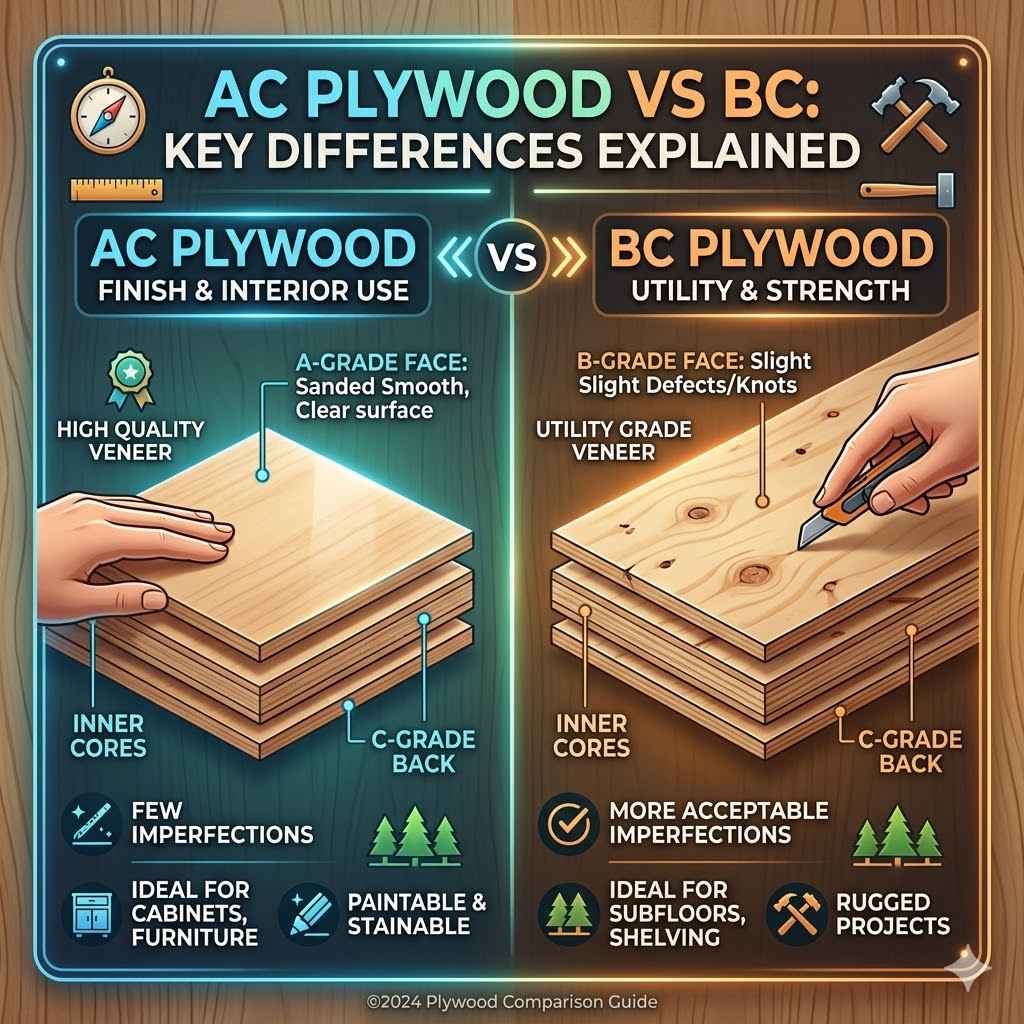
Understanding the difference between AC plywood and BC plywood is key for many building and DIY projects. These grades refer to the quality of the veneer on each side of the plywood sheet. This distinction directly impacts the plywood’s appearance, strength, and suitability for different applications.
For beginners, recognizing these differences can seem like a puzzle, but it’s quite straightforward once you know what to look for. This section will clarify the main distinctions between AC and BC grades, setting the stage for a deeper look into their characteristics.
What AC Plywood Means
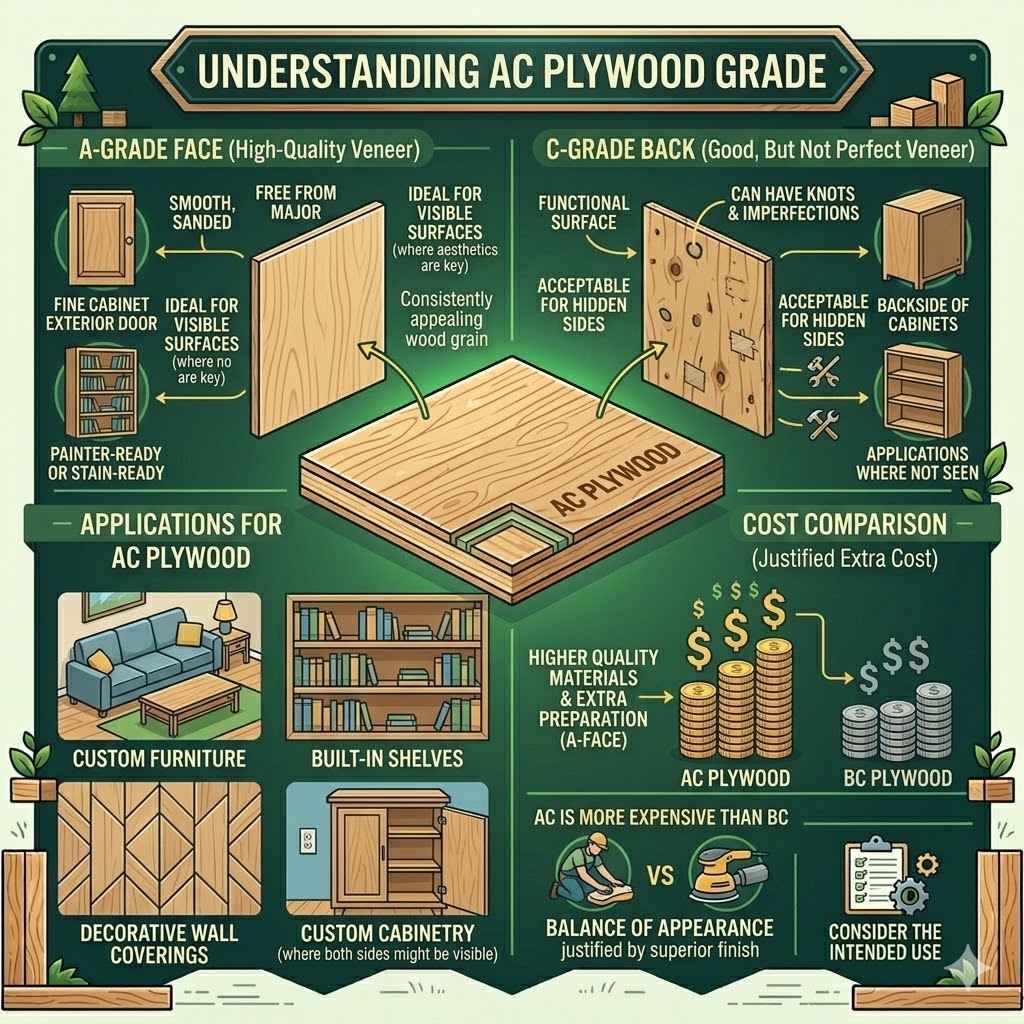
AC plywood is a grade that signifies a high-quality veneer on one side (A-grade) and a good, but not perfect, veneer on the other (C-grade). The A-grade face is smooth, sanded, and free from major defects like knots or splits, making it ideal for visible surfaces where aesthetics are important. Think of furniture, cabinetry, or decorative wall paneling.
The C-grade back is still functional but may have more knots, patches, or minor imperfections.
- A-Grade Face Characteristics: The A-grade side is what you’ll see. It’s been carefully prepared to be as smooth and flawless as possible. This means very few, if any, knots or defects. This careful preparation makes it a favorite for projects where the finish matters a lot, like the exterior of a cabinet or a built-in bookshelf that will be painted or stained. The wood grain is usually consistent and appealing.
- C-Grade Back Characteristics: The C-grade side is less about looks and more about function. It can have more knots, some small holes from knots, or minor veneer repairs. It’s not meant to be the star of the show, so these imperfections are acceptable for its intended use. This grade is perfectly fine for the backside of a cabinet or for applications where it won’t be seen.
- Applications for AC Plywood: Because of its good looks on one side, AC plywood is excellent for projects that require a nice finish. This includes things like custom furniture, built-in shelves, decorative wall coverings, and even some types of custom cabinetry where both sides might be visible. It offers a balance of appearance and utility for these uses.
- Cost Comparison: Generally, AC plywood is more expensive than BC plywood. This is because of the extra work and higher quality materials that go into creating the A-grade face. If your project demands a beautiful, smooth surface, the extra cost is often justified by the superior finish you can achieve.
What BC Plywood Means
BC plywood offers a balance between quality and cost. It features an A-grade veneer on one side and a B-grade veneer on the other. The A-grade side is similar to that of AC plywood, offering a smooth and attractive surface for visible applications.
However, the B-grade side is better than the C-grade found in AC plywood. It will have some small knots or plugged defects but is generally cleaner and more uniform than a C-grade veneer, making it a versatile choice for a wide range of projects.
- A-Grade Face on BC Plywood: Just like with AC plywood, the A-grade side of BC plywood is meant to look good. It’s smooth and clean, making it suitable for surfaces that will be seen. This is where you’ll focus if you’re painting or staining the project and want a nice, even finish. It’s free from major flaws that would distract the eye.
- B-Grade Back Characteristics: The B-grade back is a step up from the C-grade. It might have a few more knots than an A-grade, but these are typically well-matched or plugged, meaning small holes are filled with a matching wood material. You’ll find it more consistent and less prone to larger imperfections than C-grade. It’s still functional but looks a bit better than C-grade.
- Versatility of BC Plywood: BC plywood is a very popular choice because it works well for many different jobs. It’s great for projects where you need one good-looking side but the other side doesn’t need to be perfect. This includes things like cabinet doors, built-in cabinets, shelving units, and even some structural applications where appearance is a secondary concern.
- Cost-Effectiveness: BC plywood strikes a good balance between quality and price. It’s usually more affordable than AC plywood because the B-grade back doesn’t require the same level of defect-free perfection as an A-grade. This makes it a cost-effective option for many DIYers and builders who need good quality without breaking the bank.
Comparing AC Plywood vs BC Plywood Directly
When you look at AC plywood versus BC plywood side-by-side, the main difference boils down to the quality of the veneer on the “lesser” side. AC plywood pairs an A-grade face with a C-grade back, while BC plywood pairs an A-grade face with a B-grade back. This means the B-grade back of BC plywood is generally superior to the C-grade back of AC plywood.
This difference in the back veneer affects both the appearance and the cost of the material, making one a better choice than the other depending on the specific needs of your project.
| Plywood Grade | Front Veneer | Back Veneer | Typical Use Cases | Cost Range |
|---|---|---|---|---|
| AC Plywood | A-Grade (Smooth, few defects) | C-Grade (More knots, minor defects) | Visible surfaces needing a premium finish, fine furniture, decorative paneling. | Higher |
| BC Plywood | A-Grade (Smooth, few defects) | B-Grade (Some knots, plugged defects, more uniform than C) | Cabinet doors, built-ins, shelving, general construction where one side shows. | Moderate |
Key Differences in Detail
The distinction between AC and BC plywood hinges on the quality of the back veneer. An A-grade veneer is characterized by its smooth, uniform surface with minimal to no knots or defects. This makes it perfect for any application where the surface will be seen and needs to be aesthetically pleasing.
The variation comes in the second-grade veneer.
Understanding Veneer Grades
Plywood is made by layering thin sheets of wood, called veneers, glued together. The grade assigned to plywood (like A, B, C, D) refers to the appearance and quality of the veneer on each side. An ‘A’ veneer is the highest quality, meaning it’s smooth, sanded, and free of major defects.
A ‘B’ veneer is still good but might have some small knots or plugged defects. A ‘C’ veneer will have more knots, possibly some small holes where knots have fallen out, and generally a less uniform appearance.
Appearance Considerations
When you’re building something, how it looks can be just as important as how strong it is. For projects where the plywood will be visible, like the outside of a cabinet or a bookshelf you plan to paint, the face veneer quality is crucial. An A-grade face on both AC and BC plywood means you’ll get a smooth, clean surface that’s ready for finishing.
The difference appears on the back. If the back will be seen, or if you want a slightly better finish on the hidden side, BC’s B-grade back is a noticeable improvement over AC’s C-grade back.
- Visible Surfaces: For anything that will be seen, like the doors of a kitchen cabinet or a decorative wall panel, the A-grade face is what you want. Both AC and BC plywood offer this. The difference is minimal here, but the quality of the A-grade can sometimes vary slightly between manufacturers.
- Hidden Surfaces: If the back of the plywood will be visible, even if only from certain angles or during installation, the B-grade of BC plywood looks much nicer than the C-grade of AC plywood. This might matter for built-in shelving where you occasionally see the underside.
- Finishing Qualities: Both A-grade faces will take paint and stain well. However, a cleaner, less-defective back (like the B-grade on BC) means less prep work if you decide to finish both sides or if accidental glimpses of the back are common.
Structural Integrity and Strength
While veneer grades primarily refer to appearance, they can indirectly hint at the plywood’s overall construction. The core of the plywood, the layers sandwiched between the face and back veneers, is usually made of lower-grade wood. However, the quality of the outer veneers can sometimes correlate with the care taken in manufacturing the entire panel.
For most standard applications, both AC and BC plywood offer sufficient structural integrity. The strength of plywood comes from its layered construction and the type of wood used for the core. The grade differences (A, B, C) mainly relate to the surface appearance.
Therefore, for load-bearing purposes, the core material and the thickness of the plywood are more important than the grade of the face and back veneers.
- Core Material Matters Most: The strength of any plywood sheet largely depends on the wood species used for its core layers and the adhesives binding them. Plywood grades (AC, BC) focus on the outer appearance, not the structural core’s strength. For structural applications, focus on the plywood’s thickness and the manufacturer’s specifications for load capacity.
- Adhesive Quality: The glue used between the wood layers is critical for strength and durability, especially in outdoor or high-moisture environments. Look for exterior-grade adhesives, often indicated by ‘WBP’ (Water Boil Proof) or ‘EXT’, regardless of the veneer grade. This ensures the plywood won’t delaminate over time.
- Edge Stability: While not directly graded, the quality of the edge can reflect the overall manufacturing process. Well-made plywood will have a solid edge with fewer gaps or voids between the inner plies. This contributes to the panel’s stability and how well it holds fasteners.
Cost Differences
The cost of plywood is a significant factor for many projects. AC plywood is typically more expensive than BC plywood because the C-grade back is less desirable and requires more work to produce a clean surface compared to the B-grade back of BC plywood. The A-grade face is the premium veneer on both, so the cost difference is driven by the quality of the other side.
For DIYers and contractors, choosing between AC and BC often comes down to balancing budget with aesthetic requirements. If the project requires a high-quality finish on one side and the other side is completely hidden, opting for BC might save money without compromising the visible quality.
- Price Point Justification: The higher cost of AC plywood is justified when the C-grade back is also intended to have some visual appeal or requires minimal finishing work for less critical areas. If the back is never to be seen and appearance is irrelevant, paying more for AC over BC is unnecessary.
- Budget-Friendly Choices: BC plywood offers a more budget-friendly option for projects needing one good surface. Its B-grade back is usually acceptable for many uses where the focus is on function rather than perfect looks. This makes it a smart choice for maximizing value.
- Long-Term Value: While AC might cost more upfront, if its superior finish on both sides (even the back) leads to a more durable or attractive final product that requires less remedial work later, it can offer better long-term value. However, for most common uses, BC provides excellent value.
When to Choose AC Plywood
AC plywood is the premium choice when both sides of the plywood might be visible or require a high-quality finish. Its A-grade face offers a smooth, beautiful surface for staining or painting, and its C-grade back, while less perfect, is still functional and can be finished if needed. This makes it ideal for projects where a flawless appearance is paramount.
- Fine Furniture Making: For crafting high-end furniture, such as cabinet doors that are seen from all angles, tabletops, or decorative panels, the smooth, defect-free surface of AC plywood’s A-grade face is essential. Even the back, if exposed, is more presentable than lower grades.
- Custom Cabinetry and Millwork: When building custom cabinets or intricate millwork where aesthetics are critical, AC plywood ensures a premium look. This includes visible sides, doors, and drawer fronts, providing a professional finish that appeals to clients or homeowners.
- High-End Decorative Applications: For any decorative wall treatments, built-in feature walls, or custom display cases, AC plywood provides a superior canvas for finishes. The consistent quality of the A-grade face means fewer surprises and a more predictable outcome when applying stain or paint.
- Projects with Exposed Edges: If the edges of the plywood will be exposed and need to look good, AC plywood often has cleaner, more uniform plies, making edge banding or finishing easier and more attractive.
When to Choose BC Plywood
BC plywood is a versatile and cost-effective option for many projects. It provides an excellent A-grade face for visible surfaces, combined with a more functional B-grade back. This makes it a popular choice for applications where one side is the primary focus for appearance, but the other side doesn’t need to be perfect.
- Cabinet Doors and Drawer Fronts: The A-grade face of BC plywood is perfect for the visible side of cabinet doors and drawer fronts. The B-grade back is acceptable as it’s usually hidden inside the cabinet. This offers a great balance of appearance and cost.
- Built-in Shelving and Bookcases: For custom shelving units and bookcases where the shelves and exterior surfaces are seen, the A-grade face is ideal. The back panels or undersides of shelves can utilize the B-grade, saving money.
- General Interior Construction: BC plywood is frequently used in interior construction for applications like wall paneling, partitions, or subflooring where appearance might be a factor for one side, but structural integrity and cost are also important considerations.
- Projects Requiring a Good Finish on One Side: If your project demands a smooth, paintable or stainable surface on one side, and the other side will be entirely hidden or can have minor imperfections, BC plywood is an excellent, economical choice.
Comparing AC Plywood vs BC Plywood in Real-World Scenarios
Let’s look at a couple of common projects to see how AC and BC plywood stack up. Imagine you are building a custom entertainment center for your living room. The exterior, including the cabinet doors and visible shelving, needs to look fantastic.
For this, the A-grade face of either AC or BC plywood would be suitable. However, if the back panels of the cabinets will be against a wall and never seen, BC plywood would be a more economical choice. If, however, the entertainment center is a freestanding piece, or the back panels are visible from a hallway, the slightly better finish of BC’s B-grade back might be preferred over AC’s C-grade.
- Scenario 1: Kitchen Cabinet Doors: You are building new doors for your kitchen cabinets. The front of the doors must be smooth and free of knots for a perfect paint or stain finish. The inside of the doors will not be seen. In this case, BC plywood is an excellent choice. You get the perfect A-grade face you need, and the B-grade back is perfectly acceptable because it’s hidden. Using AC plywood here would mean paying more for a C-grade back you don’t need to be as good.
- Scenario 2: Custom Built-in Bookshelf: You are creating a large, built-in bookshelf that spans an entire wall. The shelves and the face of the cabinet frame need to look great. The back panels of the shelves will be against the wall. For this project, BC plywood is likely the best balance of quality and cost. The A-grade face will give you the smooth finish you want for the visible parts. The B-grade back is more than adequate for the unseen back panels. If the bookshelf was a more open design where the back was often visible, AC plywood might be considered if its C-grade back was acceptable, or you might even consider a higher grade like AB or AA for the back as well.
Other Plywood Grades to Consider
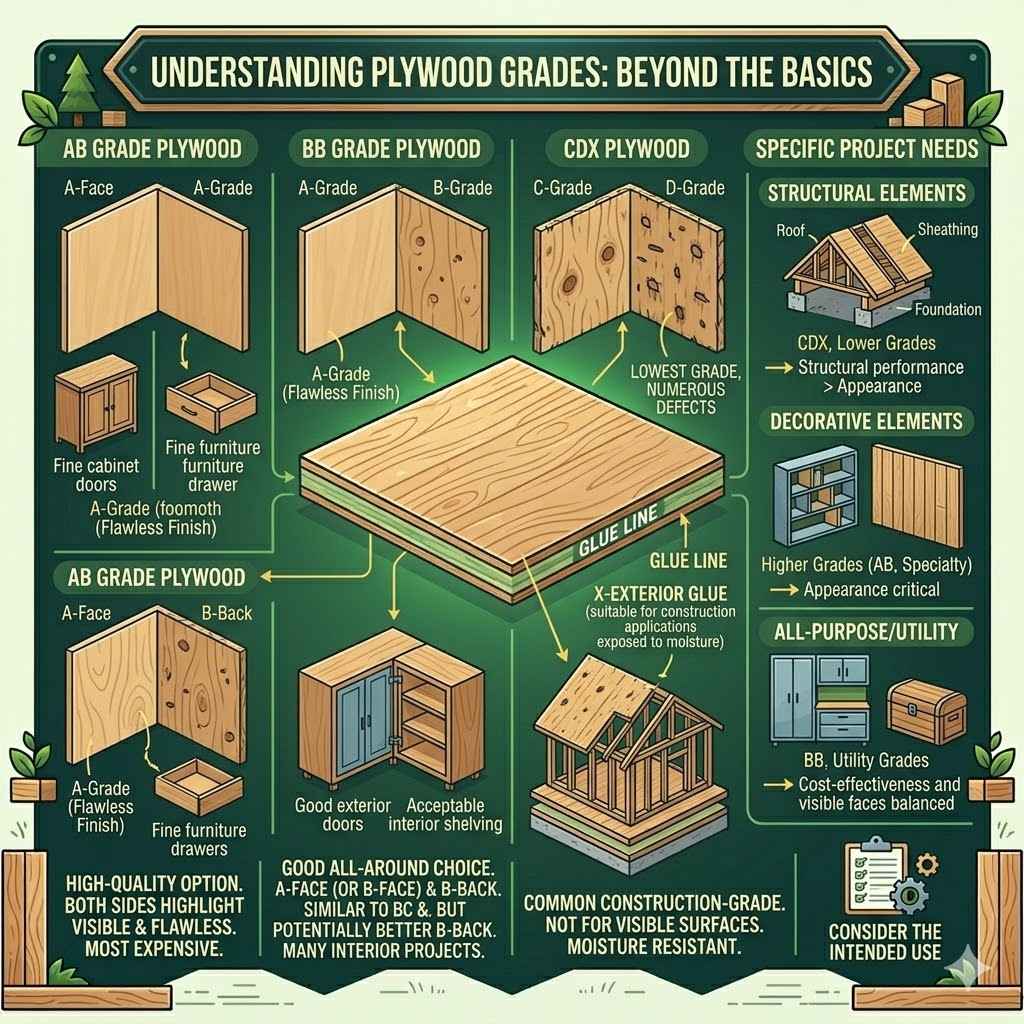
While AC and BC are common, the world of plywood grades extends beyond these. Understanding other grades can help you make even more informed decisions for specific projects. For instance, grades like AB, BB, and even utility grades have their place.
Each grade designation tells you something about the appearance and potential defects on each side of the panel, guiding you toward the most suitable material for your building needs.
- AB Grade Plywood: This is a high-quality option where both the face and back veneers are A-grade. It’s the best for projects where both sides will be highly visible and need a flawless finish, such as fine furniture or high-end millwork. As you might expect, it is also the most expensive.
- BB Grade Plywood: BB grade plywood typically features an A-grade face (or a B-grade face with minor imperfections) and a B-grade back. It’s similar to BC plywood but can sometimes have a slightly better B-grade back. It’s a good all-around choice for many interior projects where appearance on one side is important.
- CDX Plywood: CDX is a common construction-grade plywood. The ‘C’ and ‘D’ indicate lower veneer grades, with ‘D’ being the lowest, often containing numerous knots and defects. The ‘X’ stands for exterior glue, meaning it’s suitable for construction applications exposed to moisture. It is not intended for visible surfaces.
- Specific Project Needs: The best grade depends entirely on your project. For structural elements like roof sheathing or subflooring, lower grades like CDX are perfectly fine. For decorative elements, higher grades like AB or even specialty veneer panels are more appropriate. Always consider the intended use before selecting a grade.
Frequently Asked Questions
Question: What does the ‘A’, ‘B’, ‘C’, and ‘D’ mean in plywood grades
Answer: These letters refer to the appearance quality of the veneer on each side of the plywood sheet. ‘A’ is the best grade, meaning smooth, sanded, and free of major defects. ‘B’ is still good but may have small knots or plugged defects.
‘C’ will have more knots and some imperfections, and ‘D’ is the lowest grade, often with many defects.
Question: Is AC plywood stronger than BC plywood
Answer: The veneer grades (AC, BC) primarily describe the appearance of the surface, not the inherent structural strength of the plywood. The strength comes more from the core layers, the thickness of the sheet, and the type of adhesive used. For most typical uses, both AC and BC plywood offer sufficient strength.
Question: Can I paint both AC and BC plywood
Answer: Yes, you can paint both AC and BC plywood. The A-grade face on both types provides a smooth surface that takes paint very well. If the back of the plywood is also visible and you want to paint it, the B-grade back of BC plywood will require less prep work than the C-grade back of AC plywood.
Question: Which plywood grade is best for visible surfaces
Answer: For visible surfaces where appearance is most important, you want the best veneer quality. The A-grade face on both AC and BC plywood is ideal for this. If both sides of the panel will be visible, or if you want the best possible finish on the back as well, consider higher grades like AB plywood.
Question: Is BC plywood cheaper than AC plywood
Answer: Yes, BC plywood is generally cheaper than AC plywood. This is because the B-grade back on BC plywood is less costly to produce than the C-grade back on AC plywood, while both typically feature a similar quality A-grade face. The price difference reflects the quality variation on the less desirable side.
Wrap Up
Understanding AC Plywood vs BC Key Differences Explained helps you choose wisely. AC plywood offers a premium finish on one side, with a more functional back. BC plywood provides a great A-grade face with a better-than-average B-grade back.
Select AC for projects where both sides need a high-quality look, and BC for excellent value when one side is most important. This choice leads to better project outcomes.