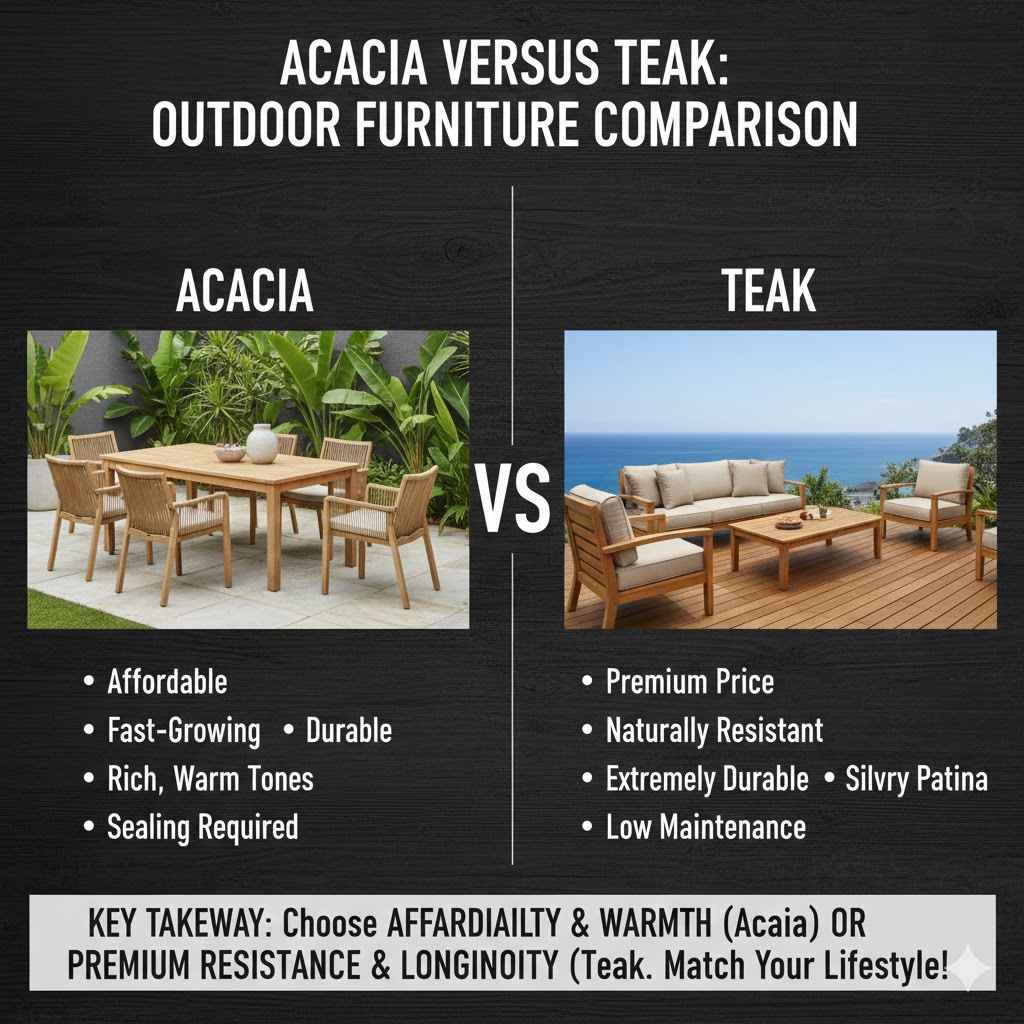
Acacia Versus Teak Outdoor Furniture Comparison
Deciding between acacia and teak for your outdoor furniture can feel tricky when you’re just starting out. You see these beautiful pieces and wonder, which one is better for my patio? It’s a common question that gets asked a lot.
Don’t worry, this guide will make it super simple. We’ll walk through everything you need to know, step by step, so you can pick the perfect wood for your outdoor space. Get ready to learn about Acacia vs Teak Outdoor Furniture: Which Wins? and how to make the best choice for you.
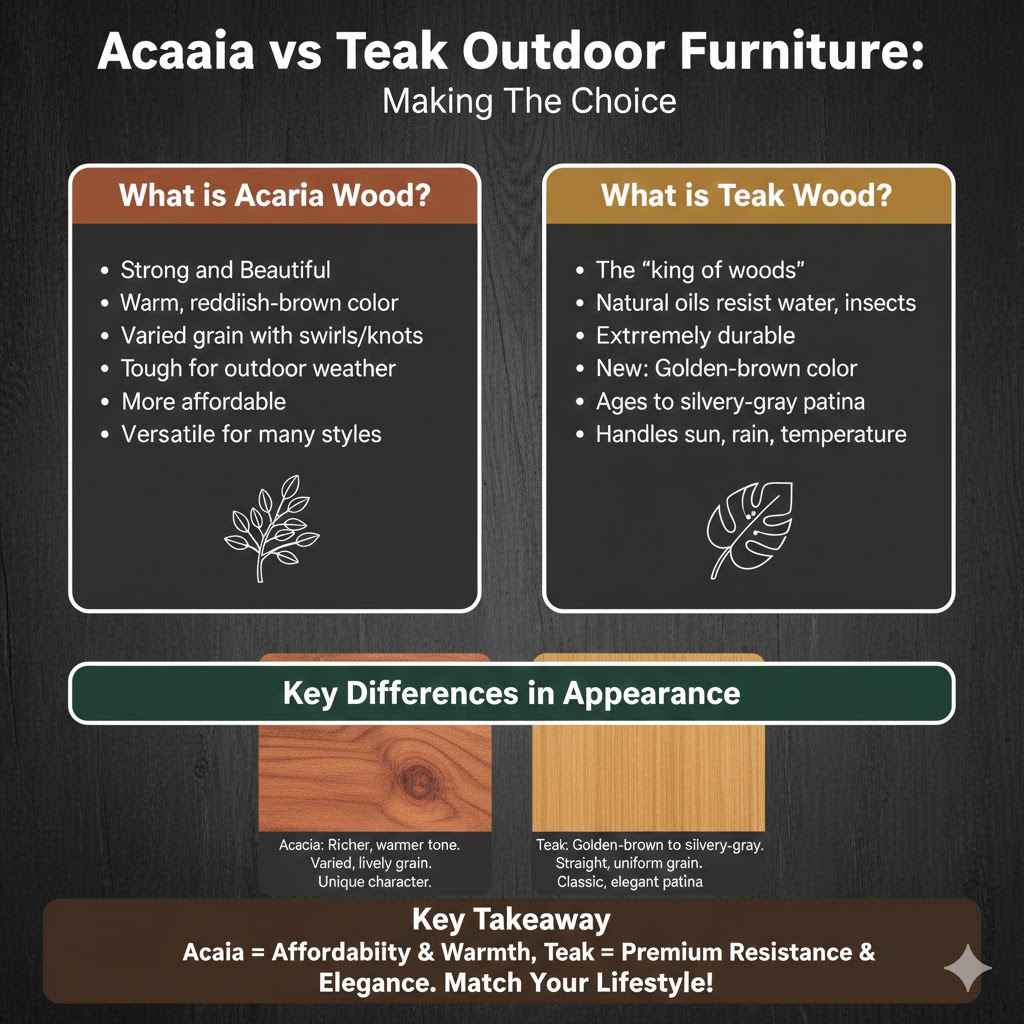
Acacia vs Teak Outdoor Furniture Making The Choice
Choosing outdoor furniture is a big decision. You want something that looks good and lasts a long time. Acacia and teak are two popular wood choices for outdoor sets.
They both have their own special qualities. This section will help you see what makes each wood unique. Understanding these differences is the first big step to finding the best fit for your yard or deck.
We’ll look at what each wood offers, so you can get a clear picture.
What is Acacia Wood?
Acacia is a really common tree found in many parts of the world. It’s known for being strong and beautiful. It comes in many different types, so the look can change a bit.
Most outdoor furniture uses acacia that is grown in places like Australia, Africa, or Asia. It’s a favorite because it’s tough enough to handle the weather outside. People also like it because it doesn’t cost as much as some other fancy woods.
Acacia wood is also known for its natural beauty. It often has a warm, reddish-brown color. You might see nice wavy lines or knots in the grain.
This gives each piece of furniture a unique look. It’s a wood that can be shaped into many different styles of furniture. This makes it very versatile for designers and homeowners.
What is Teak Wood?
Teak is often called the “king of woods” for outdoor furniture. It comes from trees that grow in South and Southeast Asia. Teak is famous for its amazing natural qualities.
It has natural oils that make it super resistant to water, insects, and even rot. This means it can sit outside for years and still look great.
Teak wood usually has a beautiful golden-brown color when it’s new. Over time, when it’s left outside, it weathers to a lovely silvery-gray. This color change is natural and many people love the rustic look it creates.
Teak is also known for being very durable and strong. It can handle a lot of sun, rain, and temperature changes without warping or cracking.
Key Differences in Appearance
When you look at acacia and teak side by side, you’ll notice some visual differences. Acacia wood often has a richer, warmer tone, leaning towards reddish-browns. Its grain can be more varied, sometimes showing dramatic swirls or distinct knots.
This gives it a lively and distinctive character. Each piece can look quite unique.
Teak, on the other hand, typically starts with a golden-brown hue. Its grain is usually straighter and more uniform. This gives teak furniture a more classic and elegant appearance.
As teak ages outdoors, it develops a beautiful, soft silver-gray patina. This weathered look is highly sought after and adds a touch of timeless charm to any garden.
Durability and Weather Resistance Acacia vs Teak
When we talk about outdoor furniture, how it holds up against the weather is super important. You want your tables and chairs to last through sunny days, rainy spells, and everything in between. Both acacia and teak are good at this, but they do it in slightly different ways.
Let’s break down how each wood handles the outdoors.
Acacia’s Durability Factors
Acacia wood is known for its strength and density. This makes it quite good at resisting everyday wear and tear. It can handle normal outdoor conditions well, like sunshine and light rain.
However, it doesn’t have the same natural, built-in defenses as teak.
To keep acacia looking its best and to help it last longer, it often needs a little more care. This might include applying protective finishes or oils periodically. If not cared for, acacia can be more prone to fading, cracking, or developing mildew over time, especially in very harsh climates with a lot of moisture or intense sun.
Teak’s Natural Defense System
Teak’s real superpower is its natural oil content. These oils are like a built-in shield. They make teak incredibly resistant to water.
This means it won’t soak up moisture and swell or rot easily. This is a huge advantage for furniture that sits outside all year.
These natural oils also act as a barrier against insects, like termites, which can damage other types of wood. Teak is also very stable, meaning it doesn’t warp or crack much even with big changes in temperature and humidity. This makes it a very low-maintenance choice for people who want their furniture to last with minimal fuss.
How They Handle the Elements
Imagine a sudden downpour or a week of hot sun. Acacia will hold up pretty well, especially if it’s been treated or sealed. But over many years, constant exposure to wet and dry cycles can start to show.
It might fade or get minor surface damage.
Teak, on the other hand, thrives in these conditions. Its natural oils repel water, so it doesn’t get waterlogged. The sun might change its color to gray, but the wood itself remains strong and sound.
Teak furniture is built to weather the storm, both literally and figuratively.
Maintenance Needs Compared
Acacia furniture usually needs regular cleaning. You might need to scrub it to remove dirt or mildew. Applying teak oil or a sealant every year or two can help protect it and keep its color.
Without this, it can look tired faster.
Teak furniture needs less frequent maintenance. A simple wipe-down with soap and water is often enough to keep it clean. If you want to keep its golden-brown color, you can use special teak cleaners and protectors.
But many people choose to let it turn silver-gray, which requires almost no effort at all. This makes teak a much easier option if you’re busy.
Real-Life Example: A Coastal Patio
Consider a patio right by the sea. It gets salty air, strong sun, and frequent sea spray. A table made of acacia might start to show wear within a few years.
The salt can be harsh, and the constant moisture might encourage mildew if not cleaned often.
A teak table in the same spot would likely look almost as good after five or ten years. The salt and spray don’t harm its natural oils. It will probably turn a beautiful silver-gray, looking like it belongs there.
The wood itself stays strong and solid, ready for many more years of use.
Cost and Value Proposition
Price is a big factor for most people when buying new furniture. When you compare acacia and teak, there’s a noticeable difference in how much they cost. This difference isn’t just about the price tag; it’s also about what you get for your money over time.
Let’s look at the costs involved.
Acacia Furniture Pricing
Acacia furniture is generally much more affordable than teak. This is one of its biggest selling points. Because acacia trees grow faster and are more widely available, the wood is less expensive to harvest and process.
For someone on a budget, acacia furniture offers a way to get a stylish and functional outdoor set without spending a lot of money. You can often find complete dining sets or lounge collections for a fraction of the price of similar teak pieces. This makes it a great option for those who want good looks without a high investment.
Teak Furniture Pricing
Teak wood is significantly more expensive than acacia. The higher cost is due to several factors. Teak trees take a very long time to mature, often 50 to 100 years, before the wood is ready to be harvested.
Also, genuine teak is often sourced from managed forests, which can add to the cost. The demand for teak is high globally, further driving up prices.
When you invest in teak furniture, you are paying for its exceptional durability, natural beauty, and longevity. The price reflects the quality of the material and its superior performance in outdoor environments. Many consider teak a long-term investment.
Long-Term Value Comparison
While acacia is cheaper upfront, you might find yourself needing to replace it sooner than teak. If acacia furniture starts to show wear after 5-7 years and needs to be replaced, the cost of buying multiple acacia sets over, say, 20 years could add up. You’ll also spend more time and money on maintenance for acacia.
Teak furniture, though expensive initially, can last for 20 years or even longer with minimal maintenance. When you spread the cost of teak furniture over its lifespan, the cost per year can become very competitive. It offers excellent long-term value because you buy it once and enjoy it for decades.
This makes teak a wise investment for many.
Statistics on Wood Furniture Longevity
Studies have shown that well-maintained teak furniture can last upwards of 25 years, sometimes even 50 years. Acacia furniture, while durable, typically has a lifespan of 5-10 years before significant cosmetic or structural issues might arise if not continually maintained. This significant difference in lifespan impacts the overall cost-effectiveness of each option over time.
| Furniture Type | Initial Cost | Average Lifespan | Estimated Cost Per Year (20 Years) |
|---|---|---|---|
| Acacia (with moderate maintenance) | $$ | 7-10 Years | $$ – $$$ (assuming replacement every 7 years) |
| Teak (with minimal maintenance) | $$$$ | 20+ Years | $ – $$ |
Scenario: A Family with Young Children
A family with young kids might be more concerned about immediate costs. They want to furnish their backyard for summer fun without breaking the bank. Buying a beautiful acacia dining set allows them to seat everyone and enjoy outdoor meals.
If a minor scratch happens, it’s less of a financial blow than on a more expensive teak set.
On the other hand, if this family plans to stay in their home for a long time and wants furniture that will be there for their children as they grow, teak might be a better, albeit more costly, choice. The durability means it can withstand more active use and still look good for many years to come.
Maintenance and Care Requirements
Keeping your outdoor furniture looking good is key to enjoying your patio. The amount of work involved in caring for acacia versus teak is quite different. If you love to tinker and maintain things, one might appeal more.
If you prefer low-effort upkeep, the other might be your best bet. Let’s get into the details of how to care for these woods.
Acacia Wood Care Needs
Acacia wood requires more hands-on care to maintain its appearance and extend its life. Regularly cleaning the furniture is essential to remove dirt, dust, and potential mildew growth. Mild soap and water are usually sufficient for general cleaning.
To protect the wood from UV rays and moisture, periodic sealing or oiling is recommended. This can involve applying a sealant or a specialized wood oil every one to two years. This process helps to prevent the wood from drying out, cracking, and fading.
Without regular treatment, acacia can develop a weathered gray look more quickly and might become more susceptible to damage.
Teak Wood Care and Upkeep
Teak’s natural properties mean it demands much less maintenance. Its inherent oils make it highly resistant to moisture and decay, so it doesn’t need sealing to prevent damage from the elements. Basic cleaning is usually all that’s required.
For routine cleaning, a soft cloth with mild soap and water is effective. If mildew appears, a gentle scrub with a cleaner designed for teak will usually do the trick. Many owners choose to let their teak furniture age naturally to a soft silver-gray patina.
This look is popular and requires no extra effort beyond occasional cleaning.
Cleaning Techniques for Each Wood
For acacia, you’ll want to use a soft brush or sponge with mild soap. Rinse thoroughly and let it air dry completely. For tougher stains or mildew, a wood cleaner might be needed.
Always test any cleaner on an inconspicuous spot first.
For teak, the same mild soap and water approach works well. If you want to restore the golden color, you can use a teak brightener followed by a teak protector. This is more of an aesthetic choice than a necessity for the wood’s health.
For the silver-gray look, just a simple wash is fine.
Long-Term Protection Strategies
For acacia, regular application of a good quality exterior wood sealant or teak oil is important. This creates a protective barrier against the elements. Storing acacia furniture indoors or covering it during harsh weather can also significantly prolong its life and appearance.
For teak, the best long-term protection is often just letting it be. The natural oils and its inherent resistance mean it’s well-equipped to handle the outdoors. If you want to preserve the original color, using UV-protectant finishes can help, but this is optional.
Covers can still be useful for keeping furniture clean and free from debris.
Sample Maintenance Schedule
Here’s a possible schedule:
- Spring Cleaning (Acacia): Wash thoroughly with soap and water. Apply a fresh coat of sealant or oil.
- Summer Checks (Acacia & Teak): Wipe down spills and dirt as needed. Check for any early signs of mildew on acacia.
- Fall Prep (Acacia): Clean one last time before covering or storing. Re-oil if needed before storage.
- Winter Storage (Acacia): Cover with breathable furniture covers or store in a shed or garage.
- Year-Round (Teak): Simple cleaning as needed. Let it weather naturally or use teak care products if desired.
Environmental Impact and Sourcing
Where your furniture comes from and how it’s made matters to many people. Both acacia and teak can be sourced responsibly, but it’s good to know the differences. Understanding these aspects helps you make a choice that aligns with your values.
We’ll look at how these woods are grown and harvested.
Acacia Wood Sourcing
Acacia trees grow relatively quickly and are abundant in many regions. This means acacia can often be a more readily available and sustainable option. Many acacia wood products come from responsibly managed plantations.
When acacia is sourced from certified sustainable forests, it has a lower environmental footprint compared to hardwoods that take centuries to grow. Look for certifications like FSC (Forest Stewardship Council) to ensure the wood is harvested in an eco-friendly way. This means that for every tree cut down, new ones are planted.
Teak Wood Sourcing
Genuine teak wood comes from specific tropical regions, primarily in Asia. Traditionally, teak was harvested from natural forests, which led to concerns about deforestation and illegal logging. However, the industry has moved towards more sustainable practices.
Today, much of the teak used for furniture comes from legally managed plantations. These plantations are often managed by governments or private companies with a focus on long-term harvesting and replanting. Similar to acacia, looking for FSC certification on teak furniture is the best way to ensure it’s sourced responsibly and ethically.
Sustainability of Fast-Growing Acacia
Because acacia grows so fast, it can be replenished much quicker than slow-growing hardwoods like teak. This rapid growth cycle means that acacia plantations can provide a steady supply of wood without depleting natural forests. This makes acacia a strong contender for eco-conscious consumers.
The speed at which acacia trees reach maturity also means less land may be needed for plantations over time, compared to forests of very old trees. This can be a significant environmental benefit, especially in areas where land use is a concern.
Challenges with Teak Sustainability
While many teak sources are now sustainable, the historical over-harvesting has left a mark. It’s crucial for consumers to be aware of where their teak is coming from. Unscrupulous suppliers might still offer illegally logged teak, which contributes to deforestation and habitat loss.
The long growth period of teak also means that it takes a very long time to replace harvested trees. This makes sustainable management even more critical. Consumers play a vital role by choosing only from reputable sources that can prove their sustainability practices.
Example: Forest Management Certifications
Imagine two furniture brands. Brand A sells acacia chairs and clearly displays an FSC certification on their tags. This tells you the wood came from a forest managed with respect for the environment and local communities.
They likely replanted trees and protected wildlife habitats.
Brand B sells teak tables. Their website says the teak is “ethically sourced.” However, they can’t provide proof of certification or details about their suppliers. This makes it harder to trust their claims.
For an environmentally conscious buyer, Brand A’s acacia would likely be the preferred choice due to verifiable sustainable practices.
Statistics on Sustainable Wood Use
According to the Forest Stewardship Council (FSC), wood products with the FSC label come from forests that are managed responsibly. In 2022, over 200 million hectares of forest worldwide were certified by the FSC, ensuring that timber is harvested in a way that benefits people and the planet. This number continues to grow as more companies prioritize sustainable sourcing for materials like acacia and teak.
Choosing Between Acacia and Teak For Your Home
Now that you know all about acacia and teak, you can make a smart choice for your outdoor space. The best wood for you really depends on what you’re looking for. Do you want to save money upfront?
Or are you investing in something that will last for a very long time? Let’s bring it all together.
Who Should Choose Acacia?
Acacia is a fantastic choice if you are on a budget. It’s more affordable and still gives you a beautiful outdoor furniture set. It’s great if you like to change your outdoor decor every few years.
You can get a new look without spending too much. It’s also a good option if you don’t mind doing a bit of maintenance to keep it looking nice.
If you want a warm, inviting look for your patio and don’t need furniture to last for several decades, acacia is a solid pick. It’s perfect for renters or those who are just starting out with outdoor living spaces.
Who Should Choose Teak?
Teak is the top choice for people who want the absolute best in durability and longevity. If you see your outdoor furniture as a long-term investment and want something that will look great for 20 years or more, teak is the way to go. It’s perfect for homeowners who plan to stay put and want furniture that can handle anything.
If you value ease of maintenance and prefer a classic, elegant look that ages beautifully, teak is ideal. The silver-gray patina it develops is highly desirable and requires very little effort to maintain.
Making Your Final Decision
Think about your budget. How much can you spend right now? Also, consider how much time you want to spend caring for your furniture.
Do you want to oil it every year, or would you rather just wipe it down? How long do you plan to keep the furniture? These questions will guide you.
For many, the choice comes down to a balance of cost, appearance, and how long they want the furniture to last. Both acacia and teak can make your outdoor space beautiful and functional. It’s just about finding the one that fits your life and your style best.
Key Considerations Summary
- Budget: Acacia is more affordable upfront. Teak is a larger initial investment.
- Durability: Teak is naturally more resistant to elements and pests. Acacia is good but needs more protection.
- Maintenance: Teak requires minimal care. Acacia needs regular cleaning and sealing.
- Appearance: Acacia has warmer tones and varied grain. Teak offers a classic look that weathers to silver-gray.
- Lifespan: Teak furniture can last decades. Acacia typically lasts 5-10 years with proper care.
Sample Scenario: A Balcony Retreat
Someone setting up a small balcony might choose a couple of acacia chairs and a small table. The budget is probably tighter for a balcony space, and the furniture might not be used as heavily as in a large backyard. The ability to get a nice-looking set without a huge cost is appealing.
Alternatively, if the balcony is covered and protected from the harshest weather, a teak bistro set could be a beautiful, long-lasting addition. Even with some protection, teak’s natural resilience means it will likely outlast acacia over many years of use.

Frequently Asked Questions
Question: Is acacia wood strong enough for outdoor furniture?
Answer: Yes, acacia wood is quite strong and dense, making it suitable for outdoor furniture. It can handle everyday use and weather well, especially with proper care and finishing.
Question: Will teak furniture turn green?
Answer: Teak furniture typically turns a silver-gray color as it ages and weathers. It will not turn green unless it develops mildew due to poor cleaning or constant dampness without airflow.
Question: Which wood is more expensive acacia or teak?
Answer: Teak wood is significantly more expensive than acacia wood. This is due to teak’s slower growth, natural properties, and higher demand.
Question: How often should I oil acacia furniture?
Answer: It’s generally recommended to oil or seal acacia furniture every one to two years to help protect it and maintain its appearance. The exact frequency may depend on your climate.
Question: Can I leave teak furniture outside all year round?
Answer: Yes, teak furniture is designed to withstand outdoor elements and can be left outside year-round. Its natural oils protect it from moisture, rot, and insects.
Conclusion
When weighing Acacia vs Teak Outdoor Furniture: Which Wins? the answer truly depends on your priorities. Acacia offers great style and value upfront.
Teak provides unmatched durability and a timeless elegance over many years. Choose acacia for budget-friendly beauty or teak for a lasting, low-maintenance investment.