Acacia Wood vs Bamboo Cutting Boards: Which Is Actually Better?
Acacia wood actually tests harder than most bamboo on the Janka hardness scale (roughly 1,750 lbf versus 1,380-1,600 lbf for common bamboo), yet bamboo often dulls a knife faster anyway. That paradox comes down to bamboo’s silica content and its glued-strip construction, not raw hardness – and it’s the single biggest thing most comparisons get backwards.
Below, we break down what each board is actually made of, how they perform on durability, knife-friendliness, hygiene, and cost, and which one fits your kitchen – plus a food-safe acacia board we’d actually recommend.
What Are Cutting Boards Made Of
Cutting boards are essential kitchen tools. They protect your countertops and your knives. Traditionally, they were made from wood, but plastic and other synthetic materials are also common today.
Natural wood options like acacia and bamboo have gained popularity for their aesthetic appeal and performance. They offer a warm, natural look that many people prefer in their kitchens. They also tend to be gentler on knife edges than harder synthetic materials, which helps your knives stay sharper for longer.
Best Solid Acacia Pick
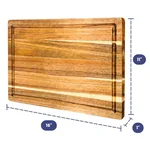 |
Ziruma Non-Toxic Acacia Wood Cutting Board – $39.95 A one-piece solid acacia board finished with beeswax, flaxseed, and lemon oil instead of glued bamboo strips – so there’s no adhesive seam to worry about.
|
Acacia Wood Cutting Boards
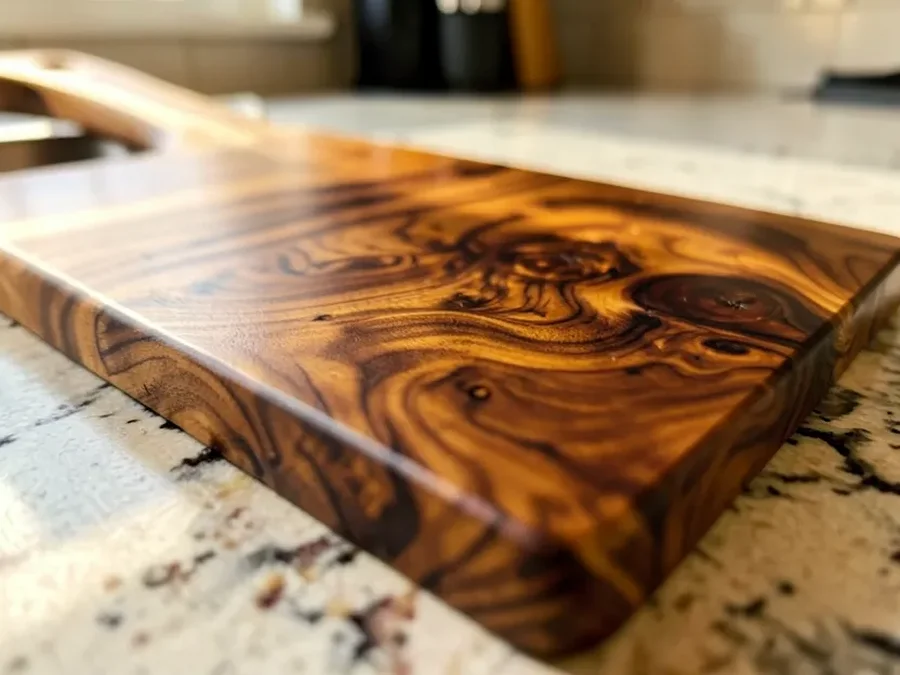
Acacia wood is a popular choice for cutting boards due to its beautiful grain patterns and natural durability. It’s a hardwood known for its strength and resistance to moisture. Many acacia wood cutting boards are made from pieces of acacia that are glued together, creating a striking mosaic-like appearance.
This construction method also contributes to the board’s stability and prevents warping.
Pros of Acacia Wood Cutting Boards
- Durability: Acacia is a dense hardwood, making it very durable and resistant to scratches and dents.
- Aesthetic Appeal: It features unique, rich grain patterns that add a touch of elegance to any kitchen.
- Water Resistance: Acacia wood is naturally somewhat resistant to moisture, which helps prevent it from absorbing liquids and developing stains or odors quickly.
- Knife Friendliness: It is relatively gentle on knife edges compared to materials like glass or stone, helping to maintain your knives’ sharpness.
Cons of Acacia Wood Cutting Boards
- Weight: Acacia wood can be quite heavy, making larger boards cumbersome to move and clean.
- Maintenance: Like all wood cutting boards, acacia requires regular oiling to maintain its condition and prevent drying out.
- Can Harbor Bacteria if Not Cared For: While naturally antimicrobial to some extent, proper cleaning is essential to prevent bacteria growth, especially after cutting raw meats.
Bamboo Cutting Boards
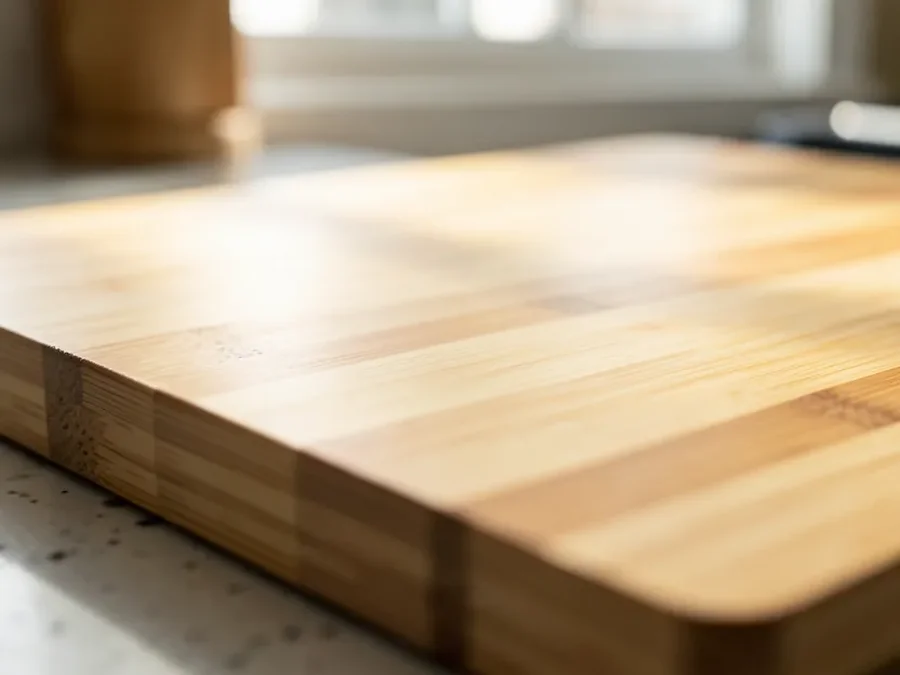
Bamboo cutting boards are a strong contender in the natural cutting board market. Bamboo is technically a grass, but it’s incredibly strong and renewable. It’s known for its hardness, sustainability, and often a more uniform appearance compared to acacia wood.
Pros of Bamboo Cutting Boards
- Sustainability: Bamboo is a fast-growing, renewable resource, making it an eco-friendly choice.
- Hardness: Bamboo is very hard, making it resistant to deep knife marks and scratches.
- Lightweight: Compared to many hardwoods, bamboo is generally lighter, making it easier to handle.
- Moisture Resistance: Bamboo fibers have natural properties that make it quite resistant to water absorption.
Cons of Bamboo Cutting Boards
- Can Be Hard on Knives: While not as damaging as glass, bamboo’s hardness can dull knife edges more quickly than softer woods.
- Can Crack or Warp: While resistant to moisture, extreme temperature changes or prolonged soaking can cause bamboo to crack or warp.
- Adhesive Concerns: Bamboo boards are built from strips of bamboo laminated together, and the glue holding those strips matters for food safety. Cheaper imported boards sometimes use lower-grade, formaldehyde-based resins that can break down and off-gas over repeated hot-water washing. Look for a board explicitly labeled food-safe, formaldehyde-free, or bonded with an FDA-approved adhesive (Titebond III is a common food-safe standard) before buying.
Acacia Wood vs Bamboo Cutting Boards: Which Is Better? A Detailed Comparison
When comparing Acacia Wood vs Bamboo Cutting Boards: Which Is Better?, several factors come into play. Both are excellent choices for home cooks, but their differences become apparent with use.
Durability and Hardness
Here’s where most comparisons get it backwards: acacia is the harder material by Janka rating, not bamboo. Depending on the species, acacia typically tests around 1,700-1,750 lbf on the Janka hardness scale, while common bamboo boards test lower, often in the 1,380-1,600 lbf range. Acacia is a genuine hardwood tree species, while bamboo is technically a grass, not a wood at all – its cutting-board strength comes from how tightly the strips are laminated together, not from a single dense hardwood fiber structure.
So why does bamboo have a reputation for being the tougher, more knife-dulling material? Two reasons that have nothing to do with the Janka number: bamboo contains natural silica, a mineral that acts like microscopic grit against a blade’s edge, and every laminated bamboo board has glue seams where the strips meet. A knife edge catches slightly at each seam transition, which wears it down faster than gliding across one continuous piece of acacia.
Knife Edge Preservation
For those who value keeping their knives sharp, acacia offers a real advantage despite testing harder on paper. Its solid, continuous grain gives a blade a consistent surface to glide across, so it holds an edge noticeably longer between sharpenings.
Bamboo’s silica content and glue-seam construction mean it’s more likely to contribute to premature dulling, even though it isn’t the harder material overall. If you’ve invested in good knives, that’s the more relevant fact than the raw hardness number.
Moisture and Stain Resistance
Both acacia and bamboo have natural properties that help them resist moisture and staining. Acacia wood’s dense grain helps repel liquids to some extent. Bamboo also has a natural resistance due to its fibrous structure.
However, neither is completely waterproof. Regular cleaning and proper drying are essential for both. Leaving liquid to sit on either surface for too long can lead to staining and potential warping or cracking.
Maintenance and Care
Both types of boards require similar care. They should be washed by hand with mild soap and warm water. Never put them in the dishwasher, as the heat and harsh detergents can cause significant damage.
After washing, they should be dried thoroughly. For long-term preservation, both acacia and bamboo benefit from regular oiling. Mineral oil or a specialized cutting board oil can be applied periodically to keep the wood conditioned, prevent drying, and enhance its natural beauty.
This also helps create a barrier against moisture and stains.
Sustainability and Environmental Impact
Bamboo stands out as a highly sustainable option. It’s a rapidly renewable resource that grows quickly without needing a lot of water or pesticides. This makes it an excellent choice for environmentally conscious consumers.
Acacia wood is also a natural material, and many manufacturers source it from sustainably managed forests. However, the growth rate of bamboo generally surpasses that of acacia, giving bamboo an edge in terms of rapid renewability.
Aesthetics and Appearance
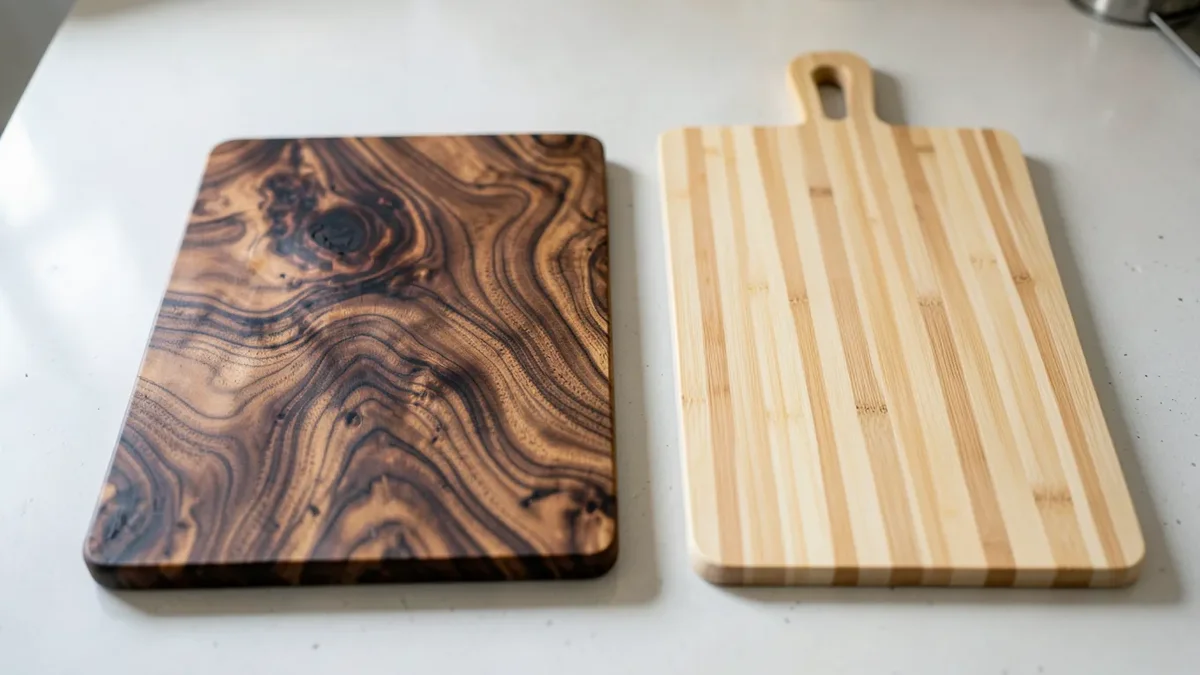
This is often a matter of personal preference. Acacia wood typically boasts a beautiful, varied grain pattern with rich, warm colors. Each board can look quite unique.
Bamboo often has a more uniform, lighter color and a consistent grain pattern, giving it a modern, clean look. Some bamboo boards might feature a “pressed” look, where strips are laminated together, which can be less visually varied than acacia.
Cost
Generally, bamboo cutting boards tend to be more affordable than acacia wood cutting boards, especially when comparing boards of similar size and thickness. The lower cost of bamboo, combined with its rapid growth and availability, makes it a budget-friendly option.
Hygiene and Bacteria
Both acacia and bamboo have natural antimicrobial properties that can help inhibit bacterial growth. However, it’s vital to remember that no wooden cutting board is entirely immune to bacteria. Proper cleaning after each use, especially after cutting raw meat or poultry, is crucial for maintaining hygiene.
For raw meats, using a separate board is always recommended, regardless of the material.
Choosing the Right Board For You
When you’re weighing Acacia Wood vs Bamboo Cutting Boards: Which Is Better?, think about what matters most in your kitchen.
For the Eco-Conscious Cook
If sustainability is your top priority, bamboo is likely the superior choice. Its rapid growth cycle and renewable nature make it an environmentally friendly material.
For the Knife Enthusiast
If you cherish your knives and want to keep them as sharp as possible for as long as possible, acacia wood might be the better option. Its slightly softer nature is gentler on blades.
For the Budget-Savvy Chef
Bamboo cutting boards generally offer more bang for your buck. They provide good durability and functionality at a more accessible price point.
For the Aesthetic-Focused Home
If you love unique natural beauty and rich wood tones, acacia wood’s varied grain patterns might be more appealing. For a modern, minimalist look, bamboo could be preferred.
For Frequent Use and Durability
Both are durable, but the choice might come down to how you define durability. Bamboo resists deep scratches better due to its hardness. Acacia might feel more substantial and hold up well to general wear.
Consider how you use your boards: heavy chopping vs. light prep work.
Table Comparison
| Feature | Acacia Wood Cutting Board | Bamboo Cutting Board |
|---|---|---|
| Durability | Very Good (dense hardwood) | Excellent (very hard) |
| Knife Edge Preservation | Good (gentler on blades) | Fair (harder, can dull knives faster) |
| Moisture Resistance | Good | Very Good |
| Sustainability | Good (natural, can be sourced sustainably) | Excellent (fast-growing, renewable grass) |
| Aesthetics | Rich, varied grain patterns, warm colors | Uniform, often lighter color, clean look |
| Weight | Can be heavy | Generally lighter |
| Cost | Mid to High | Low to Mid |
| Maintenance | Regular oiling recommended | Regular oiling recommended |
Frequently Asked Questions
Question: Is bamboo or acacia better for preventing knife dulling
Answer: Acacia wood is generally considered better for preserving knife edges because it is slightly softer than bamboo. Bamboo’s hardness, while good for resisting cuts, can wear down your knives more quickly over time.
Question: Which cutting board material is more sustainable
Answer: Bamboo is typically considered more sustainable because it is a very fast-growing grass that can be harvested quickly and replanted easily. It’s a highly renewable resource.
Question: Can I put my acacia or bamboo cutting board in the dishwasher
Answer: No, you should never put either an acacia wood or bamboo cutting board in the dishwasher. The extreme heat and detergents will cause them to warp, crack, and lose their finish.
Question: How do I clean my acacia or bamboo cutting board
Answer: Clean your cutting board by hand with warm water and mild soap. Rinse it well and dry it thoroughly immediately after washing. Avoid soaking it in water.
Question: Do acacia wood or bamboo boards harbor bacteria
Answer: Both materials have natural antimicrobial properties that can help inhibit bacterial growth. However, it is crucial to clean them properly after each use, especially after cutting raw meats, to maintain good hygiene.
Question: Is the glue in bamboo cutting boards toxic
Answer: Not if the manufacturer uses a food-safe adhesive. Reputable bamboo boards use FDA-approved, formaldehyde-free glue (such as Titebond III) to laminate the strips. Cheaper imported boards sometimes use lower-grade resins that can break down with repeated hot-water washing, so check the listing for a formaldehyde-free or food-safe adhesive claim before buying. A one-piece solid acacia board sidesteps this question entirely since there’s no glue seam at all.
Final Thoughts
Deciding between acacia wood and bamboo cutting boards ultimately comes down to your priorities. If you want a board that’s kind to your knives and don’t mind the extra weight, acacia is the better pick – and a solid one-piece board also means no glue seam to think about. If sustainability, lighter weight, and a lower price matter more, bamboo is still a solid choice, just double-check the adhesive claim before you buy.
Whichever you choose, hand wash and dry it promptly and oil it regularly – that matters more for long-term durability than the species itself. For a broader look at acacia versus bamboo across other woodworking projects (flooring, shelving, tabletops), see our general Acacia Wood vs Bamboo comparison.
Sponsored / affiliate links. As an Amazon Associate I earn from qualifying purchases. I may earn additional commission from eligible campaigns.