Are Boxwood Roots Invasive? What Every Gardener Should Know
It’s a question many gardeners ponder, especially after seeing a beloved shrub thrive. You wonder, “Are boxwood roots invasive?” This feeling often comes with a mix of pride in your green thumb and a whisper of worry about what’s happening underground. You’ve worked hard to make your garden beautiful.
The last thing you want is for one plant to cause trouble for others. Let’s dive into what’s really going on beneath the soil.
Boxwood roots are generally not considered invasive in the way that aggressive weeds or certain trees are. While they spread, they typically stay within a manageable range and don’t aggressively overtake other plants or damage structures. Understanding their growth habits helps gardeners coexist with these popular shrubs.
Understanding Boxwood Roots
Boxwood, or Buxus sempervirens, is a gardener’s friend for many reasons. It stays green all year. It shapes up nicely for formal gardens.
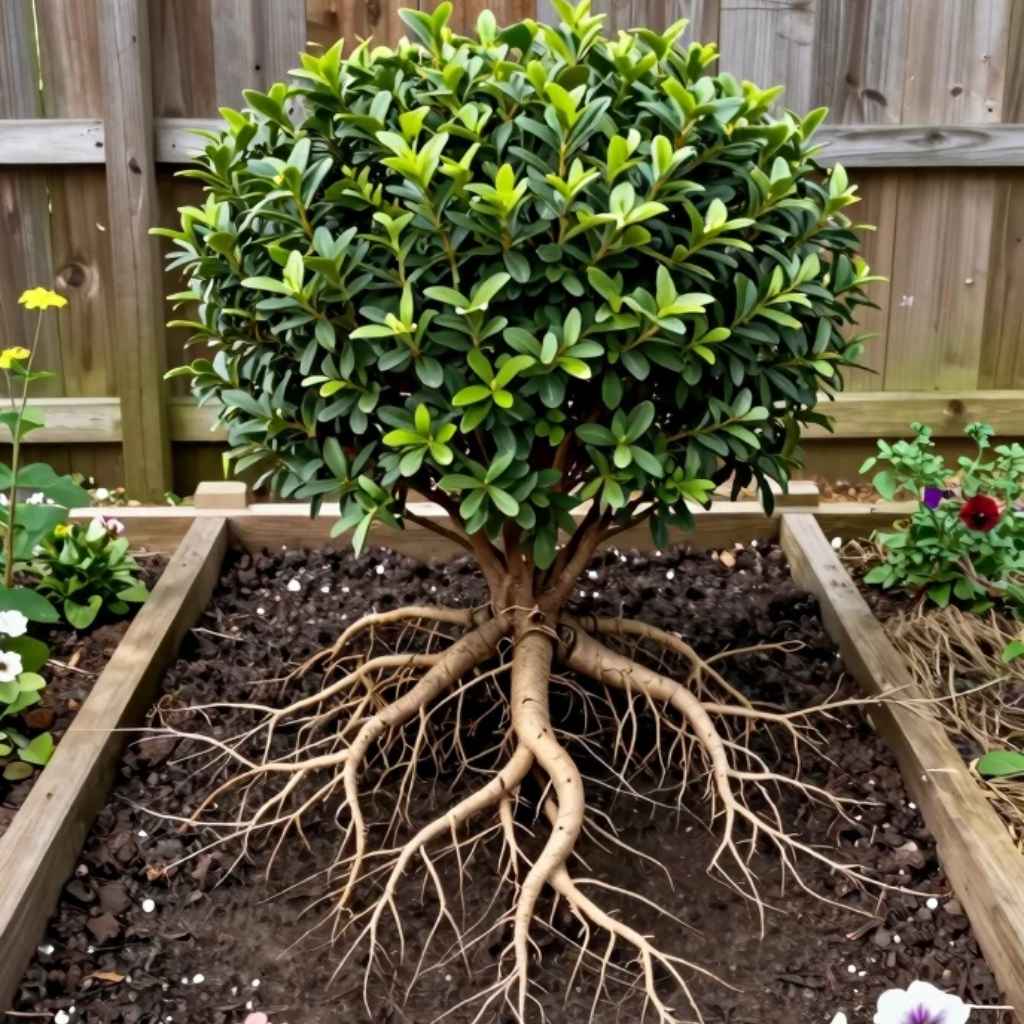
But what about its roots? They are usually quite shallow. They spread out rather than digging deep.
This makes them less likely to damage foundations. It also means they won’t fight too hard with the roots of nearby plants.
Think of them as a wide, flat network. This network helps the shrub soak up water and food from the top layer of soil. It’s a smart design for staying alive and looking good.
Boxwood roots are fibrous. This means they are thin and stringy. They don’t have one big, thick root that goes searching for trouble.
This is a key difference from truly invasive plants.
The overall root system of a boxwood shrub is usually about as wide as the shrub’s canopy. Sometimes it can be a little wider. But it rarely goes more than a foot or two deep.
This contrasts sharply with plants like wild blackberries or bamboo. Their roots can travel many feet underground. They can pop up far from where you first planted them.

My Own Boxwood Scare
I remember when I first planted a row of boxwoods along my driveway. They were small when I got them. Within a few years, they looked amazing.
They were perfectly shaped little green walls. But then I noticed some cracks starting to appear in the asphalt near the edge. My heart sank.
“It must be the boxwood roots!” I thought.
I pictured those roots like tiny drills boring into the pavement. I felt a wave of panic. I imagined having to dig them all up.
It would have been a huge job. My neighbor, who’s been gardening for decades, saw my worried face. He chuckled.
He explained that boxwood roots usually aren’t strong enough to break asphalt.
He said that cracks in pavement often happen for other reasons. Weather, ground settling, or even tree roots from nearby bigger trees are more likely culprits. He came over and looked.
He pointed out that the cracks were actually quite far from the base of the boxwoods. He said if the roots were the problem, they’d be right there, pushing from below.
This was a huge relief. It taught me not to jump to conclusions. It also showed me the importance of understanding how different plants grow.
My boxwood roots were just doing their job. They were providing stability and food for the plant. They weren’t out to destroy my driveway.
Boxwood Root Behavior Snapshot
Growth Pattern: Typically shallow and spreading.
Depth: Rarely exceeds 1-2 feet.
Structure: Fibrous and relatively fine.
Invasive Potential: Low to moderate, depending on soil and competition.
Damage Risk: Minimal to structures; can compete with delicate plants.
Why Boxwood Roots Spread (But Aren’t “Invasive”)
Boxwood roots do spread. This is how the plant gets enough water and nutrients. They form a dense mat near the surface.
This is important for the plant’s survival, especially in dry spells. The spread is usually proportional to the size of the shrub above ground.
If you have a small boxwood, its roots won’t go far. A large, old boxwood will have a wider root system. It needs more resources.
But this spread is a natural growth habit. It’s not an aggressive takeover like some other plants. Invasive roots actively seek out new areas.
They can grow through cracks. They can outcompete native plants for space and resources.
Boxwood roots are more about spreading out to gather what they need. They prefer healthy, well-drained soil. They don’t usually push through hard barriers.
If they hit a thick wall or a solid rock, they tend to stop or go around. They are not actively trying to invade your neighbor’s yard.
The term “invasive” has a strong meaning in gardening. It means a plant spreads aggressively. It takes over and harms the environment or other plants.
Boxwood doesn’t usually do this. It’s a controlled spread. It’s a sign of a healthy plant reaching for what it needs.
Boxwood Varieties and Root Systems
There are many types of boxwood. Some are small and compact. Others can grow quite large.
The size and spread of the roots often match the mature size of the shrub. For example, English boxwood (Buxus sempervirens ‘Suffruticosa’) is a dwarf variety. Its roots are also quite small and compact.
American boxwood (Buxus sempervirens) can grow much larger. Its root system will be more extensive. However, even these larger varieties are not known for aggressive, damaging roots.
Japanese boxwood (Buxus microphylla) also has various cultivars. Their root behavior is similar to other boxwoods – spreading but not overly aggressive.
The key takeaway is that no matter the variety, boxwood roots are generally well-behaved. They focus on supporting the plant. They don’t tend to cause problems for surrounding landscaping.
They are designed to thrive in place.
Boxwood Root Myths vs. Reality
Myth: Boxwood roots break concrete.
Reality: Very unlikely. Boxwood roots are not strong enough to crack solid concrete. Other factors usually cause pavement damage.
Myth: Boxwood roots spread uncontrollably.
Reality: They spread to support the plant, but not aggressively like invasive weeds.
Myth: Boxwood roots steal all the water.
Reality: They use water, but they share the soil with other plants if planted with care.
Myth: You must dig up boxwoods to control their roots.
Reality: Root pruning is rarely needed unless the plant is overgrown or being moved.
When Boxwood Roots Might Seem Like a Problem
Even though boxwood roots aren’t truly invasive, there are times when they can cause issues. This usually happens in specific situations. It’s more about how the plant is growing and where it’s planted.
One common issue is competition for resources. If you plant boxwoods too close to other plants that also have spreading root systems, they will compete. This can happen with hedges of other shrubs.
It can also happen if boxwoods are too near large trees. All these plants will be reaching for water and nutrients in the same soil.
Another situation is when boxwoods are planted in very confined spaces. If they are in small raised beds or pots, their roots will eventually fill the space. This can slow down growth.
It can make the plant look less healthy. But this is root bound, not invasive.
Sometimes, people mistake the natural spread of roots for invasion. When a boxwood is very healthy and well-established, its root system will be quite robust. This can appear to be spreading far.
But it’s typically confined to the area around the plant. It doesn’t jump to new gardens.
What “Invasive Roots” Really Look Like
To understand why boxwood roots are not invasive, it helps to know what invasive roots do. Think of plants like:
- Bamboo: Many types of bamboo have rhizomes. These are underground stems that spread aggressively. They can travel many feet. They can pop up anywhere.
- Running Sumac: This plant sends out root suckers. These can create dense thickets. It spreads rapidly.
- Certain Poplar Trees: Their roots can spread far and wide. They can damage pipes and foundations. They also produce suckers.
- Mint: Even common garden mint has roots that spread like crazy. It can take over a whole garden bed.
These plants have root systems designed to spread quickly. They aim to colonize new areas. Boxwood roots are not built this way.
They are more about anchoring the plant. They gather food and water for the existing shrub.
Quick Scan: Boxwood Root Health
| Check: Healthy Roots | Look For: Fibrous, spread out but contained. Soil looks good around them. |
| Check: Root Bound | Look For: Roots circling the pot or tightly packed. Slowed growth. |
| Check: Competing Roots | Look For: Stunted growth in nearby plants. Thin or weak boxwood. |
Real-World Context: Planting Boxwoods Smartly
The best way to avoid any potential issues with boxwood roots is to plant them thoughtfully. This means considering their needs from the start. Think about the space you have available.
When you plant boxwoods, give them enough room. Check the mature size of the variety you choose. For hedges, plant them with proper spacing.
This prevents them from growing into each other too much. It also stops their roots from fighting for space. A common spacing for boxwood hedges is about 18-24 inches apart.
Consider what else is planted nearby. Avoid placing boxwoods right next to aggressive plants. Also, keep them away from delicate flowers that need undisturbed soil.
If you have large trees, give your boxwoods some distance. The tree roots will take a lot of water and nutrients.
Drainage is also key. Boxwood roots hate soggy soil. If the ground stays wet, their roots can rot.
This can make them weak. A weak plant might seem like it has a root problem, but it’s actually a soil issue.
In most typical garden settings, boxwood roots will behave perfectly fine. They will spread enough to support the plant. They won’t cause structural damage.
They won’t take over your garden. It’s about giving them the right environment to grow.
What Boxwood Roots Mean for Your Garden
Understanding boxwood roots helps you manage your garden better. You can feel more confident in your planting choices.
When it’s normal: It’s normal for boxwood roots to spread outwards. This is how they find food and water. It’s also normal for them to fill the space they are given.
If you have a healthy boxwood, its roots are doing their job.
When to worry (a little): If you have very young plants struggling, check if they are too close to a large, established boxwood. Their roots might be competing. If your boxwoods are in a container and growth has stopped, they might be root-bound.
This means the roots have filled the pot.
Simple checks: To check for root-bound conditions, gently try to lift the shrub. If you see a dense mass of roots circling the pot, it’s root-bound. You might see roots pushing out the bottom drainage holes.
For in-ground plants, if a plant looks stressed, check the soil moisture. Make sure it’s draining well.
Generally, boxwood roots are a sign of a healthy plant. They are not a threat. They are part of what makes boxwood such a reliable and beloved landscape plant.
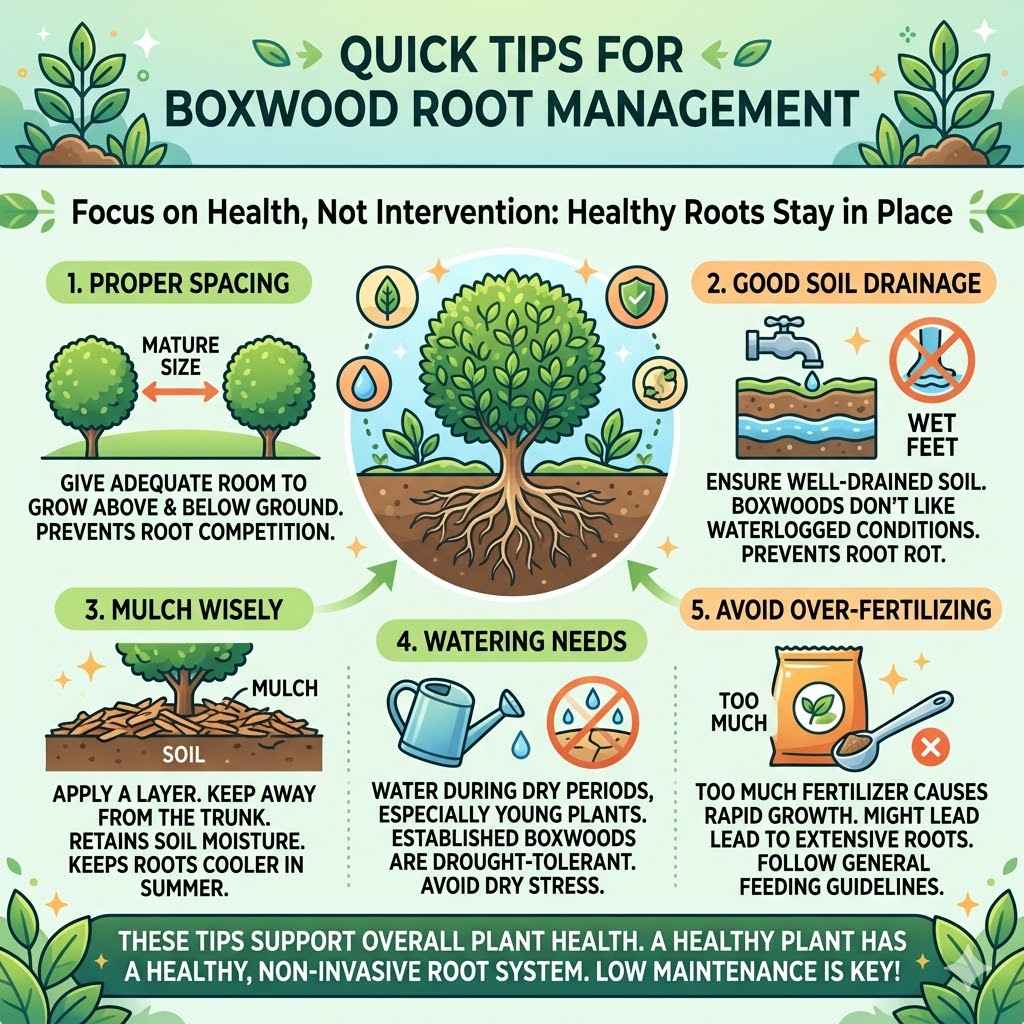
Quick Tips for Boxwood Root Management
You rarely need to “manage” boxwood roots in a way that involves digging or pruning. They are pretty low-maintenance in this regard. However, a few simple practices ensure they stay happy and healthy.
- Proper Spacing: Always consider the mature size of your boxwood. Give it adequate room to grow above and below ground. This prevents root competition later on.
- Good Soil Drainage: Ensure the soil drains well. Boxwoods don’t like “wet feet.” This helps prevent root rot, which is a far more common issue than invasive roots.
- Mulch Wisely: Apply a layer of mulch around the base of your boxwoods. Keep the mulch a few inches away from the trunk itself. Mulch helps retain soil moisture. It also keeps roots cooler in summer.
- Watering Needs: Water boxwoods during dry periods, especially when they are young. Established plants are quite drought-tolerant. But very dry soil can stress any plant.
- Avoid Over-Fertilizing: Too much fertilizer can encourage very rapid growth. This might lead to more extensive root systems than necessary. Follow general feeding guidelines.
These tips focus on supporting the plant’s overall health. A healthy plant has a healthy root system that stays in its place. You don’t need to worry about them causing major issues.
Frequently Asked Questions About Boxwood Roots
Are boxwood roots dangerous to house foundations?
Generally, no. Boxwood roots are shallow and fibrous. They lack the strength and aggressive growth to damage a strong house foundation. True foundation damage from roots usually comes from larger trees with deep, powerful root systems.
Can boxwood roots damage underground pipes?
It’s highly unlikely. Boxwood roots are not known to actively seek out and invade pipes. Most pipe damage is caused by roots of larger trees that need more water and have stronger growth habits. If a pipe is already leaking, that moisture might attract any nearby roots, but boxwood roots wouldn’t typically cause the initial damage.
How far do boxwood roots spread?
Boxwood roots typically spread outwards, roughly matching the width of the shrub’s canopy. They are usually shallow, rarely going deeper than 1 to 2 feet. So, their spread is generally contained and proportional to the plant’s size above ground.
Should I prune boxwood roots?
Root pruning is usually not necessary for boxwood plants in the ground. If a boxwood is severely root-bound in a container, then pruning might be considered before replanting. For established garden plants, focus on maintaining good soil and watering, not root pruning.
What if my boxwood roots are growing into my neighbor’s yard?
Boxwood roots don’t typically cross property lines aggressively. If you see roots extending a bit into a neighbor’s space, it’s normal for a healthy, established plant. They are simply seeking resources. They aren’t invasive weeds trying to conquer new territory.
Are dwarf boxwood roots less invasive?
Yes, dwarf varieties of boxwood naturally have smaller root systems. This means they spread less and are even less likely to be perceived as problematic. Their root growth is in proportion to their smaller size.
Conclusion: Boxwood Roots Are Garden Friends
So, to wrap it all up, boxwood roots are not invasive. They are a well-behaved part of a beautiful plant. They spread enough to keep your shrub healthy.
They generally stay where they are. With a little smart planting, you can enjoy your boxwoods for years. They’ll add structure and beauty without causing underground drama.